Table of Contents >> Show >> Hide
- Why the characters matter more than the cape
- The core trio: Batman, the Joker, and Harvey Dent
- Gotham’s stabilizers: Alfred, Gordon, Lucius, and Rachel
- The city around them: criminals, officials, and pressure points
- How the character web creates the film’s biggest themes
- Character moments that define the movie (without needing superpowers)
- What makes The Dark Knight characters so rewatchable
- Viewer experiences: why these characters stick with people (and how fans engage with them)
- Conclusion
If The Dark Knight were just “Batman punches crime,” it wouldn’t still be living rent-free in people’s brains
(and in the internet’s endless supply of reaction GIFs). What makes Christopher Nolan’s 2008 film hit so hard is
the way its characters act like a pressure test for Gotham City: crank up fear, chaos, temptation, and grief
then see who bends, who breaks, and who somehow keeps their tie straight anyway.
This guide walks through the most important The Dark Knight charactersfrom the obvious icons
(Batman, the Joker, Harvey Dent) to the underrated “glue” characters (Alfred, Gordon, Lucius Fox) and the
supporting cast that turns Gotham into a living ecosystem. Along the way, we’ll dig into what each character
represents, why their choices matter, and how the movie uses them to ask one big question:
What does it cost to keep a city from falling apart?
Why the characters matter more than the cape
Nolan’s Gotham is basically a crime saga wearing superhero clothing. The characters aren’t just there to move the
plot; they’re a moral argument in human form. Batman is a symbol trying to stay human. The Joker is a human trying
to become a symbol. Harvey Dent is the city’s hope… right up until hope gets tested like a crash dummy in a
demolition derby.
And because the film leans into ethicslaw vs. vigilantism, security vs. privacy, hero worship vs. trutheach
major character functions like a lever. Pull one, and the whole city shifts. It’s less “Who wins?” and more
“What do we become while trying to win?”
The core trio: Batman, the Joker, and Harvey Dent
Bruce Wayne / Batman: the hero who doesn’t get a day off
Bruce Wayne (Batman when the lights go down) is the story’s central contradiction: he’s a billionaire with
unlimited resources who chooses a life where he can’t publicly claim credit for anything good he does. In
The Dark Knight, Batman isn’t just fighting criminalshe’s fighting the consequences of becoming a
symbol. The more effective he is, the bigger the response he provokes. In Gotham, success doesn’t end conflict;
it upgrades it.
Batman’s defining trait here is restraint. He has powerwealth, tech, fear, mythbut he constantly runs into
problems power can’t solve: broken institutions, corrupted incentives, and a villain who doesn’t want money
or status. Batman’s struggle isn’t “Can I stop the bad guy?” as much as “Can I stop the bad guy without becoming
the kind of force Gotham should fear?”
Even Bruce’s public identity is part of the battle. Bruce Wayne plays the role of a careless playboy to protect
Batman’s mission, but that mask costs him real relationships and real peace. He’s a man trying to turn himself
into an ideathen realizing ideas don’t sleep, don’t heal, and don’t get happy endings.
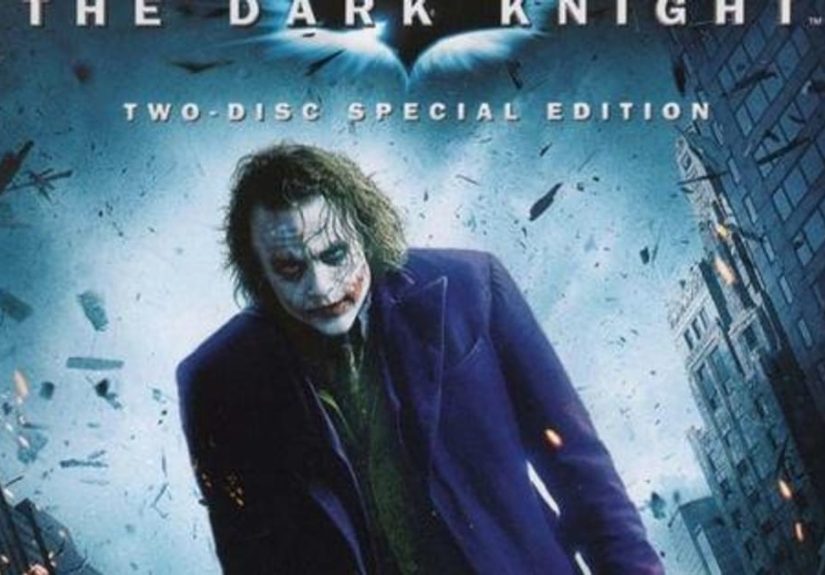
The Joker: chaos with a punchline (and no interest in your wallet)
The Joker is one of the most memorable villains in modern cinema because he isn’t motivated like a “normal”
crime boss. He’s not building an empire; he’s running an experiment. His obsession is exposing how fragile
“civilized behavior” can be when people feel cornered. He pushes Gotham into impossible choices because he wants
to prove that morality is just a costume people wear until it’s inconvenient.
What makes him terrifying isn’t superpowersit’s clarity. The Joker understands the city’s weak points:
corruption, fear, ego, and the way people crave simple stories (“hero vs. villain”) even when reality is messy.
He weaponizes attention like a modern troll before “troll culture” had a name. If Gotham is a system, the Joker
is the stress test designed to find the cracks.
Importantly, he also understands Batman. Not Bruce Wayne specifically, but Batman as a concept. Batman represents
order imposed outside the law; the Joker represents disorder that mocks the law. They are opposites in method,
but weirdly similar in one way: both operate as symbols that change how everyone else behaves.
Harvey Dent / Two-Face: the “white knight” who proves hope is risky
Harvey Dent is Gotham’s official answer to Batman. Where Batman works in shadows, Dent works in courtrooms and
press conferences. He’s the district attorney who can fight crime without breaking the social contractmeaning
he offers Batman something Bruce desperately wants: a path to stop being Batman.
Dent’s role is crucial because he represents legitimacy. Gotham can celebrate Dent publicly.
Dent can inspire people without requiring them to accept vigilantism. But that makes him a prime target. If the
Joker can corrupt the city’s “white knight,” it’s not just one man fallingit’s the collapse of a story Gotham
tells itself about justice.
Dent’s tragedy is that his faith in the system is sincere, yet the system is compromised. When his world is
shattered, he becomes a mirror held up to Gotham: if a good man can be pushed into darkness, what does that say
about the city’s foundations? The film uses Dent to explore how grief and rage can turn certainty into
something frighteningly absolute.
Gotham’s stabilizers: Alfred, Gordon, Lucius, and Rachel
Alfred Pennyworth: the conscience with better manners
Alfred is the character most likely to win “Best Supporting Human” in a city full of chaos. He’s Bruce’s
caretaker, advisor, and moral anchor. Alfred doesn’t just patch up wounds and serve tea; he argues with Bruce,
warns him, and occasionally delivers uncomfortable truths that nobody else is brave enough to say.
Alfred’s biggest function is perspective. He reminds Bruce that not every problem is solvable with gadgets or
intimidation. Some threats don’t bargain. Some people can’t be bought, scared, or reasoned with. And some costs
are emotional, not tacticalmeaning Batman can “win” a fight while losing something essential about himself.
James Gordon: the honest cop inside a crooked machine
Jim Gordon is the film’s most grounded hero. He’s a family man and a dedicated officer trying to build real
justice inside an institution with rot in its beams. Gordon’s relationship with Batman is complicated: he’s
willing to collaborate with a vigilante because the city’s legal tools aren’t enough, but he never treats that
compromise like a comfortable solution.
Gordon also embodies the story’s central theme: doing the best you can inside imperfect systems. He’s not flashy.
He doesn’t get dramatic monologues every five minutes. He’s a steady presence whose courage looks like stubborn
consistencyshowing up, telling the truth when possible, and making hard calls when “perfect” isn’t available.
Lucius Fox: tech, ethics, and the world’s most stressful R&D job
Lucius Fox is the brain of Batman’s operationWayne Enterprises leadership by day, Batman’s ethical tech partner
by night. In another movie, he’d be “the gadget guy.” In The Dark Knight, he’s something deeper:
the character who forces Batman to confront the moral cost of surveillance and power.
Lucius isn’t impressed by the fact that Batman has good intentions. He cares about guardrailsbecause once
something exists, it can be abused. His presence keeps the movie from becoming “cool tech solves everything”
fantasy. He asks: “Even if you can, should you?” And that question matters in a story where saving the city can
tempt heroes into acting like the villains they oppose.
Rachel Dawes: the human reality behind the superhero myth
Rachel is the character who refuses to treat Batman like a fairy tale. She knows Bruce. She understands what he’s
trying to do, but she won’t pretend it’s sustainable. Rachel functions as an emotional truth-teller: she
represents a normal life Bruce can’t fully access as long as he’s committed to being Batman.
Just as importantly, Rachel isn’t merely “the love interest.” She’s part of the story’s ethical structure. She’s
a reminder that choices have personal consequencesand that “saving Gotham” doesn’t automatically protect the
people closest to you.
The city around them: criminals, officials, and pressure points
Gotham in The Dark Knight feels lived-in because the supporting characters aren’t decorative. They’re
the ecosystem that makes the big three’s conflict believable. Think of them as the gears in the machinesome are
rusty, some are corrupt, and some are just trying not to get crushed.
The mob and its orbit: Maroni, the Chechen, Gambol, and Lau
The organized crime figures serve a specific purpose: they represent the “old Gotham,” where crime is a business
with rules, money, and hierarchy. Salvatore Maroni and the other mob bosses operate like executivescold, cautious,
and motivated by profit. They’re terrible people, but they’re predictable terrible people. In Gotham, that counts
as stability. (Yes, it’s a low bar. Gotham is not doing great.)
Lau, the accountant who tries to secure mob money offshore, shows how modern crime relies on global finance and
legal loopholesnot just muscle. He’s a reminder that corruption isn’t only on the street; it’s in boardrooms and
international systems. Meanwhile, characters like Gambol and the Chechen illustrate the mob’s internal violence
and fragile alliances: when fear enters the room, “professional criminals” become paranoid amateurs.
The Joker’s arrival disrupts this entire structure. He doesn’t want their systemhe wants to prove their system
is meaningless. That’s why the mob characters matter: they show the difference between “crime as business” and
“crime as ideology.”
City power and corruption: Loeb, the Mayor, and the uneasy institution
The presence of officials like the police commissioner (Loeb) and the mayor (Anthony Garcia) reinforces the
movie’s institutional focus. Gotham’s problem isn’t a lack of rules; it’s that rules can be bent, bought, or
bypassed. The film suggests that corruption isn’t always a cartoonish mustache-twirlit can be quiet, procedural,
and “just how things work.”
This is why Dent matters so much. He’s attempting to rebuild trust in these structures. If he falls, the city’s
faith collapses with him.
Everyday people caught in the blast radius: Reese, Ramirez, Wuertz, and more
Some of the most interesting The Dark Knight characters are not the headliners. They’re the
people forced to make decisions when symbols collide:
- Coleman Reese (Wayne Enterprises) represents the vulnerability of secrets in a world of smart people and loose talk.
- Detective Anna Ramirez and Detective Gerard Stephens show how complicated “good cop vs. bad cop” becomes in a compromised department.
- Officer Wuertz and other corrupt elements illustrate how institutions can be hijacked from inside.
- Mike Engel (a TV journalist) reflects how media can amplify panic or shape public narrativessometimes without meaning to.
These characters widen the story’s scope. Gotham isn’t saved or destroyed only by icons; it’s shaped by the
choices of people with smaller job titles and bigger fears.
Jonathan Crane / Scarecrow: a reminder that old villains don’t retire
The Scarecrow’s presence (even briefly) matters thematically. He’s a callback to earlier chaos and a warning:
Gotham doesn’t “finish” crime. It mutates. The city’s problems don’t vanish because one villain is caught.
Another one fills the gapoften in a new, more dangerous form.
How the character web creates the film’s biggest themes
Escalation: Batman changes the rules, and the Joker responds
One reason The Dark Knight feels so intense is that it treats conflict like evolution. Batman’s approach
makes street crime less viable, so criminals adapt. The Joker is that adaptation: a villain who bypasses the usual
incentives. The film suggests that when you introduce an extraordinary force into a system, you don’t eliminate
violenceyou transform it.
Morality under pressure: the Joker’s real battlefield
The Joker doesn’t just want Batman dead; he wants Batman’s meaning destroyed. That’s why he attacks
Dent, Gordon, and ordinary citizens with scenarios designed to trigger fear and selfishness. The fights aren’t
only physicalthey’re ethical. The movie repeatedly asks: do people choose the right thing when there’s no reward
and no guarantee?
Truth vs. legend: why Gotham clings to simple stories
Gotham wants heroes because heroes make the world feel manageable. Dent is easier to celebrate than Batman
because he works within the law. Batman is easier to fear than to understand because he’s anonymous. The Joker
exploits this hunger for clean narratives, turning public opinion into another weapon. In that sense, the movie is
also about storytelling itselfwho controls it, who benefits from it, and what happens when the truth is too
complicated to comfort people.
Character moments that define the movie (without needing superpowers)
If you’re looking for why these characters endure, it’s because their most memorable moments often involve
choicesnot explosions:
- Batman facing moral limits even when breaking them would be “easier.”
- Gordon balancing duty to the city with duty to his family.
- Lucius drawing a line around how much power any one person should hold.
- Alfred pushing Bruce to accept that not every battle is rational.
- Dent’s arc showing how quickly hope can curdle when trauma and anger take the wheel.
- Ordinary citizens being forced to decide who they are when nobody’s watching.
What makes The Dark Knight characters so rewatchable
The first time you watch the film, you may focus on plot: the chase, the tension, the big set pieces. On rewatch,
the character design becomes the main event. You notice how every major figure is built around a principle:
order, chaos, justice, loyalty, fear, or control. You start seeing Gotham as a chessboard where each character
moves not just for survival, but to prove an idea.
And because those ideas are still modernhow far should security go, how does media shape fear, what do we owe
each other when we’re scaredthese characters don’t feel trapped in 2008. They feel like they’re still arguing
with us now.
Viewer experiences: why these characters stick with people (and how fans engage with them)
Here’s the funny thing about The Dark Knight: even when you’re “just watching a Batman movie,” the
characters tend to follow you out of the theater. Many viewers describe a first watch as an emotional roller
coaster that’s less about feeling thrilled and more about feeling tested. Not because the movie asks you
to pick a side like a sports game, but because it quietly invites you to imagine what you’d do under pressure.
A common experience is realizing that your “favorite character” might change over time. On a first viewing,
the Joker can dominate the conversation because he’s unpredictable and magnetic (and because the performance
is hard to look away from). But on rewatch, people often start paying closer attention to Gordon’s steadiness,
Alfred’s tough-love wisdom, or Lucius Fox’s ethical backbone. That shift can feel like growing up in real time:
you start noticing the people who hold the world together, not just the people who light it on fire.
Fans also love debating what each character represents. Some treat Batman as a symbol of responsibilitythe idea
that power should be restrained and used to protect others. Others see him as a warning about vigilantism and the
dangers of letting one person operate outside accountability. Meanwhile, the Joker becomes a kind of Rorschach
test: some viewers interpret him as pure chaos, others as a commentator on hypocrisy, and others as a critique of
institutions that can’t adapt to new forms of threat.
Harvey Dent’s storyline, in particular, tends to land differently depending on your mood and life experience.
Some people view Dent as a tragedy about how fragile goodness can be when trauma hits. Others see him as a lesson
about idealizationhow dangerous it is to build a city’s hope on one person’s shoulders. Either way, Dent sparks
long conversations because he starts as the kind of leader people want to believe in, then becomes a cautionary
tale about what happens when pain becomes policy.
In schools and film clubs, The Dark Knight characters are often used as storytelling case studies. Writers
talk about how each character has a clear “engine” (a driving motivation) and how those engines clash in ways that
feel inevitable. It’s a great reminder that memorable characters aren’t built from cool costumesthey’re built
from clear values under stress. If you’re a creator, you might walk away thinking: “What does my character want,
what are they afraid of, and what line won’t they cross… until they do?”
And then there’s fandom life: people quote, meme, cosplay, and argue (politely… sometimes) because these
characters are iconic and flexible. You can enjoy them as thrilling entertainment, but you can also
treat them like modern myth. Batman becomes the burden of responsibility. Alfred becomes loyalty with limits.
Gordon becomes integrity in a messy system. The Joker becomes the fear that rules are thinner than we admit.
Dent becomes the heartbreak of watching a hopeful story collapse.
The best “experience” with The Dark Knight characters might be this: the movie changes depending on what
you bring to it. Watch it for action, and you’ll get it. Watch it for character, and you’ll get something that
feels uncomfortably humanbecause the scariest thing in Gotham isn’t a clown mask. It’s how quickly people can
change when the world stops feeling safe.
Conclusion
The lasting power of The Dark Knight isn’t only the spectacleit’s the character construction. Batman is
a hero trying not to become a monster. The Joker is a monster trying to prove everyone else is just like him.
Harvey Dent is the city’s hope, showing how fragile public faith can be. Around them, Alfred, Gordon, Lucius, and
Rachel form the emotional and ethical framework that makes the story feel real.
If you’re searching for “The Dark Knight characters,” you’re really searching for why this movie still hits:
it turns a comic-book world into a moral drama where every major character represents a different answer to the
same questionhow do you protect a city without losing your soul?