Table of Contents >> Show >> Hide
If you’ve sunk way too many hours into For The King, you already know it’s a weirdly perfect mash-up:
part tabletop RPG, part co-op roguelike, part board game, and part “who forgot to buy healing herbs again?”
Once you finally topple the Chaos meter and roll the credits, the real question hits: what on earth do you
play next?
The good news: there are other games that scratch that same itch for turn-based tactics, procedurally
generated chaos, and “just one more run” co-op nights. The bad news: they’re scattered across a bunch of genres
and storefronts, and not all of them actually feel like For The King once you boot them up.
This ranked list pulls together the 13 best games like For The King based on shared DNA: turn-based
combat, roguelike or highly replayable campaigns, meaningful choices, and (ideally) co-op or party-based
progression. Think of it as your world map: I’ll point out where to go, what to expect, and which games are
best for your crew, not just your backlog.
What Makes For The King So Special?
To find good alternatives, it helps to know why For The King hits so hard in the first place.
At its core, the game is:
- Turn-based and tactical, with positioning, ability timing, and risk management deciding whether your party lives or wipes.
- Procedurally generated, with maps, events, and loot reshuffled every run, giving it roguelike replayability.
- Co-op friendly, supporting up to three players in fully shared campaigns.
- Tabletop-inspired, with hex maps, dice-style rolls, and event text that feels like a DM narrating your bad luck.
So games that really feel “like For The King” usually offer some combo of:
- Party-based or co-op play
- Turn-based strategy or tactical combat
- Roguelike progression, runs, or randomized campaigns
- Choices that matter for story, maps, or character builds
With that lens in mind, here are the 13 best games like For The King, ranked from “you should probably
check this out” to “cancel your weekend plans, this is your new obsession.”
The 13 Best Games Like For The King, Ranked
13. Spellmasons
Best for: Players who want a crunchy, turn-based co-op roguelike where every move matters.
Spellmasons is a tactical, grid-based wizard brawler that really comes alive in co-op. You and your friends
sling spells in a turn-based roguelike campaign where mispositioning is fatal and friendly fire is absolutely
a thing. It leans harder into pure tactics than world exploration, but that “one more attempt with a better
build” feeling will feel very familiar if you love carefully plotting turns in For The King.
12. King’s Gambit
Best for: Fans of co-op deckbuilders and chess-flavored tactics.
King’s Gambit is a turn-based co-op roguelike deckbuilder that mixes spellcasting with chess-inspired enemies
and movement. You build out characters with card upgrades while tackling procedurally generated encounters and
bosses, similar to how your party grows over a For The King campaign. It’s still relatively new on the
scene, but its emphasis on co-op runs and build experimentation makes it an intriguing future favorite for
FTK fans.
11. Children of Morta
Best for: Duos who like emotional storytelling with their dungeon runs.
Children of Morta is a story-driven action RPG about the Bergson family, a clan of guardians fighting
creeping Corruption. While the combat is real-time instead of turn-based, the structure will feel familiar:
short, repeatable runs, meta-progression between attempts, and co-op that rewards good teamwork. The family
theme also hits some of the same “we’re in this together” vibes as a long For The King campaign, just
with more heartfelt cutscenes and fewer failed focus rolls.
10. Hades
Best for: Solo players who love roguelike runs and character progression.
Supergiant’s Hades is an action roguelike instead of a tactical RPG, but the “one more run” addiction
is very much the same. You experiment with weapon builds, boons, and curses the way you might try new party
comps and gear in For The King. The big connection is how both games blend story and repetition:
each failed run pushes the narrative forward, making your losses feel like progress rather than wasted time.
9. Slay the Spire
Best for: People who love FTK’s risk–reward decisions and build crafting.
Slay the Spire is the deckbuilding roguelike that basically kicked off the modern card-roguelite boom.
Instead of a hex map, you climb a branching tower of encounters, building a deck that defines your “character.”
The similarity to For The King is all in the risk management: do you take one more elite fight for
better rewards, or play it safe and head to the campfire? If you enjoy planning three moves ahead in FTK,
this card-based cousin will hook you fast.
8. Battle Brothers
Best for: Tactics nerds who love gritty, punishing campaigns.
Battle Brothers is a turn-based tactical RPG where you manage a mercenary company in a low-fantasy
world. Every campaign is procedurally generated, your soldiers can die permanently, and your strategic decisions
on the world map matter as much as battlefield choices. It’s like For The King turned up to 11 on the
“grim mercenary sim” dial, trading FTK’s whimsical board-game style for a more grounded, unforgiving tone.
7. Darkest Dungeon
Best for: Players who think FTK isn’t cruel enough.
Darkest Dungeon is a gothic, turn-based roguelike RPG where you manage a roster of heroes exploring
nightmarish dungeons beneath a cursed estate. Heroes can die permanently and also suffer stress, afflictions,
and full-on breakdowns as you push deeper. Where For The King uses chaos rolls and status effects,
Darkest Dungeon weaponizes stress and despair in a way that feels like the horror version of your worst
FTK wipe. It’s brutal, but incredibly satisfying if you enjoy long-term campaign planning.
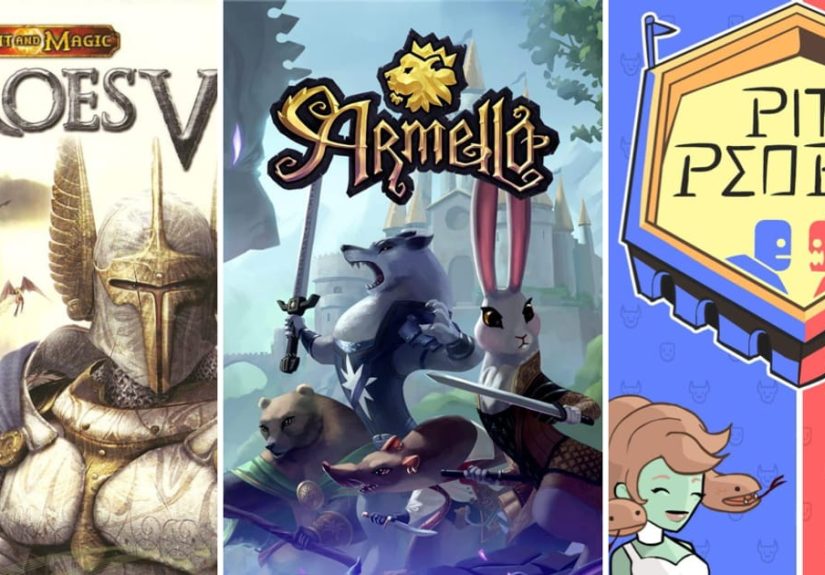
6. Armello
Best for: Fans of FTK’s board-game vibes and political chaos.
Armello is a digital board game where anthropomorphic animal heroes race, wrestle, and backstab their
way to the throne in a hex-based fantasy kingdom. Like FTK, you move across a map of tiles, tackle quests and
encounters, and gamble with risk-heavy decisions. It’s less cooperative and more “everyone’s kind of a jerk,”
but if you love the idea of a living board game with cards, dice-like randomness, and shifting priorities,
this one is an easy recommendation.
5. Gloomhaven (Digital)
Best for: Tabletop fans who want deep tactics and long campaigns.
The digital version of Gloomhaven adapts the legendary tabletop campaign into a tactical RPG with
scenario-based combat, card-driven abilities, and branching storylines. Like For The King, your party
travels across a map, tackles quests, and faces permadeath-style stakes for characters. Where FTK mixes things
up with short runs, Gloomhaven is more of a long-haul strategy experience with heavy buildcrafting and
puzzle-like encounters. It’s fantastic in co-op if your group enjoys slower, more methodical battles.
4. Divinity: Original Sin 2
Best for: Groups that loved FTK co-op and want a huge RPG next.
Divinity: Original Sin 2 is a deep, story-rich RPG with turn-based combat and full four-player co-op.
It’s less roguelike and more “epic campaign,” but it scratches similar itches: synergizing builds, coordinating
turns, and improvising around unpredictable combat outcomes. Where FTK keeps systems lean and board-gamey,
DOS2 gives you an entire sandbox of elemental interactions, branching quests, and wild character
customization to experiment with as a group.
3. Inkbound
Best for: Co-op tactics fans who want something halfway between FTK and a roguelite MMO.
From the creators of Monster Train, Inkbound is a turn-based tactical roguelike set in a
storybook multiverse. You and your party dive into runs (“dives”) that remix encounters, enemies, and loot,
while building synergistic class builds. It leans hard into co-op, with shared runs, leaderboards, and unlock
systems that encourage long-term play. If you enjoy FTK’s combination of tactical combat and repeatable runs,
this is one of the closest modern relatives.
2. Across the Obelisk
Best for: Groups who love FTK but want a heavier card-game focus.
Across the Obelisk is a co-op roguelite deckbuilder where up to four players each control a hero in a
party, building unique decks as you travel through a branching map. Decisions about paths, events, and bosses
feel very similar to FTK’s campaign choices, but combat is entirely card-driven. With 12–16 characters and
hundreds of cards and items, it’s incredibly replayable and nails that “talk it out with the team” energy on
every turn.
1. Wildermyth
Best for: Players who want FTK’s tactics plus richer storytelling.
Wildermyth is a procedurally generated, character-driven tactical RPG that feels like a living tabletop
campaign. Your heroes age, gain quirky traits, fall in love, lose limbs, and even retire, while comic-style
story events branch based on your choices and past runs. Combat is hex-based and turn-based, but the real
magic is how your party’s story evolves across multiple campaigns. If you love how For The King
turns random events into memorable tales, Wildermyth is basically that, but turned into an entire
storytelling engine.
How to Pick the Right For The King Alternative for You
If you’re overwhelmed by options (totally fair), here’s a quick way to narrow things down:
- Want FTK, but with even more story? Go for Wildermyth or Children of Morta.
- Want co-op deckbuilding chaos? Try Across the Obelisk, Inkbound, or King’s Gambit.
- Want punishing tactics and permadeath? Battle Brothers and Darkest Dungeon are your best bet.
- Want long, meaty campaigns with friends? Check out Divinity: Original Sin 2 or digital Gloomhaven.
- Mostly care about that roguelike “one more run” hit? Slay the Spire and Hades will happily eat your free time.
You don’t have to ditch For The King forever, either. Many players rotate between these games, using a
shorter roguelite like Slay the Spire for solo sessions and saving big co-op campaigns like
Wildermyth or Divinity: Original Sin 2 for group nights.
Real-World Experiences: Living the “For The King” Lifestyle
Let’s be honest: loving For The King is as much about the stories it creates as the mechanics
themselves. If you’ve ever had a friend fail a 92% roll and wipe the party, you know exactly what I mean.
One of the biggest joys of hopping into “games like For The King” is watching how each one creates its
own flavor of chaos. In Wildermyth, the wildest thing isn’t a bad dice rollit’s when your
archer slowly turns into a living tree over multiple campaigns, and you realize your “throwaway hero” just
became the legendary centerpiece of your story. The tactical combat is solid, but it’s those emergent character
arcs that make your group sit back and say, “Okay, that was actually cooler than any DM could have planned.”
With Across the Obelisk, the vibe is more “co-op puzzle solving.” I’ve seen runs where one
player is basically a walking healing engine, another is a stun-bot, and the last two are glass cannons
nuking everything in sight. Half the fun is negotiating every path on the map: do you detour for a pet unlock,
or rush the boss before your deck gets bloated? When things go wrong, it feels eerily similar to a blown FTK
runone bad event chain, the wrong elite fight, and suddenly everyone’s scrambling to patch holes in the party.
Then there’s Darkest Dungeon and Battle Brothers, which are essentially “OK,
but what if For The King was emotionally abusive?” These games lean into long-term campaign management. You’re
not just thinking about this fightyou’re thinking about food, gold, mental health, injuries, and whether
your favorite hero is one crit away from a nervous breakdown. It’s stressful, but when a desperate plan
somehow works, the payoff feels massive. It’s the same satisfaction as limping into FTK’s final battle with
half your gear broken and still pulling off a win.
On the lighter side, Armello is the game that most feels like “FTK, but everyone has hidden
agendas and a drinking problem.” Instead of co-op, you’re at each other’s throats, using cards and tricks to
mess with the board state. The drama comes from deals made and broken in real time: promising not to attack
this turn, then absolutely attacking anyway because you drew the perfect card. If your FTK group secretly
enjoys friendly betrayal, Armello is dangerous territoryin a good way.
One underrated thing about bouncing between these games is how your “FTK skills” transfer. Once you’re used
to thinking in terms of odds, attrition, and long-term resource management, you’ll notice you adapt quickly.
You’ll spot bad fights before you take them, recognize when to run, and understand that sometimes the right
move is to burn a consumable now so you’re not dead three turns later. That mindsetmore than any specific
rule setis what makes you feel at home across this whole little subgenre of tactical, roguelike-adjacent
strategy games.
So if your group is looking for the next game night staple, don’t be afraid to treat this list like a travel
itinerary. Try a story-heavy trip in Wildermyth, a tense dungeon vacation in Darkest Dungeon,
and a chaotic board-game weekend in Armello. The beauty of being a For The King fan is that
you’re already wired for adventure, terrible decisions, and the kind of shared disasters that turn into
legendary gaming stories later.
Final Thoughts
For The King sits at the crossroads of tabletop, tactics, and roguelike design, so no single game
replaces it perfectly. But that’s the fun part: by exploring games like Wildermyth,
Across the Obelisk, Inkbound, and the rest of this list, you’ll discover
new flavors of the same core experiencehard-fought victories, brutal losses, and memorable stories shared
with friends.
Whether you’re chasing the next great co-op campaign or just want a solo strategy obsession between FTK runs,
these 13 games are the best places to start rolling the dice again.