Table of Contents >> Show >> Hide
- 1) Myth: Pirates buried treasure all the time (and drew maps with a big “X”)
- 2) Myth: “Walking the plank” was a standard pirate punishment
- 3) Myth: Pirates all said “Arrr!” and talked with the same accent
- 4) Myth: Pirates always flew the skull-and-crossbones flag (the classic Jolly Roger)
- 5) Myth: All pirates were the same thing (pirates, privateers, buccaneers… whatever)
- 6) Myth: Pirate captains ruled like absolute tyrants
- 7) Myth: Pirates had one universal “Pirate Code” (like a magic constitution everyone followed)
- 8) Myth: Pirates were all men (and women on pirate ships were basically just a plot twist)
- 9) Myth: Pirates were constantly drunk on rum
- 10) Myth: Pirate life was basically a floating party (just with better hats)
- Pirate Myth-Busting: Real-World Experiences You Can Have (About )
- Conclusion: The Real Pirates Were Stranger (and Smarter) Than the Stereotypes
Pirates are the ultimate pop-culture overachievers. They’ve got brand consistency (skull flags), merch potential
(parrots), and a catchphrase (“Arrr!”) that somehow survives every Halloween. The only problem? A lot of what we
“know” about pirates is basically a greatest-hits album of movie tropesfun, memorable, and only occasionally
related to real history.
Real piracyespecially during what historians often call the Golden Age of Piracy (roughly the late 1600s
into the early 1700s in the Atlantic world)was messier, more practical, and less interested in dramatic lighting.
Think: labor disputes at sea, risky business decisions, rules written like contracts, and ports that treated pirates
like bad news… right up until someone bought a round.
Below are 10 pirate myths that deserve to be tossed overboard (politely, with a life jacket). Along the way,
you’ll get the real story, specific examples, and enough historical context to confidently correct your friends the
next time someone claims pirates spent all day burying treasure and practicing their “Arrr.”
1) Myth: Pirates buried treasure all the time (and drew maps with a big “X”)
Reality: Buried treasure was the exception, not the business model. Even the famous “Captain Kidd buried
treasure” story is treated as unusualand the practical reasons are obvious: beaches shift, tides change, and
“trusting your crewmates to not steal it later” is a bold strategy for people who chose piracy as a career path.
Also, pirates didn’t always score piles of gold coins. A lot of “booty” was ordinary cargotimber, cloth, spices,
medical supplies, rigging, sailsthings you can sell, trade, or use, but not exactly the kind of loot you bury like
a squirrel hiding acorns. Pirates tended to spend quickly in pirate-friendly ports, because (1) life was dangerous,
and (2) tomorrow you might be in prison. The “treasure chest” image is fun, but the real world was more like
“inventory that needs unloading.”
Specific example
Stories about Kidd helped fuel the buried-treasure legend, but accounts of pirate plunder often emphasize spending
and selling rather than digging secret holes. In other words: pirates were more “cash flow” than “geocaching.”
2) Myth: “Walking the plank” was a standard pirate punishment
Reality: It’s mostly a theatrical inventionan image sharpened by books, plays, and later film/TV. Real
pirates did punish people, and the punishments could be harsh, but “line up and take a dramatic stroll into the sea”
wasn’t some universal policy printed on the ship’s bulletin board.
What pirates did use a lot was intimidation and efficient violence (when they believed it helped the job). If
a crew surrendered quickly, pirates could capture a ship with minimal damage to the prize and less risk to
themselves. That’s the boring truth behind many pirate tactics: they were trying to get paid and survive, not
choreograph a cinematic moment.
3) Myth: Pirates all said “Arrr!” and talked with the same accent
Reality: The stereotypical pirate voice is a relatively modern creation, popularized heavily by
mid-20th-century performancesespecially portrayals of Long John Silver that turned an exaggerated regional accent
into “the pirate accent” we all recognize today.
Real pirates were a multinational mix. Crews could include sailors from different countries, backgrounds, and
languages. So if you’re looking for historical accuracy, imagine a lot less synchronized “Arrr!” and a lot more
chaotic multilingual yelling over wind, waves, and cannons.
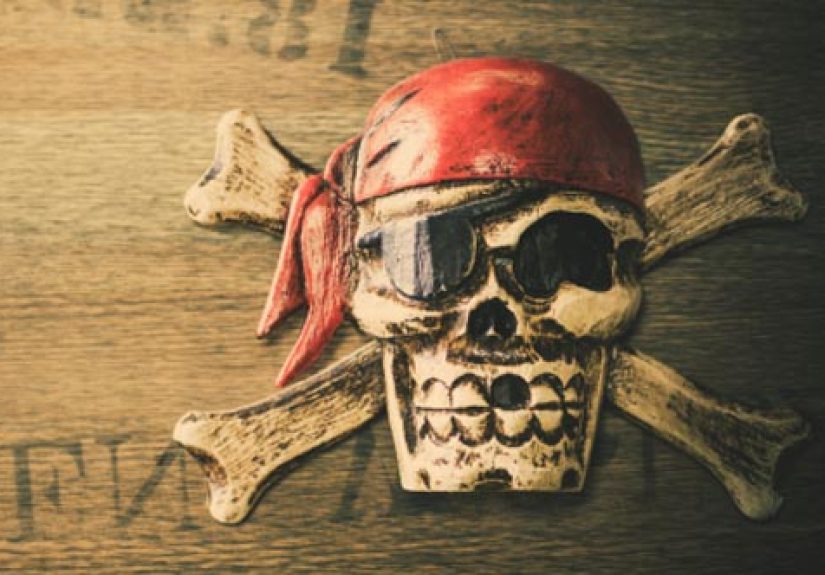
4) Myth: Pirates always flew the skull-and-crossbones flag (the classic Jolly Roger)
Reality: Pirates used a variety of flags and signalsand they didn’t fly “pirate mode” 24/7. In many
cases, crews approached under false colors and only revealed a pirate flag at the moment it was most useful. The
goal was psychological: convince the target to surrender fast.
Even when pirates used “Jolly Roger”-style flags, designs varied. The modern idea of one standard pirate flag
is a simplification. Pirate flags were more like branding experiments: skulls, skeletons, weapons, hourglassesicons
meant to say, “Make this easy, and you might live.”
5) Myth: All pirates were the same thing (pirates, privateers, buccaneers… whatever)
Reality: The labels matter because they describe different legal realities. A key distinction:
privateers operated with government authorizationoften via letters of marque and reprisalto
attack enemy commerce during wartime. In plain English: a privateer was, in effect, a state-approved raider with
paperwork.
That didn’t make privateering “nice,” but it did change how nations treated those crews. Pirates, by contrast,
acted for private ends without authorization. And the line could blur when privateers exceeded their commissions or
kept raiding after a war endedone reason piracy spiked after major conflicts ended and sailors suddenly found
themselves unemployed and armed.
Why this myth sticks
Movies love a single bucket labeled “pirates.” History loves paperwork, jurisdiction, and awkward legal categories
that ruin the vibe.
6) Myth: Pirate captains ruled like absolute tyrants
Reality: Many pirate crews used surprisingly structured internal governanceoften including voting and
checks on the captain’s power. This wasn’t “pirates were secretly wholesome,” but rather “pirates understood that
infighting destroys profits.”
Some crews separated powers between officers (for example, limiting the captain’s day-to-day control) and relied on
written agreementsoften called articles of agreementto set rules for conduct, discipline, and how loot
was divided. Think of it as a rough-and-ready workplace policy manual… written by people holding cutlasses.
7) Myth: Pirates had one universal “Pirate Code” (like a magic constitution everyone followed)
Reality: Pirate rules weren’t universal; they were often ship-specific. The term “Pirate Code” is more
modern than most people realize. What many crews actually used were articles: agreements that spelled out
shares, expectations, compensation for injuries, and penalties for breaking rules.
That “code” idea got polished by popular storytelling. In real life, it functioned less like mystical law and more
like: “Here’s the deal. Here’s your share. Here’s what happens if you steal from the crew.” Not romanticjust
functional.
8) Myth: Pirates were all men (and women on pirate ships were basically just a plot twist)
Reality: Men dominated piracy, but women pirates were realand some became famous enough to be recorded
in historical accounts. Stories of figures like Anne Bonny and Mary Read didn’t appear from nowhere;
they’re part of the documented pirate world that survived in reports and later histories.
And piracy wasn’t confined to one region or one type of crew. Piracy occurred across centuries and oceans, from the
Caribbean to the South China Sea. “Pirate history” is bigger than the Hollywood Caribbean, which is why the “all men,
all the time” myth collapses the moment you zoom out.
9) Myth: Pirates were constantly drunk on rum
Reality: Pirates definitely drankports existed for a reasonbut daily ship life wasn’t nonstop rum
chugging. On long voyages, alcohol was often a practical choice because stored water could become unsafe. Crews
drank what they could get: beer, wine, rum, brandy, and diluted mixtures (like grog-style drinks associated with
naval practice).
And here’s the twist: pirate “discipline” and “drinking” weren’t opposites. Many crews wanted order, because chaos
at sea is expensive. Being too impaired during a fight or storm is a great way to die and a terrible way to make
money.
10) Myth: Pirate life was basically a floating party (just with better hats)
Reality: Pirate life was brutal work under brutal conditions. Ships were cramped, storms were deadly,
injuries were common, and disease was a constant threat. Scurvy, for example, wasn’t a pirate-only problemit was a
broader sailor problem tied to long voyages without fresh produce and reliable vitamin C sources.
Pirates sometimes chose piracy because it could offer better pay or a less punishing hierarchy than merchant ships
or navies. But “better than terrible” is not the same as “fun.” Real pirates lived with relentless risk: capture,
trial, imprisonment, or execution. Many never made it long enough to perfect a signature swagger.
Pirate Myth-Busting: Real-World Experiences You Can Have (About )
If pirate myths are hard to shake, it’s because pirate stories are experiential. You don’t just learn themyou
absorb them from movies, theme parks, video games, Halloween costumes, and that one friend who won’t stop saying
“matey.” The good news is you can replace the myths with better stories by collecting your own pirate-adjacent
experiences (no boarding parties required).
One of the most fun ways to do this is to visit a maritime museum or exhibit that focuses on real artifacts and the
daily logistics of sailing. The moment you see how cramped ship spaces are, how heavy equipment is, and how many
things can go wrong with wind and rigging, the “pirate life is a party” myth starts to evaporate. You begin to
notice practical questions that movies skip: How did they store food? Where did clean water come from? What did
they do when someone got injured? Suddenly, “pirate history” feels less like fantasy and more like survival plus
strategy.
Another surprisingly powerful experience is reading actual historical recordstrial minutes, official notices, or
government discussions of piracy. It’s not glamorous, but it’s revealing. Legal documents show how authorities
categorized maritime crime, why some people were treated as pirates versus privateers, and how seriously governments
took the threat to commerce. Reading even a few pages can reset your brain from “pirates as vibes” to “pirates as a
major economic and political problem.”
You can also do a “pirate myth audit” the next time you watch a pirate movie or show. Keep a quick checklist:
buried treasure, walking the plank, universal pirate accents, one standard flag,
captain-as-dictator. Every time one pops up, pause and ask: “Is this drama, or is this history?”
You’ll start to see storytelling shortcuts everywhere, and the fun part is you don’t have to stop enjoying the
fictionyou just get better at spotting what it’s doing.
If you want a more hands-on angle, look for coastal historic sites, harbor tours, or lectures that cover Atlantic
trade routes, colonial ports, or naval warfare. Even without a pirate-specific focus, you’ll learn the environment
pirates operated in: shipping lanes, wartime economies, and why certain ports became hotspots for raiding and
selling stolen goods. It’s the difference between knowing pirate trivia and understanding pirate incentives.
Finally, try a “myth-busting conversation” at a party (ironically, a very pirate-friendly activity). When someone
drops a classic line like “pirates always buried treasure,” you can respond with a better story: how most loot was
everyday cargo, how burying treasure was risky, and how pirates often spent fast because the job came with a short
life expectancy. You’ll sound smart, ruin nobody’s fun, andbest of allnobody has to walk any planks.
Conclusion: The Real Pirates Were Stranger (and Smarter) Than the Stereotypes
Pirate myths survive because they’re simple, visual, and fun. Real pirates were more complicated: sometimes
strategic, sometimes chaotic, often practical, and always operating in a world where commerce, war, and law crashed
into each other on the open sea. The truth isn’t “pirates were good” or “pirates were misunderstood.” It’s that the
pirate story is bigger than parrots and peg legsand a lot more interesting once you swap fantasy for facts.