Table of Contents >> Show >> Hide
- Why Boil Sweet Potatoes?
- What You’ll Need
- Choosing Sweet Potatoes That Boil Well
- Boiling Sweet Potatoes Whole
- Boiling Sweet Potatoes Cubed or Sliced
- How to Tell If Boiled Sweet Potatoes Are Perfectly Cooked
- How to Keep Boiled Sweet Potatoes From Getting Watery
- Flavor Upgrades That Take 30 Seconds
- What to Make With Boiled Sweet Potatoes
- Nutrition Notes: Why Boiling Is a Smart Move
- Storage and Meal Prep
- Troubleshooting: Common Boiling Problems (and Fixes)
- FAQs About Boiling Sweet Potatoes
- Real-World Kitchen Experiences: What Actually Happens When You Boil Sweet Potatoes
- Conclusion
- SEO Tags
Boiling sweet potatoes doesn’t sound glamorous. No dramatic flames. No sizzling soundtrack. No “chef’s kiss” slow-motion plating.
And yet… boiled sweet potatoes are the quiet overachievers of the kitchen: fast, versatile, meal-prep friendly, and basically begging
to be mashed into something delicious.
This guide will show you how to boil sweet potatoes (whole or cubed) with reliable cook times, simple doneness tests,
and a few pro-level tricks to avoid the two biggest crimes against tubers: watery and mushy.
In a hurry? For cubed sweet potatoes, plan on about 12–15 minutes for 1-inch cubes.
For whole sweet potatoes, expect roughly 35–50 minutes depending on size. Keep reading to nail it every time.
Why Boil Sweet Potatoes?
Boiling is one of the easiest ways to cook sweet potatoes when you want soft, scoopable flesh without turning on the oven.
It’s ideal for:
- Mashed sweet potatoes (savory or sweet)
- Soups, stews, and purées
- Baby food and soft foods
- Meal prep for bowls, salads, and tacos
- Speedy weeknight sides when time is not on your side
What You’ll Need
- Sweet potatoes (any variety)
- A large pot (bigger than you thinksweet potatoes like personal space)
- Cold water
- Salt (optional, but highly recommended for flavor)
- Knife + cutting board (if cubing)
- Vegetable brush (for scrubbing the skin)
- Colander for draining
Choosing Sweet Potatoes That Boil Well
For the best texture and flavor, pick sweet potatoes that are firm, with relatively smooth skin and no major soft spots.
Small blemishes are normal; big bruises, wrinkles, or mushy areas are not.
Size matters for timing. If you’re boiling whole sweet potatoes, try to choose similarly sized ones so they finish cooking at the same time.
If your potatoes are a mixed bag (one tiny, one the size of a small bowling ball), consider cutting the large one in half.
Boiling Sweet Potatoes Whole
Boiling whole sweet potatoes is great when you want easy peeling (the skin often slips off after cooking) and a creamy interior for mashing or puréeing.
Here’s the foolproof method.
Step 1: Scrub, don’t peel (yet)
Rinse sweet potatoes under cool running water and scrub well with a vegetable brush. Since they grow underground, the skin can hold dirt and grit.
You can leave the skin on during boiling to help the sweet potato hold its shape.
Step 2: Start in cold water
Place sweet potatoes in a pot and cover with cold water by about 1 inch. Starting in cold water helps the potato heat more evenly,
so the outside doesn’t turn to mush while the center is still stubbornly firm.
Add 1–2 teaspoons of salt to the water if you want the sweet potatoes to taste like food (instead of a bland orange cloud).
Salt won’t make them “salty,” but it boosts overall flavor.
Step 3: Bring to a boil, then simmer gently
Bring the pot to a boil over high heat. Once boiling, reduce heat to maintain a gentle simmer.
A violent rolling boil can cause the potatoes to bump around, split, and cook unevenly.
Step 4: Cook times for whole sweet potatoes
How long to boil sweet potatoes depends mostly on size. Use these ranges as a starting point:
- Small (5–6 oz): 30–35 minutes
- Medium (7–10 oz): 35–45 minutes
- Large (11+ oz): 45–55 minutes
Step 5: Test for doneness
Sweet potatoes are done when a fork or paring knife slides into the thickest part with little resistance.
If the outside is soft but the center fights back, keep simmering and test again every 5 minutes.
Step 6: Drain and “steam-dry” for better texture
Drain in a colander. For an even better texture (especially if you’re mashing), return the potatoes to the warm pot off heat for 1–2 minutes.
The residual heat helps evaporate excess surface moisture so your mash isn’t watery.
Step 7: Peel (optional) and use
After boiling, the skin often peels easily. If you want to keep the skin on for extra fiber and a slightly more rustic texture, go for itjust scrub well first.
Boiling Sweet Potatoes Cubed or Sliced
Cubed sweet potatoes boil faster and are perfect for quick sides, meal prep, and recipes like sweet potato casserole filling or soups.
The key is consistent sizing.
Step 1: Peel (optional) and cut evenly
Peel if you prefer a smoother final texture, then cut into uniform cubes.
If you leave the peel on, scrub well and keep pieces fairly even so they cook at the same pace.
Step 2: Cover with cold water + salt
Add sweet potato cubes to a pot and cover with cold water by about 1 inch. Salt the water for better flavor.
Step 3: Simmer until fork-tender
Bring to a boil, then reduce to a steady simmer. Stir once or twice so cubes don’t stick together.
Cook times for cubed sweet potatoes
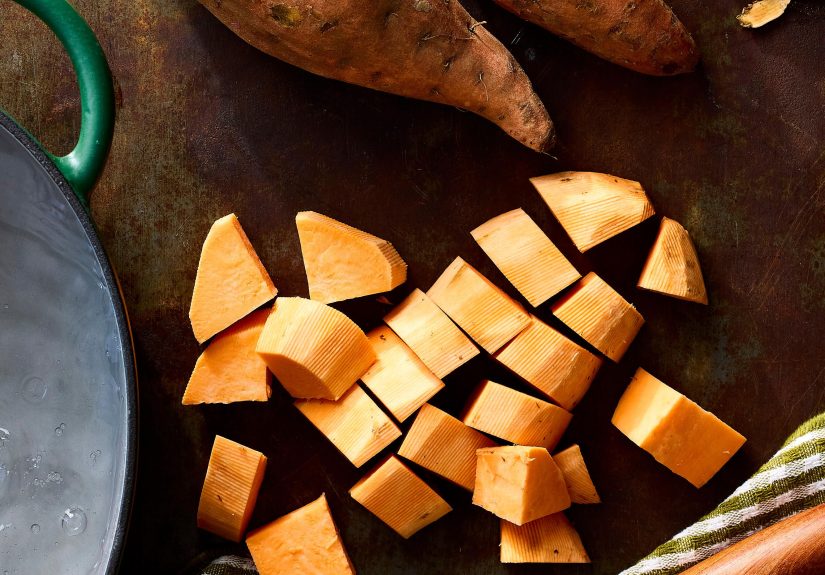
- 1-inch cubes: 12–15 minutes
- 2-inch chunks: 20–25 minutes
- Thin slices (about 1/2 inch): 8–12 minutes
When cubes are done, a fork should pierce them easily and they should break apart with gentle pressure.
Drain and steam-dry in the pot for 1–2 minutes if you want fluffier results.
How to Tell If Boiled Sweet Potatoes Are Perfectly Cooked
Boiled sweet potatoes go from “not quite” to “whoops, baby food” pretty fast. Here’s how to read the signs:
- Fork slides in smoothly: done
- Fork meets resistance in the center: keep simmering
- Edges are breaking apart and the water looks starchy-orange: you’re very close (or slightly over)
If you’re making mash or purée, slightly softer is fine. If you need pieces to hold their shape (salads, bowls), pull them as soon as they’re fork-tender.
How to Keep Boiled Sweet Potatoes From Getting Watery
Watery sweet potatoes aren’t a tragedy, but they are annoying. These steps help you avoid the “soggy side dish” situation:
- Simmer, don’t rage-boil: a gentle simmer cooks more evenly and reduces breakage.
- Don’t overcook: once they’re tender, drain immediately.
- Steam-dry after draining: return to the warm pot for 1–2 minutes to evaporate moisture.
- Cut evenly: uneven pieces guarantee some will be mush before others are done.
Flavor Upgrades That Take 30 Seconds
Boiled sweet potatoes are like a blank notebook: full of potential, mildly boring on their own, and ready for your best ideas.
Try these quick options:
Savory ideas
- Butter or olive oil + salt + black pepper
- Chili powder + lime juice + a pinch of cumin
- Garlic powder + smoked paprika
- Tahini + lemon juice + chopped parsley
- Greek yogurt + chives + a little hot sauce
Sweet ideas (because sometimes you want cozy)
- Cinnamon + a touch of maple syrup
- Brown sugar + butter + pinch of salt (the salt is the secret handshake)
- Honey + orange zest
- Nut butter + a sprinkle of toasted nuts
What to Make With Boiled Sweet Potatoes
Once you have perfectly cooked boiled sweet potatoes, you can use them in a ridiculous number of meals:
- Mashed sweet potatoes: mash with butter, salt, and a splash of milk; or go savory with olive oil and garlic.
- Quick soup shortcut: blend boiled sweet potato with broth, sautéed onion, and spices.
- Taco/burrito bowls: cube, chill, and toss into bowls with beans, greens, salsa, and avocado.
- Breakfast upgrade: warm cubes in a skillet and top with eggs; or stir mash into oatmeal for creaminess.
- Sweet potato casserole base: boil cubed sweet potatoes until very tender, then mash for the filling.
Nutrition Notes: Why Boiling Is a Smart Move
Sweet potatoes are known for their vibrant color and nutrient densityespecially orange-fleshed varieties, which contain beta-carotene
(your body converts it into vitamin A). They also provide fiber, potassium, and other helpful nutrients.
Boiling can be a helpful cooking method if you’re trying to keep things simple and lower in added fats. Some nutrition experts also note
that boiling may affect how quickly carbohydrates are digested compared with some other cooking methodsuseful if you’re thinking about steadier energy.
(If you have specific medical nutrition needs, a registered dietitian can help tailor portions and preparation.)
Storage and Meal Prep
How to store raw sweet potatoes
Raw sweet potatoes do best in a cool, dry, dark place (think pantry or cabinet), not in the refrigerator.
Refrigerating raw sweet potatoes can lead to unpleasant texture changes and harder centers after cooking.
How to store boiled sweet potatoes
Cool cooked sweet potatoes promptly and refrigerate leftovers within about 2 hours (sooner if your kitchen is very warm).
Store in shallow airtight containers for faster cooling and better food safety.
- Fridge: typically best used within 3–4 days
- Freezer: freeze for longer storage; for best quality, use within a few months
Best reheating methods
- Microwave: fastest; add a small splash of water if they seem dry.
- Stovetop: warm in a skillet with a little oil or butter for better texture.
- Oven: reheat at a moderate temperature if you’re warming a large batch.
Troubleshooting: Common Boiling Problems (and Fixes)
“My sweet potatoes are mushy.”
They were overcooked or cut too small. Next time, simmer gently, test early, and drain immediately once tender.
If they’re already mushy, embrace it: mash, purée, or turn them into soup.
“They’re cooked outside but hard in the middle.”
This happens with very thick potatoes or cooking too fast. Start in cold water, simmer steadily, and consider cutting extra-large sweet potatoes in half.
“They taste bland.”
Salt the water (lightly), then season after cooking. A little fat (butter, olive oil, tahini) carries flavor and makes sweet potatoes taste richer.
“My cubes fell apart.”
Boiled too long or boiled too hard. Lower to a simmer and pull them when fork-tenderespecially if you need them to hold shape.
FAQs About Boiling Sweet Potatoes
Should I peel sweet potatoes before boiling?
If boiling whole: you can leave them unpeeled and peel after cooking (often easier). If boiling cubes: peel first if you want a smooth, uniform texture.
If you like the skin, keep itjust scrub thoroughly.
Do I add sweet potatoes to boiling water or cold water?
Cold water is usually the better move. Starting from cold helps the sweet potatoes cook more evenly from edge to center.
Can I boil sweet potatoes ahead of time?
Yes. Boil, drain, cool, and refrigerate. They’re great for meal prep because you can reheat them quickly or use them cold in salads and bowls.
Do purple sweet potatoes boil the same way?
The method is the same, but texture and sweetness can vary by variety. Start checking for doneness a bit early, then adjust as needed.
Real-World Kitchen Experiences: What Actually Happens When You Boil Sweet Potatoes
Let’s talk about the part no recipe card warns you about: what boiling sweet potatoes is like in a real kitchen, with real distractions,
real time pressure, and at least one person asking, “Is it done yet?” every three minutes.
First, the “biggest sweet potato in the bag” problem. You buy a few sweet potatoes thinking they’re all roughly the same size… and then you get home and
realize one of them could double as a doorstop. If you boil that monster whole alongside smaller potatoes, the small ones will be ready way earlier.
In practical terms, you either remove the small potatoes as they finish (totally fine), or you cut the large one in half before boiling so everything
cooks on a similar schedule. This is one of those tiny decisions that makes you feel like a kitchen wizard with zero extra effort.
Next: the “rolling boil chaos” moment. A hard boil sounds productive, like you’re really getting things done. But with sweet potatoesespecially cubes
a rolling boil can bounce pieces around until their edges soften and break off. The water turns cloudy, the corners crumble, and your “nice cubes for a salad”
slowly become “sweet potato confetti.” The fix is surprisingly simple: once the water reaches a boil, dial it back to a gentle simmer.
Your sweet potatoes will cook evenly and hold their shape better.
Then there’s peeling. If you’ve ever tried to peel raw sweet potatoes quickly, you know it can feel like trying to shave a slippery football.
Boiling whole sweet potatoes first can make peeling dramatically easier: the skin often loosens and slides off once the potato cools a bit.
That’s why many home cooks boil whole sweet potatoes when the end goal is mash, purée, or pie fillingless prep stress, fewer bandaids.
Another real-life situation: making food for different preferences. Some people want sweet potatoes savory (salt, pepper, olive oil, maybe a little garlic).
Others want them sweet (cinnamon, honey, maple, marshmallow-adjacent dreams). Boiling is perfect for this because you can cook a plain batch and season each
portion differently. It’s the “choose your own adventure” approach to side dishes, and it keeps peace at the table.
Meal prep is where boiled sweet potatoes quietly shine. A batch made on Sunday can turn into a week of fast add-ons: warm cubes tossed into grain bowls,
mashed into a quick side, blended into soup, or added to breakfast with eggs. The main lesson from day-to-day cooking is that boiled sweet potatoes aren’t just
a single dishthey’re an ingredient you can repurpose. When you treat them like a building block, they save time (and decision-making energy) all week.
Finally, the texture lesson: boiled sweet potatoes can taste “watered down” if you drain them and immediately mash. A quick steam-dry in the warm pot
(just a minute or two after draining) makes a noticeable difference. It’s one of those tiny techniques that feels too simple to matteruntil you try it and
realize your mash is creamier, thicker, and more flavorful. No extra ingredients required. Just better process.
Conclusion
If you can boil water, you can boil sweet potatoesand now you can do it with confidence. Start in cold water, simmer gently, use the fork test,
and don’t skip the quick steam-dry if you want the best texture. Whether you’re making mashed sweet potatoes, prepping cubes for weekday bowls,
or building the base for a holiday casserole, boiling is a simple method that delivers consistently delicious results.