Table of Contents >> Show >> Hide
- What People Mean by “Becoming Boomers”
- The Economic Plot Twist: Millennials Are Finally Building Wealth
- Homeownership, Renovations, and the Rise of “Outdoor Furniture Discourse”
- Parenthood Later, But Parent Energy All the Same
- Work: From “Please Promote Me” to “Please Stop Scheduling This Meeting”
- Tech: From Early Adopters to “Why Does Everything Have a Subscription?”
- Politics: Less “Hope and Change,” More “Property Taxes and School Boards”
- The Eternal Cycle: Every Generation Thinks the Next One Is Broken
- So… Are Millennials Really Becoming Boomers?
- Experiences: The Very Specific Moment You Realize You’ve Become “Millennial Boomer”
There comes a moment in every millennial’s life when you hear yourself say something like,
“We should probably get a good vacuum,” and your soul briefly leaves your body.
Because that sentence? That’s not a sentence a “young person” says. That’s a sentence a person
with a preferred mulch brand says.
The internet has a name for this slow-motion personality plot twist: “Millennials are becoming boomers.”
It’s usually a jokeuntil you realize you’ve started caring about interest rates, back pain, and whether your neighbor’s
fence is “up to code.” So… are millennials actually turning into the generation that raised them? Or is this just what
happens when a cohort hits midlife with a mortgage (or at least a strong opinion about mortgages)?
Let’s unpack what’s real, what’s exaggerated, and what’s simply the universal curse of aging: eventually, everyone becomes
the person who says, “Turn that down,” even if “that” is a podcast about air fryers.
What People Mean by “Becoming Boomers”
Nobody is claiming millennials are literally time-traveling into the post-war era, buying a house for $17, and surviving on
one income plus vibes. “Becoming boomer” is shorthand for something simpler (and funnier): adopting behaviors we stereotypically
associate with older adulthoodespecially the behaviors millennials once swore they’d never touch.
Think: prioritizing stability over spontaneity, treating homeownership like a sport, swapping “going out” for “staying in,”
complaining about “kids these days,” and feeling suspiciously emotional about a well-organized garage. It’s not a moral failing.
It’s mostly biology, economics, and the fact that you can’t eat brunch forever without eventually needing antacids.
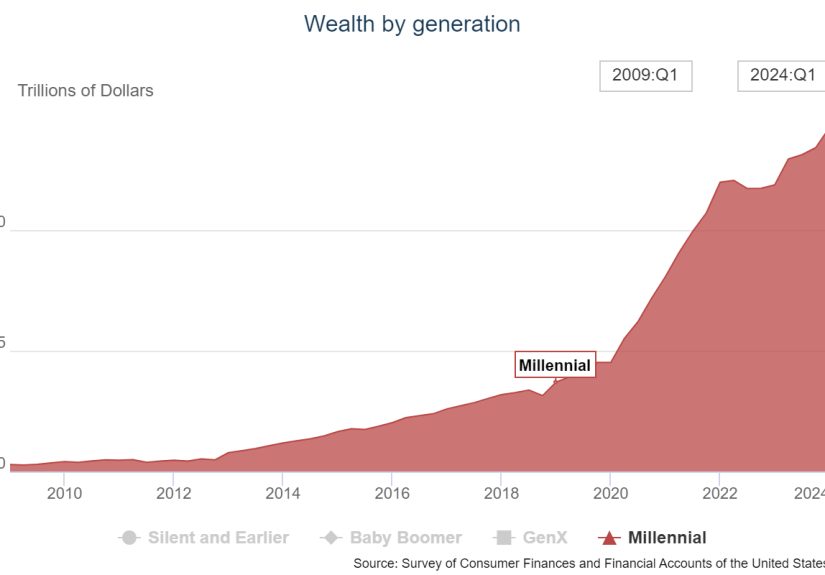
The Economic Plot Twist: Millennials Are Finally Building Wealth
For years, the millennial storyline was basically: graduate into a recession, pay rent forever, collect student debt like Pokémon,
and watch housing prices sprint away like they’re training for the Olympics. And yes, those pressures were (and still are) real.
But the last several years also delivered a surprising shift: many millennials have started building meaningful wealthespecially
older millennials who caught the housing market at the right time or invested steadily.
Home values and stocks did a lot of the lifting
A big chunk of wealth in America is built the unsexy way: owning assets that rise over timehomes, retirement accounts, and boring
investments that don’t come with a neon logo. As millennials age into their late 30s and 40s, more of them are participating in
the same asset-based wealth system that benefited many boomers (though typically later, and with more obstacles).
That’s where the “becoming boomer” vibe really kicks in: once your net worth is tied to a house, you suddenly care deeply about
neighborhood school ratings, property taxes, and whether the city is “doing something about that pothole.” Congratulationsyour
hobbies now include municipal frustration.
Still uneven: not everyone gets the glow-up
Here’s the part memes don’t always capture: millennial wealth gains are not evenly distributed. Plenty of millennials are still
priced out of homeownership, carrying high rent burdens, or recovering from economic shocks. Even among homeowners, the path often
includes delayed milestones, help from family, or moving to more affordable regions.
In other words, some millennials are “becoming boomers” in the sense of building assets and settling downwhile others are still
running the obstacle course version of adulthood. Both realities can be true at the same time, which is also very boomer of us:
nothing says “grown-up” like a complicated truth that doesn’t fit in a tweet.
Homeownership, Renovations, and the Rise of “Outdoor Furniture Discourse”
If you want to watch a millennial transform in real time, hand them a set of house keys. Suddenly they’re comparing mortgage points,
learning what a sump pump is, and saying things like, “We should build equity,” as if equity is a pet they need to feed twice a day.
Homeownership trends have been shifting as younger adults re-enter the market in some areas, even while affordability remains a major barrier.
And once people buy homesoften older starter homes that need workthey renovate. A lot. Remodeling isn’t just a hobby; it’s a coping mechanism.
If life is chaotic, at least your backsplash can be controlled.
This is where millennials start sounding like boomers in the most predictable way: the moment you own a home, you become emotionally invested in
“the condition of the property,” which is polite adult code for “I will fight the weather, pests, and my own budget to keep this place from falling
apart.”
Parenthood Later, But Parent Energy All the Same
Millennials have tended to reach traditional milestones later than prior generationsmarriage, kids, home buying, the whole adult checklist.
But “later” doesn’t mean “never.” It means a lot of millennials are now raising kids while also managing careers, high costs, and the subtle
realization that children are tiny negotiators who do not accept your terms.
The result? Peak boomer behavior, updated for the modern era. Instead of “Back in my day,” it’s “When I was on Vine…”
Instead of printed photos in wallets, it’s 9,000 nearly identical pictures of your toddler on your phone.
Instead of yelling at teenagers on your lawn, it’s texting the neighborhood group chat about “that car that keeps speeding.”
Parenting also pushes millennials into institutional adulthoodschools, pediatric appointments, schedules, snacks, and the endless mental
load of “Do we have enough berries?” (No. The answer is always no.)
Work: From “Please Promote Me” to “Please Stop Scheduling This Meeting”
Millennials are no longer the “young disruptors” of the workplace. Many are now managers, team leads, and the people who have to deliver the
awkward phrase: “Let’s circle back.” That shift alone can make millennials feel like they’ve crossed into boomer territorybecause boomers are
often stereotyped as the managerial class.
And when you become the manager, you inherit a new set of problems:
onboarding Gen Z talent, adapting to newer workplace norms, and realizing that you are now responsible for “culture.” (No pressurejust the emotional
weather system of your entire team.)
Some of what gets framed as “millennials becoming boomers” at work is simply the lifecycle effect: the older you get, the more your incentives
shift toward stability, benefits, and not being pinged at 10:47 p.m. on a Tuesday by an app that didn’t exist last year.
Tech: From Early Adopters to “Why Does Everything Have a Subscription?”
Millennials grew up alongside the modern internet. They remember dial-up, AIM away messages, and the magical era when you could buy software once
and it didn’t try to charge you monthly for the privilege of existing.
As a group, millennials still use a lot of techbut their relationship with it is changing. Many are less excited by novelty and more focused on
utility: privacy settings, screen time, and which apps are actually worth the hassle. That shift can look boomer-ish from the outside, but it’s also
the natural result of living long enough to see every platform go through the same cycle: fun → crowded → ads → chaos → “I miss the old version.”
Social media is a great example. As millennials age, their usage patterns increasingly resemble “middle age” patterns more than “teen” patterns:
less trend-chasing, more community, more marketplace deals, more “Is this product actually good?” reviews. If you’ve ever searched
“best ergonomic office chair” unironically, welcome to your new identity.
Politics: Less “Hope and Change,” More “Property Taxes and School Boards”
Political behavior also evolves with life stage. People who are paying mortgages, raising kids, or caring for aging relatives tend to become more
attentive to local issuesschools, housing policy, healthcare access, cost of living. That can read as “boomerification,” especially when millennials
start showing up to town meetings with a spreadsheet and a simmering rage about zoning.
At the same time, millennials haven’t simply copied boomer politics. Many still hold distinct views shaped by the events they lived through:
the Great Recession, rising education costs, pandemic disruptions, and the housing affordability squeeze. The result is a mixed picture: millennials
may adopt boomer-like priorities (stability, institutions, long-term planning) without adopting the exact same ideological profile.
The Eternal Cycle: Every Generation Thinks the Next One Is Broken
Let’s address the most iconic boomer stereotype of all: “Kids these days have it too easy,” or “Kids these days don’t know how to work.”
Here’s the plot twist: psychology research suggests people across eras consistently believe the younger generation is decliningeven when objective
measures don’t support the panic.
Translation: if you catch yourself thinking Gen Z is “different,” you’re not necessarily observing a social collapse. You’re experiencing a
time-honored human tradition called aging. The brain compares today’s teens to an idealized version of the past (often starring you),
and suddenly you’re one rant away from saying, “In my day, we made eye contact.”
So… Are Millennials Really Becoming Boomers?
In the most literal sense, no. Boomers are defined by a unique historical contextpost-war expansion, different labor markets, different housing
conditions, different expectations about institutions. Millennials are aging under a very different set of economic rules and cultural realities.
But in the practical sense? Yes, millennials are becoming more like “typical older adults” because they are, in fact, becoming older adults.
They’re buying homes when they can, building wealth when possible, raising families (or choosing not to), moving into leadership roles, and developing
strong feelings about the thermostat.
The funniest part is that this isn’t a millennial failure or a boomer victory. It’s the lifecycle. Every generation grows into some version of the
adult they used to roast. The only thing that changes is the soundtrackand the fact that we now complain on group chats instead of front porches.
Experiences: The Very Specific Moment You Realize You’ve Become “Millennial Boomer”
To really understand the “millennials are becoming boomers” phenomenon, you don’t need a chart. You need a Tuesday. Because this transformation
usually happens in tiny, absurd experienceslike emotional confettiuntil one day you look up and realize you own a lint roller in bulk.
1) The Neighborhood Awakening
It starts innocently: you move somewhere new and tell yourself you’ll be “chill.” Then you catch yourself walking the block and mentally ranking
the lawns. You learn which neighbor has the loudest leaf blower. You develop a personal rivalry with the person who never brings their trash bin
back in. One day you hear a car blasting music at 11 p.m. and you whisper, “Unbelievable,” like you’re auditioning for the role of Town Elder #2.
2) The Home Improvement Spiral
You buy a plant. Then two plants. Then you’re watching a 17-minute video comparing grout options like it’s the season finale of a prestige drama.
You begin using phrases like “return on investment” while holding a paint swatch. You don’t even like painting. You just like the idea of a wall
that looks “finished.” Suddenly your weekends are a blur of hardware store runs, and you feel a dangerous level of pride about owning a drill.
3) The Social Life Swap
Younger you would go out on a Friday night. Current you goes out on a Friday night and spends the whole time thinking about parking. You still like
your friends. You just prefer them… indoors. With snacks. And a reasonable start time. There’s a specific kind of joy in canceling plans and realizing
you now have enough time to cook something “healthy” and watch a show you’ve already seen. That’s not giving up. That’s peace.
4) The Tech Skepticism Era
You used to download apps for fun. Now every new app feels like a personal attack. “Why do I need an account?” you ask, as if the app can hear you.
You start saying things like, “I don’t trust this,” because you’ve lived through enough platform scandals to know that the free thing is never
actually free. You still use technology constantlyyou’re just tired of being beta-tested by your phone.
5) The Health and Comfort Priorities
The biggest tell? You start paying for comfort on purpose. Not luxurycomfort. Supportive shoes. A decent mattress. A chair that doesn’t destroy your
spine. You stretch “just in case.” You say “hydration is important” with a straight face. And you become the person who brings a jacket everywhere
because “restaurants are cold,” which is the adult version of carrying a security blanket.
These experiences aren’t proof that millennials are turning into boomers in a historical sense. They’re proof that millennials are entering the stage
of life where you build routines, protect your energy, and sometimes choose practicality over vibes. If that sounds boomer-ish, it’s because adulthood
has recurring themesjust with updated slang and better memes.
So if you’ve recently found yourself defending a “sensible purchase,” arguing about interest rates, or getting irrationally excited about a new set
of storage bins, don’t panic. You’re not becoming your parents. You’re becoming yourself, just with a stronger opinion about kitchen lighting.