Table of Contents >> Show >> Hide
- Meet Anthony Holden: The Dad Behind the Panels
- Why Parenting Comics Feel So Real (and Weirdly Healing)
- Inside the 33 Comics: Themes of Chaos and Joy
- The Joys Hiding Inside the Mayhem
- Parenting Humor as Emotional Survival Gear
- Real-Life Reflections: When Comics Feel Like Home (Extra )
- Conclusion: Laughing Our Way Through Parenthood
If you’ve ever stepped on a rogue LEGO at 2 a.m. and thought, “I did not sign up for this,” you already understand the world of Anthony Holden’s parenting comics.
His work, lovingly showcased in Bored Panda’s collection “The Chaos And Joys Of Parenting: 33 Lighthearted Comics Illustrated By Anthony Holden,” turns everyday family life into a series of sweet, chaotic, and extremely relatable snapshots of modern parenting.
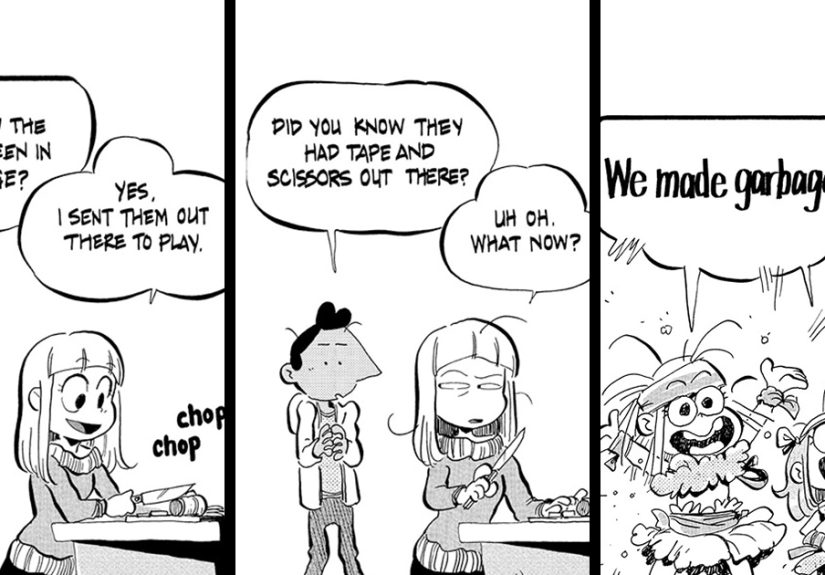
These lighthearted comics follow a dad, his partner, and their kids through all the tiny disasters that make up family life: toothpaste in the hair, glitter explosions, weird bedtime negotiations, and existential questions shouted from the back seat.
Each panel feels like a gentle reminder that while raising kids can be exhausting, it’s also hilarious and full of unexpected joy.
Meet Anthony Holden: The Dad Behind the Panels
Before we dive into the chaos, it helps to know the storyteller. Anthony Holden is a professional artist, a dad, and a self-described “regular person” whose biggest creative inspiration is his own family.
He’s shared that he started drawing these comics to capture the short, funny, blink-and-you-miss-them moments of childhood so he’d remember them later, when the kids were older and the details had started to blur.
In his “Precious Rascals” series, the kids aren’t idealized versions of perfectionthey’re goofy, loud, curious, and occasionally unhinged in the most kid-like way possible.
They experiment with how many shirts they can wear at once, treat shampoo like a science project, and blurt out brutally honest comments about their parents’ brains, bodies, and behavior.
The parents, meanwhile, are loving but obviously human: they get tired, confused, mildly horrified, and still somehow manage to show up for their kids again and again.
This combination of cartoon exaggeration and emotional truth is part of what makes Holden’s work stand out in the world of parenting comics.
Other popular artistslike Yehuda and Maya Devir with their couple-and-baby comics, Adrienne Hedger’s wry family panels, or Brian Gordon’s “Fowl Language” stripsalso focus on the chaos of raising children, but Holden’s soft line work, expressive faces, and gentle pacing give his comics a warm, storybook flavor.
Why Parenting Comics Feel So Real (and Weirdly Healing)
The main keyword here isn’t just “parenting comics”it’s relatable.
Parents see themselves and their kids in these panels, even when the specific situation is different.
Maybe your child didn’t trap themselves under six shirts, but you definitely remember some ill-advised experiment that ended in tears, stains, or both.
They Turn Everyday Chaos Into Story
In real time, parenting chaos feels like pure stress. You’re cleaning up spilled milk, answering a hundred questions, hunting for a missing shoe, and trying to get everyone out the door before someone remembers their science project was due yesterday.
In comic form, that same chaos becomes a narrative: setup, disaster, punchline, tiny life lesson.
When Holden shows a kid panicking over a mess that mysteriously “disappeared” or a parent discovering toothpaste smeared through hair, he frames the moment as something you’ll laugh about latermaybe not at 7:32 a.m. on a school day, but eventually.
Comics help parents step back and realize, “Oh, this is just one small, ridiculous scene in a much bigger story.”
They Validate the Exhaustion and the Love
One of the quiet joys of these 33 comics is how they never pretend parenting is easy.
The adults in Holden’s panels look confused, frazzled, or emotionally blindsided on a regular basis.
They’re not flawless role modelsthey’re works in progress who happen to be raising kids while still figuring out their own lives.
At the same time, the comics are soaked in affection.
Even when a kid says something unintentionally savage (“Is my brain going to get weird?”) or turns the house into a disaster zone, the underlying message is that these children are deeply loved.
That combinationhonest frustration plus obvious loveis exactly how many parents describe their daily experience.
They Show Kids as Full, Funny People
Another reason these lighthearted comics resonate is the way the children are drawn as fully realized little humans.
They’re not props in their parents’ story; they are the story.
Holden’s kids make strange fashion decisions, misinterpret adult metaphors, test boundaries, and ask questions that would stump a philosopher.
That focus mirrors a wider trend in parenting comics and humor: rather than mocking kids, the joke often lands on the absurdity of life itself.
Parents, not children, usually end up looking like the ones who are confused, outsmarted, or out of their depthand that’s exactly how many adults feel in real life.
Inside the 33 Comics: Themes of Chaos and Joy
While each comic stands on its own, there are clear themes running through the collection.
You can practically feel the rhythm of a real household pulsing under the panels: mornings, mealtimes, bedtime, school, sibling rivalry, and those random moments when a child decides to create a crisis out of absolutely nothing.
1. The Messes That Turn Into Memories
Several of the featured comics revolve around mess.
We see kids drenched in craft supplies, hair disasters that involve shampoo and toothpaste, and chaotic clothing experiments that require a parental rescue mission.
In reality, those moments mean extra laundry, extra cleaning, and maybe extra coffee.
But in the panel, you see something else: a memory.
Years later, nobody will remember which Tuesday you did the dishes, but everyone will remember the week one of the kids accidentally redecorated the bathroom in glitter or tested gravity with a cereal box.
By freezing these scenes in comic form, Holden shows how chaos slowly transforms into cherished family lore.
2. The Strange Logic of Children
Kids in these comics operate on their own internal logic, and it is both hilarious and surprisingly consistent.
They ask for help with “something wide” so they can finish a sentence, misunderstand grown-up idioms, and come up with science experiments that feel like they were designed by a well-meaning but slightly unhinged engineer.
For parents reading along, this is a comforting reminder: your kids aren’t weird; they’re just kids.
Young brains are still wiring themselves together, and comics like these turn that development into comedy gold instead of pure frustration.
3. Parents as Big Kids in Disguise
One quietly brilliant aspect of Holden’s style is the way the parents often mirror their kids.
The dad bursts into dramatic songs about beans, gets way too excited about small things, and occasionally seems just as baffled by life as his children are.
The mom clearly loves her family, but her side-eye game is strong enough to power the national grid.
This playful portrayal underlines a universal truth: adulthood doesn’t magically turn you into a calm, all-knowing authority figure.
Many of us are just tall children with bills, trying to raise shorter children with snack demands.
These comics let parents laugh at that reality instead of feeling guilty about it.
The Joys Hiding Inside the Mayhem
It’s easy to focus on the chaos in parentingendless tasks, sleepless nights, the constant sense that you’re forgetting something important.
What makes “The Chaos And Joys Of Parenting” stand out is the way joy sneaks into almost every frame, even when the situation looks objectively disastrous.
Sometimes the joy is literal: a shared laugh, a silly dance, a moment when siblings team up instead of fighting.
Other times, it’s smaller and quieter: a child’s earnest attempt at a compliment, a kid’s wholehearted curiosity, or a parent’s expression softening as they realize they’ve just witnessed a once-in-a-childhood moment.
These tiny joys are easy to miss in real life.
You might only notice them in hindsightor in a comic, where the artist has paused time and placed a spotlight on that exact second when annoyance turned into affection.
Parenting Humor as Emotional Survival Gear
Beyond entertainment, comics like these function as emotional survival gear for parents.
Research on stress and humor consistently shows that laughter can help people cope with difficult situations, and raising kids definitely qualifies.
Parenting humor normalizes the mess, the doubt, and the feeling that your life has been hijacked by tiny roommates who never pay rent.
When parents scroll through a Bored Panda gallery of lighthearted comics, they’re not just killing timethey’re connecting with a community.
Every “This is so us” comment, every shared panel in a group chat, is a reminder that other people’s kids also say absurd things at bedtime and other parents also lose their patience, apologize, and try again.
That sense of being part of a larger story can make a real difference on hard days.
Parenting might still be chaotic, but it feels less lonely when you can look at a comic and think, “Okay, it’s not just me. We’re all winging it.”
Real-Life Reflections: When Comics Feel Like Home (Extra )
The magic of “The Chaos And Joys Of Parenting: 33 Lighthearted Comics Illustrated By Anthony Holden” isn’t just in the drawing style or the punchlinesit’s in how eerily familiar the situations feel once you’ve lived them.
Many parents report something like a double-take reaction: they see a panel and instantly remember a night when their own child tried to brush their hair with a fork, “decorate” the walls with markers, or ask a question so profound it stopped all adult conversation in the room.
Think about bedtime, for example.
In theory, it’s a calm nightly routine.
In reality, it’s a multi-phase operation involving water refills, missing stuffed animals, and late-breaking news that there is a diorama due tomorrow.
Holden’s comics often allude to that atmospherekids sprinting through the house, half-dressed, inventing new reasons why sleep is “not possible right now.”
For a parent, seeing that mess translated into a playful four-panel strip can be incredibly soothing.
It says, “Yes, this is wild. And yes, you’re still doing okay.”
The same thing happens with school life.
One comic might show kids sitting through a talk on internet safety, rolling their eyes at information they claim to already know.
Another might capture the weirdness of online assignments or the frustration of digital platforms that never quite work the way they’re supposed to.
If you’ve ever tried to troubleshoot a homework login while dinner burns and a sibling stages a protest over vegetables, you’ll recognize that energy immediately.
Even the “small talk” moments in these comics feel lived-in.
A child casually asks if their brain will get weirder as they grow up, and the adults struggle to answer honestly without starting an existential crisis at the dinner table.
That kind of moment happens in real homes more often than anyone admits.
Kids have a way of asking questions that adults have carefully avoided, and comics like Holden’s capture the hilarity and nervousness of trying to respond in real time.
Parents who share these comics often say they serve as conversation starters.
Someone will post a panel with a caption like, “Tag the parent who would sing a bean song,” and suddenly there’s a thread full of people telling their own ridiculous stories.
One person might describe the time their child tried to wear every pair of underwear at once; another remembers a sibling experiment with dish soap and the washing machine that ended with a kitchen full of bubbles.
The original comic gives everyone permission to talk about the chaos without embarrassment.
These strips also resonate strongly with caregivers who worry they’re “messing up” their kids.
In an online world full of polished parenting advice and aspirational family photos, it’s easy to feel like everyone else’s home is tidy, calm, and bathed in natural light.
Comics push back against that illusion.
Holden’s panels are full of crooked ponytails, cluttered counters, and expressions that say, “I’m doing my best, okay?”
That visual honesty reminds parents that a good childhood doesn’t require perfect control; it just requires love, safety, and a sense of humor.
Another powerful experience tied to these comics is nostalgia.
Grandparents and grown kids often react to them with a mix of laughter and bittersweet recognition.
A grandparent might see a frantic parent character and remember being in that stage decades ago; an adult child might notice how much the cartoon parents look like their own did when they were young.
The comics become a bridge between generations, proving that while technology and trends change, the core chaos and joys of parenting stay surprisingly consistent.
Finally, there’s the creative spark these works can ignite.
Many parents who follow artists like Anthony Holden end up documenting their own families in small waysmaybe not with full comic strips, but with quick doodles, funny notes, or smartphone photos captioned with the day’s best kid quote.
Capturing these moments, even imperfectly, helps people slow down and notice what’s good amid the noise.
That’s one of the central experiences these comics offer: they train you to look for tiny stories in the middle of dishes, laundry, and homework, and to recognize that your messy, loud, imperfect family life is actually something pretty beautiful.
Conclusion: Laughing Our Way Through Parenthood
“The Chaos And Joys Of Parenting: 33 Lighthearted Comics Illustrated By Anthony Holden” is more than just a funny galleryit’s a comforting mirror.
It reflects back the sleepless nights, sticky tables, awkward conversations, and unexpected tenderness that define real parenting.
These comics show that even when your home feels like a circus and your patience is hanging by a thread, there are moments of genuine joy hiding in the mess.
By turning chaotic scenes into lighthearted storytelling, Holden gives parents a way to laugh, breathe, and remember that they’re not alone on this rollercoaster.
Parenting will never be neat, predictable, or completely under control.
But thanks to artists who capture its chaos and joys, we can at least enjoy a good laugh on the way to bedtime, school drop-off, or whatever wild adventure our kids dream up next.