Table of Contents >> Show >> Hide
- Before You Start: What Homemade Dishwasher Soap Can (and Can’t) Do
- Ingredient Cheat Sheet (a.k.a. “What Am I Actually Mixing?”)
- Safety Notes (Quick, Important, and Not Here to Ruin Your Vibe)
- Way #1: The Everyday Borax-Free Powder (Simple + Reliable)
- Way #2: The Oxygen-Boost Power Powder (For Grease, Grime, and Regret)
- Way #3: The Borax-Boost Powder (Optional, With Easy Substitutes)
- Way #4: Pressed Dishwasher Tablets (Because Scoops Are Overrated)
- How to Get Better Results (Without Turning This Into a Full-Time Hobby)
- Troubleshooting: Cloudy Glasses, White Film, or “Why Is Everything… Beige?”
- Storage Tips (So Your Powder Doesn’t Become One Big Dishwasher Brick)
- Bonus: of Real-World “What It Feels Like” When You Switch to Homemade Dishwasher Soap
- Conclusion
Confession time: your dishwasher doesn’t actually want “soap.” It wants a low-suds, high-alkaline detergent that can break down grease, lift food particles, and play nice with hard waterwithout turning your kitchen into a bubble-themed slip-and-slide. That’s why appliance makers (and cleaning industry folks) warn against swapping in hand dish soap or random pantry substitutes.
Still, plenty of households experiment with homemade dishwasher detergent for cost, ingredient control, or “I refuse to buy another plastic tub” reasons. This article gives you four practical DIY approacheswith real talk about what they do well, where they struggle, and how to tweak for hard water and cloudy glasses.
Before You Start: What Homemade Dishwasher Soap Can (and Can’t) Do
The good
- Budget-friendly: bulk powders often cost less per load than pods.
- Customizable: you can go fragrance-free, borax-free, or add an oxygen booster for grime.
- Less packaging: a jar beats a mountain of plastic, emotionally and literally.
The not-so-magical
- Commercial detergents usually clean better because they often include enzymes (for proteins and starches), surfactants, and anti-spotting systems you’re not easily replicating at home.
- Hard water is the boss fight. Minerals (calcium/magnesium) can cause white film and spots if your formula doesn’t bind them well.
- Warranties and manuals: some manufacturers recommend sticking to products labeled for automatic dishwashers. DIY is a “use your judgment” zone.
If you try DIY and your dishes come out looking like they’ve been lightly dusted with powdered donuts, don’t panicwe’ll troubleshoot later.
Ingredient Cheat Sheet (a.k.a. “What Am I Actually Mixing?”)
Washing soda (sodium carbonate)
This is your alkaline heavy lifter. It helps cut grease and can help “soften” hard water by tying up minerals. It’s stronger than baking soda, so a little goes a longer way.
Baking soda (sodium bicarbonate)
Milder alkali and deodorizer. In dishwasher recipes, it often plays a supporting role: gentle cleaning + buffering.
Citric acid
The hard-water helper. Citric acid can latch onto mineral deposits and reduce spotting/filming when used wisely. It’s also commonly used for dishwasher descaling/cleaning cycles.
Salt (optional)
In DIY formulas, salt can help with hard-water performance by influencing mineral behavior. If your machine has a built-in softener (common in some regions/models), follow your manual and use dishwasher salt as directed.
Oxygen bleach (sodium percarbonate)
Often sold as “oxygen bleach” powder. In water, it breaks down into hydrogen peroxide + sodium carbonate, helping with stains and grimeespecially tea, coffee, and baked-on food.
Borax (optional, controversial)
Some DIY recipes use borax as a “builder” for cleaning performance. It can be irritating and is not something you want inhaled or ingestedso it’s included here as an optional method with extra safety notes and easy substitutes.
Safety Notes (Quick, Important, and Not Here to Ruin Your Vibe)
- Label your jar. “Mystery white powder” is not a great household tradition.
- Keep powders away from kids and pets. Also away from snack shelves, because accidents love comedy.
- Avoid inhaling dust. Mix gently; consider a mask if you’re sensitive.
- Protect your eyes. Powders can be irritatingwash hands after handling.
- Never use hand dish soap in the dishwasher. Suds can overflow and cause a mess (and sometimes errors or leaks).
- Don’t mix cleaning chemicals “just because.” In particular, don’t mix acids (like vinegar) with bleach products.
Way #1: The Everyday Borax-Free Powder (Simple + Reliable)
This is the “weekday hoodie” of homemade dishwasher detergent: not fancy, usually works, and doesn’t require a chemistry degree or a treasure hunt at four stores.
Ingredients
- 1 cup washing soda
- 1 cup baking soda
- 1/2 cup citric acid
- 1/2 cup kosher salt (optional, helpful in hard water)
How to make it
- Add all powders to a bowl.
- Whisk gently (slow stirring = less dust).
- Pour into an airtight jar with a scoop.
How to use it
- Normal load: 1 tablespoon in the detergent cup.
- Dirty load or hard water: 1 tablespoon in the cup + an extra 1/2 tablespoon in the pre-wash area (or sprinkled in the tub).
Best for
- Daily dishes, light-to-moderate soil
- Homes that want a borax-free dishwasher detergent
Watch-outs
If your water is very hard, you may still need a rinse aid or a citric-acid “booster” approach (see troubleshooting).
Way #2: The Oxygen-Boost Power Powder (For Grease, Grime, and Regret)
When your casserole dish looks like it survived a medieval siege, oxygen bleach is your helpful sidekick.
Ingredients
- 2 cups washing soda
- 1 cup oxygen bleach (sodium percarbonate)
- 1/2 cup citric acid
- 1/2 cup salt (optional)
How to make it
- Mix powders gently in a bowl.
- Store in an airtight container in a cool, dry spot (moisture is the enemy here).
How to use it
- Normal load: 1 tablespoon in the cup.
- Heavily soiled: 1 tablespoon in the cup + 1/2 tablespoon in pre-wash.
Best for
- Greasy pans, baked-on cheese, coffee/tea stains
- Households that want better cleaning without borax
Watch-outs
Oxygen bleach powders can be irritating and should be stored carefully. Keep it dry, tightly sealed, and away from curious hands and paws.
Way #3: The Borax-Boost Powder (Optional, With Easy Substitutes)
This version shows up in lots of DIY circles. Some people like it for performance in hard water. Others skip it due to safety concerns around borate products. Both choices are validwhat matters is handling it responsibly if you use it.
Ingredients
- 1 cup washing soda
- 1 cup borax
- 1/2 cup citric acid
- 1/2 cup salt (optional)
How to make it
- Combine powders slowly to reduce airborne dust.
- Store in a clearly labeled airtight jar.
How to use it
- 1 tablespoon in the detergent cup (start low; increase slightly only if needed).
If you want the “boost” without borax
Swap the 1 cup borax with either:
- 1 cup oxygen bleach (sodium percarbonate) or
- 1/2 cup oxygen bleach + 1/2 cup washing soda
Best for
- People who have tried borax-free powders and still get film
- Hard-water homes willing to follow strict storage and safety habits
Watch-outs
Borax/borate products can irritate eyes/skin and are not for ingestiontreat them like the “garage shelf” product they are, not a kitchen staple.
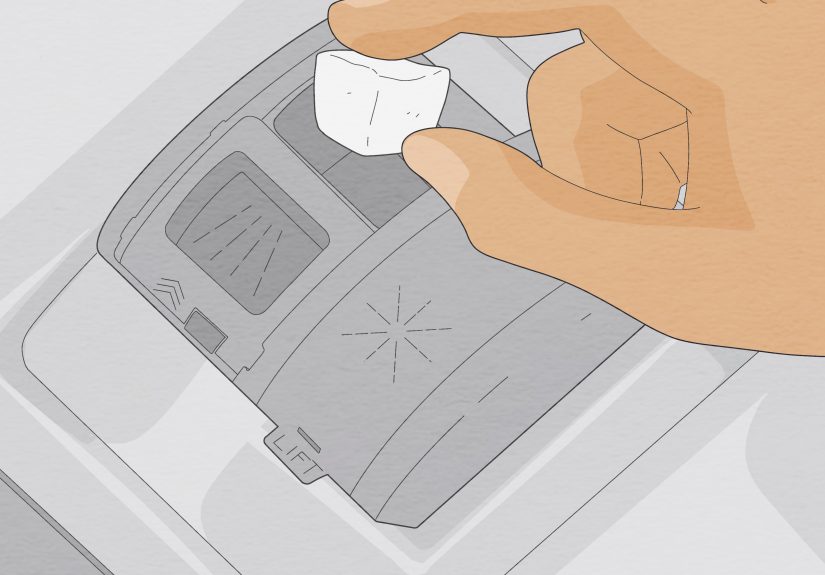
Way #4: Pressed Dishwasher Tablets (Because Scoops Are Overrated)
If you love the convenience of pods but want DIY control, pressed tablets are the closest home version. They’re not as sleek as factory pods (no dissolving film), but they’re satisfyingly solidlike tiny cleaning hockey pucks.
Choose your base
Use either:
- Base A (everyday): the Way #1 powder mix, or
- Base B (power): the Way #2 powder mix
What you’ll need
- 1–2 cups of your chosen powder base
- A silicone ice cube tray or small mold
- A spray bottle with water (or a teaspoon used carefully)
- Optional: a few drops of lemon essential oil (skip if you’re sensitive; it’s not required)
How to make tablets
- Place the powder base in a bowl.
- If using essential oil, stir it in first.
- Lightly mist the mixture with waterjust enough so it barely holds together when squeezed. Think “sandcastle,” not “cookie dough.”
- Pack the damp mix firmly into molds.
- Let dry 24–48 hours in a low-humidity spot.
- Pop out and store airtight (again: moisture is the villain).
How to use tablets
- Use 1 tablet per load. If your tabs are small, use 2 for heavy loads.
- If you have a pre-wash compartment, you can add a tiny pinch of powder there for extra punch.
Watch-outs
DIY tablets can crumble if they’re too dry or too lightly packed, and they can fuse into one mega-tablet if they get humid. Airtight storage is not optionalit’s the whole game.
How to Get Better Results (Without Turning This Into a Full-Time Hobby)
1) Make sure your water is hot enough
For most dishwashers, incoming water around 120°F helps detergent dissolve and activate. If your water is cooler, you may see more film and leftover grease. Tip: run the hot water at the sink until it’s hot before starting the dishwasher.
2) Use rinse aid strategically (especially with DIY detergent)
Rinse aid helps water sheet off dishes, improving drying and reducing spots. If you don’t want commercial rinse aid, some people use vinegarbut manufacturers and consumer experts often caution that frequent vinegar use can be hard on rubber parts. A safer compromise: use commercial rinse aid regularly and reserve vinegar/citric-acid cleaning cycles for occasional deep cleaning.
3) Scrape, don’t pre-rinse like you’re power-washing a driveway
Big chunks should go in the trash, but dishes don’t need to be squeaky-clean going in. Over-rinsing can reduce the food soil enzymes (in commercial detergents) would otherwise “grab,” and it wastes water.
4) Clean the filter and spray arms
Even the best detergent loses to a clogged filter. If your dishwasher has a removable filter, rinse it and brush off gunk regularly.
Troubleshooting: Cloudy Glasses, White Film, or “Why Is Everything… Beige?”
Problem: White residue or cloudy film
Likely causes: hard water minerals, too much detergent, or water that’s not hot enough.
Fixes:
- Reduce detergent by 1/2 tablespoon for a week and compare results.
- Add a rinse aid (recommended for hard water).
- Try Way #2 (oxygen boost) if grease is the issue, or increase citric acid slightly (by 1–2 tablespoons per batch).
- Run a manufacturer-style citric acid cleaning cycle occasionally to remove mineral buildup.
Problem: Dishes feel greasy or smell “not clean”
Likely causes: under-dosing, cool water, overloaded racks blocking spray, or a dirty filter.
Fixes:
- Switch from Way #1 to Way #2.
- Use a bit in pre-wash (or sprinkle a small amount in the tub).
- Verify hot water and avoid overloading.
- Clean the filter and check spray arms for clogs.
Problem: Etched glass (permanent cloudiness)
Reality check: etching is not residueit’s microscopic damage that can come from very hot water, overly aggressive detergents, or soft water combined with high alkalinity. If it’s etching, no amount of tinkering will “wash it off.”
Fix: reduce alkalinity (less washing soda), use gentler cycles, and avoid super-high heat for delicate glassware.
Storage Tips (So Your Powder Doesn’t Become One Big Dishwasher Brick)
- Use an airtight container (a clamp jar, gasket container, or sealed canister).
- Keep it dryaway from steam zones like the stove and dishwasher vent.
- Use a dry scoop; don’t introduce moisture unless you’re intentionally making tablets.
- If clumps happen, break them up with a fork. If it becomes a rock, congratulations: you’ve invented a paperweight.
Bonus: of Real-World “What It Feels Like” When You Switch to Homemade Dishwasher Soap
The first time you try homemade dishwasher detergent, it’s normal to hover like a nervous contestant on a cooking show. You’ll start the cycle, listen for suspicious bubbling, and wonder if your dishwasher is quietly judging your life choices. (It’s not. It’s just… mechanical.)
In the first week, the most common “experience” isn’t dramait’s fine-tuning. Many people start with a full tablespoon and think, “More detergent = more clean,” then discover hard water responds by leaving a chalky film, like your glasses attended a powder party without you. The fix is almost always boring: dose a little lower, add rinse aid, or bump up the citric acid slightly in your batch. DIY detergent is less “set it and forget it” and more “set it and adjust it once.”
Hard-water homes often notice the biggest shift when they treat DIY detergent like a two-part system: the cleaning powder handles grease and food, while a rinse aid (or occasional citric-acid maintenance cycle) handles minerals. Once you split those jobs, the results get noticeably betterespecially on glassware. You might still see occasional spots on plastic containers (plastic loves clinging to water like it’s emotionally attached), but that’s also true with many commercial detergents. Opening the dishwasher door a crack after the cycle can help drying, and it costs exactly $0.
Another very real experience: storage matters more than you think. The first time someone leaves their DIY powder near the dishwasher vent, they learn what humidity can do. The mix goes from “scoopable” to “prehistoric sediment layer” fast. The solution is wonderfully simple: a tighter container and a drier shelf. Some people even keep a small “working jar” under the sink and store the bulk mix in a pantry or closet to avoid kitchen steam.
Then there’s the satisfaction factor. Pressed tablets can feel ridiculously rewardinglike you made tiny cleaning coins. They’re not always perfect (some crumble, some fuse together if the air gets damp), but when you drop a DIY tablet into the dispenser and it works, you’ll feel like you unlocked a minor domestic superpower.
Finally, there’s the “Sunday reset” moment: you realize your dishwasher runs better when you clean the filter and run an occasional cleaning cycle. DIY detergent doesn’t force that habit, but it highlights it. When your machine is clean, your DIY formula performs better. When your machine is funky, everything struggles. In other words: homemade dishwasher soap doesn’t just clean dishesit also teaches you that dishwashers are like houseplants. Ignore them long enough and they’ll let you know.
Conclusion
Homemade dishwasher soap can be a smart, low-waste optionespecially if you pick a formula that matches your water hardness and your “how dirty are these dishes, really?” reality. Start with the borax-free everyday powder, level up to oxygen boost for tough loads, and consider tablets if convenience is your love language. Keep your water hot, your filter clean, and your expectations realisticand you’ll get plenty of sparkling wins without turning your kitchen into a detergent laboratory.