Table of Contents >> Show >> Hide
- Fed Decision Day: How High Did Rates Go?
- Inflation in November: Finally Some Good News
- How Markets Reacted to the Fed’s Move
- Borrowing Costs: What Changed for Your Wallet
- Crypto Shockwaves in the Background
- Recession Fears and the Job Market
- Practical Takeaways from Dec. 14, 2022
- Looking Back: Experiences and Lessons from Fed Day 2022
December 14, 2022 was one of those days when coffee wasn’t optional.
Wall Street, Main Street, and anyone with a credit card bill was fixated on
one big question: What will the Federal Reserve do today?
With inflation finally starting to cool and recession worries simmering in the background,
the Fed’s rate decision turned into a kind of national money-weather report.
In this deep dive, we’ll walk through what the Fed did, why the November inflation numbers
mattered so much, how stocks and mortgage rates reacted, and what all of it meant for your
wallet on that day. Then, we’ll look back with some practical “lessons learned” from that
moment in the economy’s roller-coaster ride.
Fed Decision Day: How High Did Rates Go?
The Big Move: A Smaller, But Still Serious, Rate Hike
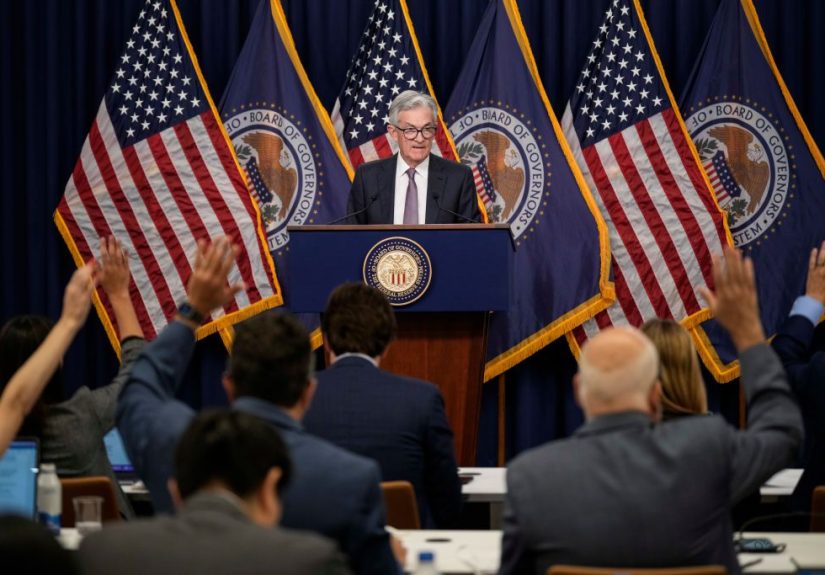
By the afternoon of December 14, 2022, the suspense was over.
The Federal Reserve announced a 50–basis-point (0.50%) increase in the
federal funds rate, bringing the target range to 4.25%–4.50%,
the highest level in about 15 years. This was a clear downshift from the four jumbo
0.75% hikes in a row earlier that year, but it was still a firm reminder that the Fed
was nowhere near declaring victory over inflation.
The Fed’s official statement also signaled that more hikes were coming in 2023.
Policymakers projected that rates could rise by roughly another three quarter–percentage
points, implying a peak (or “terminal rate”) around the low 5% range. In plain English:
borrowing would keep getting more expensive before things stabilized.
Why the Fed Stayed Hawkish
Even though inflation was easing, it was easing from a very high place.
The Fed has a long-run inflation target of 2%. In November 2022,
overall prices were still rising at more than three times that pace.
The central bank was trying to thread a tiny needle: slow the economy and cool inflation
without slamming it into a deep recession.
To do that, Fed officials focused on:
- Demand for goods and services – Higher rates make borrowing more expensive, which tends to slow big-ticket purchases and business investment.
- Labor market tightness – With unemployment still low, wages were rising briskly in many sectors, feeding inflation.
- Expectations – The Fed was determined not to let households and businesses “bake in” the idea that high inflation was the new normal.
The message on Dec. 14 was uncompromising:
inflation was slowing, but the Fed was not ready to back off.
Inflation in November: Finally Some Good News
CPI Shows a CooldownBut Not a Cure
The relative optimism on Fed Day started the day before, when the
Consumer Price Index (CPI) for November 2022 was released.
The data showed:
- Headline inflation up 7.1% year over year, down from 7.7%.
- Monthly price growth of just 0.1%, slower than the prior month.
- Core inflation (excluding food and energy) up about 6% year over year, still too high for comfort.
For consumers, the story under the hood was uneven:
- Energy costs were easing from earlier peaks, offering some relief at gas stations.
- Used car prices, which had exploded earlier in the pandemic, were finally drifting down.
- Shelter costs (rent and owners’ equivalent rent) were still rising and remained one of the biggest drivers of inflation.
- Food prices were growing more slowly, but grocery bills were still significantly higher than a year earlier.
The bottom line: inflation was heading in the right direction,
but it was still uncomfortably high. That’s why markets expected a
smaller hike (0.50%) instead of another 0.75%, but no one expected rate cuts anytime soon.
What That Meant for Everyday Budgets
On Dec. 14, 2022, households were stuck in a kind of economic limbo:
- Your weekly grocery run was still more expensive than in 2021, but prices weren’t spiking as dramatically as earlier in the year.
- Gas wasn’t the wallet-crusher it had been in summer 2022, freeing up a little cash for other bills.
- Renters and would-be homebuyers, however, were still feeling serious pain from rising housing costs and higher mortgage rates.
For many families, the best financial strategy at that moment was caution:
paying down high-interest debt, trimming non-essential spending, and building an emergency fund
to prepare for a potentially bumpier 2023.
How Markets Reacted to the Fed’s Move
From Optimism to “Oh, Right, The Fed Is Serious”
Before the Fed announcement, markets were riding the wave of that better-than-expected
inflation report. Stocks had rallied on the hope that the worst of the inflation scare was over
and that the Fed might soon slowor even pauseits rate hikes.
After the decision and press conference, though, investors got a reality check.
The Fed’s projections for more hikes in 2023, plus warnings that economic growth would slow
and unemployment could rise, weighed on sentiment.
Major U.S. indexes ended the day lower, reflecting the tug of war between:
- Good news: Smaller rate hike, cooling inflation.
- Bad news: No quick pivot to rate cuts, more tightening ahead, and rising recession risk.
For long-term investors, the lesson on Dec. 14 was familiar:
markets react quickly, but your financial plan should not. If you were investing for retirement
ten, twenty, or thirty years out, the best move was still to stay diversified, stay patient,
and resist the urge to trade on every Fed headline.
Borrowing Costs: What Changed for Your Wallet
Credit Cards, Auto Loans, and HELOCs
The Fed doesn’t set the interest rate on your credit card directly, but its moves ripple
through the entire financial system. On Dec. 14, 2022, that 0.50% hike meant the
prime ratethe benchmark many lenders usewould move higher almost immediately.
That translated into:
- Credit card APRs pushing even higher, often into the high teens or above 20%.
- Variable-rate loans, like some auto loans and lines of credit, adjusting upward.
- Home equity lines of credit (HELOCs) getting more expensive as their rates reset.
For anyone carrying a balance, the message was loud and clear:
paying down high-interest debt was about to become even more urgent.
Mortgage Rates and the Cooling Housing Market
Mortgage rates had already surged through much of 2022, briefly topping 7% for the
30-year fixed-rate loan in early November before easing slightly by mid-December.
By the time the Fed met, average mortgage rates were hovering in the mid–6% range,
still roughly double where they’d been in 2021.
The impact on housing was dramatic:
- Existing home sales had fallen sharply compared with a year earlier.
- Affordability was stretched thin as buyers faced both higher prices and higher borrowing costs.
- Refinancing activity had dropped off a cliff; the “easy refinance” era of ultra-low rates was over.
For potential buyers on Dec. 14, the choice often came down to waiting for more favorable
conditions or negotiating more aggressively on price.
For homeowners with older, low-rate mortgages, the best move was usually to sit tight,
treasure that rate, and avoid tapping home equity unless absolutely necessary.
Savers Finally Catch a Break
Higher rates weren’t all bad news. For the first time in years, savers could earn
real interest on their cash. Online banks and some credit unions were offering:
- High-yield savings accounts with rates many times higher than traditional brick-and-mortar banks.
- Certificates of deposit (CDs) with competitive yields for those willing to lock in their money for a fixed term.
On Dec. 14, it was clear that inertialeaving cash in a 0.01% savings accountwas becoming
more expensive in opportunity-cost terms. Savers who shopped around could finally earn
meaningful returns on their emergency funds and short-term savings.
Crypto Shockwaves in the Background
While the Fed dominated headlines, the crypto world was still reeling from the
spectacular collapse of FTX a few weeks earlier.
On December 13, 2022, U.S. lawmakers held a hearing to dig into how one of the world’s largest
crypto exchanges had imploded so quickly, wiping out billions in customer assets and shaking
trust in digital asset markets.
For everyday investors, the FTX saga reinforced a few timeless (if painful) lessons:
- Risk is real – High-yield promises in crypto often came with massive downside.
- Regulation matters – Unlike insured bank deposits, funds on unregulated platforms carried far fewer protections.
- Diversification is non-negotiable – Concentrated bets in speculative assets can unravel quickly.
Against the backdrop of Fed tightening, the crypto “winter” of 2022 showed just how vulnerable
speculative assets can be when easy money disappears.
Recession Fears and the Job Market
Alongside inflation and interest rates, recession risk was the third main character
in the Dec. 14 story. The Fed’s own projections suggested:
- Slower economic growth in 2023, flirting with near-zero real GDP growth.
- Higher unemployment ahead, as higher borrowing costs weighed on hiring and expansion plans.
Yet the job market at that time was still surprisingly strong.
Unemployment was low, and many employers were struggling to fill open roles.
That created a strange tension: people felt nervous about the future,
but many still had options in the labor market.
For workers, Dec. 14 was a reminder to:
- Polish up resumes and LinkedIn profiles “just in case.”
- Build skills that would stay in demand even in a slower economy.
- Take advantage of strong bargaining power where possiblebut avoid overextending financially.
Practical Takeaways from Dec. 14, 2022
When you zoom out, Dec. 14, 2022 was a snapshot of an economy in transition:
inflation trending down but still too high, interest rates rapidly catching up,
and markets recalibrating to a world where money was no longer “free.”
Key money moves that made sense thenand still age well in hindsightinclude:
- Pay down high-interest debt before rates climb even higher.
- Shop around for better savings yields instead of settling for near-zero interest.
- Keep investment horizons long-term and avoid reacting emotionally to day-to-day Fed headlines.
- Stay cautious with speculative assets, especially in unregulated or lightly regulated areas like some parts of crypto.
- Build resiliencefinancially and professionallyfor a potential slowdown.
Dec. 14 didn’t answer every question about the future of the economy,
but it did mark a turning point: the era of ultra-cheap money had clearly ended,
and a new phase of “pay attention to your interest rates” had begun.
Looking Back: Experiences and Lessons from Fed Day 2022
It’s one thing to look at charts and policy statements; it’s another to live through days
like Dec. 14, 2022 as a consumer, worker, or investor. Here’s what that day felt likeand what
many people learned from it.
For Homebuyers and Homeowners
If you were house hunting in late 2022, you probably felt like you’d showed up to the party
just as the lights came on. Prices were still historically high, but mortgage rates had jumped
from the 3% range to around double that in barely a year. On Fed Day, many buyers were refreshing
rate quotes and wondering, “Should I buy now before rates go higher, or wait and hope prices drop?”
Some buyers chose to lock in a rate, accepting a smaller or more modest home instead of stretching
for their dream property. Others paused their search entirely, deciding to rent a bit longer,
save more, or improve their credit. The shared experience was a crash course in how sensitive housing
affordability is to interest rates. A one- or two-point jump in mortgage rates can instantly add
hundreds of dollars to a monthly paymentand that reality hit home for millions of people.
For Households Juggling Debt
If you carried a balance on your credit cards, Fed Day wasn’t abstract at all.
Each rate hike meant your APR could climb higher within a billing cycle or two.
Many cardholders started running the numbers and realized that minimum payments
could keep them in debt for years, with interest charges eating up more and more of their budget.
A lot of families responded by:
- Calling their card issuers to ask for lower rates or hardship options.
- Consolidating high-interest debt into a personal loan with a fixed rate.
- Temporarily cutting back on discretionary spending to accelerate payoff plans.
Dec. 14 reinforced a powerful lesson: in a rising-rate world,
high-interest debt becomes even more of a budget enemy,
and paying it down quickly is one of the best risk-free “investments” you can make.
For Savers and Cautious Investors
Not everyone experienced Dec. 14 as bad news.
If you’d been sitting on cash earning almost nothing for years,
the new rate environment finally started to feel rewarding.
Savers who took a few minutes to compare accounts online often discovered
that they could earn significantly more by switching to a high-yield savings account
or short-term CD.
For conservative investorsthose closer to retirement or simply more risk-averse
higher yields on bonds and cash-like assets offered a bit of breathing room.
You didn’t have to take extreme risks in order to outpace inflation;
you just had to be willing to move money to more competitive options.
For Long-Term Investors Riding Out Volatility
If you checked your 401(k) or brokerage account on Dec. 14, 2022,
you might have seen red numbers and felt your stomach drop.
Fed days are notorious for big market swings, and this one was no different.
But for long-term investors, the day provided a real-world reminder
of why having a solid plan matters more than guessing the next headline.
Many investors who stayed the course through the drama followed a familiar playbook:
- Rebalancing portfolios gradually instead of making drastic moves.
- Continuing regular contributions to retirement accounts, buying at both highs and lows.
- Focusing on time in the market, not timing the market.
Looking back, this patience often paid off better than reacting impulsively to each Fed comment.
Dec. 14 was a reminder that volatility is a feature, not a bug, of investingespecially
during major policy shifts.
Big Picture: The Emotional Side of Economic News
Finally, Dec. 14, 2022 highlighted something that doesn’t show up in official statistics:
the emotional weight of constant economic uncertainty.
Between inflation worries, recession talk, market swings, and stories of crypto collapses,
many people felt a steady background hum of financial anxiety.
The healthiest responses tended to involve a mix of information and boundaries:
staying informed enough to make good decisions, but not doom-scrolling every market update.
Building a realistic budget, keeping emergency savings, and planning for different scenarios
turned out to be some of the best antidotes to uncertainty.
In hindsight, Dec. 14 wasn’t just “Fed Day.”
It was a snapshot of how quickly economic conditions can changeand how powerful it can be
to understand the moving pieces well enough to make calm, confident choices
for your own financial life.
SEO JSON