Table of Contents >> Show >> Hide
- Why Roasted Garlic Makes Mac and Cheese Taste Next-Level
- Ingredients That Matter (and the Ones That Just Want Attention)
- Roasted Garlic Mac and Cheese (Step-by-Step)
- The Texture Science (Without the Boring Lecture)
- Flavor Variations That Still Taste Like “Mac and Cheese,” Not Chaos
- Troubleshooting: Fix the Usual Mac and Cheese Problems
- Make-Ahead, Storage, and Reheating (Because Life Happens)
- Serving Ideas
- Extra: Real-Life “Roasted Garlic Mac and Cheese” Experiences (500+ Words)
- Conclusion
There are two kinds of people in this world: the “mac and cheese is fine out of the box” people, and the
“I would like my comfort food to feel like a warm hug wearing a fancy coat” people. If you’re here,
you’re probably the second kindor you’re trying to impress the first kind into switching teams.
Roasted garlic mac and cheese is what happens when classic baked mac meets mellow, caramelized garlic
and decides to become the main character. It’s creamy. It’s cozy. It’s got that sweet-savory garlic depth
that makes people pause mid-bite like, “Wait… what did you DO to this?”
Why Roasted Garlic Makes Mac and Cheese Taste Next-Level
Raw garlic is sharp and spicy. Roasted garlic is its softer, sweeter cousin who got really into meditation
and now speaks in velvety tones. When you roast a whole head, the cloves turn buttery and spreadable,
with a gentle sweetness that blends into cheese sauce instead of picking a fight with it.
The flavor math
- Roasted garlic adds sweetness and savory depth without harsh bite.
- Cheese brings salt, tang, and richness.
- A creamy base carries flavor evenly so every noodle gets a fair shot.
- A crunchy top adds contrastbecause texture is half the fun.
Ingredients That Matter (and the Ones That Just Want Attention)
Pasta: pick a shape that holds sauce like it pays rent
Elbows are classic, but cavatappi (corkscrews) and shells are excellent at trapping cheese sauce in their
twisty little hideouts. Whatever you choose, cook it just to al dente. The oven will finish the job.
Roasted garlic: the star with a surprisingly chill personality
You’ll roast 1–2 heads (depending on how garlicky you want it). Roasting transforms garlic into a soft paste
that dissolves into the sauce. Pro tip: roast two heads and save the extra cloves for spreading on bread,
stirring into mashed potatoes, or whispering sweet nothings to your next sandwich.
Cheese: blend for flavor and melt
The best mac and cheese usually uses a blend: one cheese for big flavor, one for silky melt, and one for
salty punch. A reliable “why does this taste so good?” combo:
- Sharp cheddar (bold, tangy backbone)
- Gruyère (nutty depth, grown-up vibes)
- Fontina or Monterey Jack (smooth melt, creamy texture)
- Parmesan (salty finish, great in topping too)
One non-negotiable: shred your own. Pre-shredded cheese is convenient, but it often contains
anti-caking agents that can make sauces grainy or less smooth.
The sauce base: béchamel (roux + milk) is your insurance policy
A simple roux (butter + flour) thickens the milk into a béchamel. That creamy base helps the cheese melt
smoothly and cling to pasta instead of separating into “oily puddle + sad clumps.”
Want an even easier shortcut? Some baked mac recipes skip roux and use cream cheese or other emulsifying
helpers. That works toobut béchamel gives you classic texture and reliable results.
The crunchy top: breadcrumbs with ambition
Panko breadcrumbs + melted butter + Parmesan = golden, crackly topping energy. If you want extra drama,
add a pinch of paprika, a little black pepper, or crushed butter crackers.
Roasted Garlic Mac and Cheese (Step-by-Step)
Serves: 6–8 as a main, 10–12 as a side
Total time: about 1 hour (mostly delicious waiting)
Ingredients
- 1–2 heads garlic
- 1 tbsp olive oil
- 1 lb pasta (elbows, cavatappi, shells)
- 4 tbsp unsalted butter (plus a little for greasing the dish)
- 3–4 tbsp all-purpose flour
- 3 cups whole milk (warm is best)
- 1 tsp Dijon mustard or 1/2 tsp mustard powder
- Pinch of nutmeg (optional, but quietly amazing)
- Salt and black pepper
- About 4–5 cups shredded cheese blend (example: cheddar + Gruyère + fontina/jack)
- 1/2 cup Parmesan (some for sauce, some for topping)
- Topping: 1 cup panko + 2 tbsp melted butter + 2–3 tbsp Parmesan
- Optional garnish: chives or parsley
1) Roast the garlic
- Heat oven to 400°F.
- Slice the top off each garlic head so the cloves are exposed.
- Drizzle with olive oil, wrap in foil, and roast 35–45 minutes until very soft.
- Cool slightly, then squeeze the cloves out like garlic toothpaste (in the best way).
2) Cook the pasta (but don’t overdo it)
- Boil salted water and cook pasta until just al dente.
- Drain well. If you want a chef-y move, save a splash of pasta water (it can loosen the sauce later).
3) Make the béchamel base
- In a large pot, melt butter over medium heat.
- Whisk in flour and cook 1–2 minutes (you want it to smell slightly nutty, not raw).
- Slowly whisk in warm milk, a little at a time, until smooth.
- Simmer, whisking often, until it thickens enough to coat a spoon.
- Stir in mustard, nutmeg (if using), salt, pepper, and the roasted garlic paste.
4) Add cheese the smart way (aka: don’t break your sauce)
- Turn heat to low.
- Add shredded cheese in handfuls, stirring until melted before adding more.
- Stir in a bit of Parmesan for a savory boost.
- Taste and adjust: more salt? more pepper? a little mustard? this is your moment.
5) Combine, top, and bake
- Heat oven to 375°F. Butter a 9×13-inch baking dish.
- Fold pasta into the cheese sauce until every noodle is wearing a glossy cheese coat.
- Pour into the dish.
- Mix panko + melted butter + Parmesan, then sprinkle evenly on top.
- Bake 20–25 minutes until bubbling. Broil 1–2 minutes for extra browning (watch closely!).
- Rest 5–10 minutes before serving so it thickens slightly and scoops beautifully.
The Texture Science (Without the Boring Lecture)
How to keep it creamy, not grainy
- Low heat for cheese: high heat can cause proteins to tighten and sauce to split.
- Add cheese after thickening: a stable béchamel helps the sauce emulsify smoothly.
- Shred your own cheese: it melts better than bagged pre-shreds.
- Undercook the pasta slightly: it keeps texture after baking.
Want restaurant-level silkiness?
Food science fans sometimes use sodium citrate, an emulsifying salt that helps cheese melt into
a super-smooth sauce (think queso-level creaminess, but for mac). It’s optionalnot requiredbut it’s a
neat trick if you love a glossy, never-splits finish.
Flavor Variations That Still Taste Like “Mac and Cheese,” Not Chaos
1) Roasted Garlic + Herb Garden Mode
Stir chopped fresh thyme or rosemary into the sauce. Finish with chives. It tastes fancy without making you
buy a monocle.
2) Roasted Garlic + Broccoli (the “I tried” version)
Fold in steamed broccoli florets right before baking. The roasted garlic makes the veggies feel like they
belong at the party.
3) Roasted Garlic + Spicy Kick
Add a few shakes of hot sauce, a pinch of cayenne, or use pepper Jack as part of your cheese blend.
Roasted garlic + heat is a very good duo.
4) Roasted Garlic + “Holiday Side Dish” Energy
Add sautéed onions, top with buttered crackers, and bake it in a pretty dish. People will ask for the recipe.
Accept your fame gracefully.
Troubleshooting: Fix the Usual Mac and Cheese Problems
“My sauce turned grainy.”
- Likely culprit: pre-shredded cheese, overheating, or adding cheese too fast.
- Fix: lower heat, stir gently, add a splash of warm milk, and don’t boil the cheese sauce.
“It’s oily on top.”
- Likely culprit: overheated cheese or too much aged cheese without a good emulsifying base.
- Fix: keep heat low; use a blend that includes good melters (fontina/jack).
“It baked up dry.”
- Likely culprit: overbaked or not enough sauce going in.
- Fix: make it slightly “too saucy” before baking; it thickens as it sits.
“It tastes flat.”
- Fix: mustard (Dijon or powder), black pepper, a pinch of nutmeg, and enough salt. Cheese needs seasoning help.
Make-Ahead, Storage, and Reheating (Because Life Happens)
Make-ahead
You can assemble the dish (through topping) and refrigerate it, covered, for a few days. Bake from cold
with a little extra time until hot and bubbling.
Storage
Refrigerate leftovers in a sealed container. Mac and cheese reheats best with a little moisture: a splash of milk
plus gentle heat brings the sauce back to life.
Reheating tips
- Microwave: add a splash of milk, cover loosely, heat in short bursts, stir often.
- Oven: cover with foil at 350°F until warm; uncover briefly to re-crisp the top.
Serving Ideas
- A bright green salad with vinaigrette (acid balances richness).
- Roasted vegetables or sautéed greens.
- Tomato soup for the coziest pairing imaginable.
- As a side dish for BBQ, roasted chicken, or holiday spreads.
Extra: Real-Life “Roasted Garlic Mac and Cheese” Experiences (500+ Words)
The first thing you’ll notice when you roast garlic is that your kitchen starts smelling like the opening scene of
a romantic comedy where someone “accidentally” falls in love at a farmers market. It’s warm, sweet, and
unmistakably garlickybut not aggressive. More like, “Hello, I am delicious. Would you like to be happier?”
When you squeeze roasted garlic out of its papery skin, it feels oddly satisfyinglike popping bubble wrap,
but edible and much more socially acceptable. The cloves come out soft and golden, and if you taste one
straight (you will), you’ll get a mellow sweetness that’s nothing like raw garlic. That’s exactly why it works
so well in mac and cheese: it becomes part of the sauce instead of sitting on top of it.
Making the béchamel can feel like a “trust the process” moment. At first it’s just butter and flour, then milk
that looks too thin to ever become sauce. But a few minutes of whisking later, it turns creamy and coats the back
of a spoon like it has places to be. That’s the point where you feel briefly unstoppableright before you remember
you still have to shred cheese. (Shred your own anyway. Future you will thank you.)
Then comes the magic: adding roasted garlic to the sauce. The color deepens slightly, the aroma gets richer,
and suddenly the pot smells like you’re making mac and cheese in a cabin somewhere with excellent lighting.
When you start folding in cheese by the handful, you’ll see the sauce shift from “nice white sauce” to
“shiny, molten, please-don’t-let-me-splash-hot-cheese-on-my-hand” perfection. Keep the heat low and go slow.
This isn’t a race; it’s a glow-up.
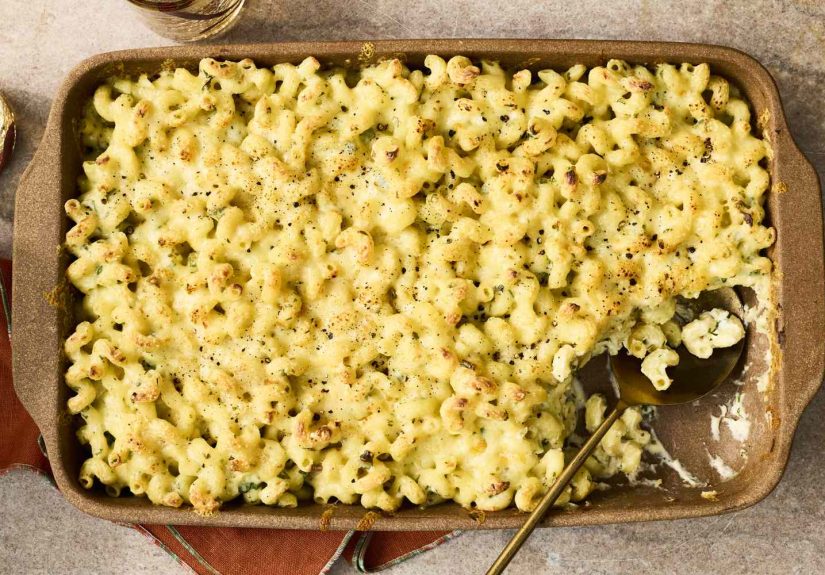
If you’re baking it, the second big experience is the sound: the faint bubbling around the edges and the gentle
crackle when breadcrumbs start browning. It’s basically ASMR for hungry people. When you pull the dish out,
the top is golden and crisp, and you’ll be tempted to scoop immediately. Try to wait five to ten minutes.
That short rest is the difference between “soupy slide onto a plate” and “creamy spoonful that holds together
like it knows what it’s doing.”
Serving roasted garlic mac and cheese to other people is also… an event. Someone will inevitably ask,
“What’s in this?” and you’ll say “roasted garlic” and watch them nod like they’ve discovered a new life philosophy.
Kids and picky eaters usually don’t even notice the garlic as “garlic”they notice it as “wow, this tastes better.”
And adults tend to hover for seconds because the flavor is familiar, but deeper than standard mac.
Leftovers have their own personality. The next day, the garlic flavor often tastes even more blended and rounded.
The sauce thickens in the fridge, so reheating with a splash of milk is the move. If you reheat it in the oven,
the top can crisp again and you get that baked texture backlike you’re time-traveling to last night’s dinner.
It’s also the kind of dish that makes you look forward to lunch, which is honestly a small but meaningful win.
Most importantly, this recipe gives you a repeatable “I can cook” moment. Once you nail roasted garlic and a
simple cheese sauce, you can riff endlesslydifferent cheeses, different add-ins, different toppingswithout losing
the comfort-food soul. Roasted garlic mac and cheese isn’t just dinner. It’s a reliable, crowd-pleasing flex
you can pull out anytime you want a meal that feels like home, but tastes like you tried (in the best way).
Conclusion
Roasted garlic mac and cheese is comfort food with a glow-up: creamy sauce, real cheese flavor, a crunchy top,
and that mellow roasted garlic sweetness that makes each bite feel intentional. Roast the garlic, keep the cheese
melt gentle, and don’t rush the final rest. You’ll end up with a dish that disappears fastand gets requested even faster.