Table of Contents >> Show >> Hide
- What Is a Longboard Stroller, Exactly?
- Why the Idea Is So Appealing
- But Here’s the Catch: Safety Isn’t Optional
- If You’re Considering a Longboard Stroller, Ask These Questions First
- Safer Alternatives That Keep the “Fun” Part
- Who a Longboard Stroller Concept Appeals Toand Who Should Skip It
- So… Is a Longboard Stroller Actually Worth It?
- Experiences From Real Life: What “More Fun” Actually Looks Like (And Why It Matters)
- Conclusion
Parenting comes with a lot of magic momentsfirst steps, first words, first time your kid tries to feed a dog a Cheerio and calls it “sharing.” It also comes with a lot of
walking. Like, a truly impressive amount of walking. And if you’ve ever pushed a stroller for the 9,000th lap around the block while narrating the same three trees like you’re
filming a nature documentary (“And here we see… Tree… again”), you understand why the idea of a longboard stroller feels like a tiny spark of joy.
The concept is exactly what it sounds like: a stroller that integrates with, mounts to, or mimics the stance and glide of a longboardso the adult gets a smoother, faster
“cruise” vibe and the kid gets a ride that feels less like commuting and more like an adventure. It’s the kind of product that makes you think, “This is either brilliant… or the
plot of a cautionary tale.” (Sometimes both things are true.)
Let’s break down what a longboard stroller is, why it’s so appealing, what the real-world tradeoffs look like, and the safer ways families can capture the same “more fun, less
grind” energywithout turning your afternoon stroll into an extreme sport highlight reel.
What Is a Longboard Stroller, Exactly?
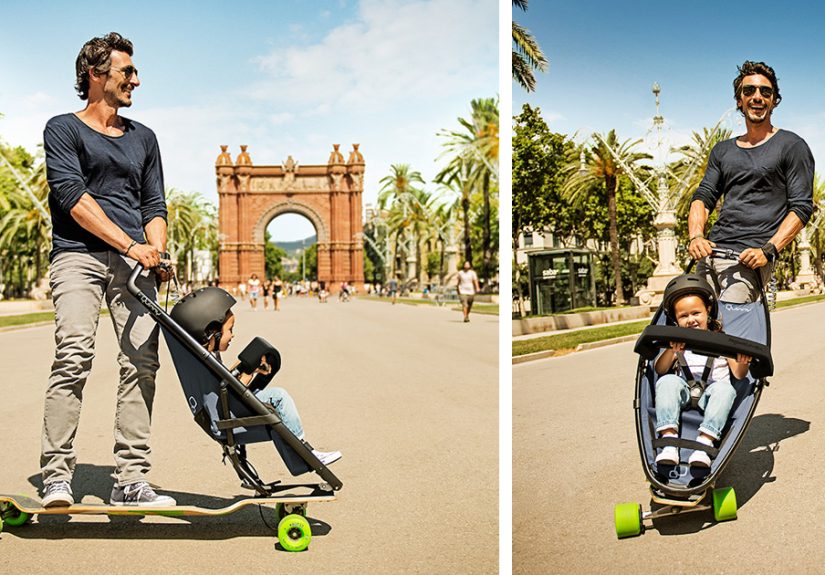
A longboard stroller is a stroller designed to roll with the feel of a longboard skateboardeither as a fully integrated product (where the stroller seat and
board are engineered as a single system) or as an accessory concept that pairs a stroller-like seat with a board platform. The most famous version to go viral came from the
stroller brand Quinny, which showcased an actual longboard-style stroller concept that looked like urban parenting’s answer to “Why can’t errands be fun?”
In the broader market, you’ll also find “skate-adjacent” stroller products that aim for the same goalmaking family walks smoother and keeping older kids engagedwithout
literally combining a stroller and a skateboard. These include:
- Stroller riding boards (also called ride-on boards or buggy boards) that attach to the back or side of a stroller so an older sibling can stand or sit.
- Toddler “mini boards” designed by stroller brands as compatible add-ons for specific stroller models.
- Jogging strollers built for stability at faster walking or running pacemore “controlled speed” than “skate glide.”
In other words: the longboard stroller is the headline act, but it has an entire supporting cast of products that share the same missionkeep the family moving, keep it
enjoyable, reduce the “my legs are tired” chorus.
Why the Idea Is So Appealing
1) It makes boring trips feel like a mini adventure
A normal stroller walk is functional. A longboard stroller feels like you’re gliding. The vibe shift is real: smoother motion, fewer jolts, and a sense that you’re
doing something a little special instead of just transporting tiny humans from Point A to Point B. For parents in dense areaswhere a “walk” is also grocery runs, daycare
drop-offs, and coffee missionsfun matters.
2) It matches how families actually move in cities
Urban parenting is full of micro-commutes. The dream is to get around efficiently without juggling a stroller that feels like a shopping cart with opinions. A longboard-style
stroller concept taps into the same mindset as biking, scooting, or walking everywhere: “Let’s make movement easier, not heavier.”
3) It can be a bonding thing (yes, even on a Tuesday)
Kids love “special rides.” Parents love anything that reduces whining and increases smiling. When your child is happily strapped in, waving at dogs like a tiny celebrity, the
entire outing gets lighter. A fun ride can change the tone of the dayespecially when everyone’s a little tired, a little hungry, and one spilled snack away from chaos.
But Here’s the Catch: Safety Isn’t Optional
Strollers already come with real injury risksmostly from falls and tip-overs. Safety experts regularly emphasize basics like using a harness correctly, following weight limits,
and keeping a stroller stable. Now imagine adding anything that increases speed, changes handling, or introduces unpredictable motion. The “cool factor” doesn’t erase physics.
Physics is undefeated.
Strollers are associated with falls and tip-overs
Injury data and pediatric safety guidance consistently point to falls and tip-overs as common stroller-related hazards. That’s one reason you’ll see repeated advice to buckle
kids in, avoid overloading handles, and use brakes as intended. If a regular stroll can lead to a fall when a harness isn’t used or a stroller catches a curb, a faster,
skate-like glide raises the stakes.
Helmets help, but they’re not magic
Skate culture and safety culture overlap on one big truth: helmets matter. Public health guidance emphasizes proper, activity-appropriate helmets for wheeled activities.
However, it’s also important not to oversell what helmets doconsumer safety guidance warns against claims that any helmet can prevent concussions. Helmets are a crucial layer
of protection, not an invincibility cloak.
Real-life environments are messy
Sidewalk cracks. Surprise gravel. Uneven ramps. A dog on a retractable leash. A toddler who throws a shoe mid-ride like it’s a ceremonial offering. In real-world conditions,
stability and control matter more than aesthetics. And anything that changes how a stroller steers or stops deserves extra scrutiny.
If You’re Considering a Longboard Stroller, Ask These Questions First
This isn’t about killing the funthis is about making sure “fun” doesn’t turn into “why are we filling out forms at urgent care?” Before you get dazzled by the idea, use this
as a reality-check framework:
1) Is it a product engineered as a stroller system (not a DIY mashup)?
Stroller safety depends on design choices: stability, restraints, braking, wheel performance, and how the seat is supported. A purpose-built product that’s been tested as a
system is fundamentally different from improvised setups. If it isn’t designed and rated as a stroller product, that’s a red flag.
2) Does it have a reliable harness and clear weight/age limits?
Pediatric safety guidance stresses correct restraint use in strollers. That means a secure harness that fits properly and is used consistently, plus manufacturer limits that
match your child’s age and size. If you can’t easily confirm limits and safe-use guidance, it’s not a “maybe.” It’s a “no.”
3) How does it handle stopping and stability?
With any stroller, braking and stability are essential. Jogging stroller guidance, for example, frequently emphasizes harness use and following manufacturer instructions
precisely because tipping and loss of control can cause injuries. If a product’s stopping and stability aren’t crystal-clear, it’s not a smart gamble.
4) Are you trying to solve a real problemor chasing a vibe?
Honest moment: sometimes what we want is not “a longboard stroller,” but “a walk that doesn’t feel like a chore.” If your goal is easier outings, you might get better results
from a great stroller, a ride-on board for a sibling, and a few simple fun ritualswithout any skate-style risk.
Safer Alternatives That Keep the “Fun” Part
If your main goal is “more fun for kids and parents,” you have options that are widely available, designed for stroller use, and popular with real familiesespecially those
juggling multiple kids.
1) Stroller ride-on boards for older siblings
Ride-on boards attach to a stroller and let an older child ride along when they get tired. Many are built as sit-or-stand accessories and are meant to be used with specific
stroller models or universal connector systems. This approach tackles a common pain point: the preschooler who can walk… until they suddenly cannot.
Several stroller brands and baby-gear companies sell riding boards with stated weight limits and intended use cases. The big benefit is that these products aim to preserve the
stroller’s stability while expanding passenger capacity.
2) Brand-specific “mini boards” designed for compatibility
Some stroller manufacturers offer skateboard-style boards engineered for their strollers. Because compatibility is part of the product design, you’re less likely to run into
the weird “this feels wobbly and I don’t like it” problem that can happen when accessories aren’t truly made to work together.
3) Jogging strollers for smoother, faster-paced outings
If your household’s version of fun is “we’re moving at an actual pace,” a jogging stroller can help. These are designed for stability and control at higher speeds than a
typical walk. Many parents find that simply upgrading to a stroller built for smooth rolling makes everyday trips feel easier andyesmore fun.
4) Make the walk itself fun (no new gear required)
Sometimes the best upgrade is the experience:
- Sidewalk scavenger hunts (“Find three dogs, one red car, and a leaf bigger than your hand.”)
- Snack “pit stops” (planned, not emergency crackers thrown like confetti)
- Story walks (make up a silly ongoing tale where every street sign is a plot twist)
- Music walks (quiet enough for safety and awareness, fun enough to keep the mood up)
Who a Longboard Stroller Concept Appeals Toand Who Should Skip It
It appeals to:
- Parents who already love wheeled commuting and want walking to feel less slow
- Urban families doing lots of short trips
- People who value novelty and design (because, yes, it looks cool)
It’s not a great match for:
- Families who regularly deal with steep hills, broken sidewalks, or unpredictable terrain
- Anyone who needs maximum braking confidence for everyday routes
- Parents who are already juggling multiple kids, bags, and distractions (because attention is a safety feature)
- Situations involving very young infants unless the stroller system is explicitly designed and rated for that age group
The bottom line: the longboard stroller is a fun idea, but most families can capture the same “better outings” feeling with safer, widely used gearand a few routines that make
walks feel like quality time instead of a chore.
So… Is a Longboard Stroller Actually Worth It?
If you’re asking whether a longboard stroller is cool, the answer is obviously yes. It’s the parenting equivalent of putting racing stripes on your grocery cart. But if
you’re asking whether it’s practical and broadly recommended, the answer is more nuanced.
Stroller safety guidance across pediatric and consumer-safety organizations repeatedly comes back to the basics: stable design, correct harness use, adherence to manufacturer
limits, and avoiding scenarios that increase fall risk. A product that introduces higher speed or skate-style handling can work only when it’s engineered and used within clear,
safety-focused boundariesand even then, it won’t be the right fit for most routines.
For many families, the “best of both worlds” looks like this: pick a stroller that rolls smoothly and safely, add a ride-on board if you have an older sibling, and build small
fun rituals into daily walks. You’ll get more smiles, fewer complaints, and less riskwithout needing a soundtrack from an action movie.
Experiences From Real Life: What “More Fun” Actually Looks Like (And Why It Matters)
The most interesting thing about the longboard stroller idea isn’t the boardit’s the emotion behind it. Parents aren’t just shopping for wheels. They’re shopping for calmer
outings, fewer meltdowns, and that rare feeling that the day is flowing instead of fighting them. And when families talk about stroller lifewhether they’ve tried a true
longboard-style concept or just a “fun upgrade” like a riding boardtheir stories tend to sound surprisingly similar.
One parent described their “two-kid commute” as a daily negotiation: the younger child wanted the stroller, the older child wanted independence, and the adult wanted to arrive
anywhere without feeling like they’d run a half-marathon while pushing a shopping cart. Adding a stroller riding board changed the whole tone. Suddenly the older kid had a
“job”: hop on when tired, hop off at crosswalks, and proudly announce, “I’m riding like a big kid.” The parent’s favorite part wasn’t the accessory itselfit was the reduction
in friction. Less stopping. Less bargaining. More forward motion. More peace.
Another family talked about turning walks into “mini missions.” They didn’t buy anything new at all. Instead, they made the stroller ride feel like a VIP tour: the kid got to
choose the “route music,” point out neighborhood “landmarks” (a mailbox, a cat, a puddlestandards are flexible), and decide where the “pit stop” happened. The parent joked
that it felt like hosting a talk show guest who refuses to walk to the studio. But it worked. When the outing feels like play, kids cooperate moreand parents feel less like
they’re dragging the day behind them.
Then there are the “design-and-speed” parentsthe ones the longboard stroller headline practically calls by name. They’re the people who love clever gear and want movement to
feel efficient and joyful. Their best experiences tend to come when fun is paired with boundaries: picking calmer routes, keeping outings short and predictable, and using
products that are built for the purpose rather than improvised. What they describe is less “extreme stroller skating” and more “a smoother glide that makes errands feel less
heavy.” The fun is in the ease.
A recurring theme across these stories is that kids don’t need maximum noveltythey need a sense of participation. When a child feels like they’re part of the outing, not just
strapped into it, everything improves. That can be as simple as letting them “help” by holding a small toy, waving at buses, or choosing which park bench is the official snack
throne. It can also be a practical accessory like a sit-or-stand board that gives older siblings the dignity of riding when they need a break.
And for parents, “more fun” is often code for “less stress.” It’s fewer stroller battles, fewer stops, and more of those small, golden moments where you realize you’re actually
enjoying the walk. Not because you bought a trendy product, but because the system finally fits your family: the stroller rolls well, the kids are comfortable, and you’re not
white-knuckling your way through the neighborhood.
So even if you never touch a longboard stroller in real life, the idea can still be useful. It reminds us that parenting gear isn’t just about functionit’s about making daily
life feel a little lighter. Whether that comes from a board, a better stroller, or a silly ritual where every squirrel is “the mayor,” the goal is the same: get outside, move
together, and come home with everyone still smiling.
Conclusion
A longboard stroller is one of those ideas that instantly makes parenting feel coolerlike you’ve unlocked a secret level where errands come with a glide. But because strollers
already carry fall and tip-over risks, anything that changes speed or handling deserves extra caution. For most families, the safest path to “more fun” is a smooth-rolling
stroller, a well-designed ride-on board for older siblings, and a few simple routines that make walks feel like an activitynot a chore. Fun is the goal; safety is the price of
admission.