Table of Contents >> Show >> Hide
- Who is Flynn McGarryand why should design people care?
- Lesson 1: Adopt a sunny outlook (literally)
- Lesson 2: Build the room around a few compelling “ingredients”
- Lesson 3: Teach yourself what you want to know
- Lesson 4: Enlist friends to contribute to your vision
- Lesson 5: Use humble materials in smart ways
- Lesson 6: Similar, not identical, seating
- Lesson 7: Dried flowers as low-maintenance greenery
- Lesson 8: Small art can make a big impact
- Why Flynn’s approach hits the right note now
- Design experience: applying Flynn’s lessons in real life
- Bringing Flynn’s design lessons home
When most twenty-somethings decorate a space, they scroll mood boards, buy a rug on sale, and call it a day.
Flynn McGarry is not most twenty-somethings. The star chef behind New York’s cult restaurant Gem and its sibling Gem Wine
decided that if he could learn to plate like Noma, he could also teach himself to design and build a restaurant interior from scratch.
In just a couple of weeks, he transformed his Lower East Side spot into Gem Wine Bar, a tiny, 380-square-foot room that feels
like a cross between a Shaker dining hall, a favorite neighborhood hangout, and your most stylish friend’s living room.
He did the carpentry himself, pulled in pieces from antique markets, leaned on creative friends, and turned the whole project into a kind of
full-scale design lab.
The Remodelista web story on this makeover distills the project into eight smart, stealable ideas.
Think of them as design lessons from a star chef and self-taught carpenterprinciples you can apply to your own home,
studio, café, or teeny-tiny rental kitchen, even if you’ve never picked up a Festool track saw in your life.
Who is Flynn McGarryand why should design people care?
Flynn’s story is already legendary in food circles. He started cooking seriously around age eleven,
hosted an ambitious pop-up called Eureka out of his family’s Los Angeles dining room, and staged at kitchens like
Eleven Madison Park and Alinea while most kids were figuring out algebra. Eventually he opened Gem, an intimate tasting-menu restaurant
on Manhattan’s Lower East Side, while still a teenager.
Along the way, he developed an equally strong obsession with design. He combed through cookbooks not just for recipes but for how
rooms were lit and tables were set. He collected back issues of design magazines for inspiration, taught himself woodworking when the cost
of custom shelving made him wince, and began to see restaurant interiors the same way he sees a plate of food: as a composition of textures,
temperatures, shadows, and tiny surprises.
When Gem’s original format evolved, he didn’t just swap menus; he turned the room into a DIY design project,
reimagining everything from the signage outside to the mix-and-match chairs at each table.
The result is a masterclass in small-space hospitality designand a blueprint you can borrow at home.
Lesson 1: Adopt a sunny outlook (literally)
A cheerful exterior sets the whole mood
Gem Wine sits on a modest, mostly residential block where it could easily disappear into the background.
Flynn’s solution was simple but bold: he painted the façade a welcoming yellow, added striped awnings,
and finished it off with a hand-painted sign and a few vintage school stools out front.
The message is instant and clear: this is a friendly, lived-in place, not a precious white-box gallery.
How to steal it at home
You might not own a restaurant, but you do have an “entry moment.”
A front door, a tiny hallway, even the first wall you see when you open the apartmentthese are all opportunities to broadcast your personality.
Consider a confident paint color, a striped runner, a simple bench, or a cluster of potted plants in mismatched terracotta.
If your living room feels flat, starting at the threshold can change how the whole home reads, even before anyone steps inside.
Lesson 2: Build the room around a few compelling “ingredients”
Lead with the pieces you love
Rather than starting with a generic shopping list, Flynn anchored the concept of Gem Wine on a handful of beloved objects:
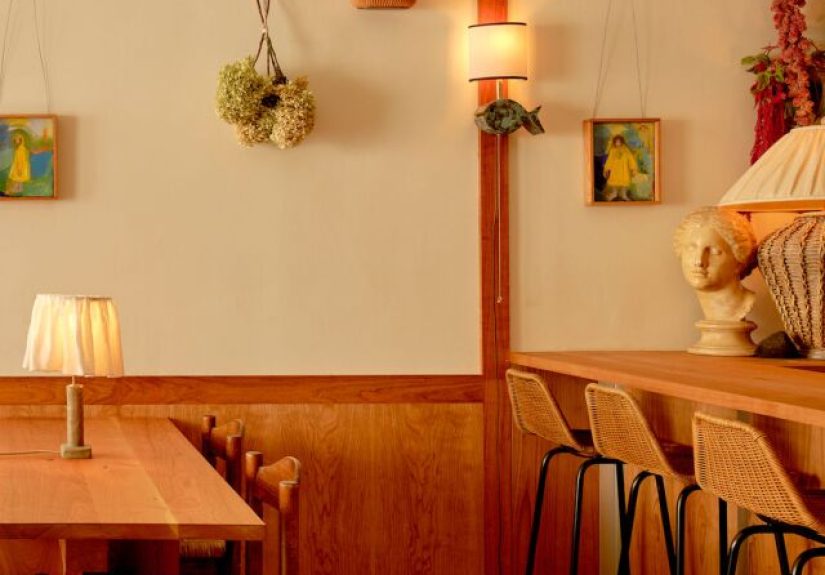
a rope fish picked up at a flea market, a series of small paintings commissioned from an artist friend,
and some vintage ship models inspired by a sailing club visit. Around these, he added cherry-wood paneling with a peg rail,
new tables he built himself, and soft white walls with a hint of green.
The result is a space that feels cohesive but never overplanned. Those few “hero” pieces create a narrativenautical hints,
craft, travel, and a bit of whimsythat everything else quietly supports.
How to steal it at home
Instead of scrolling endlessly for “living room ideas,” pull three to five objects you already adore:
a ceramic bowl, a vintage poster, a wooden stool, a handmade quilt. Ask what they have in commoncolor, mood, textureand use that as your design brief.
Choose paint, textiles, and lighting that let those things shine. It’s the same logic as a good recipe:
pick your star ingredients first, and season the rest around them.
Lesson 3: Teach yourself what you want to know
Self-taught doesn’t mean second-rate
Flynn famously educated himself as both a chef and a carpenter.
He cooked his way through high-level restaurant cookbooks like other kids tore through fantasy novels,
and later he did the same with woodworking videos and tool manuals.
When the price of custom shelving spiked, he saw it not as a dead end but as an excuse to learn a new skill with his own hands.
The furniture at Gem Winesturdy cherry tables with joinery inspired by George Nakashima, a custom peg rail, small built-insreflects that mindset.
It’s precise and intentional, but you can still sense the human hand in every curve and cut.
How to steal it at home
You don’t need to go from zero to bespoke bar build-out.
Start with one project just beyond your current skill level:
build a simple bench, install your own peg rail, reface a beat-up table with a new top.
Take a class, watch a few experts, and expect to make at least three mistakes before you get something you love.
The point isn’t perfection; it’s gaining enough confidence to shape your space instead of only shopping for it.
Lesson 4: Enlist friends to contribute to your vision
Design as a group project
Gem Wine is packed with work by Flynn’s peers: small paintings of a mysterious woman in a yellow raincoat,
ceramic lamps with flowing “skirt” shades, sculptural fish vases and sconces.
Even the construction phase was collaborativefriends helped with carpentry, heavy lifting, and finishing touches.
The effect is layered and deeply personal.
Instead of a space that looks like it was ordered from one catalog, it feels like a physical map of his relationships and creative circle.
How to steal it at home
Ask a photographer friend for a small print. Trade a home-cooked dinner for a custom sketch.
Have your most crafty pal help you upholster a bench or sew a curtain.
When friends contribute pieces, the room automatically tells a richer storyand you’ll never walk past that lamp or painting without thinking of the person behind it.
Lesson 5: Use humble materials in smart ways
Burlap and wooden bars instead of elaborate window treatments
Rather than expensive custom shades, Flynn installed simple wooden rails in the windows and stretched burlap across them.
The fabric filters light, screens out the less-attractive bits of the street, and adds texture, all while feeling surprisingly elegant.
It’s the design equivalent of turning pantry staples into a showpiece dish.
How to steal it at home
Look at the “background” materials in your space: window coverings, radiator covers, room dividers.
Could a length of linen, a roll of canvas, or even burlap soften a harsh view?
Could a simple slatted wood panel conceal an awkward niche or air vent?
When you treat these problem areas as creative challenges, you often end up with the most memorable details in the room.
Lesson 6: Similar, not identical, seating
Mix chairs like you’d mix flavors
At Gem Wine, no two chairs are exactly the sameand yet they clearly belong together.
Flynn sourced straight-backed wooden chairs and round-backed designs from different eras and makers,
but they share a common language: pale woods, honest shapes, and a sturdy, almost country simplicity.
Instead of looking chaotic, the mix feels curated and relaxed, like a family that clearly shares DNA but still has individual quirks.
How to steal it at home
If your dining set is starting to feel too perfect, introduce a bit of variation.
Mix in two end chairs that are upholstered, or add a vintage bentwood to a row of simple modern seats.
Keep one or two elements consistentmaterial, color, or silhouetteand let everything else loosen up.
Suddenly your dining room feels like a place where long, messy, wonderful dinners actually happen.
Lesson 7: Dried flowers as low-maintenance greenery
Plants that don’t need you to remember watering day
Fresh flowers are wonderful, but in a busy restaurant (or a busy life), keeping vases constantly refreshed is a full-time job.
Flynn leans on dried hydrangeas, amaranthus, and other stems that keep their structure and color as they age.
Bundled, hung, or mounded in simple vessels, they add movement and life without requiring constant care.
How to steal it at home
If you’re a “plant murderer,” dried flowers and branches are your friends.
Hang a few hydrangea heads upside down to dry, then re-arrange them in a vase.
Collect interesting twigs, seed pods, or grasses on a walk and place them in a tall jar by the door.
The look is quietly poetic, and your décor won’t collapse the moment you go on vacation.
Lesson 8: Small art can make a big impact
Tableaux instead of statement walls
The art at Gem Wine isn’t oversized or shouty. Many pieces are postcard-sized paintings, clustered at eye level near tables.
Each table becomes its own tiny world: a lamp, a painting, a ship model, a glass of wine.
That intimacy is part of why the room feels so welcomingyou’re not dwarfed by the design, you’re invited into it.
How to steal it at home
Instead of saving up for a single massive canvas, build a collection of small works.
Frame a favorite book cover, a print from a local maker, or a snapshot from a trip.
Hang them low, where people actually sit and linger.
Think in terms of “little scenes” rather than entire walls: the corner by your reading chair, the strip of wall above a console,
or the space between two windows.
Why Flynn’s approach hits the right note now
Flynn’s design philosophy lines up neatly with what many of us are craving: spaces that are warm but not fussy,
sustainable but not preachy, personal without feeling cluttered.
By building his own furniture and doing much of the renovation work himself, he saved thousands of dollarsmoney he could redirect into
better materials where it counted and into the experience of the guests.
Just as importantly, his interiors are anchored in the same values as his food:
thoughtful sourcing, respect for craft, and a belief that the way a place feels can change how people relate to each other.
Whether he’s serving a tasting menu, pouring natural wine, or building a café table, the throughline is obvious:
take care with every detail, and let the human hand show.
Design experience: applying Flynn’s lessons in real life
A tiny café, a rented apartment, and a big design lesson
Imagine you’ve just signed the lease on a narrow, slightly gloomy storefront.
The floor slopes, the windows face a not-so-charming alley, and the budget is closer to “secondhand coffee table”
than “architect-designed custom millwork.” This is exactly the kind of space where Flynn’s eight design lessons shine.
First, you deal with the street view. You choose a paint color that reads happy even on gray daysmaybe a muted mustard or soft robin’s egg blue
and add a simple hand-painted sign. A couple of stools and a pot of herbs by the door hint that this is a place to linger, not just grab-and-go.
Already, strangers pause on the sidewalk.
Inside, you resist the urge to buy everything at once.
Instead, you spread your favorite “ingredients” on a table: a vintage poster from a flea market, a set of mismatched latte bowls,
a small carved boat you picked up on vacation. The palette emergeswarm woods, faded reds, chalky whitesand you choose wall colors and textiles
that echo them. Your room now has a backbone that comes straight from your own history, not from a mood board.
You can’t afford custom shelving, so you follow the self-taught path:
you watch a handful of carpentry tutorials, borrow or rent a decent saw, and practice on scrap wood.
Are your first cuts perfect? Absolutely not. But by the third afternoon, you’ve built a sturdy wall shelf and a narrow counter along the window.
There are tiny flaws only you notice, but there’s also a sense of ownership no store-bought piece could match.
Friends drop by and, before long, the project becomes communal.
A designer friend trades a logo and menu layout for free coffee.
An artist offers to swap a few small paintings for hosting her opening night.
Your musician neighbor volunteers to help with sanding in exchange for using the space for an intimate gig once a month.
The café’s personality begins to mirror your community’s creativity.
For the windows, you copy Flynn’s burlap trick: simple wooden rails, inexpensive fabric, a staple gun, and an afternoon of experimentation.
Suddenly, harsh daylight turns into a honeyed glow, and the alley view softens into an abstract backdrop.
You mix chairs found on online marketplacessome with curved backs, some with straight linesand tie them together with a unifying element,
like a seat cushion in the same fabric or a repeated wood tone.
Plants are not your strong suit, so you lean into dried stems: hydrangeas from the florist that slowly turn papery and antique-looking,
branches from a weekend hike, a bundle of eucalyptus hanging from a hook.
They ask nothing of you but still make the space feel alive.
On the walls, instead of one big “statement piece,” you hang a row of small artworks at seated eye level along the banquette,
turning each table into its own tiny gallery.
Now imagine applying the same sequence to your rented apartment:
a bold but thoughtful entry color, a few personal “hero objects,” some small self-taught projects,
a little help from friends, humble but clever materials, mixed chairs, dried plants, petite art.
The scale may be different, but the result is the same: a space that feels like you, not like a catalog spread.
Bringing Flynn’s design lessons home
The charm of Gem Wine isn’t about square footage or budget; it’s about intention.
Flynn McGarry’s eight design lessons show that a star chef and self-taught carpenter can rethink a room the same way he rethinks a plate:
with care, curiosity, and a willingness to tinker until it feels right.
Whether you’re refreshing a kitchen corner, plotting a full restaurant makeover, or just trying to make your studio feel a little more grown-up,
the roadmap is surprisingly approachable: brighten your threshold, build around a few beloved pieces, learn enough DIY to be dangerous,
invite friends to leave their mark, use humble materials cleverly, mix rather than match, lean on low-maintenance greenery,
and let small artworks carry big emotional weight.
You may never serve a tasting menu or build an entire bar from cherry boards,
but you can absolutely borrow the spirit behind this Remodelista web story:
treat your space as a living project, not a finished product, and let each new layer tell a little more of your story.