Table of Contents >> Show >> Hide
- A Quick Reality Check Before the Nightmares Begin
- 1) The Tsavo Man-Eaters (The Lions That Stopped a Railroad)
- 2) The Champawat Tigress (The Record-Holder of Human Fear)
- 3) The Leopard of the Central Provinces (The Silent Terror)
- 4) The “Jaws” Sharks of 1916 (When Summer Itself Became Scary)
- 5) Gustave the Crocodile (The Legend That Wouldn’t Get Caught)
- What These “Animal Serial Killer” Stories Actually Teach Us
- Extra 500-Word Experience Section: What It Feels Like to Live Near a Story Like This
- Conclusion
Let’s get one thing straight before we start tossing around spooky labels: animals are not “serial killers” in the criminal-psychology sense. They do not write manifestos, twirl mustaches, or monologue in candlelit basements. But history is full of predator attacks so repeated, so localized, and so terrifying that people described the animals the only way they knew how: as monsters.
That language says a lot more about human fear than animal intent. Still, the stories are realand in some cases, wildly well-documented. Railroad workers in East Africa, villagers in India, vacationers on the Jersey Shore, and families near Lake Tanganyika all lived through periods when an animal (or animals) repeatedly attacked humans and shattered the illusion that people are always at the top of the food chain.
This list looks at five of the creepiest cases. “Creepy” here doesn’t mean supernatural. It means the kind of story that lingers: nighttime tents ripped open, swimming holes turned into panic zones, and legends so intense they blurred into movies, folklore, and cautionary tales. We’ll cover what happened, what likely caused the behavior, and why these stories still stick in our heads.
A Quick Reality Check Before the Nightmares Begin
Most wild animals avoid humans. Even in the most dramatic predator stories, researchers usually find a mix of practical reasons behind the attacks: injury, disease, depleted natural prey, habitat disruption, or easy access to vulnerable people. That doesn’t make the danger less real for the victims. It does make the story more interestingand more usefulthan simple “evil beast” mythology.
In other words: these are not campfire ghost stories. They’re extreme examples of human-wildlife conflict, amplified by fear, rumor, colonial-era reporting, and sometimes Hollywood. And yes, they’re still deeply unsettling.
1) The Tsavo Man-Eaters (The Lions That Stopped a Railroad)
Why they still haunt history
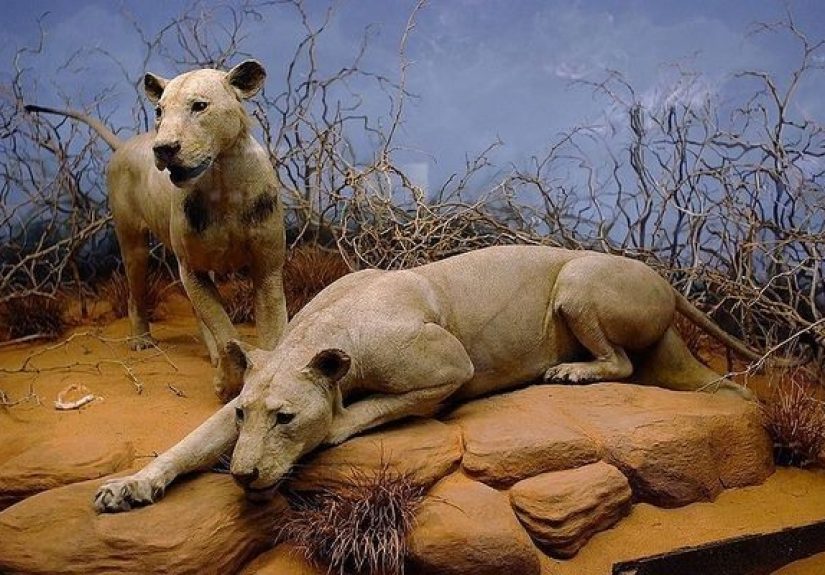
If you want a perfectly engineered nightmare, start with this: two male lions, a remote work camp, canvas tents, exhausted laborers, and a long stretch of nights in 1898 when people kept disappearing. The Tsavo man-eaters attacked workers building a railroad bridge in what is now Kenya, and the terror became so intense that the story outlived everyone involved.
The lions were later nicknamed “The Ghost and the Darkness,” which is honestly the kind of branding most horror villains would pay for. Reports from the time ballooned the death toll to dramatic numbers, while later scientific analysis pushed back and suggested a lowerbut still horrifyingcount. Even the conservative estimates are enough to explain the panic.
What makes the case so creepy
Part of the fear came from unpredictability. These were not one-off attacks on a trail or at a water source. Workers were being targeted in a camp setting while trying to sleep. The psychological effect was brutal: if the danger can enter your camp at night, where exactly is “safe”?
Another reason this case remains famous is that it has been re-analyzed with modern science. Studies of the lions’ remains and later research on hairs trapped in their teeth suggest the two lions did not eat exactly the same things and may have had different hunting patterns. That detail makes the story stranger, not simpler. Two predators, one terror campaign, but not a perfectly identical diet or role. Nature rarely reads our scripts.
What likely pushed them toward humans
Researchers have long debated why the lions attacked people. Leading explanations include painful dental problems in at least one lion, environmental stress, and reduced availability of normal prey in the region. In plain English: when a top predator is injured or food systems break down, humans can become easier targets than the animals lions usually prefer to hunt.
That doesn’t make the Tsavo lions less terrifying. It makes them more plausibleand somehow more disturbing. A supernatural explanation is scary. A natural explanation that could happen again under the right conditions is scarier.
2) The Champawat Tigress (The Record-Holder of Human Fear)
The legend and the number everyone remembers
The Champawat Tigress is often cited as the deadliest man-eating tiger in recorded history. The number most commonly repeated is 436 human deaths, and even careful retellings usually describe the toll as “more than 400.” Whether you focus on the exact figure or the broader range, the scale is staggering.
She operated across Nepal and northern India in the early 20th century and became a nightmare for entire communities. Imagine planning your day around a predator, not traffic. People reportedly avoided fields, paths, and forests unless they moved in groups. Daily life shrank. That is what repeated predator attacks do: they don’t just kill individuals, they reduce a whole region’s sense of normal.
Why this case became iconic
Partly because of the body count, yesbut also because the story became tied to Jim Corbett, one of the most famous hunters-turned-conservation voices in colonial India. That gives the Champawat case a strange double life in history: it is both a horror story and a chapter in the early evolution of public thinking about wildlife, hunting, and responsibility.
As with many man-eater cases, later explanations often point to injury or physical impairment making it harder for the tiger to hunt normal prey. Humans, tragically, can become the easier option when a big cat can no longer chase or subdue faster, stronger animals efficiently.
Why the story still chills modern readers
Tigers are ambush predators. They are built for silence, cover, and sudden violence. That means the terror in Champawat wasn’t just “there is a dangerous animal nearby.” It was “you may never see it until the moment it chooses you.” If lions feel like a siege, a man-eating tiger feels like a trap door opening beneath ordinary life.
Also, the Champawat Tigress has a historical “scale problem” for the human mind. A few attacks are tragic. Hundreds become almost mythic. The result is a case that reads like folklore but is grounded in real reporting and historical memory.
3) The Leopard of the Central Provinces (The Silent Terror)
A predator built for stealth
Lions bring force. Tigers bring ambush. Leopards bring stealth with a side of “you never heard a thing.” That’s exactly why the Leopard of the Central Provinces earns a place on this list.
Accounts commonly describe this leopard as responsible for roughly 150 deaths in India in the early 1900s, with women and children especially vulnerable. Even by the grim standards of historical man-eater stories, that detail is chilling. It suggests not random encounters, but repeated success against people who had the least chance to defend themselves.
Why leopards are terrifying in a different way
Leopards are adaptable, secretive, and comfortable moving near human settlements. They can use brush, darkness, and silence like professional stagehands. In practical terms, that makes fear spread faster than facts. People hear a sound, see a shadow, and suddenly every path home feels like a bad decision.
Unlike the cinematic image of an enormous charging predator in open daylight, leopard danger can feel domestic. The threat is close to houses. It may come at dusk. It may vanish before anyone can track it. That creates a persistent “where is it now?” anxiety that can dominate villages and local rumor networks for months or years.
The documentation problem (and why it matters)
This is also a good moment to remember that many of these cases come from historical accounts that mixed firsthand observation, local testimony, colonial reporting, and retelling. Exact numbers can be disputed. But the patterna leopard repeatedly attacking humans and becoming infamousis well established in historical summaries.
That uncertainty does not weaken the horror. If anything, it adds to it. You’re left with a shape in the dark: a real predator, a repeated trail of deaths, and a story preserved in fragments strong enough to survive for a century.
4) The “Jaws” Sharks of 1916 (When Summer Itself Became Scary)
The attacks that changed American beach culture
In July 1916, a string of shark attacks along the New Jersey coast and in Matawan Creek shocked the United States. Several people were killed, one survived, and the public reaction was immediate panic. This was not just a local storyit was a national one, because it collided with a growing American obsession with seaside leisure.
One minute: summer resort vibes. The next minute: front-page fear, barricaded beaches, and people suddenly treating the ocean like a crime scene.
Why this case is uniquely creepy
The most unnerving part wasn’t just the number of attacks. It was the setting shift. The attacks moved from coastal resort waters to Matawan Creek, well inland from the open sea. For the public, that felt like the predator had broken the rules. Beaches were scary enough. But a creek? Near town? That turned fear into obsession.
The sequence also helped build the cultural blueprint for the “rogue killer shark” narrative. Later investigators and shark experts have pointed out that it is often difficult to prove multiple attacks were caused by one individual shark, and some modern interpretations suggest more than one shark may have been involved. But panic doesn’t wait for peer review.
From real deaths to myth machine
This is the case most tangled with storytelling. It is frequently linked to the atmosphere that later fed Jaws-style cultural fear, even though the direct inspiration narrative has been debated and corrected in places. What is not in dispute is the social impact: media frenzy, mass shark hunts, and a deep public image problem for sharks that lasted generations.
In that sense, the 1916 attacks didn’t just create victims. They created a monster archetype. The biological event ended. The cultural aftershock kept swimming.
5) Gustave the Crocodile (The Legend That Wouldn’t Get Caught)
A giant crocodile, a real threat, and a fog of myth
Gustave, a massive Nile crocodile associated with Burundi’s Ruzizi River and the northern shores of Lake Tanganyika, may be the most legend-heavy entry on this list. He is often described as an enormous crocodile blamed for hundreds of human deaths over decades, with estimates frequently reaching 300 or more.
If that sounds like the plot of a movie, well… it basically became one. Gustave was the subject of a PBS documentary in the early 2000s, and repeated attempts to capture him only added to the myth. Failed capture attempts are excellent fuel for folklore. People hear “we tried and failed,” and the animal instantly levels up from dangerous to supernatural in the public imagination.
What makes Gustave so creepy
Crocodiles are already nightmare-efficient predators: low profile, explosive acceleration, near-silent approach, and an attack style that begins with “the water looked normal.” Gustave’s story adds scale and persistence. Reports describe him as unusually large, scarred, elusive, and active over many years.
At the same time, Gustave is also a reminder that famous predator stories often accumulate exaggeration. Exact body size, age, and death toll claims vary across retellings. Some estimates are based on sightings and local testimony rather than direct measurement, because he was never reliably captured and studied the way scientists would prefer.
The real lesson behind the legend
The uncertainty is not a reason to dismiss the danger. It is a reason to read carefully. Gustave represents the point where real risk, local memory, journalism, and myth all overlap. There was (and may still be, depending on the most current verified sighting) a very large, feared crocodile in a region where crocodile attacks are a serious reality. That alone is enough to command respect, even before the legend starts adding inches, years, and victims.
What These “Animal Serial Killer” Stories Actually Teach Us
These five cases are creepy for different reasons, but they share a few patterns:
- Injury or impairment matters. Several famous man-eater cases involve animals that may have been physically compromised.
- Human systems change predator behavior. Railroads, settlements, habitat change, prey loss, and crowding can create dangerous overlap.
- Panic fills gaps in evidence. Once fear spreads, rumor and certainty arrive togethereven when science is still catching up.
- The setting matters psychologically. Camps at night, village edges, creeks, and shorelines feel “close to home,” which magnifies terror.
- Legends outlive the incident. Long after the attacks stop, the stories keep shaping how people think about entire species.
So yes, this list is creepy. But it’s also a reminder that the scariest wildlife stories are usually not about “evil animals.” They’re about ecosystems under pressure, humans under fear, and the moment those two things collide.
Extra 500-Word Experience Section: What It Feels Like to Live Near a Story Like This
You don’t need to witness a man-eating animal attack to feel the psychological force of one. In communities touched by these storieswhether the threat is current, historical, or passed down through family lorethe experience often starts long before any direct encounter. It begins with changed behavior.
People leave earlier. They come home earlier. A shortcut that used to save ten minutes suddenly becomes “the path nobody takes after dark.” Children who once treated rivers, creeks, or field edges like playgrounds are told to stay close. Adults start doing little calculations all day long: Is it worth going alone? Can this wait until morning? Did anyone see tracks?
That is the part many sensational retellings miss. The deepest impact of a predator scare is not always the attack itself. It’s the shrinking of ordinary life.
Even reading historical accounts creates a strange kind of secondhand experience. You start noticing how quickly confidence disappears when a predator becomes unpredictable. A beach is no longer “the beach.” It becomes a map of risks: deeper water, murky water, incoming tide, kids too far out, no lifeguard nearby. A work camp is no longer shelter. It becomes canvas, noise, darkness, and who is sleeping closest to the edge.
There is also a social experience to these stories: the way rumor moves. In almost every famous case, one confirmed event is followed by ten unconfirmed stories, twenty theories, and a hundred confident opinions. Someone says the animal is wounded. Someone says it’s possessed. Someone says it was definitely seen near the old bridge, the mango grove, the rail camp, the creek bend, the shoreline fence. Fear has excellent legs.
And then there’s the media effect. Once newspapers, radio, film, or social media pick up a predator story, the experience changes again. The local community is living a safety problem; the outside world is consuming a thriller. That gap can feel frustrating and surreal. For outsiders, it’s “What a story.” For locals, it’s “We still need to fetch water.”
Modern readers can have a more useful experience with these stories if we resist the monster-movie instinct for just a moment. Instead of asking only, “How many did it kill?” ask: What conditions made this possible? What warnings were ignored? What changed in the habitat? What made people vulnerable? Those questions are less dramatic, but they are the ones that help prevent repeat tragedies.
Still, let’s be honest: part of the reason these cases endure is that they hit an old human nerve. We are a species that builds cities and satellites, yet a rustle outside a tent, a ripple in dark water, or a pair of eyes at the edge of a field can still reset us to factory settings. Suddenly, we remember exactly what we areclever, social, tool-making primates… and occasionally, prey.
Conclusion
The 5 creepiest serial killers (who were animals) are unforgettable not because they were villains in the human sense, but because they exposed how fragile “normal life” can be when a predator repeatedly targets people. The Tsavo lions turned a railroad project into a siege. The Champawat Tigress became a symbol of large-scale fear. The Leopard of the Central Provinces embodied stealth-driven terror. The 1916 Jersey attacks rewired shark panic in American culture. And Gustave became a living legend where fact and folklore still overlap.
If there’s one takeaway, it’s this: the scariest animal stories are often the ones that are most realmessy, disputed, ecological, and human all at once.