Table of Contents >> Show >> Hide
- Physical Media’s Greatest Trick: Making “Ownership” Feel Simple
- The Real Villains Were the Drawbacks We Pretended Were “Quirky”
- Convenience Wonand It Wasn’t Even Close
- Cost, Supply Chains, and the Retail Reality Check
- Quality Arguments: The One Area Physical Media Still Wins
- “But Streaming Can Take It Away!”: Yes, and That’s the Catch
- Even the Industry Moved On
- So Did Physical Media “Deserve” To Die?
- Personal Experiences: My Slow Breakup With Physical Media
- Conclusion
Physical media didn’t “die” in a single dramatic moment. It didn’t topple off a cliff while clutching a
director’s-cut box set and whispering, “Tell my Blu-rays… I loved them.” It just slowly lost the argument.
One scratched disc at a time. One missing case at a time. One “Why do I own this in three formats?” moment
at a time.
And yesdeserved is a spicy word. But that’s the point. For decades, physical media asked us to
tolerate inconvenience, clutter, fragility, and constant repurchasing… all for a sense of “ownership” that
was never as clean as we pretended. Streaming didn’t win because it’s perfect. Streaming won because
physical media kept handing it the trophy.
Physical Media’s Greatest Trick: Making “Ownership” Feel Simple
When “buy” meant a thing
The golden promise of physical media was straightforward: you paid once, you got a thing, and the thing
was yours. A CD felt like a tiny, shiny contract. A DVD felt like a little vault you could pull off a shelf
whenever the mood struck. A game cartridge felt like a magic talismanblow on it (scientifically questionable),
jam it in, and you were instantly transported.
That simplicity mattered. It made collections feel like identity. It made recommendations tactile (“Borrow this”)
instead of theoretical (“I’ll send you a link… if it’s still available… in your region… on the same service”).
It made media feel permanent in a way the internet still struggles to replicate.
But it was never truly simple
The catch was that physical ownership came bundled with a whole circus of “just deal with it” problems:
region codes, format wars, copy protection, missing players, outdated cables, scratched surfaces, broken cases,
sun damage, humidity, and that one disc that looks fine until it hits chapter 12 and suddenly decides it’s an
abstract film about buffering.
Physical media didn’t just sell you entertainment. It sold you an ongoing relationship with objects:
objects you had to store, protect, organize, maintain, and move. And if you’re thinking,
“That’s part of the charm,” congratulationsyou were the target audience for a very specific kind of suffering.
The Real Villains Were the Drawbacks We Pretended Were “Quirky”
Fragility: scratches, tape wear, and “disc rot” anxiety
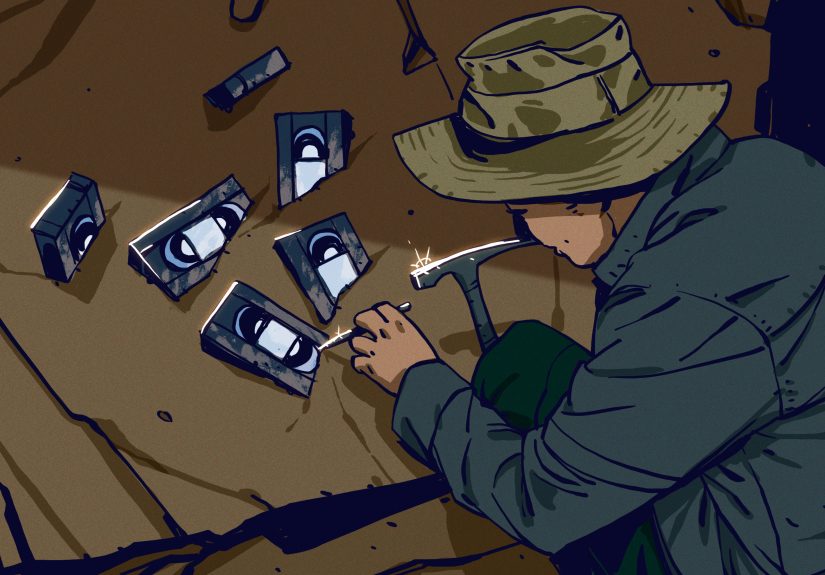
Physical media is, in a word, delicate. VHS tapes wear out. Cassettes unravel. Discs scratch if you look at them
with the wrong facial expression. Even when you baby your collection, time still has opinions.
Optical discs can degrade for a variety of reasonsmanufacturing issues, layer separation, chemical deterioration,
bad storage conditions, and plain old aging. Most people won’t see their entire library crumble overnight, but the
mere fact that “Will this still play?” is a question at all tells you something: physical “forever” always had an
expiration date hiding in the fine print.
Clutter: the stealth tax on your living space
A shelf of discs looks classy right up until you move apartments, downsize, or realize your “organized collection”
is actually a landfill with cover art. Physical media consumes space the way toddlers consume silence.
And it’s not just the discs. It’s the packaging. The jewel cases that crack. The box sets that bulge. The cardboard
sleeves that scuff. The binders that become accidental frisbees. The “special edition” that was special because it
included a booklet you never read but now feel guilty throwing away.
The upgrade treadmill and the format-wars hangover
Physical media also had a long history of turning your wallet into a confession: “Yes, I bought this again.”
VHS to DVD. DVD to Blu-ray. Blu-ray to 4K UHD. Add in remasters, director’s cuts, collector’s editions,
steelbooks, and anniversary releases, and suddenly your favorite movie is less a film and more a recurring subscription
you pay for in plastic.
Worse, there were the format warsBetamax vs. VHS, then Blu-ray vs. HD DVDwhere consumers were expected to gamble on
the future like they were picking stocks. If physical media were a friend, it would be that friend who keeps “investing”
in weird schemes and then asks you to Venmo them because “it’s definitely going to bounce back.”
Convenience Wonand It Wasn’t Even Close
Instant access beats “find the disc” every time
Streaming’s core pitch is embarrassingly effective: press play, immediately watch. No case. No disc. No drawer full of
adapters from extinct HDMI eras. No “I swear I put it back after last time.”
The convenience is not superficial; it changes behavior. When entertainment becomes frictionless, people try more things.
They rewatch more casually. They sample. They abandon and return without feeling like they “wasted” a purchase. Physical
media, by contrast, feels like a commitment. You don’t casually audition a movie you paid $24.99 for in a clamshell case.
Discovery and the long tail: more titles, fewer errands
Physical media excelled at what stores stocked. Streaming excels at what algorithms surface. That’s not always a win
for taste, but it’s a win for access. A service can put thousands of films a click awayno shelf space, no endcap,
no “Sorry, we’re out.”
Even the most iconic physical-era disruptor eventually admitted the future was digital. Netflix’s DVD-by-mail operation
the red-envelope legendended after a long, influential run. It was a symbolic “lights out” moment for the idea that
discs were still the center of home entertainment.
Cost, Supply Chains, and the Retail Reality Check
Big retailers stopped caring, and that matters
Physical media thrived when it had prime real estate: front-of-store racks, weekly releases, sale bins, and impulse buys.
But as shopping shifted online and viewing shifted to streaming, discs became a low-margin, slow-moving category.
Retail space is ruthless. If a product doesn’t earn its footprint, it gets evicted.
That eviction has been playing out in public. Major retailers phased out or reduced movie disc sections, and the
shrinking shelf presence became a self-fulfilling prophecy: fewer discs available means fewer casual purchases,
which means fewer discs stocked, and so onuntil you’re standing in an aisle that sells phone cases where the Blu-rays
used to live.
Rentals disappeared: the last “disc habit” broke
If you want to know when an era is over, watch what happens to rentals. Renting a disc was the most “normal person”
interaction with physical mediano collector identity, no shelf-building, just “Tonight, we watch something.”
But disc rentals collapsed. Netflix stopped mailing DVDs. Redbox kiosksonce everywhereshut down after its parent company
went into liquidation. That matters because rentals were physical media’s casual on-ramp. Without them, discs became either
a collector’s niche or a nostalgia project.
Quality Arguments: The One Area Physical Media Still Wins
Bitrate, consistency, and “it just looks better”
Physical media’s strongest case is visual and audio quality. A 4K UHD Blu-ray can deliver higher bitrates and more stable
playback than streamingno compression hiccups, no sudden dips because your neighbor started a video call, no “Why does this
dark scene look like a watercolor made of pixels?”
For cinephiles and home theater enthusiasts, that matters. It’s not imaginary. It’s measurable. And special features
commentary tracks, behind-the-scenes documentaries, booklets, restored cutsoften live more reliably in physical releases
than in streaming libraries that swap titles and extras like they’re rotating seasonal menus.
So why didn’t quality save discs?
Because the average viewer voted for good enough. Streaming quality improved, TVs got smarter, and most people decided
that “pretty great, instantly available” beats “slightly better, requires a plastic ritual.”
This is the brutal truth of consumer tech: the best product doesn’t always win. The easiest product does. And physical media
kept asking consumers to do homeworkplayers, cables, storage, care, upgradeswhile streaming asked them to do one thing:
tap play.
“But Streaming Can Take It Away!”: Yes, and That’s the Catch
Licenses, not forever
Here’s the part where physical-media fans say, “Aha!” and they’re not wrong. Digital purchases often function as licenses,
not ironclad ownership. Titles can disappear due to rights issues. Services rotate catalogs. Even “Buy” buttons can be more
complicated than they look if the fine print says you’re purchasing access rather than a permanent copy.
Consumer agencies have warned about this reality: digital items you “bought” can be constrained by terms of service, account
status, and licensing agreements you don’t control. In other words, you may not have the same practical ownership that a disc
in your hand provides.
Why that doesn’t resurrect the disc era
The licensing problem is realbut it doesn’t mean we should drag physical media back onto the throne. It means we should
demand clearer labeling, better consumer rights, and more transparent digital ownership models.
Also, it’s 2026. The practical alternative to “owning discs” isn’t necessarily “owning nothing.” Many people keep personal
digital libraries (legally obtained files, DRM-free music, local backups) and use modern home media servers. The instinct
behind physical ownershipcontrol, permanence, independencecan exist without an apartment full of plastic rectangles.
Even the Industry Moved On
When manufacturers stop making the blanks, the message is loud
Physical media doesn’t only live or die by consumer preference; it also depends on manufacturing ecosystems: blank media,
drives, players, and supply chains. When those shrink, the whole experience becomes harder and more expensive.
Recent moveslike major manufacturers discontinuing certain recordable formatssignal what the market already decided:
optical media is no longer the default storage story. That doesn’t mean commercial discs vanish tomorrow, but it does mean
the “every household has a disc setup” era is over.
So Did Physical Media “Deserve” To Die?
It deserved to stop being the default
If you love physical media, this might sting. But “deserved to die” doesn’t have to mean “deserved to be erased.”
It means physical media deserved to lose its privileged position as the standard way most people access entertainment.
The default should be the option that serves the most people with the least friction. That’s streaming and digital delivery.
Not because it’s morally superior, but because it’s functionally superior for everyday life. Physical media asked too much:
space, care, compatibility, upgrades, and constant repurchasing. It couldn’t keep winning that trade.
What should survive (and why it will)
Physical media still has a healthy niche where it makes sense:
- Collectors who value packaging, art, and curated editions.
- Archivists who prioritize preservation and stable access.
- Home theater fans who want the best possible audio/video quality.
- Music lovers who enjoy vinyl’s ritual and tangible experience (and the big artwork).
In other words: physical media will survive where it’s chosen, not where it’s required.
That’s a healthier relationship for everyone.
Personal Experiences: My Slow Breakup With Physical Media
My relationship with physical media ended the way many long relationships do: not with a dramatic fight, but with a quiet,
exhausted sigh while holding a box labeled “DVDs (probably).”
It started with moving. Moving turns your belongings into a courtroom, and everything has to justify itself. Clothing? Guilty,
but necessary. Kitchen stuff? Annoying, but essential. Then you hit the media shelf and realize you’re about to carry
80 pounds of plastic across town because, years ago, you felt emotionally obligated to own every season of a show you now
can’t even remember liking.
The first time I considered dumping the collection, I opened a case and found the disc wasn’t there. It was a perfect
physical-media haiku: the box exists / the disc is missing / your confidence collapses. After that, I noticed the
little problems I’d been ignoring. A disc with micro-scratches that “usually plays fine.” A CD that skipped on the one song
I actually cared about. A game that required a huge download patch anyway, which made the disc feel less like a product and
more like a permission slip.
Then came the format mess. I had a small pile of DVDs I’d “upgrade someday,” a few Blu-rays I bought because the sale was
irresistible, and exactly one 4K disc I purchased after a late-night burst of optimism about becoming a “serious” home theater
person. (Reader, I was not.) Each format came with an implied lifestyle: the right player, the right cables, the right TV
settings, and the right amount of patience. My actual lifestyle was closer to: “I have 45 minutes before I fall asleep, please
do not make me troubleshoot.”
Streaming made the decision easy in a way I resented at first. Suddenly I could watch something without planning it. I could
sample an old movie without committing to owning it. I could rewatch a comfort show like it was a warm blanket instead of a
logistical project. And the experience of discovering new thingsjumping from a documentary to a comedy special to a random
classic I’d never heard offelt natural in a way physical media never did. Physical media always asked me to decide ahead of
time what I wanted to own. Streaming let me decide in the moment what I wanted to feel.
That said, there are things I genuinely miss. I miss liner notesthose little essays and credits that made albums feel like
miniature worlds. I miss the certainty of lending someone a disc and knowing it would still work even if their Wi-Fi had
a tantrum. I miss special features that weren’t buried or missing. And, weirdly, I miss the sense of occasion: putting a disc
in felt like announcing, “We are watching a movie now,” the way lighting a candle announces, “We are pretending we are calm.”
But nostalgia isn’t a business model. When I look at my old shelves now, I don’t see a golden ageI see a lot of time spent
organizing, cleaning, upgrading, and searching for objects that were supposed to serve the entertainment, not become a second
hobby. I still keep a small physical collection: a few favorites, a couple of special editions, and the rare title I truly
want permanent access to. Everything else? I let it go. And the surprising part is that I didn’t feel like I lost my media.
I felt like I got my spaceand my timeback.
Conclusion
Physical media deserved to die as the default because it demanded too much from ordinary life: space, maintenance, upgrades,
and constant object management. Streaming and digital delivery didn’t win by being flawless; they won by being effortless.
And for most people, effortless is the whole point of home entertainment.
Still, the best future isn’t “all streaming, all the time.” It’s a world where convenience is standard, and true ownership is
available when you want itclearly labeled, fairly priced, and designed for longevity. Physical media can remain a passionate
niche for collectors, archivists, and quality obsessives. But it no longer gets to pretend it’s the most practical solution
for everyone else.