Table of Contents >> Show >> Hide
- Before You Start: What a Six Pack Really Means
- Your 14-Step No-Equipment Six-Pack Plan
- Step 1: Set a Realistic Goal and Timeline
- Step 2: Create a Small, Sustainable Calorie Deficit
- Step 3: Prioritize Protein and Smart Carbs
- Step 4: Fix Your Liquid Calories
- Step 5: Move More All Day (Not Just During Workouts)
- Step 6: Schedule 3–4 Core Sessions per Week
- Step 7: Master the Plank (Your No-Equipment Core Foundation)
- Step 8: Add Side Planks for Sharp Obliques
- Step 9: Use Dead Bugs for Safe Core Control
- Step 10: Fire Up Your Glutes With Bridges
- Step 11: Add Dynamic Moves for Definition
- Step 12: Build Your 20-Minute No-Equipment Ab Workout
- Step 13: Respect Recovery (Your Overnight Secret Weapon)
- Step 14: Track Progress Beyond the Mirror
- Common Six-Pack Myths You Should Ignore
- What It’s Really Like to Get a Six Pack Without Equipment (Experience-Based View)
- The Bottom Line: Six Pack, Zero Equipment
You don’t need a fancy gym membership, an ab machine that looks like a medieval torture device, or a closet full of resistance bands to build a strong, defined core. A visible six pack is absolutely possible with nothing more than your body weight, a bit of floor space, and the two hardest pieces of “equipment” to find: consistency and patience.
That said, it’s important to be honest: a shredded midsection is mostly about body fat levels and smart training, not just doing hundreds of crunches. Your six pack is already there your job is to reveal it and strengthen it. This guide walks you through 14 practical steps to get a six pack without any equipment, safely and efficiently, plus some real-life experience-based tips at the end so you know what the journey actually feels like.
Before You Start: What a Six Pack Really Means
Six-pack abs are mainly the rectus abdominis muscle, with the obliques and deeper core muscles helping shape the waist. Whether those muscles are visible depends largely on your body fat percentage and genetics.
- Most people start to see more obvious ab definition at lower body fat levels, roughly in the low teens for many men and high teens to low 20s for many women.
- You cannot “spot reduce” belly fat. You lose fat from your whole body over time through a calorie deficit, not just from where you want it gone.
- Strong abs are about more than looksthey support your spine, improve posture, and help almost every movement you do.
So if you’re starting from a higher body fat level, a realistic goal might be “strong, flatter, more defined core” first. The sharp, magazine-cover six pack can come later as your overall body fat drops.
Your 14-Step No-Equipment Six-Pack Plan
Step 1: Set a Realistic Goal and Timeline
Forget the “get a six pack in 10 days” clickbait. Your body doesn’t care what the headline promised. Instead:
- Think in 8–12 week blocks, not days.
- Set performance goals like “hold a plank for 60 seconds” or “complete 3 rounds of my core circuit without stopping” alongside aesthetic goals.
- Accept that habits not hacks reveal your abs. Nutrition, activity, and consistent core training all matter.
When you aim for habit change instead of instant transformation, you give yourself time to actually succeed.
Step 2: Create a Small, Sustainable Calorie Deficit
You can do the perfect ab workout at home every day, but if you’re in a calorie surplus, your six pack will stay undercover. To gradually lower body fat:
- Aim for a modest deficit (often around 250–500 calories per day for many people) instead of extreme dieting.
- Fill most meals with whole foods: lean protein, vegetables, fruits, whole grains, and healthy fats.
- Keep an eye on portion sizes, especially for calorie-dense foods like oils, nuts, desserts, and fast food.
Slow, steady fat loss is easier to maintain and less likely to wreck your energy or mood.
Step 3: Prioritize Protein and Smart Carbs
Protein helps keep you full, preserves muscle while losing fat, and supports recovery from those spicy plank sessions. Carbs are your main fuel for workouts and daily life.
- Include a source of lean protein at most meals (eggs, fish, chicken, beans, tofu, Greek yogurt).
- Use mostly high-fiber carbs (oats, brown rice, quinoa, potatoes, fruits, vegetables) instead of constant refined carbs and sugary snacks.
- Don’t fear carbs just use them wisely, especially around your workouts to keep your energy up.
Step 4: Fix Your Liquid Calories
Many people are “drinking” their abs away without realizing it. Soda, sugary coffee drinks, energy drinks, and heavy alcohol intake can quietly add hundreds of calories per day.
- Make water your default beverage; aim for roughly clear, pale-yellow urine as a simple hydration check.
- Limit sugary drinks to occasional treats.
- If you drink alcohol, keep it moderate and not every night.
It’s a boring step, but it’s one of the fastest wins for revealing a six pack.
Step 5: Move More All Day (Not Just During Workouts)
You don’t need equipment, but you do need movement. Increasing your daily activity sometimes called NEAT (non-exercise activity thermogenesis) helps burn more calories without feeling like you’re always “exercising.”
- Walk more: short walks after meals, take the stairs, park farther away.
- Set a reminder to stand up and stretch every hour if you sit a lot.
- Do quick “movement snacks”: 10 squats, 10 lunges, 30 seconds of marching in place throughout the day.
Step 6: Schedule 3–4 Core Sessions per Week
To build a defined, functional midsection, treat your core like any other muscle group:
- Train it 2–4 times per week, not randomly “when you feel like doing abs.”
- Mix static holds (like planks) with dynamic moves (like crunch variations and leg raises).
- Keep your home ab workouts in the 10–20 minute range so they’re tough but realistic to stick with.
Step 7: Master the Plank (Your No-Equipment Core Foundation)
The plank is a classic for a reason: it targets your deep core muscles as well as your shoulders and glutes all with zero equipment.
How to do a perfect forearm plank:
- Start on your forearms, elbows directly under your shoulders.
- Extend your legs behind you with feet hip-width apart.
- Form a straight line from head to heels no sagging, no pike.
- Brace your abs like you’re about to be poked in the stomach, squeeze your glutes, and keep your gaze down.
Begin with 3 sets of 20–30 seconds. As you get stronger, build up toward 45–60 seconds with good form. If your lower back starts to ache, drop to your knees and reset rather than pushing through sloppy technique.
Step 8: Add Side Planks for Sharp Obliques
Side planks target your obliques, the muscles that help create that “V” shape at your waist and support lateral stability.
How to do a side plank:
- Lie on one side with your elbow under your shoulder and legs stacked.
- Lift your hips off the floor so your body forms a straight line from head to feet.
- Keep your top hip stacked directly over the bottom hip don’t let your torso roll forward or backward.
Aim for 3 sets of 20–30 seconds per side. If that’s too hard, bend your bottom knee and keep it on the floor for support.
Step 9: Use Dead Bugs for Safe Core Control
Dead bugs look easy until you do them properly. They’re fantastic for training your deep core without stressing your lower back or neck.
How to do a dead bug:
- Lie on your back with arms straight up toward the ceiling and knees bent at 90 degrees above your hips.
- Press your lower back gently into the floor and brace your core.
- Slowly lower your right arm and left leg toward the floor while keeping your back glued down.
- Return to the start and repeat on the other side.
Start with 2–3 sets of 8–10 slow reps per side. Move deliberately; if your back arches, reduce your range of motion.
Step 10: Fire Up Your Glutes With Bridges
Strong glutes support your lower back and help your core function as a unit instead of just isolated abs.
How to do a glute bridge:
- Lie on your back with knees bent and feet flat on the floor, hip-width apart.
- Press through your heels to lift your hips until your body forms a line from shoulders to knees.
- Squeeze your glutes at the top, keep your ribs down, and avoid over-arching your lower back.
Perform 2–3 sets of 12–15 reps or hold the top position for 20–30 seconds for a static challenge.
Step 11: Add Dynamic Moves for Definition
Static holds build deep strength, while dynamic moves add intensity and help sculpt definition. Great no-equipment options include:
- Bicycle crunches: Lie on your back, hands lightly behind your head, legs in tabletop. Extend one leg while rotating your torso to bring the opposite elbow toward the bent knee, then switch sides. Go slow and controlled, not like you’re in a cartoon fight.
- Leg raises: Lie on your back, legs straight. Brace your abs and raise your legs toward the ceiling, then lower them with control without letting your lower back pop off the floor. Bend your knees if needed.
- Mountain climbers: From a high plank, draw one knee toward your chest, then switch legs in a controlled, rhythmic motion. Think “smooth and tight” rather than flailing.
Use these for 8–15 reps per exercise or 20–30 seconds of continuous work.
Step 12: Build Your 20-Minute No-Equipment Ab Workout
Here’s a simple, effective home ab workout you can do 3–4 times per week with no equipment:
Warm-up (3 minutes)
- 30 seconds marching in place
- 30 seconds bodyweight squats
- 30 seconds hip circles
- Repeat once
Core Circuit (15 minutes)
Complete 3 rounds. Rest 30–45 seconds between exercises if needed.
- Forearm plank – 30–45 seconds
- Side plank (right) – 20–30 seconds
- Side plank (left) – 20–30 seconds
- Dead bugs – 10 reps per side
- Glute bridges – 15 reps
- Bicycle crunches – 12–15 reps per side
- Mountain climbers – 20–30 seconds
Cool-down (2 minutes)
- Cat-cow stretches
- Child’s pose
- Gentle spinal twists lying on your back
Adjust work and rest as needed. Your goal is controlled movement and good form not racing the clock at the expense of your lower back.
Step 13: Respect Recovery (Your Overnight Secret Weapon)
Yes, abs are “made in the kitchen” but they’re also refined while you sleep. Recovery is when your muscles repair and your hormones reset.
- Aim for 7–9 hours of quality sleep per night when possible.
- Take at least 1–2 rest days per week from intense core training.
- If you’re constantly sore or exhausted, do a lighter session or focus on walking and stretching instead of pushing harder.
Step 14: Track Progress Beyond the Mirror
Your six-pack journey is more than a selfie project. Track changes that reflect real progress:
- How long you can hold a plank with solid form.
- How many rounds of your home ab workout you can complete.
- How your clothes fit around your waist.
- How your posture and lower-back comfort improve.
Visible abs will often show up last. Strength, stamina, and confidence usually arrive sooner don’t ignore those wins.
Common Six-Pack Myths You Should Ignore
Myth 1: “I Just Need to Do Hundreds of Sit-Ups”
Crunches hit the surface abs but miss deeper core muscles and can stress your neck and back if overused. A balanced program with planks, dead bugs, and other bodyweight core exercises is more effective and safer.
Myth 2: “If My Abs Don’t Burn, It’s Not Working”
That intense burn is mostly from fatigue and metabolite buildup, not a magic fat-melting signal. Controlled, high-quality reps and holds matter more than chasing that “on fire” feeling every set.
Myth 3: “I Have to Train Abs Every Day”
Abs are muscles like any others. They need stress + recovery. Training your core hard 3–4 days per week is plenty if you’re also managing nutrition and overall activity.
Myth 4: “If I Don’t See Abs, I Don’t Have a Strong Core”
Some people have strong, stable cores and still don’t have a sharp six pack because of genetics or higher (but still healthy) body fat levels. Think of visible abs as a combination of strength and leanness, not your only measure of fitness.
What It’s Really Like to Get a Six Pack Without Equipment (Experience-Based View)
On paper, “How to Get a Six Pack Without Any Equipment in 14 Steps” looks clean and simple. In real life, it’s a little messier and that’s completely normal.
Imagine someone starting this process from a busy, desk-heavy lifestyle. The first week, the biggest hurdle isn’t the plank; it’s remembering to do the workout at all. Day one feels exciting. They knock out the 20-minute circuit, shake a bit in the side planks, and proudly check “abs workout” off the to-do list. Day three, motivation is lower, their core feels a little sore, and the couch is loudly calling their name. This is where most people quietly opt out.
The turning point usually comes when the routine gets built into something that already exists. Maybe they always watch a show in the evening now the rule becomes “core circuit before episode.” Or they tie it to their morning coffee: finish the mug, then hit the floor for 10–15 minutes of planks, dead bugs, and bridges. No debating, no drama just a tiny, non-negotiable ritual.
By week three or four, the progress is subtle but very real. Planks that used to feel impossible at 20 seconds now breeze past 40. Their lower back complains less after sitting at a computer. They notice they’re standing a little taller and turning more powerfully during daily movements like carrying groceries or playing with kids. The mirror might not show a full six pack yet, but the body feels different: more solid, more connected.
Nutrition is often where the “oh, this is real work” moment lands. Swapping out daily sugary drinks or late-night snacks isn’t glamorous, but it often makes the biggest visual difference. At first it feels like sacrifice; over time it becomes routine sparkling water instead of soda, fruit instead of constant cookies, real meals instead of random grazing. On weekends, they might relax a bit, but they learn that one high-calorie meal doesn’t ruin everything, just like one perfect salad doesn’t build abs overnight.
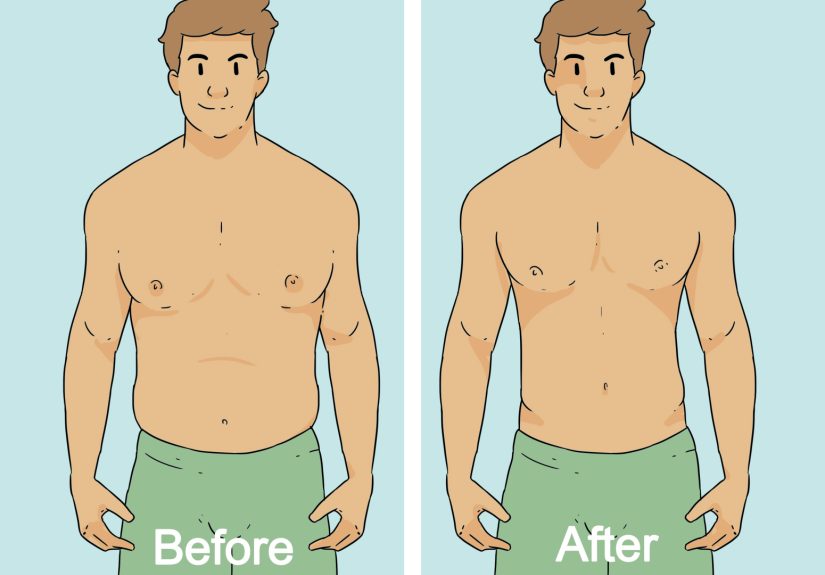
Plateaus happen, too. There’s usually a stretch where the scale barely moves and the waist measurement seems stuck. The temptation is to quit or double everything overnight. The smarter move is small adjustments: tightening up portions, adding an extra walk each day, or slightly increasing the intensity of the core circuit (longer planks, more mountain-climber time, or an extra round). Progress restarts not as a dramatic “before-and-after” moment, but as a slow, steady trend.
Social life plays a role as well. Friends may ask, “Why are you doing core workouts on your living room floor?” or joke about your water bottle habits. Over time, those same friends often start asking for tips: “What ab workout are you doing?” or “How did you tighten up your midsection at home?” That’s when the results are obvious enough for others to notice.
By the time a real six pack begins to show, most people realize the biggest win wasn’t the squares on their stomach it was the identity shift. They went from someone who tried random ab challenges to someone who reliably trains, eats with intention, and understands their own body better. The equipment-free part becomes almost symbolic: you built this with your own body, your own habits, and your own consistency.
So if you’re starting this 14-step plan, expect good days, tired days, hungry days, and “why am I doing this again?” days. That’s all part of it. Stick with the small habits the daily walks, the sensible meals, the short but focused core sessions. Over time, they will not only give you a stronger, more defined midsection, but also a version of yourself that’s a lot tougher, more patient, and more confident than when you started.
The Bottom Line: Six Pack, Zero Equipment
Getting a six pack without any equipment isn’t magic it’s method. You need:
- A realistic timeline and clear goals.
- Consistent, moderate calorie control and smart nutrition.
- Regular no-equipment ab workouts that blend static holds and dynamic movements.
- Daily movement, quality sleep, and patience with the process.
Follow these 14 steps, adjust them to your fitness level, and give yourself time. Your core will get stronger long before your abs fully “pop,” but if you stay consistent, that six pack will be the natural side effect of the healthier lifestyle you’ve built no machines, no gym membership, and no gimmicks required.