Table of Contents >> Show >> Hide
- What Makes a Death Mask “Controversial”?
- 10 Controversial Death Masks Of Famous People
- 1) Napoleon Bonaparte: The “Original” That Isn’t Singular
- 2) William Shakespeare: The Mask That Won’t Stop Being Claimed
- 3) Maximilien Robespierre: A Revolutionary Face With a Question Mark
- 4) Ludwig van Beethoven: Life Mask, Death Mask, and the Confusion In Between
- 5) Vladimir Lenin: When a Death Mask Becomes a Political Object
- 6) L’Inconnue de la Seine: The Face That Might Not Be a Death Mask at All
- 7) Walt Whitman: The Poet, the Autopsy, and the Ethics of a Cast
- 8) John Dillinger: A Death Mask Made for a Sales Demo
- 9) Jesse James: Purported Masks and the Celebrity-Relic Machine
- 10) Isaac Newton: Science, Scans, and the Strange Afterlife of a Face
- How to Spot a Questionable Death Mask
- Why We Can’t Look Away
- Extra: What It Feels Like to Encounter Death Masks Up Close (A Visitor’s-Eye View)
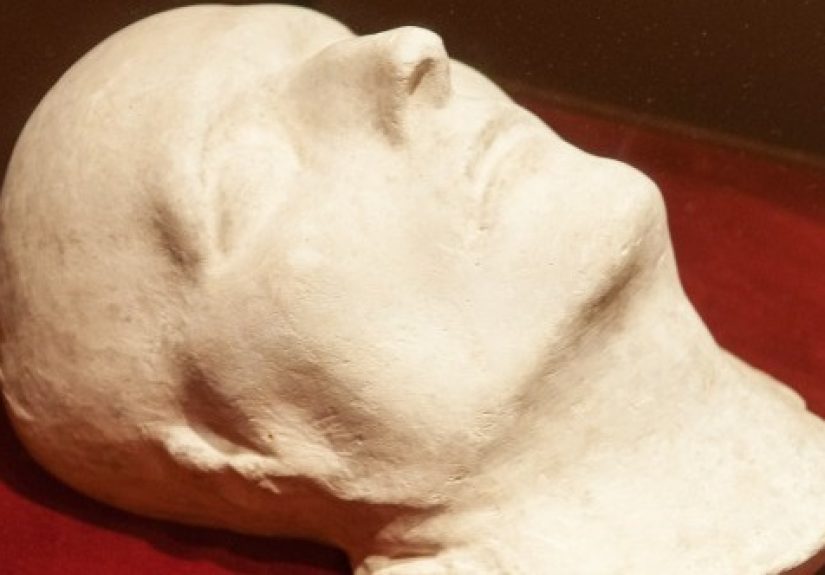
Death masks sit at the weird intersection of art, science, and “why is this in a display case right next to the gift shop?”
They’re literal casts taken from a person’s face after death (usually plaster, sometimes wax), meant to preserve features before
decomposition and before photography made everyone’s pores immortal for free.
And while the idea sounds straightforwardmix plaster, cast face, preserve historydeath masks have a talent for attracting drama.
Provenance gets murky. Copies multiply like rabbits. Myths attach themselves like lint. Sometimes the “mask” isn’t even from a dead person.
Sometimes it’s not from the person at all. Sometimes it’s absolutely real, but the controversy is ethical: should we be turning a corpse into a collectible?
Below are ten famous, fascinating, and frequently argued-over death masks (or “death masks”)each with a little controversy baked in.
Think of this as a guided tour through the museum wing labeled Humanity: Please Be Normal.
What Makes a Death Mask “Controversial”?
“Controversial” doesn’t always mean scandal in the tabloid sense. With death masks, the controversy usually falls into one (or more) of these buckets:
- Authenticity fights: Is it an original cast, a later copy, or a creative “tribute” that got out of hand?
- Identity confusion: The face is famous… but is it the famous face?
- Mythmaking: A good story grows around a mask, then starts replacing the facts.
- Commercialization: A memorial object becomes merchsometimes immediately, sometimes decades later.
- Ethics: Museums and collectors wrestle with the line between history and spectacle.
10 Controversial Death Masks Of Famous People
1) Napoleon Bonaparte: The “Original” That Isn’t Singular
If you’ve ever seen a “Napoleon death mask,” congratulationsyou’ve met the world’s most multiply-claimed face.
Napoleon died in 1821 on Saint Helena, and casts associated with him spread across Europe and beyond. The controversy?
There isn’t one universally accepted “the” mask. There are maskspluralalong with competing origin stories,
competing chains of custody, and a parade of replicas that blur the line between historical artifact and historical fan fiction.
Part of the mess is practical: once a mold exists, copies can be made. And once copies exist, copies of copies appear.
Add 19th-century collecting habits, patriotic fervor, and the fact that people love owning a physical piece of legend,
and you get a perfect storm: multiple institutions and private collections can hold casts tied to Napoleon, without all of them
being equally close to the first postmortem molding.
The result is a long-running authenticity debate where the argument isn’t “did a mask exist?”it’s “which lineage of casts
has the best claim to the earliest source?” In death-mask terms, that’s basically a custody battle for cheekbones.
2) William Shakespeare: The Mask That Won’t Stop Being Claimed
Shakespeare’s face is famously uncertain. We have portraits, engravings, and centuries of artistic interpretation.
So when a “death mask of Shakespeare” appears in the historical record, you can practically hear the collective gasp…
followed by the academic sound of twenty eyebrows rising at once.
The controversy here is foundational: there’s no solid, universally accepted documentation that a death mask was taken from Shakespeare at all.
Yet a specific cast, often associated with claims of being his, has circulated and been discussed for decades.
Supporters point to facial proportions that seem to align with traditional depictions; skeptics counter with issues of provenance,
historical plausibility, and the ease with which later collectors could “upgrade” a mysterious mask into a celebrity relic.
In other words: it’s not impossiblebut it’s exactly the kind of object that attracts wishful thinking.
When a culture desperately wants a face, it sometimes finds one.
3) Maximilien Robespierre: A Revolutionary Face With a Question Mark
Robespierre’s death at the guillotine is one of the defining images of the French Revolution’s final, blood-soaked act.
A death mask attributed to him has been used in modern discussions and reconstructionsbecause a cast can feel like hard evidence
compared to paintings and cartoons.
The controversy: historians and medical writers have questioned whether the mask matches what’s known about his injuries and final days.
Some accounts emphasize the chaos surrounding his capture and a severe jaw wound; skeptics argue that the mask’s features don’t clearly reflect that.
Others argue the mask may have been made later or be linked to another individualan artifact that gained a famous name because
fame sells better than anonymity.
Robespierre’s “mask debate” is a reminder that even when a plaster face looks persuasive, it can still be propagandajust in a different medium.
4) Ludwig van Beethoven: Life Mask, Death Mask, and the Confusion In Between
Beethoven is a perfect case study in why “mask” labels can be misleading. There are well-known casts associated with him, including a life mask
(made years before his death) and a death mask (made shortly after).
The controversy isn’t simply whether Beethoven had a death maskhe didbut how easily people confuse which cast is which,
and how later reproductions muddy the visual record.
Here’s the trap: a life mask can look “haunting,” and a death mask can look “peaceful,” and neither reaction is proof of anything.
Over time, museums, collectors, and publishers sometimes mislabeled images or swapped terms, and those errors echo.
Even captions have been known to wobble between “from the death mask” and “from the life mask,” creating a feedback loop of confusion.
The controversy, then, is partly scholarly (what’s the correct lineage and label?) and partly cultural: we love the drama of a “death mask,”
so we keep turning everything into one.
5) Vladimir Lenin: When a Death Mask Becomes a Political Object
Lenin’s image was never just personalit was political branding. In regimes that build mythology around leaders, artifacts become symbols,
and symbols attract both reverence and opportunism.
Death masks associated with Lenin have circulated in institutional contexts and the art/collectibles world, sometimes raising eyebrows
about provenance, authorization, and how a revolutionary icon becomes a market item.
The controversy often centers on how such objects move: what was official, what was replicated, what was “souvenir,” and what was simply claimed.
In the modern era, when a Lenin death mask shows up in sales contexts, it can spark debate not only about authenticity but about meaning:
is it historical evidence, political relic, ideological trophy, or just a chilling conversation starter for someone’s living room?
Lenin’s case proves a broader rule: the more symbolic the figure, the messier the artifact ecosystem.
6) L’Inconnue de la Seine: The Face That Might Not Be a Death Mask at All
This is the famous “unknown woman of the Seine,” an unidentified young woman whose serene face became wildly popular as a mask reproduction in the early 20th century.
Artists displayed her. Writers romanticized her. And in one of history’s strangest twists, her face became associated with CPR training mannequinsarguably making it
one of the most reproduced faces on Earth.
The controversy is deliciously unsettling: many doubt the origin story. Critics argue the expression looks too calm, too “posed” to be taken from a drowned body.
Some accounts suggest it may have been a life mask of a living model, later repackaged into a tragic legend because tragedy sells and mystery sticks.
In other words, the mask’s fame may be based on a story that was never trueyet the story shaped culture anyway.
If that feels unsettling, welcome to the theme of this entire article.
7) Walt Whitman: The Poet, the Autopsy, and the Ethics of a Cast
Whitman’s death in 1892 triggered a wave of memorializationand also a very hands-on kind of scientific curiosity that was common in the era.
A death mask was made, and it became part of a broader culture of collecting the famous dead: poets, presidents, generals, and celebrities
preserved in plaster for study and remembrance.
The controversy here isn’t that the mask is fake; it’s that the whole process sits uncomfortably with modern sensibilities.
Whitman’s postmortem handling sparked stories that still make readers pausebecause the 19th century often treated bodies as both sacred
and strangely available for scientific theater.
When you stand in front of a poet’s death mask, you’re not just looking at Whitmanyou’re looking at an era’s attitudes about death,
consent, fame, and “preserving genius” like it’s jam.
Whitman’s mask raises the question: when does commemoration become consumption?
8) John Dillinger: A Death Mask Made for a Sales Demo
Dillinger’s death in 1934 was headline fuel, and the aftermath was fastso fast that a death mask was reportedly made within hours.
Here’s the twist: it wasn’t just memorial art. It was created to demonstrate the quality of a company’s plaster.
Yes, really. Few things scream “modernity” like turning a notorious criminal into a product showcase.
The controversy is layered. There’s the ethical angle (commercializing a corpse), the cultural angle (glamorizing outlaws),
and the provenance angle (multiple masks and molds, plus a long history of “Dillinger artifacts” circulating).
The very fact that the mask exists as a kind of marketing proof makes people wonder what else, in the world of death masks,
began as something practical and ended as something mythic.
Dillinger’s mask is a reminder that “history” sometimes happens in the same room as “branding.”
9) Jesse James: Purported Masks and the Celebrity-Relic Machine
Jesse James has always lived in the fog where legend and evidence wrestle for control.
His death (and the folklore around it) created fertile ground for disputed relicsespecially anything that can be displayed,
photographed, or sold as “from the outlaw himself.”
One of the most telling controversies isn’t about a single museum labelit’s about the ecosystem of “outlaw death masks” that pop up in collections,
sometimes attributed to multiple famous desperados.
When a group of masks is said to be made from famous criminals, skepticism is the responsible reaction:
Were molds actually taken? Who took them? When? Why are there so many? And why do the stories sound a little too perfect?
Jesse James is also tied to longstanding identity debatesrumors that he survived, switched identities, and died elsewhere.
When the identity narrative is already unstable, any “face artifact” becomes a magnet for argument.
Even a legitimate relic can get swallowed by conspiracy.
10) Isaac Newton: Science, Scans, and the Strange Afterlife of a Face
Newton’s death mask belongs to a tradition once used for remembranceand later hijacked for “scientific” theories that aged poorly
(hello, phrenology) and for modern tech experiments.
In recent years, Newton’s mask has been scanned and rendered in 3D, inviting a new generation to feel like they’re seeing the “real” Newton.
The controversy here isn’t a simple fake-or-real showdown. It’s about interpretation.
A death mask can be treated like a neutral record, but it’s also a physical object shaped by method (how the cast was taken),
by damage over time, and by the desires of the people looking at it.
A 3D scan can feel definitive, but it’s still a translationan argument rendered in pixels.
Newton’s mask shows how even the most “scientific” relic can become a screen for projection:
we want the face to confirm the legend, and we use whatever technology we have to make the confirmation feel official.
How to Spot a Questionable Death Mask
If you ever encounter a “famous person’s death mask” (in a museum, a book, orbrace yourselfan online listing),
here are practical questions that separate history from hype:
- Provenance: Is there a documented chain of custody, or just a story that starts with “someone said”?
- Material and date: Is it an original cast, an early copy, or a much later reproduction?
- Context: Who made it, and whymemorial, study, commerce, or spectacle?
- Comparative evidence: Does it align with reliable portraits, photos, or contemporaneous descriptions?
- Institutional labeling: Do reputable collections describe it cautiously (often a good sign) or with sales-pitch certainty (often not)?
Why We Can’t Look Away
Death masks are uncomfortable because they’re honest in a way we don’t always like. They remind us that fame doesn’t stop biology,
that history is made of bodies as well as ideas, and that our desire to “keep” someone can turn into a desire to own them.
The controversiesauthenticity battles, mythmaking, commercializationaren’t side notes. They’re the point.
A death mask doesn’t just preserve a face; it preserves what a culture wants from that face.
And sometimes what we want is truth… and sometimes it’s a good story we can hang on the wall.
Extra: What It Feels Like to Encounter Death Masks Up Close (A Visitor’s-Eye View)
If you’ve never stood in front of a death mask in real life, the first surprise is scale. In photos, they can look like theatrical propsHalloween-adjacent,
a little dramatic, a little flat. In person, they’re smaller and more intimate than you expect, like the face has been turned down to “whisper.”
You don’t just see a likeness; you notice details you’d never hunt for in a portrait: how the eyelids sit, the subtle asymmetry of the mouth,
the way the cheekbones create shadows even when the lighting is unforgiving. It’s not spooky in the jump-scare sense. It’s spooky in the
“this was a real breathing person” sense.
The second surprise is how fast your brain tries to narrate. You’ll catch yourself doing it: He looks tired. She looks peaceful.
He looks like he’s about to open his eyes and ask where the nearest coffee is. That narration instinct is exactly why death masks become controversial.
We interpret emotion as if plaster is a diary. We assume serenity means a calm death, or tension means fear, when a cast is really just a record of surface shape,
influenced by time, temperature, gravity, and whatever was done to the face before the mold set. Your empathy is noble, but your certainty is not invited.
Then comes the museum-factor: the label. A good label is cautious“attributed to,” “cast after,” “traditionally identified as.”
A bad label is confident like a late-night infomercial. The difference changes the experience. When you read “cast after,” you suddenly realize you might be looking
at a copy of a copy of a copy. That can feel disappointinguntil you remember the copy is part of the story. Replication is how the relic became famous.
It’s also how confusion happens. You start seeing the whole chain: the original moment, the first cast, the later reproductions, and the culture that kept wanting
more versions of the same face.
If you’re traveling and you stumble upon a display of death masksespecially the famous, contested onesexpect a strange blend of emotions:
curiosity, discomfort, awe, and the occasional inappropriate urge to crack a joke because your brain needs an exit ramp.
(It’s okay. Humor is often a polite way of acknowledging mortality without screaming.)
The experience can also be unexpectedly grounding. A death mask collapses the distance between “historical figure” and “human being.”
Napoleon stops being a silhouette in a painting. Beethoven stops being hair and scowl. Dillinger stops being a headline. They become… a face.
Not an icon. A face.
And finally, you’ll notice the quiet conversation happening around you: people leaning in, lowering their voices, reading the placard twice,
arguing softly about whether it’s authentic, whether it’s creepy, whether it’s respectful. That little debate is the modern version of the old one.
Death masks are artifacts, but they’re also mirrors: they reflect how we handle death, fame, and truth. If you leave the exhibit feeling slightly unsettled,
that’s not a bug. That’s the feature. The faces are still doing what they’ve always doneasking the living what they think they’re looking at.