Table of Contents >> Show >> Hide
- The Viral Blow-Up: When “Babysitting” Gets Misheard as “Adoption”
- Why “You Promised Me That Baby” Isn’t a Legal Thing
- What CPS Actually Does (and What It Doesn’t)
- When Adoption Papers Show Up: What Those Documents Can (and Can’t) Do
- False or Malicious CPS Reports: The Part People Don’t Brag About
- The Emotional Engine Behind This: Infertility, Grief, and Entitlement
- If You’re the Expecting Parent: A Practical Boundary Playbook
- If You’re the Relative Who Wanted the Baby: A Healthier Path Forward
- Can This Family Recover?
- Experiences & Lessons From Similar Situations (Real Patterns, Real People, Different Details)
A viral family blow-up, a stack of “official-looking” paperwork, and a very important lesson: babies are humans, not handshake deals.
Every family has that one relative who “means well” in the same way a bull “means well” in a china shop.
But the internet collectively spit out its coffee when one story made the rounds: an expecting couple thought they were
dealing with normal new-baby excitementuntil a sister escalated from “I can help!” to “You promised me that baby,”
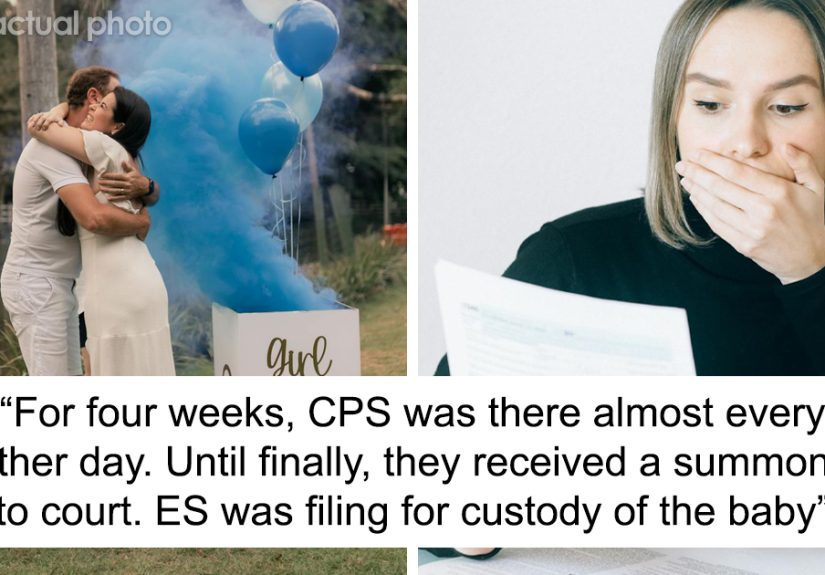
complete with adoption papers and a call to Child Protective Services (CPS).
If you’ve ever wondered, “Can someone actually do that?” (and also, “Is there a return policy on relatives?”),
let’s break down what’s really going onlegally, practically, and emotionallyusing real-world child welfare and adoption
basics in the United States. And yes, we’ll talk about boundaries, because apparently “No” needs a PR campaign.
The Viral Blow-Up: When “Babysitting” Gets Misheard as “Adoption”
The scenario that set off the drama usually goes something like this: a couple announces a pregnancy, a relative
gets overly invested, and somewhere along the way a casual comment about “helping with the baby” becomes a fantasy
storyline where the relative is the baby’s “real” parent. Thenwhen reality shows upso does a dramatic response:
adoption paperwork, custody threats, and even a CPS report.
The most shocking part isn’t that people have complicated feelings about babies. It’s that someone can genuinely
believe paperwork is a magic spell. Like: “Behold, my printed forms! I now own the child!”
(That is not how any of this works.)
Why “You Promised Me That Baby” Isn’t a Legal Thing
1) Adoption requires consent or a court processnot vibes
In the U.S., adoption is governed by state law, and while details vary, the foundation is steady:
the child’s legal parents (typically the birth mother and birth father, if paternity is established) have the primary right to consent.
Consent is usually written and must be properly executed (often notarized or done before a judge or designated official).
Without valid consentor a separate court process that legally ends parental rightsthere is no adoption.
Translation: adoption papers aren’t like a subscription you can gift to a friend. You don’t “send them” and
suddenly become a parent. If that were true, half the country would have been adopted by a cable company.
2) Even third-party custody is a high bar
Non-parent custody (sometimes called third-party custody) exists for serious situationsthink abandonment, neglect,
or circumstances where parents are unfit or have lost their protected parental status in a legal sense.
Courts generally treat parenting as a fundamental right, so a non-parent usually must prove much more than
“I really want the baby and I bought a stroller.”
In plain English: wanting isn’t standing. Courts look for the child’s safety and stability, not an adult’s entitlement.
What CPS Actually Does (and What It Doesn’t)
CPS is not a family “customer service line.” It’s part of a child welfare system designed to address reports of
suspected child abuse or neglect. Many states allow anyone to make a report, and agencies decide
whether the information meets legal definitions and requires a response.
From report to response: a simplified view
- Intake & screening: The agency reviews the allegation and decides whether it meets statutory criteria for a CPS response.
- Initial assessment/investigation: If screened in, a caseworker gathers information focused on child safety (not “who’s the villain”).
- Safety planning & services: Many systems try to keep children safely at home by connecting families to supportswhen possible.
- Escalation (only if needed): If a child can’t safely remain in the home, temporary out-of-home placement may occur.
Some jurisdictions use a “differential response” model where lower-risk reports may be handled with an assessment
pathway focused on needs and support, while severe allegations follow a traditional investigative track.
Here’s the key point for this story: CPS is focused on child safety. It’s not meant to be a weapon in adult conflict,
and it doesn’t exist to resolve arguments like “But she promised!” or “I already picked out a baby name!”
When Adoption Papers Show Up: What Those Documents Can (and Can’t) Do
The phrase “adoption papers” gets thrown around online like it’s one single form. In reality, adoption typically involves
a series of legal steps: petitions, consents or relinquishments, background checks/home studies (in many cases),
court hearings, and a final decree.
So what happens when a relative mails or hands over adoption documents?
What they CAN do
- Signal intent: They reveal what the person wants (and how far they’re willing to push).
- Create evidence: If harassment is happening, these documents can become part of a record showing escalation or coercion.
- Start a conversation with professionals: They may prompt a family to consult an attorney or counselor to protect everyone involved.
What they CAN’T do
- Force a parent to sign or surrender rights.
- Automatically create an adoption without proper consent and court approval.
- Override parental rights just because someone is related or emotionally invested.
Think of it this way: sending adoption papers without consent is like showing up at someone’s house with
a “Congratulations on your new kitchen!” brochure. Interesting creativity. Zero legal effect.
False or Malicious CPS Reports: The Part People Don’t Brag About
Reporting suspected abuse in good faith is important. But knowingly false reporting can carry consequences.
Many states have penalties for false reports, and some treat repeated or serious false reporting as a criminal offense.
The details vary widely by state, but the overall message is consistent: don’t weaponize child protection systems.
Even when the report goes nowhere, the fallout is real: stress for parents, disruption for children, and strain on an already
overloaded system that needs resources focused on kids who are actually at risk.
The Emotional Engine Behind This: Infertility, Grief, and Entitlement
Stories like this often have emotional layers that don’t excuse the behavior but help explain it. Sometimes there’s infertility,
pregnancy loss, complicated jealousy, or a history of family roles where one person feels entitled to control outcomes.
A baby can become a symbolof second chances, status, “proof” of adulthood, or a fix for pain that really needs
a different kind of care. And when people treat a baby like a solution to their own emotional emergency,
boundaries start to look like “betrayal.”
But here’s the non-negotiable: no adult’s unmet needs outweigh a child’s right to stability and safety.
Love is not ownership. Biology is not a bargaining chip. And “I called dibs” is not a parenting plan.
If You’re the Expecting Parent: A Practical Boundary Playbook
If you’re dealing with a pushy relativeespecially one who is escalatingyour goal is simple:
protect your baby, your household, and your peace. Here are practical steps that commonly help.
1) Get specific with your boundaries (not just “Stop being weird”)
- Who is allowed at appointments and the hospital?
- Who gets updates, and how often?
- Who can visit after birth, and under what health rules?
- Who can hold the babyand when?
2) Communicate in writing when things are heated
When conversations turn chaotic, written communication (text/email) helps keep a clear record of what was said and what
boundaries were set. Keep it short, calm, and consistent:
“We are not pursuing adoption. Please stop contacting us about that. If you continue, we will limit contact.”
3) Keep receiptspolitely
If someone is threatening CPS, pushing adoption papers, or harassing you, keep copies of messages and documents.
This isn’t about “winning.” It’s about safety and clarity if professionals become involved.
4) If CPS contacts you, stay calm and cooperate
A CPS inquiry doesn’t automatically mean you did something wrong. The system often investigates or assesses reports to determine safety.
Being respectful, factual, and cooperative can help the process move more smoothly.
5) Get professional support early
If the situation is escalating, consider speaking with:
a family law attorney (for local legal guidance), a therapist (for stress and boundary support),
or a mediator (when it’s safe and appropriate).
If You’re the Relative Who Wanted the Baby: A Healthier Path Forward
This part is blunt because a child deserves adults who are emotionally safe:
if you feel consumed by someone else’s pregnancy or baby, that’s a sign to seek supportnot a sign to apply pressure.
- Grieve what you’re carrying: infertility, loss, loneliness, unmet expectationsthese deserve care.
- Ask for a role, not a transfer: “How can I support you?” lands differently than “When do I get the baby?”
- Build stability first: If you want to parent someday, focus on your health, finances, relationships, and support system.
- Respect autonomy: Adults get to say no. Parents get to set rules. Babies aren’t community property.
Can This Family Recover?
Sometimes families repair after extreme conflictbut usually only when there is accountability and real change.
“I’m sorry you felt that way” isn’t it. A genuine repair looks more like:
“I crossed lines. I won’t do it again. Here’s what I’m doing to make sure.”
That may include therapy, a long period of limited contact, supervised visits (if any), and consistent respect for boundaries.
And if change doesn’t happen? Distance can be a form of protectionnot punishment.
Experiences & Lessons From Similar Situations (Real Patterns, Real People, Different Details)
The “CPS plus adoption papers” plot twist is extreme, but the emotional ingredientspressure, entitlement, and boundary-pushing
show up in many families during pregnancy and postpartum. Below are common experiences families describe in situations
where a relative’s excitement turns into control. These are not one-to-one retellings of any single story; they’re
composite patterns that come up again and again.
1) The “help” that comes with strings. Some new parents share that a relative offered childcare, money, or baby gear,
but the offer quietly came with expectations: more access, more decision-making, more “say.” When parents tried to set limits
(“Please call first,” “No unannounced visits,” “No kissing the baby”), the helper acted offendedas if boundaries erased the gift.
The lesson many parents learn: accept support that respects your rules, and be willing to decline support that tries to buy control.
2) The baby-wrap “force field.” Families often describe social gatherings where the baby becomes a group project.
One practical trick is wearing the baby in a wrap or carrier when entering crowded spaces. It’s not about being rude; it’s about
making boundaries easier to enforce without constant confrontation. Parents say it reduces awkward hand-offs, keeps the baby calm,
and gives them a little breathing roomespecially during the earliest, most exhausted weeks.
3) The visitor rules that protect everyone. Many parents report that the hardest part isn’t setting rulesit’s handling
the emotional reaction from family. “You’re keeping the baby from me!” is a common complaint when parents ask visitors to wash hands,
stay home when sick, avoid kissing the baby, or limit visits. A pattern that helps: explain that the rules are about the baby’s health
and the parents’ recovery, not about ranking relatives. Parents who practiced a short, repeatable script (“We’re limiting visitors for now;
we’ll let you know when we’re ready”) often felt more confident and less drained.
4) The “replacement parent” dynamic. In more intense situations, parents describe a relative who talks like the baby is theirs:
“My baby,” “Our child,” “I’ll raise him if you can’t.” Even if said as a “joke,” it can feel unsettlingespecially when paired with
criticism of the parents’ choices. Families who navigated this well often did two things: they corrected the language immediately
(“He’s our baby”) and they limited unsupervised access until trust was rebuilt. When someone struggles to respect identity and roles,
it’s a warning signnot a quirky personality trait.
5) When conflict turns official. A smaller number of families describe threats involving courts, CPS, or “legal paperwork”
used as intimidation. Even when the threats were empty, the stress was hugesleep loss, fear, constant second-guessing.
People who got through it best tended to focus on calm preparation: keeping records, learning the basics of local processes,
and consulting a professional for guidance. The emotional takeaway they share is simple: you don’t have to live in panic to be prepared.
6) Repair is possible, but it’s earned. Some families eventually rebuilt relationships after major boundary violations,
but the repairs that lasted had common ingredients: accountability, time, and consistent behavior. The relative stopped pushing,
apologized without excuses, accepted reduced contact, and worked on their own emotional triggersoften with professional help.
When those ingredients were missing, families often chose distance, describing it not as “giving up,” but as protecting the child’s
environment from ongoing chaos. In the end, the baby’s needs become the compass: stability, safety, and calm adults.
If there’s one universal lesson from these experiences, it’s this: parenthood creates new boundaries because it creates new responsibilities.
The people who respect that become trusted support. The people who fight it… become cautionary tales on the internet.
SEO tags (JSON)
Research basis (domains only, no links): childwelfare.gov, dcf.wisconsin.gov, law.lis.virginia.gov, civil.sog.unc.edu, hopkinsmedicine.org, parents.com, akronchildrens.org, nih.gov (PubMed/PMC), govinfo.gov, ojp.gov