Table of Contents >> Show >> Hide
- The Backstory No One Posts on the Holiday Card
- The “Hard Truth” Moment: What Teens Usually Mean
- Why Grandparents End Up Raising Kids in the First Place
- What Neglect Does to a Teen (Even When No One Wants to Call It That)
- Why the Family Backlash Hits So Hard
- Hard Truth vs. Cruelty: A Quick Reality Check
- If You’re the Teen: How to Hold Your Ground Without Burning Down the House
- If You’re the Grandparent: Support Without Becoming the Referee
- If You’re the Mom (or Absent Parent): What Actually Works
- When Reconciliation Is Possibleand When It Isn’t (Yet)
- Conclusion: Truth Isn’t the ProblemAvoidance Is
- Experience Corner: 8 Real-Life Patterns Grandfamilies Recognize (Extra Insights)
- 1) The “Sudden Parent” Phase
- 2) The Grandparents Become the Default… and the Punching Bag
- 3) The Teen Becomes Hyper-Responsible
- 4) The Family Tries to “Balance” the Story
- 5) “But She Loves You” Becomes a Conversation Ender
- 6) The Teen Gets Labeled as “Disrespectful” for Naming Facts
- 7) The Repair Attempts Are Performative
- 8) Healing Often Starts with One Safe Adult Relationship
There’s a special kind of silence that happens when a teenager finally says the thing everyone has been politely tap-dancing around for years. Not a “pass the mashed potatoes” silence. A “did the whole family group chat just freeze?” silence.
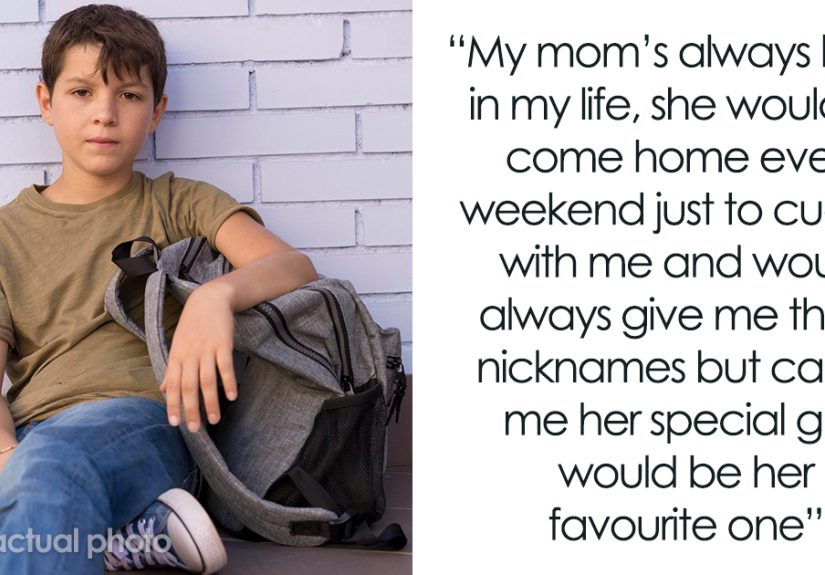
In this story, a neglected teen raised by grandparents hits their mom with a blunt truth: You weren’t there. They were. The teen doesn’t scream it for drama. They say it because reality has been living in their chest rent-free since middle school. Then comes the predictable sequel: backlash from relatives who suddenly remember the mom has “feelings,” as if the teen’s feelings were a limited-edition collectible that sold out in 2012.
This isn’t just family gossip with extra seasoning. It’s a snapshot of a very real American situation: grandfamilies and kinship carewhen grandparents or relatives step in because parents can’t (or won’t). And when kids grow up inside that gap, truth has a way of surfacing… usually at the worst possible time, like Thanksgiving.
The Backstory No One Posts on the Holiday Card
When a teen is raised by grandparents, it’s rarely because Mom and Dad were simply “busy.” It’s often because of big, messy life realities: addiction, incarceration, untreated mental illness, housing instability, domestic conflict, or a pattern of emotional neglect that leaves a kid parenting themselves.
Across the U.S., millions of children live in kinship arrangements. Some are in formal systems (with courts or child welfare involved), but many are informal grandfamiliesgrandparents stepping up without paperwork, support, or a playbook. Just love, exhaustion, and a second round of PTA meetings they never asked for.
And here’s the twist: a teen can be grateful for grandparents and still be furious at the parent who vanished. Both can be true. Teen brains are capable of holding multiple emotions at once, even if adults sometimes act like feelings come in a single-flavor pack.
The “Hard Truth” Moment: What Teens Usually Mean
When a neglected teen confronts their mom, the “hard truth” often sounds harsh because it’s unfiltered clarity, not cruelty. Teens raised by grandparents have usually spent years learning to read the room, manage adults’ moods, and swallow disappointment. When they finally speak plainly, it can feel like a slapmostly because it lands on a face that hasn’t been listening.
Common “hard truths” teens say (and what’s underneath)
- “You don’t get to act like my parent now.” (Translation: You missed the hard parts. You don’t get the highlight reel.)
- “Grandma raised me. Not you.” (Translation: I needed a stable adult, and she showed up daily.)
- “Stop calling when you need something.” (Translation: I’m tired of being useful but not loved.)
- “I don’t trust you.” (Translation: Trust isn’t a switch. It’s a track record.)
- “I’m not your second chance story.” (Translation: Your growth doesn’t erase my childhood.)
That last one? It’s a mic-drop line because it’s also a boundary. And boundaries are the emotional equivalent of installing a lock after someone keeps “accidentally” walking into your room.
Why Grandparents End Up Raising Kids in the First Place
Kinship care happens for many reasons, but the pattern is consistent: when the home environment becomes unsafe or unstable, relatives often become the safety net. Child welfare guidance widely recognizes kin placements as a preferred option when children can’t safely remain with parents, because it can reduce trauma, preserve family ties, and keep kids connected to culture and community.
Kinship care by the numbers (and why it matters)
Depending on definitions and data sources, estimates varybut the reality is steady: millions of U.S. children are being raised by grandparents or other relatives. That means millions of kids are growing up with a complicated family map: grandparents as parents, parents as occasional visitors, and a whole extended family trying to “keep the peace” without actually keeping the kid safe.
And here’s what the numbers don’t show: the late-night homework battles, the dentist appointments, the “we can’t afford that” conversations, and the emotional labor of grandparents who are aging while parenting again.
What Neglect Does to a Teen (Even When No One Wants to Call It That)
Neglect isn’t always a dramatic headline. Sometimes it’s a pattern of emotional absence: not being comforted, not being protected, not being noticed unless you’re causing problems. Over time, that shapes how a teen sees themselves and the world.
Major child-wellbeing and trauma research has consistently linked childhood neglect and other adverse experiences to long-term impacts on mental health, coping, relationships, and risk behaviors. In everyday teen terms, that can look like:
- Hyper-independence: “I don’t need anyone.” (But they do. They just don’t trust it.)
- Anger that seems “too big”: Because it’s not about one eventit’s about ten years.
- People-pleasing: Trying to earn stability by being “easy.”
- Detachment: Shutting off feelings to avoid disappointment.
- Shame: Believing the neglect was their fault.
When a teen raised by grandparents confronts a parent, they may be speaking from years of built-up grief. Adults often label it “disrespect.” Teens experience it as finally refusing to pretend.
Why the Family Backlash Hits So Hard
If you’ve ever watched a family rally around the adult who messed up instead of the kid who lived through it, you’ve seen the backlash pattern. It’s painful, but it’s also predictablebecause families aren’t just groups of people. They’re systems. Systems protect themselves.
Backlash usually comes from three places
- 1) Image management: “Don’t embarrass your mother.” (Translation: Don’t embarrass us.)
- 2) Guilt avoidance: Relatives who didn’t intervene may feel exposed by the truth.
- 3) Comfort bias: Adults empathize with adults. Kids are expected to “bounce back.”
Also, some relatives genuinely believe that forgiveness is a shortcut. Like it’s a coupon you can scan at the emotional checkout: “One free reconciliation, no questions asked.” But trust isn’t a coupon. It’s a relationship built over time.
Hard Truth vs. Cruelty: A Quick Reality Check
There’s a difference between “hard truth” and “verbal demolition.” The teen’s goal matters. If they’re setting boundaries, naming harm, or asking for accountability, that’s not crueltyit’s clarity.
What accountability can sound like
- Specific: “You didn’t come to my school events for three years.”
- Direct: “I stopped expecting you.”
- Boundaried: “I’m not ready for a close relationship.”
- Honest: “I’m angry and I’m grieving.”
What families often want is silence. What teens need is truth. Those two things do not share a parking spot.
If You’re the Teen: How to Hold Your Ground Without Burning Down the House
Let’s be real: sometimes a teen wants to burn it down. That’s understandable. But if the goal is to protect your peace and be taken seriously, a little strategy helps.
Practical boundary scripts that still sound like you
- “I’m not discussing this in a group.” (Because family crowds love drama.)
- “You can disagree, but you can’t rewrite my childhood.”
- “I’m open to rebuilding if there’s consistency.” (Consistency is the new apology.)
- “If you yell or insult me, I’m leaving the conversation.”
- “Grandma and Grandpa are my parents in practice. Please respect that.”
Also: don’t let anyone bait you into defending your pain like it’s a questionable purchase. You lived it. That’s your receipt.
If You’re the Grandparent: Support Without Becoming the Referee
Grandparents raising grandchildren often get pulled into a role they never auditioned for: family mediator. But your job isn’t to keep everyone comfortable. Your job is to keep the kid safeemotionally and physically.
What helps most (according to many kinship support models)
- Validate the teen: “It makes sense you feel that way.”
- Don’t force reconciliation: Relationship repair requires consent.
- Keep routines stable: Stability is medicine for neglected kids.
- Seek supports: Kinship navigator programs, counseling, school resources, community groups.
Grandparents also deserve care. Parenting again can strain health, finances, and mental well-being. Many kinship families rely on benefits and community support, and there are U.S. programs designed to help connect caregivers to resources (even when the family arrangement is informal).
If You’re the Mom (or Absent Parent): What Actually Works
If a teen raised by grandparents tells you the truth and it hurts, that pain isn’t proof they’re wrong. It’s proof the situation mattered.
What rebuilding trust looks like in real life
- Accountability without defensiveness: “You’re right. I wasn’t there.”
- No “but” apology: “I’m sorry” is not improved by adding “but I had it hard too.”
- Consistency over intensity: One big speech doesn’t replace daily showing up.
- Respect the grandparents’ role: Don’t compete with the people who kept your child afloat.
- Therapy/support: Not as a performanceas a commitment.
And please, for the love of all things emotionally mature, do not recruit the extended family as your PR team. If you need allies, earn them by doing the worknot by collecting “but she’s your mother” testimonials.
When Reconciliation Is Possibleand When It Isn’t (Yet)
Some families do repair. It happens when the adult who left takes responsibility, respects boundaries, and stops expecting the teen to manage their emotions. It also happens when the teen has enough support to process grief and anger safely.
But reconciliation isn’t owed. It’s earned.
Signs you’re moving toward healthy repair
- The parent accepts the teen’s reality without arguing facts.
- Visits are predictable and respectful, not chaotic.
- The parent doesn’t badmouth grandparents or demand loyalty tests.
- The teen’s boundaries are honored the first time, not after ten fights.
If those aren’t happening, the teen’s distance might not be “attitude.” It might be self-protection.
Conclusion: Truth Isn’t the ProblemAvoidance Is
When a neglected teen raised by grandparents speaks a hard truth, it can shake the family. But the truth didn’t create the damage. It simply turned the lights on.
Backlash is often a sign the family system prefers comfort over accountability. Still, that doesn’t mean the teen has to back down. Boundaries, support, and stability can help them healwhether reconciliation comes later, or not at all.
And if you’re in a grandfamily reading this, here’s the most important reminder: you’re not alone, and you’re not “dramatic” for wanting honesty. You’re human for wanting a childhood that felt safe.
Experience Corner: 8 Real-Life Patterns Grandfamilies Recognize (Extra Insights)
To make this topic more practical (and to reflect what many kinship families describe in support groups, counseling rooms, and late-night kitchen conversations), here are experiences that commonly show up when a teen is raised by grandparents and later confronts an absent parent.
1) The “Sudden Parent” Phase
A mom who was inconsistent for years may reappear when the teen gets olderoften when the teen is more “fun,” more capable, or less work. Teens notice. They may say, “Where were you when I needed rides, lunches, and someone to sign forms?” Adults call this “holding a grudge.” Teens call it “having a memory.”
2) The Grandparents Become the Default… and the Punching Bag
Grandparents often end up handling everythingschool, health care, discipline, emotional supportwhile also being criticized for being “too strict” or “too soft.” Meanwhile, the absent parent gets to be the fantasy version of themselves: the parent who “would’ve been great if…” That fantasy can create tension when the teen refuses to participate in it.
3) The Teen Becomes Hyper-Responsible
Many teens in grandfamilies learn to handle adult tasks early: caring for younger siblings, managing moods in the home, or minimizing their needs to avoid being a burden. When they finally snap and say something blunt, relatives act shockedforgetting the teen has been carrying emotional groceries for years without a cart.
4) The Family Tries to “Balance” the Story
One common experience is relatives urging the teen to consider the parent’s hardships: addiction recovery, poverty, trauma, mental health struggles. Those hardships may be realand still, the teen’s childhood was real too. Teens often feel like the family wants them to be compassionate at the expense of their own healing.
5) “But She Loves You” Becomes a Conversation Ender
Love is important. Love without action is confusing. Teens raised by grandparents often learn that love isn’t a feeling you announce; it’s something you doover and overespecially when it’s inconvenient. When relatives use “love” to dismiss harm, teens can feel emotionally abandoned all over again.
6) The Teen Gets Labeled as “Disrespectful” for Naming Facts
In many families, the unspoken rule is: adults get grace; kids get expectations. So when a teen says, “You didn’t raise me,” the family hears disrespect. But the teen is often stating a basic timeline. The backlash can teach the teen a painful lesson: honesty costs more than silence.
7) The Repair Attempts Are Performative
Some parents try to fix everything with one dramatic gesture: a gift, a speech, a social media post, or sudden rules about “my child.” Teens tend to trust consistency, not intensity. Many describe the frustration of being asked to “forgive and forget” while the parent hasn’t demonstrated stable change.
8) Healing Often Starts with One Safe Adult Relationship
Teens in grandfamilies frequently describe grandparents, teachers, coaches, counselors, or friends’ parents as the people who made life feel survivable. That’s not a small thing. A stable adult who believes the teen can soften the long-term impact of neglect. For some teens, the goal isn’t reconciliation with their parentit’s building a life where they feel safe, supported, and in control of their own future.
If you recognized your life in any of this, you’re not being dramaticyou’re being accurate. And accuracy is the first step toward change.