Table of Contents >> Show >> Hide
- What the Teen Says Happened (And Why It Hit a Nerve)
- How Did We Get Here? The Rise of “Gender Policing” in Public Spaces
- The Legal Reality: Public Accommodations, Privacy, and Civil Rights
- Why This Matters Beyond One Restaurant
- A Similar Example: When “Prove It” Becomes a Pattern
- What Restaurants Should Do (If They Want Fewer Lawsuits and More Customers)
- What to Do If This Happens to You (Or Someone You’re With)
- The Bigger Lesson: Safety Can’t Be Built on “Prove It”
- Experiences Related to “Proving” Gender in Restrooms (Real-World Patterns)
- Conclusion
Restrooms are supposed to be the “quick pit stop” of modern life: in, out, back to your fries before they cool down and lose the will to live. So when a teen says a restaurant server turned a bathroom break into an interrogationcomplete with a demand to “prove” her genderit’s not just awkward. It’s alarming, humiliating, and a flashing neon sign that something bigger is happening in public spaces.
This article breaks down what the teen alleges happened, why “gender policing” has become such a volatile issue, what the law can look like in public accommodations (like restaurants), and what businesses and customers can do to keep bathrooms from becoming battlegrounds. We’ll keep it respectful, plain-English, and yeslight enough to read without needing a stress ball, while still treating the topic with the seriousness it deserves.
Important note: The incident described below is based on publicly reported allegations and a discrimination complaint. As with any ongoing dispute, details may evolve.
What the Teen Says Happened (And Why It Hit a Nerve)
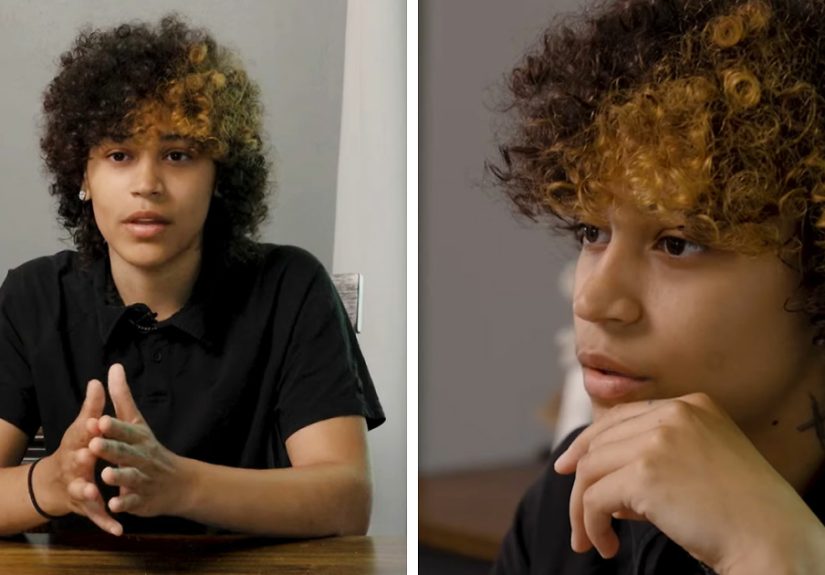
In widely reported accounts, an 18-year-old Minnesota student alleged she was confronted in a women’s restroom at a restaurant after a server accused her of being a man. According to the teen, the server followed her into the bathroom, yelled at her to leave, and the situation escalated to the point where the teen says she felt pressured to unzip her hoodie to show her chestessentially “proving” she was a girljust to end the confrontation and get out.
The teen is reportedly not transgender. She identifies as a lesbian, and described being targeted because she didn’t match someone else’s expectations of what a girl “should” look like. That detail matters because it underscores a reality people often miss: bathroom harassment doesn’t only land on transgender people. It can also hit cisgender women, gender-nonconforming people, lesbians, teens going through awkward style phases, and frankly anyone whose outfit says “comfortable” instead of “approved by the Gender Police.”
The teen, represented by an advocacy organization, filed a discrimination complaint with the state civil rights agency. From a legal standpoint, that means the claim isn’t just a viral storyit’s also a formal allegation that the restaurant’s conduct (through an employee’s actions and the business’s response) violated state protections related to discrimination in public accommodations.
How Did We Get Here? The Rise of “Gender Policing” in Public Spaces
“Gender policing” is the everyday practice of strangers deciding they’re the referee of someone else’s identity. It can look like a glare, a comment, a demand for ID, or (in the worst cases) a confrontation. And it thrives on one big assumption: that gender is always obvious, always binary, and always legible at a glance. Real lifeshockinglydoes not cooperate.
1) Stereotypes are doing the driving
Many people have a mental checklist for “woman” or “man” that’s basically a Halloween costume guide: long hair, certain clothing, certain body shape, certain voice. When someone doesn’t match the checklist, some bystanders treat it like an emergency. But the checklist is fake. Women can be tall, muscular, flat-chested, short-haired, deep-voiced, broad-shouldered, and still… women. Men can be slender, high-voiced, and wear eyeliner and still… men. None of this is new.
2) “Bathroom panic” turns everyday spaces into moral theaters
In the past decade, public debate about who “belongs” in which restroom has gotten louder and more political. When fear-based narratives spike, regular people sometimes start playing amateur security guard. The problem is that bathrooms aren’t airports. There is no TSA line for using a stall. And attempts to enforce “biological certainty” in a public restroom tend to produce one predictable outcome: harassment of innocent people.
3) Social media pours gasoline on misunderstandings
Once a confrontation happens, it can become content. Clips, captions, hot takeseveryone’s a prosecutor, judge, and jury from the comfort of their couch. That social feedback loop can encourage more confrontations, because people start thinking, “If I call someone out, I’m the hero in this story.” Spoiler: you’re not the hero when you’re blocking a bathroom door.
The Legal Reality: Public Accommodations, Privacy, and Civil Rights
The legal landscape in the United States is patchy. There isn’t a single, uniform federal rule that clearly covers gender identity discrimination in every private business the way many people assume. Instead, protections often depend on state laws, local ordinances, and how agencies interpret existing sex-discrimination rules. Translation: your rights can change when you cross a state linesometimes faster than your phone switches from LTE to 5G.
Public accommodations: what counts?
Public accommodations generally include businesses open to the publicrestaurants, hotels, theaters, retail stores, and similar places. Many states prohibit discrimination in these spaces based on characteristics like race and sex, and a growing number explicitly include sexual orientation and gender identity as protected categories.
Minnesota as a case study
In Minnesota, the state’s civil rights law prohibits discrimination in public accommodations based on multiple protected classes, including sexual orientation and gender identity. That means the teen’s complaint isn’t just about a rude momentit’s framed as an alleged civil rights violation occurring in a place open to the public.
Importantly, laws like these don’t require someone to be transgender to be protected from gender-based harassment. Discrimination can involve sex stereotypingtreating someone differently because they don’t conform to expectations about femininity or masculinity. So even when a person is cisgender, being targeted for “not looking like a woman” can still be discrimination under certain state frameworks.
Why This Matters Beyond One Restaurant
The teen’s story landed with so many people because it captures a uniquely modern nightmare: being publicly accused of not being yourself, in a place where you’re vulnerable, and having your privacy treated like a debate prompt.
- It weaponizes vulnerability. Bathrooms are private spaces. Forcing someone to “prove” their body is a violation of dignity.
- It spreads fear. After a humiliating incident, people may avoid public restroomsrisking health issues and limiting everyday life.
- It harms more than one group. Trans people face disproportionate harassment, but cis women and gender-nonconforming people are also swept in.
- It puts workers in impossible roles. Servers are trained to upsell appetizers, not enforce gender norms in a hallway.
This also raises a business reality: even if the employee acted alone, companies can still face reputational and legal fallout for how they hire, train, supervise, and respond. In other words, “We didn’t mean to” is not a customer-service strategy.
A Similar Example: When “Prove It” Becomes a Pattern
The teen’s allegations aren’t the only recent example of women being confronted in restrooms over gender assumptions. In another widely reported case, a woman at a Boston hotel said a security guard confronted her in a women’s restroom and demanded identification to “prove” her gender. The point isn’t that every case is identicalit’s that the script is becoming familiar: accusation, escalation, demand for proof, and a person left feeling unsafe in a space that should have been mundane.
When these incidents become “normal,” everyone loses. It doesn’t create safety; it creates suspicion. And suspicion has a way of targeting the same people over and over: LGBTQ+ folks, people of color, women who don’t perform femininity on cue, and anyone who doesn’t fit a narrow stereotype.
What Restaurants Should Do (If They Want Fewer Lawsuits and More Customers)
Restaurants can’t control the whole culture. But they can control what happens in their building. Here’s what responsible policies look like in practice:
1) Adopt a clear, written nondiscrimination policy
Make it explicit: customers will not be harassed based on sex, sexual orientation, gender identity, gender expression, race, or disability. Put it in employee manuals. Train on it. Repeat it. If it’s only in a dusty PDF nobody reads, it’s not a policyit’s a decorative document.
2) Train staff on what to do (and what never to do)
- Never demand “proof” of someone’s gender.
- Never follow a customer into a restroom to confront them.
- Never block a customer from leaving.
- Do involve a manager if there’s a complaint, and address it discreetly and respectfully.
3) Use simple de-escalation scripts
If another customer complains, staff can respond with something like: “Our policy is that guests may use the restroom that aligns with their identity. If you need a private option, I can help you find one.” This keeps the focus on service, not surveillance.
4) Give managers a playbook for restroom complaints
Managers should be trained to: (a) listen without validating discriminatory assumptions, (b) avoid targeting the accused person, (c) offer practical alternatives (single-stall restroom if available), (d) document the incident, and (e) check on the wellbeing of anyone harassed.
5) Design helps: privacy-forward restrooms
Where possible, floor-to-ceiling stall doors, better locks, and clear signage reduce conflict. “All-Gender Restroom” signs aren’t a magical spell, but private stalls and good design do more for safety than amateur bathroom policing ever will.
What to Do If This Happens to You (Or Someone You’re With)
No one should need a “bathroom incident checklist,” but here we are. If you’re confronted:
- Get safe first. If you feel threatened, leave the area and find a public, staffed place (front counter, host stand).
- Ask for a manager. Calmly state what happened and that you want it documented.
- Write down details. Date, time, location, employee description, witnesses, and exactly what was said.
- Save receipts and messages. Proof you were there can help if you report later.
- Consider reporting externally. State human rights agencies, local civil rights offices, or an attorney can explain options.
- Take care of yourself. Humiliation can linger; support from friends or counseling can help.
This isn’t legal advicejust a practical guide. If you’re considering a formal complaint, a local civil rights agency or attorney can help you understand timelines and options.
The Bigger Lesson: Safety Can’t Be Built on “Prove It”
The logic behind gender policing is usually framed as “protecting women.” But forcing people to prove their bodies doesn’t protect womenit targets them. It tells every woman, “You’re only welcome here if strangers approve your appearance.” That’s not safety. That’s a dress code enforced by suspicion.
A safer world is one where bathrooms stay boring. Where a teen can wash her hands without being accused of existing incorrectly. Where staff members handle complaints with professionalism instead of panic. And where nobody is treated like they have to earn the right to pee in peace.
Experiences Related to “Proving” Gender in Restrooms (Real-World Patterns)
When stories like this go public, a familiar wave follows: people start sharing their own restroom experiences. Not all of them involve a restaurant, and not all of them involve a formal complaint, but the emotional imprint is surprisingly consistentshock, embarrassment, anger, and a new instinct to avoid bathrooms altogether.
One common experience comes from teens and young adults who present in a more androgynous or masculine wayshort hair, loose hoodie, sneakers, no makeup, the universal outfit of “I’m here to eat, not audition for a beauty pageant.” They describe being stared at, whispered about, or stopped by someone who decides they’re “in the wrong place.” The weird part is how quickly a normal moment turns into a scene, like the restroom is suddenly a stage and you didn’t know you were in the show.
Another pattern shows up among lesbian and queer womenespecially butch or gender-nonconforming womenwho say they’ve been challenged in women’s restrooms for years. Some describe developing coping strategies that sound like travel hacks no one asked for: choosing restrooms in quieter areas, going only when a friend can stand nearby, or waiting until they get home even when it’s inconvenient. The “lesson” they learn isn’t about manners; it’s that other people may treat their body as public property.
Transgender people and nonbinary people often report the highest stakes. For them, a confrontation can carry not only humiliation but fear of escalation into harassment or violence. Some people describe rehearsing a script in their headwhat to say if confronted, how to keep their voice calm, where the exit is, which employee seems safest to approach. Imagine having to do a mental fire drill just to use a restroom. That’s not a culture war. That’s daily life.
There are also stories from the other side of the counter: servers, hosts, and managers who say they’re increasingly pulled into restroom disputes by customers who demand action. Many workers describe feeling untrained and stucktrying to keep the peace without embarrassing someone or triggering a complaint. The best-run places have a clear policy: staff don’t “verify” gender, and complaints are handled by management with discretion. The worst-run places wing it, and winging it is how a hallway conversation becomes a headline.
Finally, there’s the after-effect people don’t always see. After a humiliating restroom confrontation, many describe a lingering change in behavior: scanning the room before standing up, choosing restaurants based on whether restrooms feel “safe,” or avoiding crowded venues where people are more likely to play bathroom detective. The emotional residue is realeven if the incident lasted only minutes. That’s why these stories matter. Not because bathrooms are interesting, but because dignity is.
Conclusion
A teen alleging she was forced to “prove” her gender in a restaurant restroom isn’t just a shocking storyit’s a warning sign about what happens when stereotypes and fear replace basic respect. Public accommodations exist so the public can… accommodate themselves. That means serving food, providing facilities, and treating customers like human beings, not puzzles to be solved.
The path forward is refreshingly practical: clear nondiscrimination policies, staff training, manager-led de-escalation, and restroom designs that prioritize privacy. And for the rest of us, it’s a simple cultural shift: let bathrooms be boring again. Nobody should have to prove who they are to wash their hands.