Table of Contents >> Show >> Hide
- The Update That Went Viral, and Why the Internet Pounced
- What His Experiment Gets Right: The Boring Stuff That Actually Works
- Where the Claims Outrun the Evidence
- The Reputation Gap: Science Story vs. Internet Story
- What Everyday Readers Can Use Without Becoming a Full-Time Biohacker
- Extended Experiences from the Longevity Front Lines (about )
- Conclusion
If modern wellness had a main character, it might be a 46-year-old tech founder with a strict bedtime, a lab-grade morning routine,
and a mission statement that sounds like a sci-fi movie trailer: don’t die. Then came the internet moment. He shared a visual update,
people flooded the comments, and the joke machine switched to turbo mode. Some laughed, some criticized, some defended him, and almost
everyone had an opinion.
But beneath the memes is a bigger story worth paying attention to: how online culture treats extreme self-optimization, why anti-aging
claims spread so quickly, and what actual longevity science says when you turn the volume down. This article unpacks the backlash,
separates signal from noise, and gives you the part nobody can troll successfully: evidence-based habits that improve healthspan,
whether or not you own a cryotherapy chamber.
The Update That Went Viral, and Why the Internet Pounced
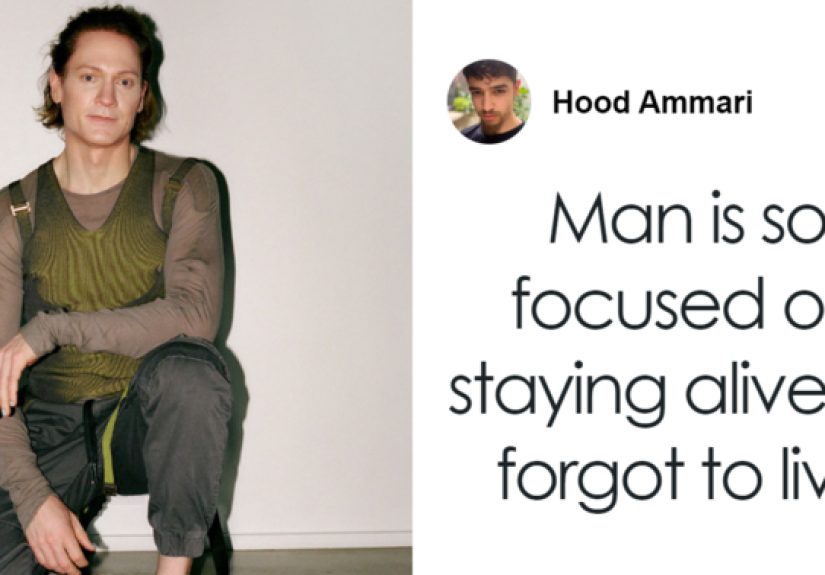
The social media storm kicked off after the biohacker posted facial transformation photos and joked that even his Face ID was confused.
The post was intended as self-aware humor and a progress update, but it became a lightning rod. The replies ranged from playful roasting
to direct skepticism about whether his anti-aging protocol was helping or hurting his appearance.
That reaction wasn’t random. His project has always been public-facing, expensive, and controversial. He has framed his approach as a
full-stack longevity experiment: strict nutrition, tightly controlled sleep, regular testing, heavy biomarker tracking, and highly
customized interventions. He has also embraced the spotlight, which means every update lands in a culture trained to react instantly.
On the internet, “interesting” beats “nuanced” every time.
The Three Reasons This Story Keeps Exploding Online
1) Visual change is easy to judge, biology is not.
The public can see a face in a photo. The public cannot see blood markers, vascular function, or long-horizon risk curves in real time.
So conversations collapse into “looks better” versus “looks worse,” even when the stated goal is internal aging biology.
2) Extreme protocols trigger a fairness debate.
A multimillion-dollar health routine raises an obvious question: if something works, is it only useful for the ultra-wealthy?
People are not just arguing about one person’s results. They are arguing about who gets access to future longevity tools.
3) Social media rewards certainty, not uncertainty.
Real science often sounds like: “promising,” “early,” “mixed,” and “needs more trials.” Social media prefers:
“miracle” or “scam.” Guess which one gets more reposts.
What His Experiment Gets Right: The Boring Stuff That Actually Works
Here’s the part that frustrates both fans and critics: the strongest longevity levers are not glamorous. They are consistent, measurable,
and stubbornly ordinary.
Sleep Discipline
Quality sleep is one of the most reliable predictors of long-term health and recovery. If you optimize nothing else, regular sleep timing
and enough total sleep can improve metabolic health, cognitive performance, and resilience. You don’t need a futuristic bedroom; you need
consistency.
Physical Activity and Strength
Exercise remains the closest thing to an all-purpose anti-aging intervention in everyday life. Aerobic work supports cardiovascular health;
resistance training preserves muscle and function; balance and mobility reduce injury risk as people age. This is not trendy advice.
That is exactly why it endures.
Food Quality and Calorie Awareness
Longevity conversations often get distracted by supplement stacks, but dietary pattern still does most of the heavy lifting. A high-quality,
minimally processed eating pattern with enough protein, fiber, and micronutrients outperforms hacky shortcuts. Some studies suggest that
moderate calorie reduction may affect pace-of-aging measures, but this is not a free pass for crash dieting or nutritional extremes.
Where the Claims Outrun the Evidence
The anti-aging field is exciting, but it is not magic. Progress exists, yes. Certainty does not.
Biological Age Is Useful, but Not a Crystal Ball
“Biological age” can be estimated from molecular and clinical data, and it is a valuable research concept. But a single score is not your destiny.
Different tools measure different dimensions of aging, and they do not always agree. A lower number on one dashboard does not guarantee
better outcomes everywhere else.
Biomarkers Are Signals, Not the Finish Line
Biomarkers matter because they can catch risk earlier than symptoms. But the temptation is to treat them like a video game score.
You can end up over-optimizing a spreadsheet while under-valuing real-world outcomes: energy, function, mental health, social connection,
and long-term disease risk.
High-Intervention Protocols Still Need Better Human Data
Some aggressive anti-aging interventions generate buzz long before they generate decisive evidence in broad human populations.
That does not mean they are useless. It means responsible interpretation requires patience, replication, and transparent methodology.
In longevity science, “interesting” is the start of the conversation, not the end.
The Reputation Gap: Science Story vs. Internet Story
The internet sees one narrative: “rich biohacker tries to beat aging, gets roasted.” The science community sees another:
“N-of-1 self-experimentation can inspire hypotheses, but it cannot replace rigorous population-level evidence.”
Both narratives can be true at the same time.
Public figures in health spaces always operate under a paradox. If they stay private, nobody learns from their experiments.
If they go public, the conversation shifts from data quality to personality. Add money, spectacle, and platform algorithms,
and you get exactly what happened here: a medical-and-cultural debate disguised as a comment thread.
What Everyday Readers Can Use Without Becoming a Full-Time Biohacker
If your goal is to age better without turning your calendar into a lab protocol, use this practical framework:
1) Build a “minimum effective longevity routine”
Start with four anchors: consistent sleep window, weekly cardio, weekly strength sessions, and mostly whole-food meals.
Keep it simple enough that you can still do it when life gets chaotic.
2) Track a few meaningful metrics, not fifty
Choose metrics that connect to behavior: resting heart rate, blood pressure, waist measurement, step count, and routine lab work through your clinician.
If tracking increases anxiety more than insight, reduce the dashboard.
3) Upgrade environment before adding supplements
Fix bedtime cues, kitchen defaults, grocery patterns, movement breaks, and sunlight exposure first. Environmental design beats willpower over the long run.
4) Treat claims like investments
Ask: what is the quality of evidence, what is the downside risk, what is the cost, and what is the opportunity cost? If a new intervention fails those tests,
put your money back into fundamentals.
Extended Experiences from the Longevity Front Lines (about )
One reason this story resonates is that almost everyone is running a smaller version of the same experiment. Not with private clinics and elite testing,
but with calendars, habits, and whatever motivation survives Wednesday afternoon.
Consider the founder who copied the “perfect morning” trend after reading about high-performance routines. He bought wearables, meal-prepped like a machine,
and color-coded his supplements. For three weeks, everything looked incredible on paper. By week four, he was skipping workouts, sleeping less, and calling
himself a failure because he missed one checkpoint. What changed things wasn’t a new device; it was reducing ambition by 40%. He kept only three non-negotiables:
bedtime consistency, strength training twice a week, and no screens during meals. His metrics improved more with less complexity.
Then there is the remote designer who became obsessed with “bio-age” scores from commercial tests. Each result triggered a mood swing. If the number improved,
she felt invincible. If it dipped, she panicked and overcorrected with restrictive eating. Eventually, she reframed the score as weather, not identity. She
worked with her physician, shifted attention to blood pressure and activity consistency, and treated biological-age outputs as one imperfect signal among many.
Anxiety dropped. Adherence went up. Ironically, that calmer approach produced better outcomes.
A third example: a gym-committed parent in his 40s who chased every supplement trend but ignored recovery. He lifted hard, tracked every gram of protein,
and slept like someone who believed tomorrow had no consequences. He was “disciplined,” but constantly exhausted. His turning point came when he treated sleep
as training, not downtime. He moved caffeine earlier, set a wind-down routine, and protected a stable sleep window. Within two months, his performance improved
more than it had with a year of product experimentation.
There are also people who try the opposite path: no tracking, no data, just vibes. Some do fine. Others drift into wishful thinking. The most sustainable middle
ground tends to be light structure plus honest feedback. Enough measurement to stay grounded, not so much that life becomes a compliance audit.
What ties these experiences together is not a miracle protocol. It is behavioral realism. The internet loves spectacular transformations, but long-term health
usually grows from repeatable decisions that look boring on camera: a walk after dinner, strength sessions you actually keep, food quality most days, and sleep
you protect like it mattersbecause it does.
That is why stories about extreme biohacking are useful even when the comments get chaotic. They force a clearer question: do you want a dramatic health identity,
or do you want durable health outcomes? The first can be purchased and posted. The second is built quietly, then defended for years.
Conclusion
The backlash to the 46-year-old biohacker’s update was predictable, but also revealing. It showed how quickly serious health topics become entertainment once
they collide with personality, money, and social media velocity. It also exposed a deeper truth: despite the futurism, the strongest anti-aging strategy is still
grounded in unsexy fundamentalssleep, movement, food quality, stress regulation, and clinical common sense.
You do not need to “win aging” on the internet. You need to increase your odds of staying functional, sharp, and resilient in real life. If this story teaches
anything, it is that public spectacle can start the conversation, but only evidence and consistency can finish it.