Table of Contents >> Show >> Hide
- What “Investing in Foreign Currency” Really Means
- Start Here: Three Questions That Prevent Expensive Confusion
- 7 Practical Ways to Invest in Foreign Currency
- 1) Currency ETFs (the simplest on-ramp for many investors)
- 2) Multi-currency accounts and bank currency holdings (for real-life spending goals)
- 3) International stock funds (indirect currency exposure with growth potential)
- 4) International bond funds (currency matters more than many people expect)
- 5) Currency-hedged ETFs (when you want foreign assets but less FX noise)
- 6) Forex (spot FX) trading through regulated firms (high risk, high responsibility)
- 7) FX futures and options (a structured market route, still not casual)
- What Moves Exchange Rates? (The Short List That Actually Matters)
- How to Build a Currency Plan (Without Turning Your Portfolio Into a Soap Opera)
- Risk Checklist (Read This Before the Market Reads You)
- Taxes and Paperwork (U.S. Basics You Should Know)
- Common Mistakes (A Greatest Hits Album of “Oops”)
- Putting It Together: Two Quick Examples
- Real-World Experiences: What People Learn After Investing in Foreign Currency (About )
- Conclusion
If you’ve ever looked at your bank app and thought, “Wow, the dollar is really out here freelancing,” you’re not alone.
Foreign currency investing (a.k.a. “FX investing”) is basically a betor a hedgeon how one currency will move versus another.
Sometimes it’s strategic (protecting money you’ll spend abroad). Sometimes it’s tactical (trying to profit from exchange-rate moves).
And sometimes it’s just… someone discovering leverage and learning humility at high speed.
This guide walks you through how to invest in foreign currency using practical, real-world vehicles Americans commonly use:
currency ETFs, multi-currency accounts, international funds, and (for the brave and properly educated) forex and futures.
We’ll keep it in plain English, add specific examples, and highlight risks so you don’t accidentally turn “diversification” into “financial parkour.”
What “Investing in Foreign Currency” Really Means
When people say they want to invest in foreign currency, they might mean one of three things:
- Direct currency exposure: owning euros, yen, or pounds (or a product tied to them) so your result depends mainly on the exchange rate.
- Indirect currency exposure: owning foreign stocks or bonds where returns are influenced by currency moves and the investment’s local performance.
- Hedging currency risk: reducing how much exchange-rate swings affect a portfolio (or a future expense).
The “best” approach depends on your goal. If you’re paying tuition in the UK next year, you’re not trying to become a currency wizard.
You’re trying to avoid a nasty surprise when the exchange rate shifts. If you’re speculating on rate cuts, that’s a different movie.
Start Here: Three Questions That Prevent Expensive Confusion
1) Are you hedging or trying to profit?
Hedging is like wearing a seatbelt: it’s not thrilling, but it’s smart. Speculating is like doing donuts in a parking lot:
possible to pull off, but the odds of embarrassment rise quickly.
2) What’s your time frame?
Currency moves can be choppy day-to-day and surprisingly stubborn over months. A “quick trade” mindset often collides with reality:
macro trends can take time, and markets can stay irrational longer than your attention span.
3) How much risk can you actually tolerate?
Many FX products involve leverage or embedded costs. Even “simple” currency ETFs can swing meaningfully during major policy shifts or crises.
If a 5% move would make you panic-sell, build a plan that assumes you are human (because you are).
7 Practical Ways to Invest in Foreign Currency
1) Currency ETFs (the simplest on-ramp for many investors)
Currency ETFs trade like stocks in a brokerage account. Some track a single currency against the U.S. dollar; others track a basket.
This is often the easiest way to get direct FX exposure without opening a specialized trading account.
- Example use case: You think the euro may strengthen versus the dollar over the next 6–18 months, so you buy a euro-tracking currency ETF.
- Pros: Easy access, no need to roll contracts yourself, clear pricing, fits inside a standard portfolio.
- Cons: Fees, tracking differences, and the fund’s structure (some hold deposits; some use derivatives) can affect results.
Tip: Read what the ETF actually holds and how it gets exposure (cash deposits vs. futures/forwards).
Two “currency ETFs” can behave differently during volatile periods.
2) Multi-currency accounts and bank currency holdings (for real-life spending goals)
If your goal is future spendingtravel, overseas education, a property purchaseholding foreign currency in a multi-currency account can be practical.
You’re not “trading” as much as matching future needs with the currency you’ll actually use.
- Example use case: You’ll pay €20,000 in expenses over the next year. You convert portions over time to reduce the risk of one terrible exchange rate day.
- Pros: Intuitive, goal-aligned, less temptation to overtrade.
- Cons: You may earn little interest, and currency moves can still reduce your purchasing power in USD terms.
A “boring” approach can be a feature, not a bugespecially if your objective is stability.
3) International stock funds (indirect currency exposure with growth potential)
Buying foreign stocks (or international index funds) gives you indirect exposure to currency because your USD return reflects:
the local stock return plus the currency move between the U.S. dollar and the local currency.
- Example use case: You buy a broad international stock index fund for diversification; if the dollar weakens, your international holdings may look stronger in USD.
- Pros: You’re investing in businesses, not only exchange rates; historically, equities have had long-term growth tailwinds.
- Cons: Currency can amplify volatility; foreign markets have their own risks (regulation, geopolitics, sector concentration).
4) International bond funds (currency matters more than many people expect)
Bonds are often held for stability, but unhedged international bonds can introduce meaningful currency swings.
Many long-term investors consider hedging currency exposure for international bonds more often than for international stocks.
- Example use case: You want international bond diversification but prefer smoother returns, so you choose a USD-hedged international bond fund.
- Pros: Can reduce reliance on one country’s interest-rate environment.
- Cons: Currency moves can overwhelm bond yield; hedging can reduce FX volatility but isn’t free.
5) Currency-hedged ETFs (when you want foreign assets but less FX noise)
Currency-hedged funds aim to deliver returns from foreign assets while dampening currency impact. They’re common in international equity and bond categories.
Think of it as telling your portfolio: “Yes to international exposure. No to surprise exchange-rate drama (within reason).”
- Pros: Can reduce currency-driven volatility, especially helpful for bond allocations.
- Cons: Hedging costs can vary; performance can lag when the hedge works “too well” (like when a weaker dollar would have helped you).
6) Forex (spot FX) trading through regulated firms (high risk, high responsibility)
Retail forex investing typically means trading currency pairs (like EUR/USD or USD/JPY) in an over-the-counter market.
This area is famous for leverage, fast moves, and marketing that makes risk sound like a fun hobby.
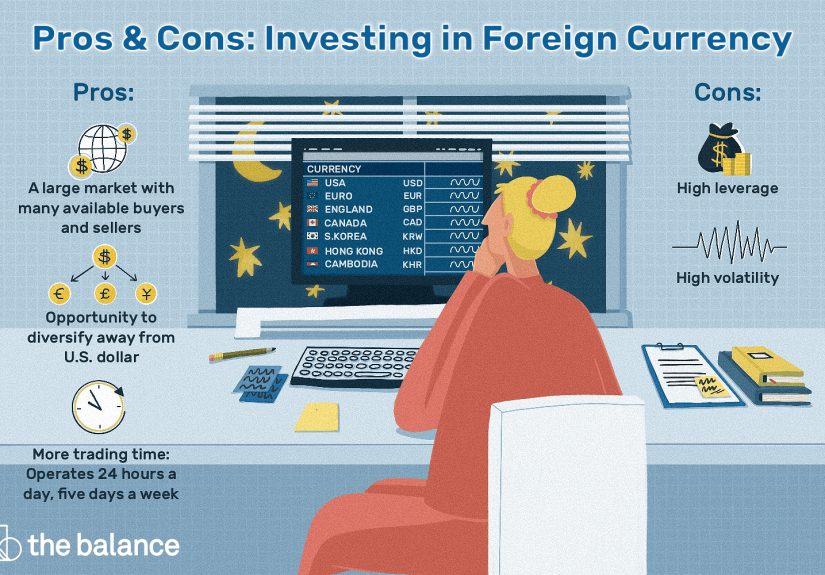
Reality check: Leverage magnifies both gains and losses, and it can exceed your initial deposit depending on the product and broker terms.
If you’re not already comfortable with derivatives and risk controls, consider this an “advanced track,” not the starting line.
- Pros: Direct exposure, potentially tight spreads in major pairs, access to global macro moves.
- Cons: Leverage risk, counterparty risk, fraud risk, emotional overtrading, and a learning curve that charges tuition.
7) FX futures and options (a structured market route, still not casual)
Currency futures and options trade on regulated exchanges and can offer clearer pricing and standardized contracts.
But they also involve margin, which means leverage is part of the package.
- Pros: Exchange-traded structure, transparency, commonly used by institutions for hedging.
- Cons: Contract sizing can be large, margin calls are real, and you must understand how futures behave around roll dates and volatility spikes.
What Moves Exchange Rates? (The Short List That Actually Matters)
Exchange rates don’t move because a currency is “cute” or because social media declared it “undervalued.”
They move due to big forces that affect demand for one currency versus another:
- Interest-rate differentials: Higher yields can attract capital (though it’s not a guaranteed win).
- Inflation and purchasing power: Persistent inflation can pressure a currency over time.
- Economic growth and trade: Trade balances, commodity dependence, and competitiveness can matter.
- Risk sentiment: In “risk-off” moments, investors often rush toward perceived safety and liquidity.
- Central bank policy and credibility: Guidance, interventions, and surprise moves can reshape currency trends.
- Politics and geopolitics: Elections, conflict, sanctions, and policy shocks can reprice currencies quickly.
If you want to follow FX without drowning in noise, focus on policy paths (rates, inflation trends) and what markets have already priced in.
Headlines are loud; macro is persistent.
How to Build a Currency Plan (Without Turning Your Portfolio Into a Soap Opera)
Step 1: Pick your role for currency
- Hedge a known future expense (e.g., pay rent abroad) → multi-currency account or staged conversions.
- Diversify long-term portfolio → international stock/bond funds (maybe hedged for bonds).
- Tactical view (you have a macro thesis) → currency ETFs or carefully sized futures/forex (advanced).
Step 2: Decide position size (small is a superpower)
For many diversified investors, direct currency positions are often kept modest.
A small allocation can still diversify risk without letting FX dominate your results.
If you’re hedging a real expense, size it to the expensenot to your enthusiasm.
Step 3: Choose a simple rule for entering and exiting
Example rules that reduce decision fatigue:
- For hedging: Convert a fixed amount monthly for 6–12 months (“rate averaging,” but for currency).
- For tactical ETF positions: Set a time horizon (e.g., 12 months) and a maximum loss you’re willing to tolerate.
- For diversified portfolios: Rebalance quarterly or semiannually instead of reacting to every wiggle.
Step 4: Know your costs before you commit
Currency investing isn’t just “up or down.” It’s also:
- Spreads: the difference between buy and sell prices (especially noticeable in less-traded currencies).
- Fund expenses: ETF fees and tracking variance.
- Carry and yield differences: interest-rate gaps can help or hurt depending on your position.
- Hedging costs: can rise or fall with rate differentials and market conditions.
Risk Checklist (Read This Before the Market Reads You)
- Leverage risk: A small move can become a large loss. Margin calls don’t care about your confidence.
- Fraud risk: Unregistered dealers and too-good-to-be-true promises are common in shady corners of retail FX.
- Liquidity risk: Exotic or emerging-market currencies can gap in stressful markets.
- Event risk: Central bank surprises and geopolitical shocks can move FX quickly (sometimes overnight).
- Behavior risk: Overtrading and revenge-trading are the unofficial national sports of uninformed speculators.
If you take only one lesson: choose regulated, reputable platforms and avoid anyone promising guaranteed returns.
In currencies, “guaranteed” usually means “guaranteed to teach you a painful lesson.”
Taxes and Paperwork (U.S. Basics You Should Know)
Taxes can differ based on the instrument you use. The U.S. tax treatment of certain FX products may involve different sections of the tax code
(and different forms), so keep clean records and consider professional advice if you’re trading actively.
- Currency futures and some options: Often fall under special contract rules and reporting requirements.
- Spot forex (OTC): May be treated differently than exchange-traded futures.
- ETFs: Typically generate taxable events like other funds depending on distributions and how you trade them.
Practical tip: If you’re dabbling, keep it simplefew trades, clear statements, easy-to-export records.
Complexity is fun until April shows up with a clipboard.
Common Mistakes (A Greatest Hits Album of “Oops”)
- Confusing a strong story with a strong trade: A narrative can be true and still overpriced in the market.
- Ignoring interest-rate differentials: “Carry” can quietly shape returns, especially over time.
- Oversizing positions: Currencies can move sharply during crises. Small positions help you stay rational.
- Chasing headlines: FX is macro. Macro takes time. Your phone wants drama; your portfolio wants discipline.
- Using leverage before you have rules: Leverage should be the last knob you touch, not the first.
Putting It Together: Two Quick Examples
Example A: Hedging a real expense (responsible and boringin a good way)
You’ll spend about €12,000 over the next year on a study program.
Instead of converting all at once (and praying you pick the best day), you convert €1,000 per month.
If the dollar strengthens, some months you’ll get more euros per dollar; if it weakens, you’ll be glad you didn’t wait.
The point isn’t “winning”it’s reducing the risk of a budget surprise.
Example B: Tactical currency view using an ETF (measured, not manic)
You believe a major central bank is likely to cut rates faster than the U.S., which might pressure its currency.
Instead of trading leveraged spot FX, you take a small position in a currency ETF aligned with that view,
set a 12-month horizon, and cap your downside by sizing the position so a worst-case scenario doesn’t wreck your plan.
You’re not trying to be a hero; you’re trying to be consistent.
Real-World Experiences: What People Learn After Investing in Foreign Currency (About )
Most people don’t start foreign currency investing because it sounds relaxing. They start because something nudges them:
an overseas trip that suddenly got pricier, a pay raise in a foreign currency, a news cycle full of “strong dollar / weak dollar” talk,
or the classic moment of curiosity“Wait, I can invest in currencies like a hedge fund?” (Cue the soundtrack.)
A common early experience is realizing that currencies can feel “quiet”… until they’re not. Someone buys a currency ETF expecting slow,
steady movement, and then a central bank surprises the market and the currency jumps (or drops) in a way that feels unfair.
That’s usually the moment people learn the first big FX truth: policy expectations matter as much as policy itself.
By the time the news hits your feed, the market may have been pricing it in for weeks.
Another frequent lesson comes from trying to time conversions for real-life spending.
People often attempt to “wait for the perfect rate,” then watch the rate drift the other way while they keep waiting.
Many eventually switch to a simple scheduleconverting a fixed amount every week or monthbecause it reduces stress and regret.
It’s not flashy, but it’s emotionally efficient. And in personal finance, emotional efficiency is underrated.
Investors who experiment with spot forex often report a different kind of education: the difference between being right and getting paid.
Someone might correctly predict that a currency should weaken long-term, but in the short term it rallies, triggers a margin call,
and ends the trade before the thesis has time to play out. That’s how people discover the second big FX truth:
leverage shrinks your time horizon. Even if your idea is good, leverage can force you out at the worst time.
People also learn that “safe haven” isn’t a permanent identityit’s a role currencies play depending on the situation.
A currency that behaves defensively in one type of crisis may not behave the same way in another.
That’s why experienced investors tend to avoid all-in, single-bet currency positions.
Instead, they treat FX as a tool: a small diversifier, a partial hedge, or a tactical slice that’s sized to be survivable.
Finally, many investors come away with a surprising appreciation for simplicity.
The most satisfying “wins” aren’t always huge profitsthey’re avoiding a bad outcome:
locking in enough foreign currency for a future expense, smoothing the ride in an international bond allocation,
or adding a modest non-dollar exposure that helps when the dollar’s direction shifts.
If currency investing teaches anything, it’s this: you don’t need to predict everything.
You just need a plan that still works when you’re wrong sometimesbecause everyone is.
Conclusion
If you want to invest in foreign currency, start by deciding whether you’re hedging a real-world need, diversifying long-term,
or taking a tactical view. For many investors, currency ETFs and internationally diversified funds offer the cleanest entry point.
More complex routes like spot forex and FX futures can be legitimate tools, but they demand education, strict risk controls,
and an honest respect for leverage.
The win condition isn’t “calling the top” or “beating the market with vibes.” It’s building currency exposure that fits your goals,
costs, and tolerance for volatilityso your portfolio can travel the world without getting lost.