Table of Contents >> Show >> Hide
- Who Is Vilija Vitkute?
- The Core Magic Trick: Paper + Bodypaint + Photography
- Paper Art That Behaves Like Couture
- Bodypainting as Performance Art (Not Just a Pretty Finish)
- Signature Style #1: Camouflage That Makes You Look Twice
- Signature Style #2: Special Effects Bodypainting Meets Paper Engineering
- Sustainability and Skin-Safety: The Un-Glittery Side of Beautiful Work
- Behind the Scenes: How a Paper-and-Paint Piece Gets Made
- How to Look at Vilija’s Work Like a Pro (Even If You’re Not One)
- Want to Try This Aesthetic Yourself? Start Small and Smart
- Conclusion: Why Vilija Vitkute’s Work Sticks With People
- Experiences: on What This Kind of Art Feels Like (Up Close)
- SEO Tags
Some artists paint on canvas. Some build sculptures. Some cut paper until it behaves like lace, armor, or a tiny architectural miracle.
And then there’s Vilija Vitkutė (often written as Vilija Vitkute)an artist who treats paper, skin, and camera like three instruments in the same band.
When it works, it’s not just prettyit’s a full-on optical plot twist.
Her work lives in that rare space where craft meets performance, and where “temporary” doesn’t mean “forgettable.”
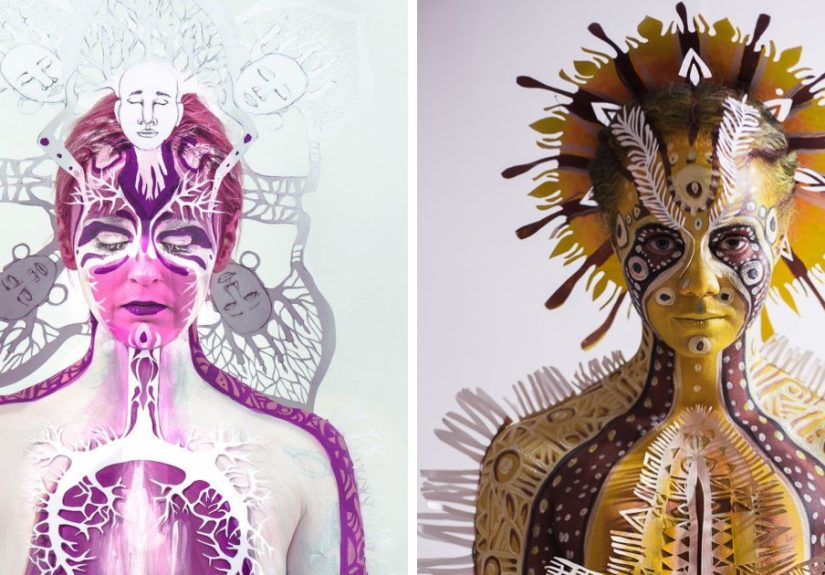
A paper element might be hand-cut, shaped, and engineered like couture. A bodypaint design might be mapped to a landscape, a wall, or a story.
Then the final pieceoften photographed or filmedbecomes the lasting artifact.
If you’ve ever looked at a bodypainting image and thought, “Wait… where did the person go?” you’re already halfway into Vilija’s world.
Who Is Vilija Vitkute?
A multidisciplinary artist with a camera-ready imagination
Vilija is widely known for bodypaintingespecially the kind that plays with camouflage illusionand for intricate hand-cut paper art that she combines with paint-based body art.
She has also presented her creative universe through projects that include photography, performances, and film.
In other words: she doesn’t just make “a look.” She builds a whole scene, then invites you to step into it with your eyes.
What makes her particularly compelling is the way she merges mediums that usually live in separate rooms of the art world.
Paper craft can be dismissed as “cute” until you see it used like high-fashion structure.
Bodypainting can be dismissed as “just makeup” until you see it used as narrative, activism, and visual illusion.
Vilija’s work arguespolitely, but firmlythat these categories are outdated.
The Core Magic Trick: Paper + Bodypaint + Photography
Why her art feels bigger than the materials
Think of Vilija’s creative process like a three-step recipe:
(1) design a concept that can live on a human form, (2) build tactile paper elements that add dimension, and
(3) integrate bodypainting techniques that unify everything into one visual story.
The camera becomes the final toolnot to “filter” the work, but to complete it.
Paper contributes texture and structure: sharp edges, layered shadows, sculptural volume.
Paint contributes flow: gradients, blending, optical continuity.
Together, they let her create images that feel simultaneously handmade and unreallike a dream that went to art school and came back with an honors degree.
Paper Art That Behaves Like Couture
When scissors become a design language
Paper art is deceptively demanding. It’s not only about cutting shapesit’s about understanding how paper holds tension, where it bends, where it tears,
and how light behaves on a folded edge.
In Vilija’s approach, paper can become costume-like: layered, dimensional, and intentionally theatrical.
The term “paper couture” exists for a reason, because once paper is engineered with fashion-level thinking, it stops being “craft” and starts being “construction.”
In projects that combine paper and bodypainting, paper often plays the role of physical emphasis.
Paint can suggest petals; paper can become petals that cast shadows.
Paint can imply armor; paper can become armor-like structure that changes the silhouette.
This pairing is part of why her images feel so vividyour brain reads them as both illustration and sculpture at the same time.
Bodypainting as Performance Art (Not Just a Pretty Finish)
Why painting on skin changes the meaning of the work
Bodypainting is temporary by nature, which gives it a unique intensity.
You don’t “own” it the same way you own a canvas painting; it exists for a window of time.
That makes the act of creating it more like performanceplanning, execution, endurance, collaboration, and the shared trust between artist and model.
In Vilija’s world, bodypainting isn’t simply decoration. It’s a method for turning the human form into a storytelling surface:
landscapes, environmental themes, and illusion-based scenes that can look almost impossible from the right angle.
It’s also a medium with deep global roots in cultural expressionone reason contemporary artists treat it with serious respect.
Signature Style #1: Camouflage That Makes You Look Twice
The illusion technique: blending a human into a place
Camouflage bodypainting is a special kind of visual challenge: the goal is not “make the body stand out,” but “make the body disappear.”
That means the artist must match color, pattern, and perspective with obsessive accuracy.
The background isn’t just sceneryit’s the other half of the artwork.
The best camouflage work feels like an optical riddle:
first you see a landscape or a room,
then you notice something “off,”
then your brain finally snaps into place and finds the human figure.
Vilija’s camouflage-focused projects have helped popularize that look-twice experiencepart art, part visual hide-and-seek, all craftsmanship.
What it takes to pull off camouflage (without cheating)
A strong camouflage illusion typically requires:
- Scene mapping: planning where the model will stand, how lighting will fall, and what the camera angle must be.
- Color discipline: mixing tones to match real-world surfaces (stone, water, wood, sky) rather than “pretty” paint colors.
- Edge control: hiding body outlines by breaking them with pattern and shadow.
- Patience: because realism is slow, and illusions don’t accept shortcuts.
When the illusion works, it’s unforgettablebecause it forces you to notice the environment more carefully.
In a subtle way, that supports an eco-minded message: attention is a form of respect.
Signature Style #2: Special Effects Bodypainting Meets Paper Engineering
Where fantasy, structure, and message collide
Vilija’s recognition in competitive bodypainting includes a major highlight: winning the World Bodypainting Festival category for
Special Effects Bodypainting in 2019.
Special effects bodypainting is not only about paint techniqueit often involves building elements that add depth, texture, and transformation.
That’s where her paper artistry becomes a superpower.
One of the most interesting aspects of her special-effects approach is how the “effects” don’t have to be plastic-heavy or wasteful.
Paper can create dramatic form while staying lightweight and potentially more eco-friendly than many conventional costume materials.
It also photographs beautifully: crisp edges, layered shadows, and a sculptural presence that paint alone can’t always achieve.
Sustainability and Skin-Safety: The Un-Glittery Side of Beautiful Work
Eco choices that don’t ruin the art
It’s easy to say “eco-friendly” and then quietly do nothing about it.
The harder move is to build sustainability into the process: recyclable paper choices, intentional use of materials, and designs that don’t rely on disposable excess.
When an artist foregrounds environmental intention, it can shape the final aestheticcleaner concepts, sharper symbolism, fewer gimmicks.
Skin comes first (because art shouldn’t itch for a week)
Bodypainting is still a cosmetic product sitting on skin for hours.
That means professional practice matters: hygienic tools, reputable cosmetic-grade products, and awareness of irritation or allergic reactions.
For people with sensitive skin, even standard cosmetics can trigger contact dermatitisso patch testing and careful ingredient awareness are practical, not paranoid.
If you’re ever inspired to try body art yourself (even on an arm or hand), the safest mindset is:
treat paint like skincare.
Use products designed for skin, avoid the eyes unless products are specifically rated for that area, and wash off gently.
The goal is to end the day with art in your photosnot regret on your skin.
Behind the Scenes: How a Paper-and-Paint Piece Gets Made
A realistic workflow (minus the myth of “effortless genius”)
The final photo might look spontaneous, but mixed-media body art is usually built in stages:
- Concept & sketches: decide the story, the mood, and what the viewer should notice first.
- Paper build: cut, fold, layer, and test how pieces read under light. Paper is dramaticuntil it collapses. Testing matters.
- Placement planning: determine how paper elements sit on the body or costume so they move with the model.
- Paint mapping: outline major shapes and perspective lines so paint aligns with the scene.
- Detail pass: blend edges, add highlights and shadows, refine illusion-breaking seams.
- Photography/film: lock the camera angle, control the lighting, and capture the moment before the artwork changes.
This kind of process explains why Vilija’s work reads as “complete.”
It’s not one medium propping up another; it’s multiple crafts working togetheron purpose.
How to Look at Vilija’s Work Like a Pro (Even If You’re Not One)
Three questions that unlock the image
- What’s the trick? Is it camouflage, dimension, transformation, or symbolic storytelling?
- Where is the handwork? Look for paper edges, layered cuts, and shadow depth.
- What’s the message? Many of her themes connect body, environment, and the idea of belonging inside nature rather than standing above it.
Once you start noticing those layers, the images become more than “cool.”
They become evidence of choicesmaterial choices, ethical choices, and storytelling choices.
Want to Try This Aesthetic Yourself? Start Small and Smart
Beginner-friendly ways to combine paper art and body art
You don’t need a studio, a film crew, or a dramatic wind machine (although… respect if you have one).
You can explore the paper-and-paint vibe with simpler, safe projects:
- Paper silhouette + paint gradient: cut a leaf or wave shape and paint a matching gradient on your forearm behind it.
- Shadow play: create layered paper petals and photograph them near painted color fields to see how real shadows change the look.
- Mini camouflage challenge: match paint colors to a patterned fabric and try to “disappear” a hand against it (great for learning color matching).
If you’re younger, it’s especially important to use products made for skin and to have an adult help with product selection and cleanup.
Art should be adventurousjust not risky.
Conclusion: Why Vilija Vitkute’s Work Sticks With People
Vilija Vitkute’s appeal isn’t only technique (though the technique is real).
It’s the way she uses technique to make you noticenotice paper as a serious art material, notice the body as a living canvas,
notice the environment as something you can blend into instead of conquer.
Her paper art and bodypainting don’t compete; they collaborate.
And the result is the rare kind of visual work that makes you pause, smile, and look againbecause your brain knows it’s seeing something handmade,
even when it feels impossible.
Experiences: on What This Kind of Art Feels Like (Up Close)
There’s a specific kind of excitement that happens when you experience paper art and bodypainting together: it feels like watching two different creative instincts
shake hands. Paper is quiet, patient, and precise. Bodypainting is immediate, responsive, and alive. When you’re near a finished piecewhether in a photo,
a gallery setting, or a behind-the-scenes studio momentyou can almost sense the timeline inside it: the slow hours of cutting and building, and then the fast,
focused rhythm of painting before the light shifts or the model needs a break.
If you’ve ever tried cutting paper for a project, you know the first lesson is humility. The blade doesn’t care about your confidence.
It cares about your angle. One rushed cut and the “clean edge” becomes “modern abstract accident.” But when you slow down, something calming happens:
your hands find a steady pace, the pattern reveals itself, and the paper starts behaving like a material with personality.
That’s where Vilija’s paper-driven aesthetic is so inspiringbecause it reminds you that detail is not a punishment; it’s a style choice.
Now add bodypainting, and the energy changes. Painting on a living surface forces collaboration.
You can’t treat a person like a wall. You have to communicate: “Turn your shoulder slightly,” “Hold that pose,” “Tell me if anything feels uncomfortable.”
It’s a creative process with manners. It also teaches you to plan smarter. You start thinking in zones:
areas that move a lot, areas that crease, areas that catch light, areas that need extra blending so they don’t “break” the illusion in a photo.
Suddenly, anatomy becomes part of composition.
The most memorable partwhether you’re the artist, the model, or just someone watchingtends to be the moment the illusion clicks.
At first, it’s just shapes and color. Then the edges get refined. Shadows appear where your brain expects them. A paper element catches a highlight and suddenly looks
sculptural instead of flat. The painting stops looking like “paint” and starts looking like “a scene.”
And when you step back, the work feels bigger than the tools that made itscissors, pigment, patience.
Finally, there’s cleanupthe unglamorous finale that actually matters.
Paper gets sorted: what can be saved, what can be recycled, what needs repair.
Skin gets treated kindly: gentle washing, moisturizer, no scrubbing like you’re sanding a deck.
In a strange way, that ending is part of the experience too. It reinforces a truth that Vilija’s work quietly embodies:
art can be bold without being wasteful, transformative without being harmful, and spectacular without pretending it came from nowhere.
The best mixed-media body art leaves you with two thingsimages you remember, and a new respect for how much care it takes to make “magic” look effortless.