Table of Contents >> Show >> Hide
- Why This Tiny Tattoo Landed Such a Big Message
- What It Really Means to Be Deaf in One Ear
- The Invisible Disability Problem
- Why Strangers Often Get It Wrong
- More Than a Trend: A Lesson in Accessibility
- Not Everyone Would Choose a Tattoo, and That Is Fine
- The Real Power of the Tattoo
- Related Experiences: What Living With One Deaf Ear Can Feel Like
- Conclusion
Some tattoos are symbolic. Some are sentimental. Some are the result of a bold Friday and a questionable amount of confidence. And then there are tattoos like this one: tiny, clever, practical, and so useful that they make you wonder why more people have not borrowed the idea already.
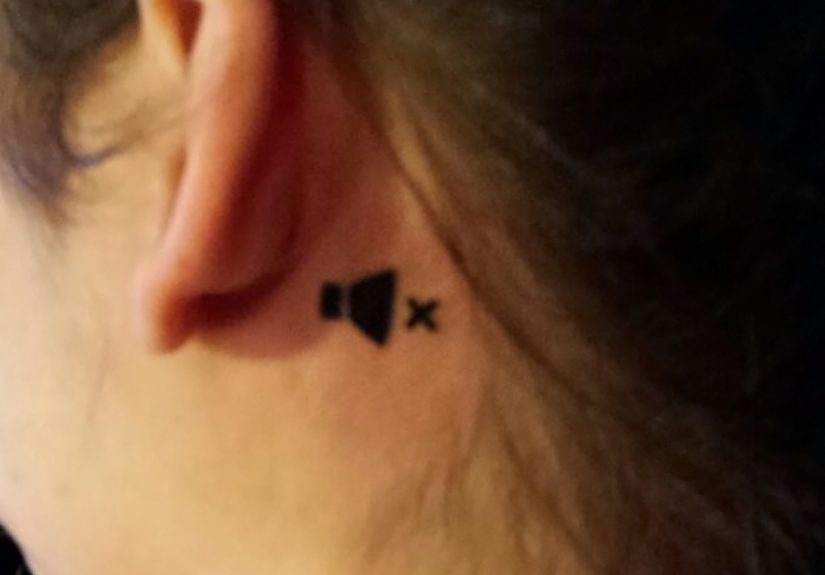
The story at the center of this article is simple but unforgettable. A young woman who is deaf in one ear chose to get a small tattoo behind that ear so strangers would instantly understand what words often fail to explain quickly. Instead of repeating, “Please stand on my other side,” or awkwardly pretending she caught what someone said when she absolutely did not, she turned her body into a quiet form of communication. No speech. No lecture. No giant neon sign. Just a subtle visual cue that says, “Heads up, this side is off duty.”
That is why the story resonated with so many people. It was not only about a tattoo. It was about the exhausting little negotiations that come with living with an invisible disability. It was about the gap between what strangers assume and what a person is actually navigating every day. Most of all, it was about finding a smart, personal, and oddly elegant way to make life a little easier.
Why This Tiny Tattoo Landed Such a Big Message
The original idea went viral because it was both deeply personal and instantly understandable. The design was minimalist: a muted speaker symbol placed behind the non-hearing ear. That tiny image did a lot of work. It warned people not to start a conversation from the wrong side. It reduced awkward misunderstandings. It also gave the wearer a bit more control over everyday interactions that can become frustrating fast.
And let us be honest: everyday interactions are where hearing loss often feels the most annoying. Not necessarily tragic. Not always dramatic. Just relentlessly inconvenient. The barista asks a question from the deaf side. The coworker drops a comment while walking past. The friend in the passenger seat starts talking while traffic growls in the background. The cashier mumbles. The Uber driver speaks while looking at the windshield instead of your face. Suddenly, a normal day turns into a long parade of “Sorry?” and “Can you say that again?” and the all-time classic, “Never mind.”
The tattoo, then, was more than body art. It was a shortcut through friction. It was self-advocacy with ink.
What It Really Means to Be Deaf in One Ear
Being deaf in one ear is often described medically as unilateral hearing loss or single-sided deafness. That may sound straightforward, but the lived experience is more complicated than many people realize. A person may still hear well with the other ear, yet everyday listening can remain surprisingly difficult. That is because hearing is not just about volume. It is also about direction, clarity, balance, and the brain’s ability to sort useful sound from chaos.
With one functioning ear, it can be much harder to tell where sound is coming from. In a quiet room, that may be manageable. In a noisy restaurant, crowded office, subway station, classroom, airport gate, or family dinner where everybody talks at once like they are auditioning for a chaos festival, it becomes a completely different game.
People with one-sided hearing loss often describe three recurring problems. First, they struggle to localize sound. A voice might seem close but come from the wrong direction. Second, they often have trouble understanding speech in background noise. Third, they may miss what is said on the deaf side entirely, which can make them look distracted, rude, or confused when they are really just working with incomplete audio.
That matters because hearing loss in one ear is easy for outsiders to underestimate. Someone might think, “Well, the other ear still works.” But one working ear does not magically replace what two ears do together. Hearing is a team sport, and when one player leaves the field, the whole system changes.
The Invisible Disability Problem
One reason this tattoo idea feels so powerful is that hearing loss is often invisible. Unlike a wheelchair, cane, or cast, it may not announce itself. A person can look completely fine to everyone else while quietly missing half the conversation. That invisibility creates a strange social trap. If you explain your hearing loss, some people finally adjust. If you do not explain it, they may assume you are ignoring them, zoning out, or being difficult.
This is where the tattoo becomes genius. It removes some of the burden from the person with hearing loss. Instead of constantly having to disclose, clarify, apologize, or educate, the symbol handles the introduction. It says what needs to be said before the misunderstanding even happens.
There is also something emotionally smart about using a design rather than a speech. Repeating “I am deaf in my left ear” over and over can feel tiring. Sometimes it feels clinical. Sometimes it feels vulnerable. Sometimes you simply do not want to explain your body to a stranger while buying toothpaste. A tattoo offers an alternative that feels personal rather than medical.
Why Strangers Often Get It Wrong
People who do not live with hearing loss tend to assume communication problems are mostly about loudness. So they speak up, repeat the same phrase at the same speed, or say it from another room like distance is just a fun little detail. But hearing loss is not always solved by more volume. Clarity matters. Facing the person matters. Background noise matters. Lighting matters because many people rely on facial expressions, lip reading, and visual cues to fill in what the ear misses.
That is why one of the most frustrating parts of one-sided deafness is the social misunderstanding around it. Someone says your name from the deaf side and gets annoyed when you do not respond. Someone talks while turning away. Someone starts chatting from the back seat. Someone covers their mouth. Someone says, “Oh, I forget you cannot hear on that side,” as if they are surprised your nervous system did not suddenly install an update overnight.
The tattoo addresses this with remarkable efficiency. It is not loud. It is not aggressive. It simply nudges people toward better behavior.
More Than a Trend: A Lesson in Accessibility
It would be easy to treat this story as a cute internet moment, the kind of thing people share because it is clever and visually satisfying. But that would miss the bigger point. The tattoo highlights how much accessibility often depends on tiny changes that make human interaction smoother.
For a person with hearing loss, good communication can be helped by simple things: getting their attention before speaking, standing on their better-hearing side, facing them directly, reducing background noise when possible, and not rushing through sentences like you are reading legal disclaimers at auction speed. In public spaces, captions, assistive listening options, and clear communication practices make an enormous difference. In workplaces and schools, accommodations are not favors. They are the difference between inclusion and constant exhaustion.
That is another reason the tattoo story sticks. It reminds us that many people are quietly adapting because the world is not consistently built with them in mind. The tattoo is creative, but it also reveals the amount of effort people with invisible disabilities regularly invest just to get through ordinary interactions.
Not Everyone Would Choose a Tattoo, and That Is Fine
Of course, not every person who is deaf in one ear is going to sprint to a tattoo studio. Some people would rather use a pin, custom earring, hairstyle, hearing device, phone note, or simple verbal explanation. Some will want no visible marker at all. That choice matters. Accessibility should expand options, not turn one workaround into a new expectation.
That is what makes the story refreshing rather than preachy. The tattoo is not presented as the answer. It is one answer. It is a creative personal solution to a personal communication challenge. For the woman who got it, it offered relief. For the rest of us, it offers perspective.
It also raises a broader question: what would daily life look like if more people understood hearing loss without needing a visual reminder at all? What if we normalized facing people when we speak? What if captions were treated as standard, not optional? What if asking for repetition did not carry social embarrassment? What if accessibility stopped being seen as an extra and started being seen as basic good design?
The Real Power of the Tattoo
The best thing about this story is that it turns a private frustration into a public insight. A woman got tired of being misunderstood. She came up with a solution that was stylish, smart, and instantly legible. The internet loved the creativity, but the deeper reason it mattered is that it exposed how much energy invisible disabilities demand.
That little symbol behind one ear says a lot about independence. It says that self-expression can also be self-protection. It says that accessibility does not always arrive in official language or policy manuals. Sometimes it arrives in the form of a tiny design that keeps strangers from speaking into the void.
And maybe that is the most interesting part. The tattoo is small, but the idea behind it is huge: when people are given room to design their own tools for communication, dignity gets a lot easier to hear.
Related Experiences: What Living With One Deaf Ear Can Feel Like
To understand why a tattoo like this feels so practical, it helps to imagine the daily texture of one-sided hearing loss. It is not always one dramatic moment. Often, it is a hundred tiny moments stacked on top of one another until your brain feels like it has completed a full-time job in customer service without lunch.
Picture a crowded coffee shop. The person behind the counter asks whether you want room for cream, but they ask from the side you cannot hear well. You catch maybe two syllables and a hopeful eyebrow raise. You guess. Suddenly you are holding a drink you did not order, and now everyone is acting like the latte is the victim here. Or imagine dinner with friends. The restaurant has hard floors, loud music, clinking glasses, and three overlapping conversations. The person on your deaf side tells a joke. Everyone laughs. You smile a beat late, which is social code for “I have no idea what just happened, but I support the general mood.”
Then there is the phone problem. Many people first notice one-sided hearing loss because a phone call sounds wrong in one ear. You switch ears and the world snaps back into focus. It is such a strange, specific moment that it can feel almost unreal. Later, it becomes habit. You angle your better ear toward people in meetings. You choose a seat in restaurants based on acoustics like an undercover sound engineer. You position yourself in group photos and group conversations with the same strategy. None of this is dramatic from the outside, but from the inside, it is constant problem-solving.
The emotional side can hit just as hard. Missing pieces of conversation can make a person feel isolated even when they are physically surrounded by people. Some become hyper-alert. Some withdraw. Some develop a polished sense of humor because humor is lighter to carry than frustration. Others get tired of being told, “Never mind,” which is usually intended as convenience but can land like exclusion. Over time, even confident people may feel self-conscious about asking others to repeat themselves or shift positions.
That is why visual cues, whether a tattoo or another marker, can feel liberating. They reduce the number of explanations. They make social encounters less random. They also help convert confusion into understanding before it becomes tension. A stranger sees the symbol, steps to the other side, and the interaction starts on better terms. That is a small victory, but small victories are often what make a day feel manageable.
In that light, the tattoo is not just clever. It reflects a broader truth about living with hearing loss: people often build their own bridges long before the world offers one.
Conclusion
The story of a woman getting a tattoo to show she is deaf in one ear became popular because it was visually clever, but it lasted because it was emotionally accurate. It captured the very real frustration of living with a condition people cannot see and often do not understand. More importantly, it showed that communication does not always need a grand solution. Sometimes it needs awareness, better habits, and a little bit of creative rebellion.
A small tattoo cannot fix one-sided hearing loss. It cannot make noisy rooms quieter, force strangers to face you when they speak, or erase the fatigue that comes from sorting speech out of chaos. But it can do something valuable: it can make the world pause and understand, even for a second. And sometimes that second is the difference between feeling dismissed and feeling seen.