Table of Contents >> Show >> Hide
- What “Solderless” and “Soluble” Really Mean
- The Breakthrough Pattern: A Water-Soluble Substrate + Recoverable Conductor
- A Concrete Example: How a Dissolvable PCB Workflow Works in Practice
- How to Go Solderless: The Practical Connection Toolkit
- How to Go Soluble: Materials That Disappear on Purpose
- Why This Matters: The E-Waste and Recycling Reality
- Where a Solderless, Soluble PCB Actually Shines
- Design Rules and Gotchas (Because Water Is Both Friend and Frenemy)
- What’s Next: Toward Circular Prototyping
- Conclusion
- Hands-On Experiences: What Building a Solderless, Soluble Board Feels Like (and What You Learn Fast)
Imagine building a circuit board the way you build a sandwich: stack the layers, press it together, test it, and when you’re done… you literally rinse the “plate” clean and reuse the ingredients.
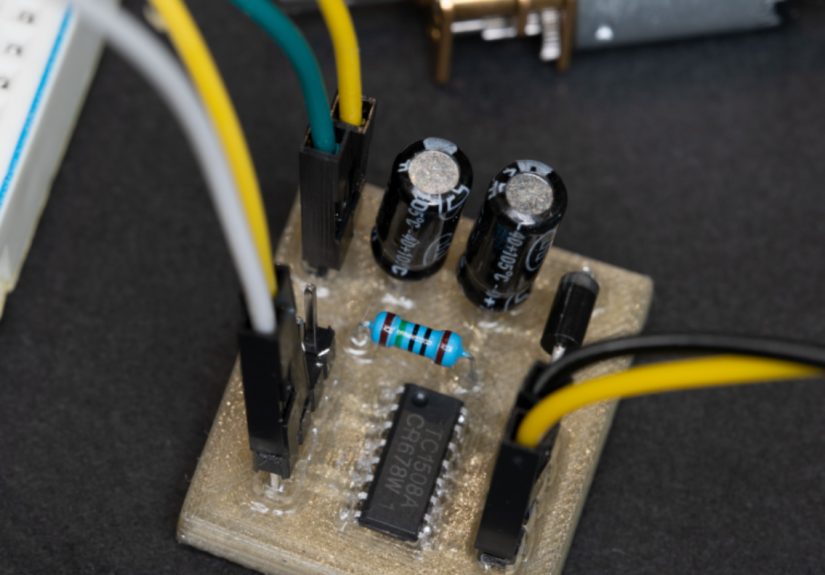
That’s the vibe behind a solderless, soluble circuit boarda PCB approach designed to make prototyping faster, safer for beginners, and dramatically easier to recycle than conventional boards.
Traditional PCBs are great at being permanent. Unfortunately, prototypes are great at being temporary. And when temporary electronics are built like permanent ones (fiberglass-epoxy boards, soldered joints, mixed materials), they often end up in the hardest-to-recycle category: “miscellaneous e-waste, good luck.”
A soluble, solderless PCB flips the script: build robust enough to test, then dissolve the board to recover parts and materials.
What “Solderless” and “Soluble” Really Mean
Let’s define terms, because “soluble PCB” sounds like something you’d stir into soup (do not do this).
Solderless
“Solderless” doesn’t mean “no metal-to-metal contact.” It means the electrical connections are made without melting solder to permanently bond components to copper pads.
Instead, solderless assembly leans on mechanical pressure, clamping, compliant pins, adhesives, or removable contact systems.
The goal is simple: connect reliably, disconnect cleanly.
Soluble
“Soluble” means the substrate (the board material) is designed to dissolveoften in waterso you can separate:
- the board material (which can be recovered or safely processed),
- the conductive pathways (sometimes recoverable), and
- the electronic components (reusable).
Put together, the big promise is a more circular workflow: prototype → test → dissolve → recover → rebuild.
The Breakthrough Pattern: A Water-Soluble Substrate + Recoverable Conductor
A particularly compelling modern approach uses polyvinyl alcohol (PVA) as a water-soluble base. PVA is common in 3D printing supports because it dissolves in water, which makes it a natural candidate for “boards that disappear on purpose.”
Now add a conductor you can reclaimlike liquid metaland you’ve got the core of a dissolvable PCB that isn’t just biodegradable; it’s recyclable by design.
One widely discussed method in this category is a fully recyclable prototyping technique where a 3D-printed PVA substrate contains internal channels that get filled with a conductive liquid metal alloy.
When you’re done, the board dissolves, the liquid metal beads back up for collection, and the components can be recovered and reused.
A Concrete Example: How a Dissolvable PCB Workflow Works in Practice
Here’s the “movie montage” version of the workflow many labs and makerspaces care aboutfast, practical, and compatible with real components:
1) Design the circuit like a normal PCB
You start with a standard PCB design mindset: netlists, component placement, and routing.
The difference is that instead of exporting copper traces for etching or milling, you convert the routing into 3D-printable channels inside a PVA substrate.
2) 3D print the soluble board with built-in channels
A fused deposition modeling (FDM) printer produces a PVA “board” that contains hollow pathways.
Think of it like plumbing for electronstiny tunnels that will later become traces.
3) Inject the conductor (often a liquid metal) into the channels
Instead of copper foil laminated to fiberglass, the conductor is introduced after printing.
Liquid metal has a key advantage: it can be recovered after dissolution because it re-forms into droplets or beads rather than turning into an inseparable smear.
4) Mount components without solder
This is the make-or-break part: you need connections that are electrically solid but mechanically reversible.
Typical strategies include:
- Press-fit or compliant pin sockets for through-hole parts (pins deform slightly to make a gas-tight connection).
- Spring contacts / pogo pins to press pads against conductive areas without permanent bonding.
- Clamps and ZIF-style interfaces for flexible leads or tails.
- Conductive adhesives where mechanical retention is provided by a housing, not by solder.
5) Test, iterate, and (when done) dissolve
When the prototype has served its purpose, you immerse the assembly in water.
The PVA dissolves, components separate, and the conductor can be collected.
The end result isn’t “trash,” it’s “parts bin plus recovered material.”
For many prototyping environments, this is the dream outcome: less waste, less time spent desoldering, and fewer “we’ll totally recycle this later” boxes that quietly become permanent furniture.
How to Go Solderless: The Practical Connection Toolkit
Solderless isn’t one technologyit’s a menu. The right choice depends on your pitch, current, vibration, and how many times you plan to disconnect and reconnect.
Press-fit and compliant pins
Press-fit technology uses specially designed pins that deform elastically when inserted into plated through-holes, creating a strong mechanical and electrical bond without solder.
It’s common in high-reliability industries because it can form durable connections and reduces thermal stress on the board.
For soluble boards, press-fit concepts translate well when the board includes reinforced holes or embedded hardware designed to take insertion forces.
Clamping and “ZIF-like” interfaces
Zero insertion force (ZIF) and clamping connectors shine when you need repeatable connection to flat conductors (like flexible circuits).
The point isn’t that the connector itself is never soldered in any context; it’s that the connection mechanism is mechanical and reversible.
In a dissolvable-board world, clamp-style interfaces can be built into reusable “carrier frames” so the consumable part is the soluble substrate, not the connector.
Pogo pins and spring contacts
If you’ve ever used a programming jig, you’ve used pogo pins.
They’re great for temporary test points, modular assemblies, and prototypes that you want to take apart frequently.
They also play nicely with soluble substrates because the “board” doesn’t need to survive rework heatonly contact pressure.
Conductive adhesives (silver epoxy and friends)
Conductive epoxies can attach components electrically without soldering, and they’re often used when heat is a problem or when you’re bonding dissimilar materials.
The trade-offs: cure time, potential brittleness, and conductivity that can vary by formulation.
For a soluble PCB, conductive adhesive can be ideal when combined with a mechanical retainer (clip, pocket, or cradle) so the adhesive isn’t doing all the mechanical work.
Low-barrier “no-solder” prototyping methods
Not every solderless circuit board needs to be a research-grade marvel.
Paper circuits, copper tape traces, conductive inks, and “peel-and-stick” circuit elements are all part of the same philosophy:
lower the friction to experimenting.
These approaches don’t always deliver high current or long life, but they’re fantastic for education, workshops, and early-stage interaction prototypes.
How to Go Soluble: Materials That Disappear on Purpose
Soluble substrates are part of a broader family called transient or physically transient electronicsdevices designed to dissolve, degrade, or resorb under specific conditions.
That can mean water dissolution (fast, convenient) or controlled degradation (slower, programmable).
Water-soluble polymers (like PVA)
Water-soluble polymers are attractive because the trigger is safe and accessible: water.
For prototyping, that’s a feature, not a bug. It turns disassembly into a predictable “end-of-life” step rather than a struggle with heat guns and solder wick.
Bioresorbable and biodegradable materials (for specialized use cases)
Research in transient electronics has explored substrates and encapsulants like bio-derived polymers and materials inspired by biocompatible systems.
In medical contexts, devices may be designed to safely resorb in the body over time, reducing the need for surgical removal.
In environmental monitoring, transient electronics can enable sensors that don’t linger as long-term litterthough responsible materials selection remains crucial.
Conductors that can be recovered or safely transformed
The conductor choice is central:
- Recoverable conductors (like certain liquid metals) support reuse and circularity.
- Transient metals (like magnesium in some research systems) can dissolve under controlled conditions, useful for bioresorbable devices.
- Printed conductive inks are accessible, but they can be harder to fully reclaim, depending on chemistry and substrate.
The best option depends on your goal: maximum reuse in a lab (recoverable) versus engineered disappearance for specialized deployment (transient).
Why This Matters: The E-Waste and Recycling Reality
E-waste isn’t just “old phones.” It’s also the mountain of prototypes, short-run devices, and one-off electronics that never make it to mass production.
PCBs are notoriously complex to recycle because they combine metals, resins, fiberglass, and additives in tightly bonded layers.
Even when recycling is possible, it often focuses on metal recovery while leaving the non-metal fraction as a difficult residue.
A dissolvable board doesn’t magically solve global e-waste. But it attacks a specific, high-leverage pain point:
the prototype lifecycle.
If a makerspace can reuse components and recover core materials repeatedly, that’s fewer boards manufactured, fewer parts discarded, and less time wasted on disassembly.
Where a Solderless, Soluble PCB Actually Shines
1) Makerspaces and engineering labs
This is the sweet spot: lots of iterations, lots of test circuits, and lots of boards that are “done” after a week.
Dissolvable, solderless boards turn end-of-life into a routine cleanup step rather than a guilt spiral.
2) Classroom and outreach settings
Soldering is a valuable skillbut it’s also a barrier for beginners, safety-conscious programs, and short workshops.
A solderless system helps students focus on circuit thinking first.
And a soluble substrate makes teardown and reset fast, which is perfect for repeated labs.
3) Temporary sensing and short-duration deployments
Transient electronics research suggests interesting futures for sensors that don’t become permanent debris.
The soluble-board idea overlaps with this space, especially when the substrate and conductor are chosen with environmental compatibility in mind.
4) Rapid product exploration
When you’re testing form factors, interactive prototypes, or weird mechanical geometries, the ability to build non-flat or 3D-routed circuits (via 3D printing) is a big deal.
You can put “traces” where copper would be difficult, then recycle the whole experiment when the design changes.
Design Rules and Gotchas (Because Water Is Both Friend and Frenemy)
Moisture management is not optional
If your board dissolves in water, humidity becomes a design constraint.
Storage needs desiccant, sealing, or at least a dry container.
Short tests are fine; long-term deployment in damp environments is not the point of this class of board.
Electrical performance has practical limits
Soluble, injected conductors and contact-based interconnects can handle many prototyping needs, but they’re not identical to copper traces on FR-4.
You’ll care about:
- trace resistance (especially for power paths),
- signal integrity at higher frequencies,
- connector contact reliability over repeated cycles,
- mechanical reinforcement where insertion forces occur.
Plan the “dissolve step” like a real process
A dissolvable PCB is only eco-friendly if you actually capture and reuse what it releases.
That means:
- use a container dedicated to dissolution (not your kitchen sink),
- separate and collect conductive material,
- rinse and dry components properly,
- keep good labeling so parts return to inventory rather than chaos.
What’s Next: Toward Circular Prototyping
The most exciting direction isn’t “every consumer gadget dissolves in the rain.”
It’s more practical: prototyping becomes circular by default.
Picture a near-future lab workflow:
you print a soluble substrate overnight, inject conductors in the morning, clamp components by lunch, test in the afternoon, dissolve after dinner, and start again.
The board stops being a disposable object and becomes a temporary scaffold for reusable parts.
Pair that with better design software conversions (so routing becomes printable channels automatically), and you get a new kind of electronics literacy:
circuits that are as editable as 3D printsbecause, in a very real sense, they are.
Conclusion
A solderless, soluble circuit board is less about novelty and more about fixing the mismatch between how we prototype and how we manufacture.
Prototypes change constantly; traditional PCBs assume permanence.
By using reversible interconnects and dissolvable substrates, you can iterate faster, lower barriers for learners, and dramatically reduce the “prototype graveyard” that fuels e-waste.
Will this replace FR-4 for production electronics? Not anytime soonand that’s okay.
The point is to make the messy, experimental stage of building electronics cleaner, cheaper, and more reusable.
In other words: let your ideas be temporary, not your planet’s landfill.
Hands-On Experiences: What Building a Solderless, Soluble Board Feels Like (and What You Learn Fast)
The first time you build a dissolvable, solderless board, you’ll probably have two simultaneous thoughts:
“This is unbelievably cool,” and “Oh wow, I need to treat water like a wildcard villain.”
That mix of wonder and healthy paranoia is exactly right.
In maker-friendly setups, the learning curve is surprisingly gentleespecially compared to fine-pitch soldering.
Instead of hovering over pads with a hot iron, you spend your attention on mechanical fit: how firmly pins seat, how evenly a clamp presses, and whether your contacts feel “confident” or “wobbly.”
It’s a different kind of craftsmanship. You become less of a tiny-metal welder and more of a careful mechanical designer.
One practical lesson shows up early: your circuit is only as reliable as your contact pressure.
If a pogo pin isn’t aligned, it will remind you by turning your LED into a strobe light at the worst possible moment.
If a press-fit hole is slightly under-supported, insertion becomes a wrestling match (and the board will lose).
The fix is usually simpleadd reinforcement, redesign the pocket, or distribute forcebut you learn to respect mechanics the way you used to respect heat.
Another common “aha” is how liberating it feels to iterate without emotional baggage.
With a conventional PCB, every design change carries a tiny penalty: wasted board material, time spent desoldering, and that pile of “maybe useful later” boards.
With a soluble substrate, you can treat a prototype like a draft.
That psychological shift matters. People take more creative risks when the cleanup is built into the plan.
The dissolve step itself becomes a ritual. Most teams end up developing a mini standard operating procedure:
label the build, snap a photo for documentation, remove any parts that shouldn’t get wet, then dissolve in a dedicated bin.
When the substrate disappears, you get a strangely satisfying “ta-da” momentlike a magic trick that ends with your components neatly recoverable.
The first time you watch a board dissolve cleanly, you’ll probably say something like, “So… we can just do this again?” Yes. That’s the point.
But there are also classic rookie mistakes. Leaving a soluble board exposed overnight in a humid room can turn your “PCB” into a slightly sad, bendy cracker.
Overdriving a power trace can produce heat you didn’t plan for, and some contact methods are less forgiving than solder when current spikes happen.
And if you don’t plan how you’ll capture and store reclaimed conductive material, you’ll create a new kind of mess: not e-waste, but “mystery jar of conductive goo.”
The biggest takeaway people report is this: dissolvable, solderless boards make electronics feel more like a reusable kit and less like a one-way manufacturing pipeline.
You still need engineering disciplineespecially around mechanical reliability and moisture handlingbut the payoff is real.
You spend less time fighting assembly and more time learning, testing, and improving designs.
And when a prototype is done, “throw it away” stops being the default ending.