Table of Contents >> Show >> Hide
- What Was the Coleco Adam?
- Why the Adam Looked So Impressive at First Glance
- Coleco Adam Specifications and Core Hardware
- SmartWriter, SmartBASIC, and Everyday Use
- The ColecoVision Connection
- Why the Coleco Adam Failed
- What the Coleco Adam Actually Got Right
- The Coleco Adam Legacy Today
- What It Was Like: of Experience and Atmosphere
- Final Thoughts
The Coleco Adam is one of those machines that makes retro-computing fans grin, wince, and start telling stories at the same time. It arrived in the early 1980s with huge ambitions, a flashy all-in-one concept, and enough built-in extras to make competing home computers look slightly underdressed. On paper, it was a dream machine: an 8-bit home computer with a keyboard, storage, printer, word processing tools, and ties to the popular ColecoVision game console. In real life, well, the Adam became famous for being both surprisingly forward-thinking and gloriously chaotic.
If you have ever wondered why the Coleco Adam still gets mentioned in lists of fascinating vintage computers, this is the full tour. We will cover what it was, how it worked, what made it special, why it stumbled, and why collectors and enthusiasts still keep it alive. The short version is that the Adam aimed to be a family computer, a game machine, a word processor, and a budget-friendly productivity system all at once. That is a lot to ask from one beige box with a printer that sometimes behaved like the boss of the household.
What Was the Coleco Adam?
The Coleco Adam was an 8-bit home computer released by Coleco in 1983. Coleco was already well known for the ColecoVision video game console, and the Adam was designed to build on that momentum. Instead of launching a totally separate universe, Coleco made the Adam closely related to the ColecoVision hardware. It was sold in two main forms: as a standalone computer system and as Expansion Module #3, which turned a ColecoVision console into a computer.
That upgrade strategy was genuinely clever. If a family already owned a ColecoVision, they could move into home computing without starting from scratch. In an era when plenty of people were trying to decide whether they wanted a computer, a game system, or both, Coleco tried to say, “Why not all of it?” It was a bold sales pitch, and for a moment, it looked like it might work beautifully.
The Adam also arrived with a built-in productivity angle that stood out in the home computer market. Many machines of the time were sold as blank canvases that expected users to supply their own printer, software, and patience. The Adam was marketed more like a ready-to-go family package. You plugged it in, turned it on, and it could act like an electronic typewriter or word processor almost immediately. For parents, that sounded practical. For kids, the ColecoVision compatibility sounded fun. For marketers, it sounded like a winning combination. For repair technicians, it sounded like job security.
Why the Adam Looked So Impressive at First Glance
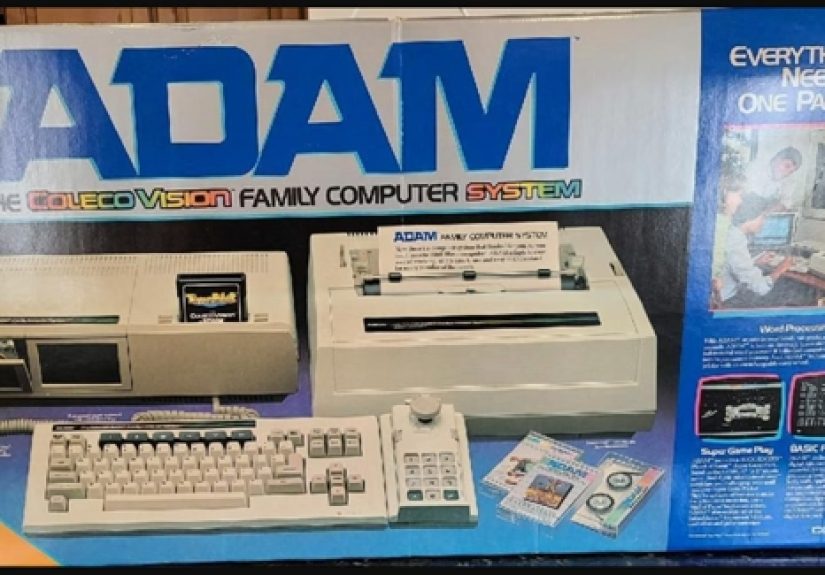
The Coleco Adam made a strong first impression because the bundle looked generous. The system typically included 64 KB of RAM, Digital Data Pack storage, a keyboard, a letter-quality daisy wheel printer, and bundled software including SmartWriter and SmartBASIC. It also shipped with a game pack, helping reinforce the machine’s double life as both a home computer and an entertainment system.
That package mattered. In the early 1980s, comparing computers was not just about the CPU or memory. Buyers also had to think about accessories, printers, software, storage, and whether they would need to sell a kidney to afford all of it. The Adam’s value proposition was simple: buy one big box, and you get nearly everything needed to start computing at home.
This “everything in one package” concept gave the Adam a futuristic appeal. It was not just selling hardware. It was selling the idea that home computing could be approachable, complete, and useful right away. In hindsight, that part of the vision was ahead of its time. Plenty of later home and office systems would succeed by making computing feel packaged and convenient. The Adam simply tried to get there a little too early, and a little too noisily.
Coleco Adam Specifications and Core Hardware
CPU, memory, and graphics
Under the hood, the Adam used a Zilog Z80A processor running at about 3.58 MHz. That put it in familiar 8-bit territory and made it part of the same broad generation as several beloved home systems from the era. It included 64 KB of RAM and 16 KB of video RAM, which was respectable for a consumer machine marketed to families and hobbyists.
For graphics, the Adam used a Texas Instruments video chip and supported a display resolution of 256 x 192. That spec will not melt a modern GPU with envy, but for the time it was perfectly suitable for games, menus, and home software. Because of its heritage, the Adam also inherited strong gaming DNA from the ColecoVision side of the family.
Storage and the famous Digital Data Pack
One of the Adam’s most distinctive features was its use of the Digital Data Pack, or DDP. This was a tape-based storage format that looked like a cassette’s ambitious cousin. Coleco promoted it as a practical storage medium with more capacity and speed than ordinary audio cassettes used on some competing systems.
In theory, the DDP was an interesting idea. In practice, it became one of the Adam’s most debated features. Tape storage could work, but by the time the Adam hit the market, floppy disks were becoming more attractive and less exotic. Tape-based systems already asked users for patience; the Adam sometimes asked for patience, optimism, and maybe a backup plan.
Floppy drives were eventually available for the Adam, including 5.25-inch disk options, which helped make the platform more flexible. Still, the DDP remains one of the machine’s defining quirks and one of the first things retro fans mention when discussing it.
The printer that ruled the kingdom
The bundled printer was both a selling point and one of the Adam’s most notorious design choices. It was a daisy wheel printer, which meant it could produce letter-quality text that looked much nicer than the output from many dot-matrix printers of the era. That made the Adam appealing to families who wanted homework, letters, or household documents to look polished.
There was one small catch. Actually, more than one. The biggest was that the printer also housed the power supply for the whole system. If the printer failed, the computer effectively took the day off too. That meant the printer was not merely a helpful accessory. It was the boss, the landlord, and the electrical overlord of the setup.
Even worse, the printer was slow and noisy. Users got high-quality text output, but they had to wait for it with the soundtrack of a small office appliance arguing with itself. It was a neat idea attached to a less neat real-world experience.
SmartWriter, SmartBASIC, and Everyday Use
The Coleco Adam tried to be useful the moment you powered it on. Unlike many home computers that greeted users with a BASIC prompt and the emotional energy of a blank tax form, the Adam booted into SmartWriter, an electronic typewriter and word processing environment. That made the machine feel less intimidating for casual users and more like a real appliance for home tasks.
This was a smart move. Not every buyer in 1983 wanted to learn programming on day one. Some people wanted to write a letter, type schoolwork, or feel like they were living in the future without first memorizing commands from a thick manual. The Adam understood that instinct.
At the same time, the platform also supported SmartBASIC, which gave hobbyists and learners a familiar path into programming. Interestingly, BASIC was not stored in ROM the way it was on many competing home computers. Instead, it came on a Digital Data Pack. That design choice reflected Coleco’s emphasis on the built-in word processing experience, but it also meant that programming was not the immediate default.
The system also had ties to CP/M, which increased its credibility as more than just a toy-store curiosity. In theory, this widened the Adam’s usefulness and gave it a more serious software identity. In practice, the machine still struggled to shake its reliability issues and toy-company image.
The ColecoVision Connection
One of the Adam’s greatest strengths was its relationship to the ColecoVision. Because the system grew out of that ecosystem, it could use ColecoVision games and accessories. That instantly gave the Adam a stronger entertainment library than many fresh computer platforms could hope for at launch.
This made the Adam unusual in a good way. Most home computers wanted you to choose between “serious machine” and “game machine.” The Adam cheerfully tried to sit in both chairs at once. It could help type a letter, then play a game, then pretend to be a family productivity hub, all in the same beige neighborhood.
That hybrid identity also explains why the Adam remains so memorable. It was not just another 8-bit computer. It was part computer, part console upgrade, part office starter kit, and part ambitious experiment in bundling. Even people who never owned one often remember the concept.
Why the Coleco Adam Failed
Now for the painful bit. The Adam’s reputation was damaged by a combination of production delays, hardware defects, reliability complaints, and unmet expectations. Coleco had grand goals for the system, reportedly aiming to ship huge volumes by the end of 1983, but reality had other plans.
Early units were infamous for problems. Some machines arrived defective. Some users reported repeated returns. The Adam became tied to stories of startup issues, finicky storage behavior, and a nasty surge problem that could erase removable media if users were careless at power-up. That is the kind of quirk that tends to ruin a relaxing afternoon of word processing.
The system’s design also made troubleshooting more frustrating than it should have been. Because the printer was integral to the machine’s power arrangement, a printer issue could disable the entire setup. That is the sort of engineering choice that seems imaginative in a conference room and dramatic in a living room.
Retail availability also hurt the Adam. Coleco had promoted the machine aggressively, but it did not ship enough working units to meet expectations. A computer can survive being odd. It can survive being slow. It can even survive being loud if it is charming enough. What it usually cannot survive is a first impression that says, “Maybe this one will work after the third trip back to the store.”
By January 1985, the Adam was discontinued. Coleco had shipped far fewer units than hoped, and the losses tied to the project were severe. The computer’s short commercial life turned it into a cautionary tale about overpromising, underdelivering, and letting the launch stumble at the exact moment public confidence mattered most.
What the Coleco Adam Actually Got Right
It is easy to mock the Adam, and honestly, the machine occasionally seems to invite that treatment. But it also deserves credit for several smart ideas.
1. It understood the family-computer package
The Adam recognized that consumers liked bundles. Instead of selling a bare computer and forcing buyers to hunt down a printer and software, it presented an all-in-one solution. That convenience-first approach makes perfect sense, even now.
2. It treated word processing as a feature, not an afterthought
Booting into a typewriter or word processor was an approachable idea for households. Coleco clearly saw that many home users cared more about practical tasks than writing code on day one.
3. It bridged gaming and productivity
The Adam’s ColecoVision compatibility gave it immediate personality. It was not pretending games were beneath it. It happily brought games along for the ride.
4. It remains historically fascinating
Some computers are successful but forgettable. The Adam was unsuccessful and unforgettable. That may not have thrilled Coleco accountants, but it certainly helped the machine earn a long afterlife in retro-computing circles.
The Coleco Adam Legacy Today
Despite its commercial failure, the Coleco Adam never fully disappeared. Retro enthusiasts still restore systems, collect manuals and accessories, create modern hardware expansions, and preserve software for the platform. That devotion says something important. The Adam may have been flawed, but it was never boring.
Collectors love it because it captures a very specific 1980s dream: the moment when home computing seemed ready to become a complete family activity overnight. Historians appreciate it because it shows how much of the early computer market was shaped not just by technology, but by marketing, timing, manufacturing quality, and public trust. Fans love it because it is a machine with personality. Sometimes that personality is charming. Sometimes it is “printer as power dictator.” But it is definitely personality.
In modern retro-computing culture, the Adam stands as a reminder that innovation is not always tidy. Some devices win because they are reliable and polished. Others become legends because they attempted something bold, tripped over the rug, and still managed to leave an impression large enough to echo for decades.
What It Was Like: of Experience and Atmosphere
To really understand the Coleco Adam, you have to imagine not just the specifications, but the experience. Picture a family in the early 1980s carrying home a giant box that promises the future. This is not some tiny gadget. This is a full event. The box says computing, education, games, productivity, and modern life have all arrived in one heroic beige package. Expectations are sky-high. Somewhere in the house, someone is already planning to write the great American novel, balance the checkbook, teach the kids programming, and play a space shooter before dinner.
Then the system gets unpacked, and the Adam immediately feels substantial. There is a keyboard, a printer, media, controllers, cables, and that sense that you are setting up not just a device but an entire command center. The setup itself feels wonderfully of its time. It is part consumer electronics, part science fair, part ritual. You do not simply “log in.” You assemble. You connect. You negotiate with a TV set. You become, briefly, the IT department of your own household.
And when it works, there is genuine magic. The SmartWriter environment makes the machine feel useful right away. You can type on it, save work, and print output that looks far more serious than what many people expected from a home computer. For users coming from typewriters, that was a big deal. The Adam could feel like a bridge between the old office world and the new digital one. It said, “Yes, this is a computer, but it also understands that you have letters to write and school papers to finish.”
The gaming side added another layer of excitement. Because of the ColecoVision connection, the Adam was not just a productivity box. It had arcade energy in its bloodstream. That gave the system a personality that many dedicated home computers lacked. It could feel responsible one minute and playful the next, like a machine wearing a tie over a superhero costume.
Of course, the Adam experience also included frustration, and plenty of it. The printer noise alone could make a room sound like a mechanical woodpecker had opinions about your document formatting. The storage system asked for trust. The reliability problems asked for more trust than some users were willing to give. Early owners often found themselves in that deeply retro emotional state where admiration and annoyance coexist in the same breath.
That strange mix is why the Adam still inspires affection. People do not remember it as merely a failed computer. They remember it as an adventure. It was dramatic, ambitious, awkward, and memorable. It promised the future with a straight face and then sometimes erased your tape for extra suspense. Yet even with all that chaos, or maybe because of it, the Adam remains lovable. It represents a period when home computing was still experimental enough to be weird, hopeful enough to be grand, and unpredictable enough to become legend.
Final Thoughts
The Coleco Adam was not the most reliable 8-bit home computer of its era, and it certainly was not the most commercially successful. But it was one of the most ambitious. It tried to merge gaming, word processing, family computing, and bundled convenience into one machine. That vision was smart. The execution, unfortunately, was shakier than a printer table on thick carpet.
Still, the Adam deserves more than a punchline. It was a real attempt to rethink what a home computer could be. It packaged practical tools with entertainment, lowered the barrier to entry for nontechnical users, and offered a surprisingly rich concept for its time. Even its failure tells us something useful about the early personal computer era: good ideas alone are not enough if quality control, timing, and reliability do not show up for work.
Today, the Coleco Adam survives as a cult favorite, a collector’s conversation starter, and a remarkable example of 1980s computer history. It may not have conquered the home computer market, but it absolutely earned a permanent place in the story of it.