Table of Contents >> Show >> Hide
- When Real Loss Collides With Reel Life
- Fast & Furious: Driving Forward Without Paul Walker
- Black Panther & Wakanda Forever: Grief as the Script
- Glee: Grieving in Real Time
- Harry Potter and Other Ensembles: Quiet Legacies
- How Actors Cope Behind the Scenes
- What Their Stories Teach Us About Grief
- Reflections & Experiences: Inside the Emotional Reality of Carrying On
- Conclusion
Hollywood loves a line like “the show must go on” it looks great on a T-shirt and even better in an inspirational montage.
But when a cast loses a co-star, that slogan stops being cute and starts feeling like pressure.
Behind the polished tributes and red-carpet smiles are exhausted people trying to film scenes, hit marks, and say lines
while someone’s chair is still empty.
In recent years, actors from ensembles like Fast & Furious, Black Panther, Glee, and the
Harry Potter films have spoken candidly about what it means to keep working after losing the heart of their cast.
Their stories blend grief, loyalty, guilt, joy, and an extremely unglamorous amount of crying in trailers between takes.
This article explores how they carry on, how productions adapt, and what their experiences reveal about grief for all of us.
When Real Loss Collides With Reel Life
A long-running cast is less like a LinkedIn network and more like a messy, overcaffeinated family.
People grow up together, share overnight shoots, divorces, in-jokes, and bad craft services.
When one of them dies, the loss is personal and professional: a friend is gone, and so is a scene partner
who held up entire storylines.
Actors describe three immediate shocks:
- Emotional whiplash: Moving from memorials to make-up chairs.
- Creative disruption: Scripts built around the late actor suddenly no longer work.
- Public spotlight: Grief becomes clickable content, dissected in real time.
Many performers say the decision to continue isn’t about “pretending it’s fine,” but about protecting their co-star’s legacy
and the crew whose livelihoods depend on the project. Articles profiling actors after such losses from blockbuster stars
to TV ensembles repeatedly highlight that carrying on is rarely a clean, heroic choice; it’s a fragile compromise.
Fast & Furious: Driving Forward Without Paul Walker
Paul Walker’s death in 2013 hit the Fast & Furious cast like a crash with no stunt coordinator.
Co-stars have described finishing Furious 7 as “beautiful, inspirational, and painful” all at once.
The production rewrote the film, used existing footage, and created that now-famous farewell sequence not as a gimmick,
but as a global memorial.
Jordana Brewster has spoken about grief arriving “in waves,” years later, especially when revisiting the franchise and
fan tributes. Vin Diesel regularly honors Walker in public, framing new installments as
extensions of his friend’s legacy, while the character Brian is kept alive off-screen a deliberate choice to avoid
exploiting or replacing him.
Cast members describe a quiet rule on set: action scenes can go bigger, but the emotional core stays anchored in the friend
they lost. Their version of carrying on is not “moving past” Walker, but folding his memory into the DNA of every film.
Black Panther & Wakanda Forever: Grief as the Script
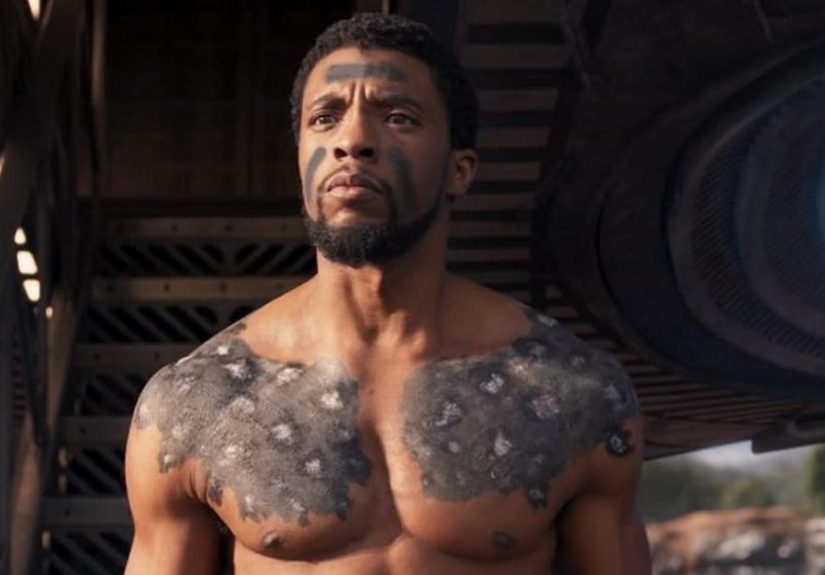
After Chadwick Boseman’s death in 2020, Marvel and the Black Panther family faced an excruciating question:
continue, or stop? Director Ryan Coogler has shared that he briefly considered walking away from filmmaking altogether.
Instead, he and the cast chose a harder path reshaping Black Panther: Wakanda Forever into a film about grief,
legacy, and radical love.
Letitia Wright, Lupita Nyong’o, Danai Gurira, Winston Duke, and others have described the shoot as a long ritual of mourning,
where scenes at T’Challa’s funeral felt painfully real, and castmates supported one another between takes.
Interviews emphasize one shared principle: Boseman would not be “replaced.” The story bends around his absence rather than
pretending it never happened. Producers and cast repeatedly stress that honoring him was “the most important thing”
about returning.
Here, work becomes a living memorial the film itself a love letter that lets audiences grieve alongside the people
who knew him best.
Glee: Grieving in Real Time
Few casts have had their pain as exposed as the team behind Glee. Cory Monteith’s death in 2013 forced the show to
address a raw wound mid-run, followed years later by the death of Naya Rivera. Cast members have recalled returning to
the same sets, the same music, while still in the early stages of grief, describing it as brutally surreal.
Over time, some have found revisiting the show and Monteith and Rivera’s performances strangely healing, turning
what once felt unbearable into a way to celebrate who they were.
Their experience underlines a key reality: performing through loss can retraumatize, but it can also offer structured space
for remembrance when handled with care.
Harry Potter and Other Ensembles: Quiet Legacies
The Harry Potter cast spent a decade together, then began losing co-stars including Alan Rickman.
Daniel Radcliffe and others have spoken lovingly about Rickman’s mentorship and kindness, emphasizing how his influence
continues to shape their choices long after the cameras stopped.
Similar stories ripple across ensembles large and small: supporting actors, stunt coordinators, makeup artists not always
headline names whose deaths leave a lasting imprint on sets and careers. The public may remember a character; their castmates
remember the person who stayed late to help run lines or cracked jokes at 3 a.m.
How Actors Cope Behind the Scenes
1. Turning Work Into Tribute
Many casts channel grief into the material itself: dedicating episodes, shaping character arcs to echo their co-star’s
values, preserving catchphrases, or building subtle nods into sets and costumes. These choices let them feel that every
shooting day says, in its own way, “We remember you.”
2. Refusing to Replace
A recurring theme in statements around Walker, Boseman, and others is the refusal to “swap in” a new face to fill an old role.
It’s not just fan service it’s an ethical line. Rewriting to leave space around a loss acknowledges that people are not
interchangeable content assets; they’re part of a shared history.
3. Leaning on the Cast “Family” and Professionals
Actors talk about group chats turning into support lines, late-night hotel hallway conversations, and the unspoken pact
that someone will tap in when another can’t keep it together that day. At the same time, more productions are bringing in
grief counselors and mental health professionals a recognition that trauma on set is real, and pretending otherwise is
bad for people and for the work.
4. Setting Boundaries With Fans and Media
Another layer: fans demanding constant access to pain. Some cast members have described needing to step back from interviews
or social media because every promotional tour morphed into a memorial circuit. Healthy carrying on often includes a polite
but firm “no” protecting private grief from public consumption.
What Their Stories Teach Us About Grief
Underneath the studio logos and box-office math, these stories are familiar. Anyone who has gone back to an office after
losing a colleague knows the strange sting of seeing their mug still in the kitchen or their name in an old email thread.
Actors remind us:
- Continuing doesn’t mean “getting over it.”
- You’re allowed to find meaning in your work without turning grief into content.
- Honoring someone can look like doing your job well, taking care of their people, and refusing to erase them.
The show goes on. But it goes on differently slower, gentler, with an empty space everyone can feel.
Reflections & Experiences: Inside the Emotional Reality of Carrying On
Listen closely to how actors describe those first days back on set, and a pattern emerges.
One cast member walks onto a soundstage and instinctively looks for the friend who always stole the best spot at the craft
table. Another reaches a line written months before the tragedy and suddenly realizes it now plays like a eulogy.
Someone laughs at an old blooper reel and then feels guilty for laughing at all. The workday becomes a loop of
“Do your job, try not to fall apart, repeat.”
Some performers say the job kept them afloat. Having call times, marks to hit, and scenes to finish gives structure when
grief makes time feel shapeless. They talk about the comfort of familiar routines: the same makeup chair, the same AD
barking about lunch, the same crew member sneaking them terrible coffee and better advice. In that routine, their co-star
feels close as if they might stroll in late with a joke about the call sheet.
Others admit that going back too soon hurt. Filming on locations tied to memories forced them to relive the loss on loop.
An emotional scene that once would’ve been “fun” to play now hits too close, and they leave set drained, wondering if
“the show must go on” is a mission statement or an excuse. Several have spoken about learning to say, “I need a minute,”
and finding directors and crews increasingly willing to pause rather than bulldoze through.
Over time, something shifts. The late co-star becomes part of the culture of the production: their phrases woven into ad-libs,
their photo in the wardrobe trailer, their name mentioned in safety meetings as a reminder to take care of one another.
New cast members are quietly briefed: “You would’ve loved them.” The set stops being a place where the loss happened and
becomes a place where their presence is actively kept alive.
That is what “carrying on” really looks like for many actors: not stoic resilience, not neat closure, but an ongoing
relationship with someone who isn’t physically there. They show up, deliver the scene, protect each other, and find ways to
thread their friend’s spirit through future seasons, sequels, and careers. It’s imperfect and human and a reminder that
continuing after a loss is not betrayal. Sometimes, it is the deepest form of respect.
Conclusion
When actors talk about carrying on after losing a co-star, they are really talking about how to live with grief under bright
lights and unforgiving schedules. Their stories reject the myth of quick recovery and replace it with something harder and
more hopeful: the idea that love, memory, and community can coexist with pain, and that moving forward can honor
the one who is missing instead of erasing them.
sapo:
When a beloved co-star dies, the cameras don’t automatically cut. Casts from franchises like Fast & Furious,
Black Panther, Glee, and more have opened up about the brutal, complicated, and sometimes healing experience of returning
to set after loss. This in-depth feature explores how they navigate grief under the spotlight rewriting scripts,
turning projects into tributes, setting boundaries with the public, and finding real solidarity behind the scenes
offering a human, honest look at what “the show must go on” really means.