Table of Contents >> Show >> Hide
- What Is an Aged Brass Hanging Rail, Exactly?
- Why Aged Brass Works So Well in Real Homes
- Where to Use Aged Brass Hanging Rails (Beyond “Above the Stove”)
- Choosing the Right Rail: Materials, Finish, and “Will This Hold My Stuff?”
- Design Ideas That Make Aged Brass Rails Look Intentional (Not Like an Afterthought)
- Installation Basics (So Your Rail Doesn’t Become a Surprise Event)
- How to Care for Aged Brass (Without Polishing the Soul Out of It)
- What Do Aged Brass Hanging Rails Cost?
- Common Mistakes (So You Don’t Have to Learn the Hard Way)
- Final Thoughts: Small Hardware, Big Impact
- Experiences With Aged Brass Hanging Rails (The Real-World Stuff)
If you’ve ever looked at a beautifully styled kitchen and thought, “Wow… even the utensils look like they have their life together,”
there’s a decent chance you were admiring a hanging rail. Add an aged brass finish and suddenly your spatula isn’t just a spatula
it’s part of the decor. That’s the magic of aged brass hanging rails: they’re practical storage that also acts like jewelry for your walls.
Warm metals have been hanging around (pun intended) because they make spaces feel invitingless “sterile showroom,” more “someone actually cooks here.”
Designers have also been leaning into finishes with depth, character, and patina rather than ultra-shiny perfection. In other words:
a little lived-in is officially cool again. And aged brass is the poster child for that vibe.
What Is an Aged Brass Hanging Rail, Exactly?
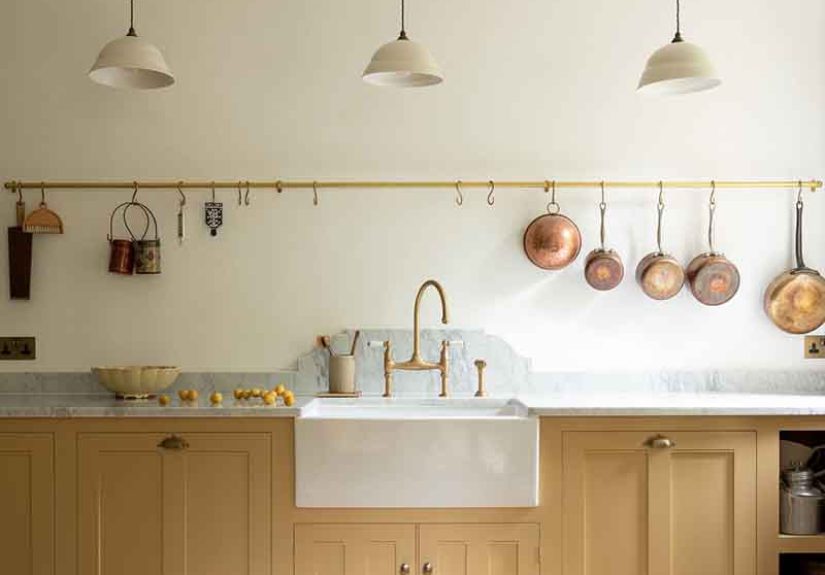
A hanging rail is a wall-mounted bar designed to hold hooks, S-hooks, baskets, or accessories so you can hang items vertically.
You’ll see them called pot rails, utensil rails, mug rails, gallery rails, or simply hanging bars.
The “aged brass” part describes the finish: a warm brass tone that looks softened, deepened, or gently darkenedlike it’s been in the family
long enough to have opinions about where the good light is.
Some “aged brass” finishes are chemically darkened to mimic age, while others are living finishes (often unlacquered)
that naturally deepen over time through exposure to air, moisture, and touch. Either way, the goal is the same:
that rich, warm, slightly moody brass look that plays nicely with everything from modern minimalism to vintage cottage chaos.
Why Aged Brass Works So Well in Real Homes
1) It adds warmth without screaming for attention
Aged brass is the friend who shows up dressed well, compliments your outfit, and doesn’t make the evening about them.
It reflects light gently (not like a mirror shouting “LOOK AT ME”), and it pairs beautifully with popular materials:
painted cabinets, natural wood, marble-look quartz, concrete, zellige-style tile, and even stainless appliances.
2) It hides fingerprints and water spots better than high-polish finishes
A softly patinated or brushed aged brass finish tends to be more forgiving than shiny polished brass.
If your household includes kids, roommates, or a partner who believes “wiping it down” is a seasonal activity,
that forgiveness matters.
3) Brass doesn’t rust the way iron-based metals do
Rust is an iron thing. Brass is a copper-and-zinc alloy, so it won’t develop orange iron rust.
In steamy kitchens or bathrooms, that’s a practical advantageespecially for rails that live near sinks and kettles.
4) Copper alloys (including brass) are known for antimicrobial behavior
This is not a substitute for cleaning (sorry, we all wanted it to be), but it’s a nice bonus:
uncoated copper-alloy surfaces have been studied for their ability to reduce microbial load over time.
For high-touch spots like handles and rails, it’s one more reason brass has stayed popular beyond just looks.
Where to Use Aged Brass Hanging Rails (Beyond “Above the Stove”)
Kitchens: the classic, for good reason
- Utensil rail near the cooktop: Hang your everyday toolsspatulas, ladles, tongsso drawers can breathe again.
- Pot rail for S-hooks: Great for lightweight pans, strainers, and colanders (heavy cast iron needs serious mounting).
- Coffee station rail: Hang mugs, a small basket for pods/filters, and a tiny scoop that will finally stop disappearing.
- Prep-zone rail: Add hooks for towels, a small cutting-board loop, or produce bags.
Pantries and utility spaces
Rails aren’t just for pretty kitchens. In a pantry, a hanging storage rail can hold baskets for snacks,
reusable grocery bags, or a hook for the step stool you pretend you don’t need (until you do).
It’s vertical storage that doesn’t require a full remodelor emotional readiness for open shelving.
Bathrooms: towel rails with extra style points
Aged brass brings warmth to bathrooms, especially when paired with white tile, muted paint colors, or natural wood vanities.
Use a rail for towels, robes, a hanging caddy, or even a small plant (the plant will judge your skincare routine,
but it will look fantastic doing it).
Entryways and mudrooms
A rail with hooks can replace bulky coat racks. It’s great for backpacks, dog leashes, hats, keys, and the one umbrella
you buy every year because you can never find the one you already own.
Closets and bedrooms
In a closet, a brass hanging rail can serve as a secondary rod for accessories, scarves, or tomorrow’s outfit.
In bedrooms, it can become a minimalist hanging display for jewelry, headphones, or a small fabric basket.
Choosing the Right Rail: Materials, Finish, and “Will This Hold My Stuff?”
Solid brass vs. brass-plated
Solid brass rails tend to feel heavier, wear more gracefully, and tolerate polishing better.
Brass-plated rails can look great (especially at a lower price), but aggressive cleaning can damage the plating,
and dents or scratches may reveal the base metal.
Lacquered vs. unlacquered (living finish)
If you want your rail to stay looking “freshly installed,” look for a protected or lacquered finish.
If you love the idea of a finish that deepens over timehigh points getting shinier where touched, low points getting darker
you’ll probably enjoy unlacquered brass or a “living finish.”
Rail length and spacing
The right length depends on what you’re hanging. A short rail is perfect for mugs or towels.
A longer rail works for utensils and cookwarebut make sure the hooks have room to slide if you want flexible spacing.
Many wall-mounted rack systems use adjustable S-hooks, which makes the rail more adaptable as your needs change.
Load expectations (a friendly reality check)
Hanging rails are excellent for frequently used, reasonably lightweight items. For heavy cookware,
the rail and its mounting hardware matter as much as the finish. Translation: if your plan is to hang a collection of cast iron that could
double as gym equipment, mount the rail into studs (or a properly anchored board that’s mounted into studs). Drywall alone is not a life partner.
Design Ideas That Make Aged Brass Rails Look Intentional (Not Like an Afterthought)
Match the “undertone,” not the exact shade
Aged brass can lean golden, brownish, or slightly muted. Instead of trying to match it perfectly to every other metal,
coordinate by undertone: warm metals with warm metals, cooler metals with cooler metalsor intentionally mix them for contrast.
Aged brass looks especially sharp alongside matte black, polished nickel, or stainless, as long as it looks like a decision.
Use repetition to make it feel cohesive
Repeat aged brass in at least two placesmaybe the rail and cabinet hardware, or the rail and a light fixture.
That repetition tells the eye, “This is a theme,” not “I panic-bought this at 2 a.m.”
Pair with texture
Aged brass loves texture: handmade-look tile, wood grain, stone veining, linen curtains.
In minimalist spaces, it prevents things from feeling too cold. In maximalist spaces, it plays well with pattern
without starting a fight.
Installation Basics (So Your Rail Doesn’t Become a Surprise Event)
Most hanging rails install with brackets and screws, but the right method depends on your wall and what you plan to hang.
Here’s a practical checklist that keeps things safe and sane:
- Find studs whenever possibleespecially for pot rails or anything holding real weight.
- Use a level. A slightly crooked rail will haunt you every time you walk into the room.
- Choose the right anchors if studs aren’t available (and keep loads light when using anchors alone).
- For tile walls, use the correct drill bit and go slowly to avoid cracking; seal around penetrations in wet areas.
- Test spacing by holding up your most-used item(s) firstespecially mugs and utensils with long handles.
A smart approach for heavy-duty kitchen rails is to mount a finished wood backer board into studs, then mount the rail to that board.
It can look custom (on purpose) and gives you more flexibility if stud spacing doesn’t line up with your dream rail placement.
How to Care for Aged Brass (Without Polishing the Soul Out of It)
Daily/weekly care
- Wipe with a soft cloth and mild soap/water when needed.
- Dry thoroughlystanding water can leave spots, especially on darker finishes.
- Avoid abrasive pads and harsh cleaners that can scratch protective coatings.
If you’re dealing with hard-water spots
Some manufacturers recommend gentle approaches first: soft cloth, mild soap, thorough rinse, and dry.
For stubborn mineral spots, diluted vinegar solutions are commonly suggested for certain finishesfollow brand guidance,
rinse completely, and don’t let acidic cleaners sit on the surface.
If it’s unlacquered and you love the patina
Congratulations: your “maintenance plan” is mostly… patience. Clean gently when it gets grimy, then let it keep aging.
The finish will shift over time, especially where it’s touched most. If you ever want to brighten it up,
use a brass polish cautiously and understand it may change the look dramatically (and unevenly, at first).
If it’s lacquered and you want it to stay pretty
Treat it like a good manicure: gentle cleaning, no harsh scrubbing, and try not to chip the protective layer.
Once lacquer is compromised, the metal underneath may age differently in that area.
What Do Aged Brass Hanging Rails Cost?
Prices vary based on size, brand, and material (solid brass costs more than plated).
A simple, shorter rail might be budget-friendly, while a modular system with brackets, end caps, and specialty hooks
can climb quicklyespecially in designer hardware lines.
The good news: rails are one of those upgrades where you can start small. A single rail near the coffee station or sink can make a daily difference.
If you love it, you can add a second rail later without rewriting your entire kitchen.
Common Mistakes (So You Don’t Have to Learn the Hard Way)
- Mounting heavy rails into drywall only: That’s a “today problem” that becomes a “gravity problem.”
- Choosing a finish that fights your other metals: If everything else is cool-toned chrome, aged brass may need a supporting role elsewhere.
- Hanging items too close to heat or splatter zones: Rails near a stove are handy, but grease loves to travel.
- Over-polishing aged finishes: If you picked “aged,” let it be aged. Don’t buff it into a different personality.
Final Thoughts: Small Hardware, Big Impact
Aged brass hanging rails are one of those rare home upgrades that check both boxes: they make your space more functional
and more attractive. They can organize clutter, free up drawers, and add warmth and character in the exact spot your eye lands
every day. Whether you use one to hang mugs, towels, or the utensil you swear you’ll wash immediately after cooking
(no judgmentsame), it’s a practical detail that looks like a design decision.
Experiences With Aged Brass Hanging Rails (The Real-World Stuff)
The “Tiny Kitchen, Big Personality” Story
In small kitchens, countertop space is basically a luxury itemlike beachfront property, but with more crumbs.
A common experience homeowners share is that a single aged brass rail instantly changes how the kitchen functions day-to-day.
Instead of digging through an overstuffed drawer for the whisk, the daily tools live on hooks within arm’s reach.
The surprise benefit? The kitchen feels bigger. When your counters aren’t crowded with utensil crocks, spoon rests, and “temporary” piles,
you suddenly have room to cook without doing a balancing act.
Aged brass also tends to soften the look of utilitarian storage. Stainless rails can feel professional (and a little cold),
while aged brass looks decorative even when it’s holding very unglamorous items like a potato peeler.
People often describe it as making the kitchen feel “finished,” like the space has a point of view.
And if you’re mixing practical with prettysay, white cabinets, a simple backsplash, and a rail near open shelving
the aged brass becomes an easy focal point that doesn’t require a full renovation budget.
The “Patina Is a Relationship” Story
If you choose an unlacquered or living finish, you’ll notice something quickly: the rail starts telling the truth about how you live.
The spots you touch the most may get a little brighter. The areas near steam (kettles, sinks, dishwashers) may deepen or shift tone.
Some people absolutely love thisbecause the finish becomes uniquely theirswhile others realize they prefer the consistency of a protected finish.
The best real-world advice tends to be: decide whether you want your brass to stay “styled” or become “storied.”
Many homeowners find a happy middle ground: they clean gently, dry after splashes, and let the finish evolve naturally.
That way, it never looks dirtyjust lived-in. The rail becomes one of those background details that quietly improves over time,
which is rare in homeownership (most things do the opposite).
And if you ever change your mind, you can usually brighten brass with careful polishingjust know it’s less like “touching up paint”
and more like “changing the mood lighting.” You can do it, but it will look different.
The “One Rail Turned Into Three” Story
A very common experience: someone installs one railoften near the stove or coffee areathen realizes how useful it is and starts spotting
opportunities everywhere. A short rail in the bathroom becomes a place for hand towels and a hanging basket for hair tools.
Another rail in the laundry room holds lint rollers, clothespins, and those delicates bags you only remember when it’s too late.
In an entryway, a rail with hooks makes leaving the house smoother: keys, dog leash, hats, and the tote bag you keep forgetting in the car
all have a home.
The design benefit is that aged brass repeats nicely across rooms. Even if the rest of the house isn’t “matchy-matchy,”
a consistent warm metal finish creates a subtle thread that ties spaces together.
People often report that guests notice the railnot because it’s loud, but because it’s one of those “quietly expensive-looking” details
that reads intentional. And that’s the real charm: it’s storage that doesn’t feel like storage. It’s organization that looks like decor.