Table of Contents >> Show >> Hide
- How We Ranked These Al Capone Actors
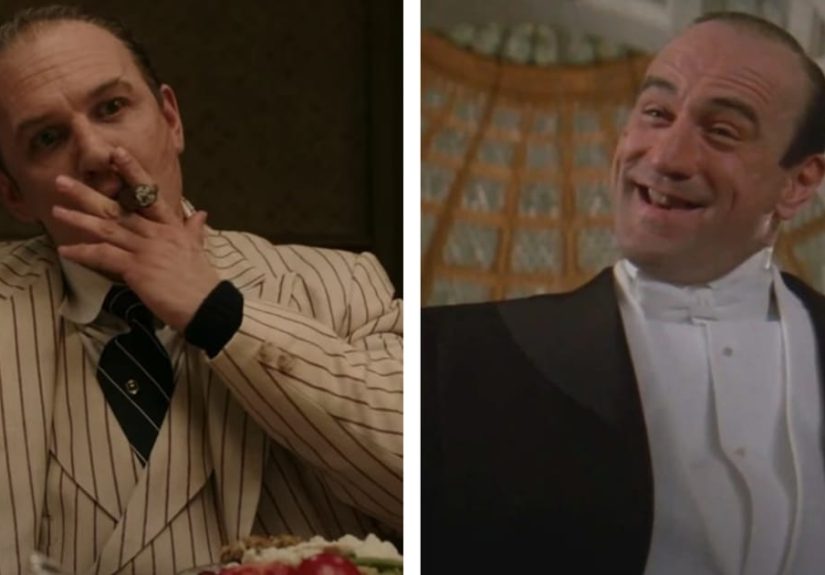
- 1. Robert De Niro – The Untouchables (1987)
- 2. Stephen Graham – Boardwalk Empire (2010–2014)
- 3. Rod Steiger – Al Capone (1959)
- 4. William Forsythe – The Untouchables (1993–1994 TV Series)
- 5. Tom Hardy – Capone (2020)
- 6. Ben Gazzara – Capone (1975)
- 7. Neville Brand – The Untouchables (1959 TV Series) & The George Raft Story (1961)
- 8. Eric Roberts – The Lost Capone (1990 TV Movie)
- 9. F. Murray Abraham – Dillinger and Capone (1995)
- 10. Ray Sharkey – The Revenge of Al Capone (1989)
- 11. Titus Welliver – Mobsters (1991)
- 12. William Devane – Lois & Clark: The New Adventures of Superman (1994)
- 13. Anthony LaPaglia – Road to Perdition (2002, Deleted Scene)
- 14. Jon Bernthal – Night at the Museum: Battle of the Smithsonian (2009)
- Have We Really Covered “Every” Al Capone Actor?
- What These Performances Say About Our Obsession With Gangsters
Few historical figures have the same cinematic pull as Al Capone. The Chicago crime boss has
been dead for decades, but Hollywood keeps dragging him back into the spotlight with fedoras,
pinstripe suits, and an endless supply of cigars. From prestige dramas to pulpy TV movies and
even family-friendly blockbusters, actors love taking a swing at “Scarface.”
In this guide, we’re ranking every major live-action Al Capone performance in movies and TV.
These are the portrayals that shaped how audiences picture Capone today – the ones that turned
a real-life gangster into one of pop culture’s favorite villains.
How We Ranked These Al Capone Actors
Ranking Al Capone performances is a little like picking the “best” illegal speakeasy: everyone
has an opinion, and somebody’s going to be mad. To keep it fair, this list weighs:
- Acting quality – nuance, presence, and credibility as a dangerous crime boss.
- Historical flavor – how well the performance channels the real Capone’s charm and brutality.
- Cultural impact – how much the portrayal shaped the public image of Capone.
- Screen time and story importance – cameos count, but they won’t outrank lead roles.
With that in mind, here’s our ranked tour through the actors who’ve brought Al Capone to life on
screen.
1. Robert De Niro – The Untouchables (1987)
When most people picture Al Capone, they’re actually picturing Robert De Niro. In Brian De
Palma’s stylish crime drama The Untouchables, De Niro turns Capone into a terrifyingly
charismatic showman – a man who can work a room, a press conference, or a baseball bat with the
same theatrical flair.
De Niro famously insisted on period-correct details, right down to Capone’s silk underwear.
The performance is big, operatic, and just shy of cartoonish, but that’s precisely the point:
this is Capone as public spectacle, the self-created celebrity mobster who treated reporters
like his personal PR team. His scenes are limited, yet every entrance feels like a main event.
Why De Niro’s Capone Ranks #1
- He’s the cultural default – the version quoted, parodied, and referenced for decades.
- The performance balances charm, cruelty, and vanity in a way that feels both theatrical and grounded.
- Iconic scenes (yes, that dinner table moment) helped cement Capone as a mythic movie villain.
2. Stephen Graham – Boardwalk Empire (2010–2014)
If De Niro gives us the legend, Stephen Graham gives us the man. Over multiple seasons of HBO’s
Boardwalk Empire, Graham plays Capone from hot-headed young hood to increasingly
powerful, increasingly unstable kingpin.
His Capone is short, volcanic, sensitive about respect, and capable of flipping from goofy to
lethal in a single breath. Because the series has time to breathe, we see him as a son, father,
friend, and traumatized veteran, not just a headline-making mob boss. By the later seasons,
Graham’s performance can be unexpectedly heartbreaking, even as Capone descends further into
violence and paranoia.
For viewers who want a full character study instead of a handful of explosive scenes, Graham’s
Capone is tough to beat.
3. Rod Steiger – Al Capone (1959)
Rod Steiger was one of the first big-screen actors to tackle Capone head-on in a movie that
literally bears his name. The 1959 film Al Capone leans into crime-biopic territory,
and Steiger fills it with a swaggering, volcanic performance that feels very much of its era –
broad, intense, and occasionally booming enough to rattle your speakers.
What makes Steiger’s turn so important is timing. Coming only a few decades after the real
Capone’s reign, this film helped define how mid-century audiences imagined Prohibition-era
Chicago. His Capone can be oddly dignified one moment and terrifying the next, an early template
for the “gentleman gangster” vibe later actors would refine.
4. William Forsythe – The Untouchables (1993–1994 TV Series)
In the 1990s syndicated revival of The Untouchables, William Forsythe gets something
many Capone actors don’t: time. As a series regular, he plays Al Capone as a constant, looming
threat – not just a guest star you check in on between hero scenes.
Forsythe’s Capone is colder and more strategic than some of the more volcanic versions. He
still has flashes of rage, but there’s also a sense of weary professionalism: this is a guy who
treats crime like a business and bloodshed like a line item. The show itself leans into
pulpy-crime storytelling, yet Forsythe manages to bring a grounded menace that makes this a
fan-favorite take.
5. Tom Hardy – Capone (2020)
Tom Hardy’s approach is… different. Instead of young, rising Capone, Capone (originally
titled Fonzo) catches the gangster in his final, syphilis-ravaged years, exiled to
Florida and slipping in and out of reality.
Hardy goes all in on physical transformation and vocal choices. His Capone shuffles, wheezes,
mutters, and occasionally explodes into frightening clarity. The film itself divided critics,
but almost everyone agreed on one thing: Hardy is fiercely committed. Rather than glamorizing
the legend, this version shows what’s left when the money, power, and myth run aground on
illness and regret.
If De Niro gives us Capone at the height of his empire, Hardy shows us what happens when the
empire is gone and only the ghosts are left.
6. Ben Gazzara – Capone (1975)
Long before Hardy’s Capone, Ben Gazzara headlined another movie of the same name.
Released in 1975, this version traces Capone’s rise through the Chicago underworld, mixing
crime drama with a slightly grindhouse, 1970s flavor.
Gazzara plays Capone with low-key intensity rather than big emotional outbursts. His Capone
feels watchful and calculating, someone who’s just as dangerous in a quiet room as in a
shootout. While the film doesn’t have the prestige of The Untouchables, it’s an
important entry in Capone cinema and a favorite for fans of ’70s gangster movies.
7. Neville Brand – The Untouchables (1959 TV Series) & The George Raft Story (1961)
Character actor Neville Brand was one of the earliest TV Capones, playing him multiple times in
the original 1959 series The Untouchables and again in the film The George Raft
Story. His take is pure hardboiled TV villain: snarling, dangerous, and always just a
hair’s breadth away from violence.
Brand’s portrayal might feel heightened by modern standards, but it helped introduce Capone to
millions of living-room viewers when the real events were still within living memory. For many
early TV audiences, Neville Brand was Al Capone.
8. Eric Roberts – The Lost Capone (1990 TV Movie)
In the TV movie The Lost Capone, Eric Roberts plays Al Capone opposite Adrian Pasdar
as his brother Jimmy, a lawman who ends up on the opposite side of Prohibition. The focus here
isn’t strictly on Al’s rise and fall, but on family ties and moral choices.
Roberts brings his trademark intensity, giving Capone a restless energy and a sense that trouble
is never more than a breath away. While the production doesn’t have the budget or scope of the
biggest gangster epics, it does offer a more intimate look at Capone as a brother and a human
being, not just a headline.
9. F. Murray Abraham – Dillinger and Capone (1995)
What if John Dillinger didn’t die in that famous 1934 shootout and later crossed paths with Al
Capone? That’s the premise behind Dillinger and Capone, a fictional mash-up that pairs
Martin Sheen’s Dillinger with F. Murray Abraham’s Capone.
Abraham leans into the role with veteran gravitas, playing Capone as a crime lord who’s aged
into a dangerous, world-weary king. Even when the plot veers into pulpy territory, Abraham
keeps his Capone grounded, adding an almost Shakespearean weight to this alternate-history
gangster tale.
10. Ray Sharkey – The Revenge of Al Capone (1989)
In the TV movie The Revenge of Al Capone, Ray Sharkey steps into the fedora for a
story that imagines Capone pulling strings even after his official downfall. Sharkey’s
performance plays up Capone’s ruthlessness and ego, making him a constant looming presence even
when he’s not physically dominating the frame.
While not as widely seen today, it’s a key piece of the late-’80s wave of mob stories and a
reminder that TV has always been interested in keeping Capone’s legend alive.
11. Titus Welliver – Mobsters (1991)
Before he was solving cases on Bosch, Titus Welliver briefly appeared as Al Capone in
the 1991 film Mobsters, which focuses on the “Young Turks” of organized crime, like
Lucky Luciano and Meyer Lansky. Capone isn’t the star here, but he is a looming force in the
underworld ecosystem.
Welliver’s Capone is efficient and intimidating, underscoring the idea that by the time the new
generation of gangsters is rising, Capone is already a benchmark for power and brutality.
12. William Devane – Lois & Clark: The New Adventures of Superman (1994)
Yes, Superman has crossed paths with Al Capone. In the episode “That Old Gang of Mine” from
Lois & Clark, William Devane plays a resurrected Capone brought into Metropolis
via mad science and comic-book logic.
Devane doesn’t aim for documentary realism – this is Capone as comic-book villain – but he
nails the blend of charisma and menace. It’s a fun reminder of how deeply Capone has sunk into
pop culture: he’s not just a historical figure, he’s a stock villain you can plug into almost
any genre, even superhero TV.
13. Anthony LaPaglia – Road to Perdition (2002, Deleted Scene)
Anthony LaPaglia’s take on Capone is a fascinating “what if.” He was cast as the gangster in
Road to Perdition, but his scenes ended up on the cutting room floor, surviving only as
bonus material. Even so, the performance is worth mentioning because it shows how carefully
filmmakers deploy Capone.
The world of Road to Perdition already features heavy hitters like Paul Newman’s
mob boss John Rooney, and adding Capone risked overwhelming the story. LaPaglia’s trimmed
performance is a reminder that sometimes the idea of Capone – the offscreen legend – is powerful
enough on its own.
14. Jon Bernthal – Night at the Museum: Battle of the Smithsonian (2009)
On the other end of the spectrum, we have Jon Bernthal’s brief, comic take on Capone in
Night at the Museum: Battle of the Smithsonian. This version trades historical nuance
for family-friendly fun, with Capone appearing as one of many historical figures brought to
life in a museum.
Bernthal keeps the gangster edge but dials it down for a PG audience. It’s a cameo, but it
neatly shows how far Capone has traveled in pop culture: from terrifying news headlines to
a bit player in a kids’ adventure comedy.
Have We Really Covered “Every” Al Capone Actor?
Over the years, Al Capone has been name-dropped, parodied, and loosely fictionalized countless
times. Silent nods, unnamed look-alikes, and comedy sketches could fill another list on their
own. For this ranking, we’ve focused on major film and TV portrayals where Capone is clearly
identified and has a meaningful presence in the story.
Together, these performances show just how flexible the character has become. Sometimes he’s
a near-mythic monster, sometimes a tragic figure eroded by illness, sometimes a comic-book
villain, and sometimes just one more cog in a much larger criminal machine.
What These Performances Say About Our Obsession With Gangsters
Watching these different Al Capone portrayals back-to-back is a strangely revealing experience.
You start with the early depictions – the black-and-white TV episodes and mid-century crime
dramas – where Capone is almost a morality tale. Crime doesn’t pay, kids, especially if you
shout at your henchmen and wear a carnation in your lapel.
Move into the 1970s and 1980s and the tone shifts. Filmmakers like Brian De Palma push style
to the forefront. De Niro’s Capone is seductive and terrifying, surrounded by slow-motion
carnage and operatic music. It’s not subtle, but that’s part of its appeal. The performance
asks a blunt question: why are we so fascinated by monsters when they’re well-dressed and
well-spoken?
Then you hit the long-form TV era. Stephen Graham’s Capone on Boardwalk Empire is
messy, wounded, and occasionally very funny. You don’t just see the headlines; you see his
friendships, his family life, his war trauma, and his inability to control his own temper.
Viewers get the unsettling feeling that under slightly different circumstances, this guy might
have been a factory worker, a bar owner, or the loud uncle at Thanksgiving instead of a crime
lord. The line between “normal” and “notorious” starts to look a lot thinner.
Later portrayals push even further into deconstruction. Tom Hardy’s Capone is not a
power fantasy; it’s a slow-motion collapse. The gangster who once strutted around Chicago is
left confused, humiliated, and haunted in his own mansion. Watching that performance after
De Niro’s feels like flipping to the last page of a book you thought you knew and realizing the
ending is much uglier than the legend.
Even the comedic and superhero versions tell us something. William Devane’s Capone in
Lois & Clark and Jon Bernthal’s in Night at the Museum show how easily
history becomes iconography. Once a person’s face becomes a symbol – in this case, the fedora,
the cigar, the squat, bullish frame – storytellers can drop them into almost any genre. It’s
less about Capone the man and more about what he represents: unchecked power, swaggering
lawlessness, and the temptation to glamorize both.
For viewers, marathoning these performances can feel like time travel through pop culture
attitudes. Early versions treat Capone like a cautionary tale. Later ones wrestle with the
psychology behind the myth. The most recent entries, especially those focused on his decline,
flirt with a kind of anti-glamour – a reminder that all that power comes with a brutal bill.
The through-line across decades is simple: Al Capone is a mirror. Each era projects its
anxieties onto him – about crime, celebrity, corruption, masculinity, or the price of chasing
the American Dream at any cost. That’s why actors keep coming back to the role, and why we keep
watching. Underneath the cigars and pinstripes, he’s a shortcut to some of our biggest cultural
obsessions.
So whether you’re team De Niro, team Graham, or secretly ride for one of the deep-cut TV movie
versions, one thing’s clear: as long as we’re making stories about power, greed, and charisma
gone wrong, Hollywood’s most notorious gangster is going to keep getting called back for one
more job.