Table of Contents >> Show >> Hide
- What an “Alcohol Blood Test” Can Measure
- Type 1: BAC (Blood Alcohol Concentration) / Blood Ethanol
- Type 2: Direct Alcohol Biomarkers (The “Longer Memory” Tests)
- Type 3: Indirect Markers (Helpful Clues, Not a Receipt)
- How Blood Alcohol Testing Is Performed
- Detection Windows at a Glance (Typical Ranges)
- How to Interpret Results Without Guessing (or Panicking)
- When Results Don’t Match Someone’s Story
- Practical Questions to Ask (So You Leave With Answers)
- Conclusion
- Real-World Experiences With Alcohol Blood Tests (About )
“Alcohol blood test” sounds like one simple thinguntil you learn it can mean
very different tests with very different goals. Sometimes the question is:
“Is there alcohol in the blood right now?” (That’s a classic BAC/ethanol test.)
Other times it’s: “Has someone been drinking over the past weeks?” (That’s where biomarkers like PEth and CDT show up.)
This article breaks down the main types of alcohol blood tests, what they’re used for,
how results are reported, and why timing matters so much. Along the way, we’ll keep it real:
your liver doesn’t accept bribes, coffee isn’t a magic eraser, and the “one drink” story gets
complicated fast.
What an “Alcohol Blood Test” Can Measure
Alcohol testing in blood generally falls into three buckets:
-
Current (acute) alcohol in the bloodstream usually called a
blood alcohol concentration (BAC) or blood ethanol test.
This is about recent drinking, measured in hours. -
Direct alcohol biomarkers substances formed because alcohol was present in the body.
Some of these can stick around for days to weeks. -
Indirect markers changes in common blood labs that can be consistent with heavy drinking,
but can also happen for other reasons (so they’re not “proof,” just clues).
Type 1: BAC (Blood Alcohol Concentration) / Blood Ethanol
What it measures
A BAC test measures the amount of ethanol (drinking alcohol) in a certain volume of bloodoften
reported as grams per deciliter (g/dL) in the U.S. You’ll also see it written as a “percent,” like 0.08%.
In practice, 0.08% means 0.08 g/dL.
How quickly it shows upand how long it lasts
Ethanol is absorbed fairly quickly and can be detected soon after drinking. But it’s also cleared relatively fast
compared with longer-term biomarkers. Most patient-facing references describe BAC as reflecting alcohol intake
within roughly the past up to about 12 hours, depending on the amount consumed and timing.
Common uses
- Emergency care: assessing intoxication and helping guide treatment decisions.
- Legal/forensic testing: impaired driving investigations, custody-related cases, probation monitoring (varies by jurisdiction).
- Workplace safety: post-incident testing in safety-sensitive roles.
- Clinical evaluation: when symptoms could be related to alcohol or mixed substance exposure.
How results are reported (with examples)
BAC results are usually numeric. A few common formats:
- 0.02 g/dL (0.02%) low level; measurable impairment can still occur.
- 0.08 g/dL (0.08%) widely recognized legal threshold for impaired driving in the U.S. (laws can vary by state and situation).
- Higher values increasing impairment risk; clinically concerning levels depend on context, tolerance, and other health factors.
Why BAC can surprise people
Two people can drink “the same amount” and end up with different BACs. Factors include body size, sex,
food intake, drinking speed, and individual metabolism. Also: mixing alcohol with certain medications or other drugs
doesn’t usually change BAC itselfbut it can increase impairment and risk, which is the part that actually matters.
Type 2: Direct Alcohol Biomarkers (The “Longer Memory” Tests)
If BAC is a snapshot, biomarkers are more like a short video clipor sometimes a highlight reel.
They’re often used when clinicians or programs need more objective information than self-report alone,
especially for monitoring abstinence or heavy use.
Phosphatidylethanol (PEth)
PEth is a group of phospholipids that form in red blood cell membranes only when ethanol is present.
Because it’s formed in the body in response to alcohol exposure, it’s considered a direct biomarker.
Detection window: PEth is often described as detectable for roughly 2–4 weeks after drinking,
and potentially longer in people with chronic or heavier consumption patterns.
How PEth is used: PEth is commonly used in situations where recent-to-subacute alcohol exposure matters,
such as monitoring abstinence in treatment programs, pre-surgical screening (for some procedures),
and transplant evaluations. It’s also used when there’s a mismatch between reported drinking and suspected intake.
Interpreting PEth: Cutoffs vary by lab, but some clinical discussions use a threshold around
20 ng/mL as suggestive of moderate-to-heavy use. Many labs also provide interpretive ranges.
The key point: PEth is best interpreted alongside clinical history, because a single number can’t tell the whole story.
Limitations: Certain medical contexts (including advanced liver disease) may affect interpretation,
and serial testing can be more informative than a single result.
Carbohydrate-Deficient Transferrin (CDT)
CDT reflects changes in transferrin (a blood protein) associated with sustained heavy alcohol intake.
It’s generally considered a marker of long-term heavy drinking rather than occasional use.
Detection window: CDT is typically discussed as reflecting drinking patterns over roughly the prior
2–4 weeks. It usually takes sustained heavy consumption to elevate CDT, and levels trend back toward normal
with abstinence (often over a few weeks).
How CDT is used: CDT may be used in clinical settings to support identification of chronic heavy alcohol use,
to monitor relapse to heavy drinking after abstinence, or as part of broader evaluations where alcohol use could affect care.
Limitations: CDT is more specific than many indirect liver tests, but it’s not perfect. Certain rare genetic
variants and significant liver conditions can affect results. Some guidance also notes performance differences across populations.
Ethyl Glucuronide (EtG) and Ethyl Sulfate (EtS) in Blood
EtG and EtS are minor metabolites created when the body processes ethanol.
They’re widely used in urine testing, but can also be measured in blood in certain contexts.
Detection window: In blood, EtG/EtS are generally considered short-term markersoften described as detectable
up to about 36 hours after drinking (timing varies with dose and individual factors).
A major “gotcha”: Some professional guidance warns that extraneous alcohol exposure
(like alcohol-containing medications or certain hygiene products) can elevate EtG/EtS. That’s one reason programs often set
specific cutoffs and ask detailed exposure questions.
Type 3: Indirect Markers (Helpful Clues, Not a Receipt)
Indirect tests don’t detect alcohol itself. They detect effects on the body that can be consistent with heavy drinking.
They’re common because they’re part of routine lab panels.
Common indirect blood markers
- GGT (Gamma-glutamyl transferase)
- AST and ALT (liver enzymes; patterns and ratios can be clinically meaningful)
- MCV (mean corpuscular volume; red blood cell size)
These labs can be elevated for many reasons besides alcohol (medications, liver or biliary disease, metabolic conditions,
vitamin deficiencies, and more). They’re best used as part of a full clinical picture, not as a standalone verdict.
How Blood Alcohol Testing Is Performed
Medical testing
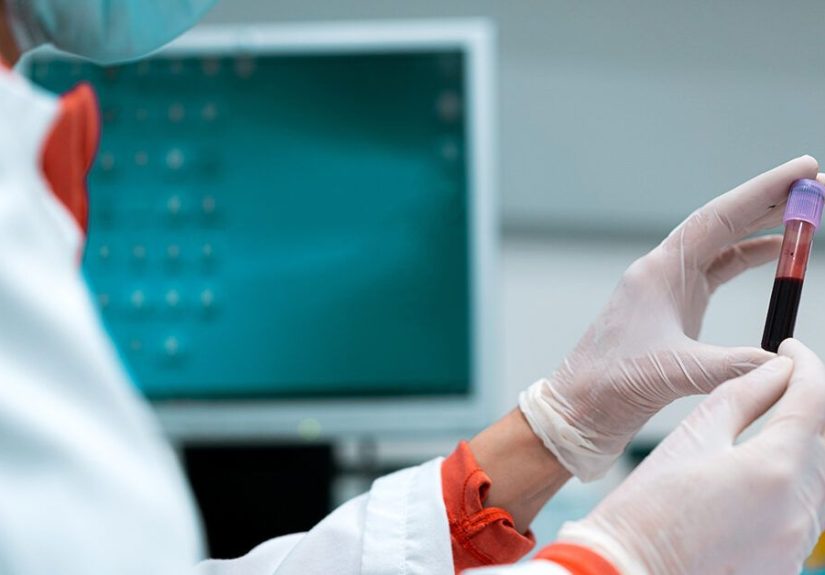
In medical settings, a clinician draws blood from a vein in the arm. Most people don’t need special preparation for a blood alcohol test,
and results for BAC can return relatively quickly.
Forensic (legal) collection
When blood is collected for legal purposes, procedures focus heavily on preventing contamination and preserving the sample.
Some forensic guidance recommends non-alcohol skin disinfectants (such as povidone-iodine) before venipuncture,
and collection tubes often include an anticoagulant (e.g., potassium oxalate) plus a preservative (e.g., sodium fluoride).
Chain-of-custody documentation and proper labeling are central in these settings.
How labs measure ethanol
Many laboratories measure ethanol using gas chromatography methods (often with headspace sampling) because it’s sensitive and specific.
In plain English: the lab is using a well-established technique to measure ethanol precisely, not “sniffing the tube and guessing.”
Detection Windows at a Glance (Typical Ranges)
These are general ranges. The exact window depends on dose, timing, individual metabolism, and the specific method used.
| Test | What it Detects | Typical Window | Common Use Case |
|---|---|---|---|
| BAC / blood ethanol | Alcohol currently in blood | Minutes after drinking to ~12 hours | ER care, legal impairment |
| EtG/EtS (blood) | Minor alcohol metabolites | Hours to ~36 hours | Recent use/relapse support (selected settings) |
| CDT | Protein changes linked to sustained heavy drinking | ~2–4 weeks pattern | Chronic heavy use/monitoring |
| PEth | Direct biomarker formed in presence of alcohol | ~2–4 weeks (sometimes longer with heavy/chronic use) | Abstinence monitoring, high-stakes clinical programs |
| GGT / AST / ALT / MCV | Indirect physiologic effects | Varies (weeks to months) | Supportive clues, not specific proof |
How to Interpret Results Without Guessing (or Panicking)
1) Match the test to the question
If someone wants to know whether alcohol is present right now, BAC is the right tool.
If the goal is to monitor abstinence over weeks, PEth (and sometimes CDT) may be more appropriate.
Confusion happens when people expect a BAC test to “see” last weekendor expect a long-term biomarker to explain
what happened an hour ago.
2) Understand metabolism: time is the main ingredient
After drinking stops, BAC generally declines at a fairly steady average rate. Educational materials commonly cite an average
decline around 0.015–0.020 BAC per hour. Translation: the body sobers up on its schedule, and caffeine doesn’t speed up those liver enzymes.
3) Avoid “reverse math” unless a professional is doing it
People love to ask: “So how many drinks was that?” The honest answer is:
blood tests are not a reliable drink-counter.
Timing, food, body composition, drink size, and individual metabolism can all bend the math.
Labs report concentrations; interpretation requires context.
When Results Don’t Match Someone’s Story
Mismatches can happen for multiple reasonssome innocent, some not, and many simply “biology doing biology.”
A few examples:
-
Testing timing: A BAC may be negative if the person drank earlier but enough time passed.
A PEth may still be positive because it reflects a longer window. -
Unexpected exposures: Some guidance notes that alcohol-containing medications, mouthwashes,
or hygiene products can affect EtG/EtS. -
Medical complexity: Liver disease and other health factors can complicate interpretation,
especially for indirect markersand even for PEth in certain situations. -
Lab differences: Methods, cutoffs, and reporting units can differ by lab. Always read the reference ranges
and interpretation notes that come with the report.
Practical Questions to Ask (So You Leave With Answers)
- Which alcohol test was orderedBAC, PEth, CDT, EtG/EtS, or indirect labs?
- What window does this test reflect in this specific lab and context?
- What cutoff is being used (especially in monitoring programs)?
- Could any medical conditions or medications affect interpretation?
- How will results be usedclinical care, safety decision, legal process, or monitoring?
Conclusion
Alcohol blood testing isn’t one testit’s a toolbox. BAC (blood ethanol) is the best tool for detecting
current alcohol in the bloodstream and is commonly used in emergency and legal settings.
Biomarkers like PEth and CDT are more about drinking patterns over
weeks, often used when abstinence monitoring or heavy-use assessment matters.
Shorter-term metabolites like EtG/EtS can support detection of more recent use than BAC,
though interpretation needs care because of potential exposures outside beverages.
If there’s one takeaway, it’s this: the “meaning” of a result depends on
which test was used, when it was collected, and why it was ordered.
Get those three answers, and the numbers start making a lot more sense.
Real-World Experiences With Alcohol Blood Tests (About )
Most people don’t wake up thinking, “Today feels like a great day for a blood draw about alcohol.”
Alcohol blood tests usually happen because something else is going onan accident, a medical scare,
a new program requirement, or a recovery milestone. That context shapes the experience as much as the needle does.
In the emergency room, the vibe is often fast and confusing. Someone might come in dizzy,
vomiting, disoriented, or injured. Clinicians may order a BAC test as part of figuring out what’s happeningespecially
if symptoms could be caused by alcohol, medications, or a mix of substances. Many people later describe feeling
embarrassed or defensive, even when the medical team is simply trying to make safe decisions. A helpful mindset is:
the test isn’t a moral judgment; it’s a data point that can affect treatment choices (like which medications are safe to give).
In legal or workplace situations, people often report the opposite: everything feels slow, formal, and intensely documented.
There may be identity checks, signatures, sealed containers, and careful labeling. That formality can feel intimidating,
but it’s designed to protect the integrity of the sample. People sometimes assume, “If it’s this official, it must be
the most accurate.” In reality, accuracy comes from the method and the procedurecollection, preservation,
storage, and chain of custody all matter.
In recovery or monitoring programs, the emotional layer can be heavy. Some individuals describe the test as a “progress report”
they didn’t ask for but still care deeply about. PEth testing, in particular, can trigger anxiety because it reflects a longer window than a BAC.
A common experience is confusion about what the number means: “Does this prove I drank last night?” or “Does this mean I’m labeled a heavy drinker?”
Programs vary, and so do lab cutoffsso the healthiest move is to ask for the program’s written interpretation rules and discuss the result with a clinician.
In high-stakes medical programs (like transplant evaluations or certain surgeries), people often describe feeling watchedlike one lab value
could change their whole timeline. The stress is real. If you’re in this situation, it helps to request clarity up front:
which test will be used (BAC vs PEth vs CDT), what level triggers follow-up, and whether repeat testing is an option.
People also report relief when someone finally explains the basics: that biomarkers don’t measure “character,” they measure exposureand they must be interpreted
with medical context.
Across all settings, one experience shows up again and again: people want the result explained in plain English.
If you’re ever handed a number with zero explanation, it’s reasonable to ask, “What does this test reflecthours, days, or weeks?”
That single question can turn a scary mystery into something understandable.