Table of Contents >> Show >> Hide
- What Does “Ambulatory Wheelchair” Mean?
- Why Someone Might Walk and Still Need a Wheelchair
- Where a Wheelchair Fits Among Mobility Aids
- How Professionals Decide Which Mobility Aid Makes Sense
- Common Myths About Ambulatory Wheelchair Users
- Tips for Choosing and Using Mobility Aids Well
- Real Experiences Related to Ambulatory Wheelchair Meaning
- Conclusion
Let’s start with the phrase that sends a lot of people into a tiny spiral of confusion: ambulatory wheelchair. At first glance, it sounds like a contradiction. If someone is ambulatory, doesn’t that mean they can walk? And if they use a wheelchair, doesn’t that mean they can’t? Welcome to the part of mobility conversations where real life politely ignores oversimplified assumptions.
In everyday use, when people say ambulatory wheelchair meaning, they are usually talking about an ambulatory wheelchair usersomeone who can walk to some degree but also uses a wheelchair when walking is painful, unsafe, exhausting, slow, or likely to make symptoms worse. In other words, a person may be able to walk from the couch to the bathroom and still need a wheelchair for a grocery store, an airport, a museum, a school campus, or a bad symptom day. Human bodies are complicated like that. Rude, but complicated.
This guide breaks down what the term means, where wheelchairs fit among other mobility aids, why someone might need one even if they can still stand or walk, and how to think about mobility support in a way that is practical, respectful, and actually useful. Because the goal of a mobility aid is not to win a debate with strangers. The goal is to help a person move through life with more safety, less pain, and more independence.
What Does “Ambulatory Wheelchair” Mean?
Ambulatory means a person can walk
In medical language, ambulatory generally means a person is able to walk, at least to some extent. That does not automatically mean they walk easily, quickly, safely, or for long distances. It does not mean they can handle stairs, uneven sidewalks, crowded spaces, long hallways, or an all-day outing without consequences. It simply means walking is possible in some form.
So what is an ambulatory wheelchair user?
An ambulatory wheelchair user is someone who can still walk but uses a wheelchair in specific situations. The wheelchair may be needed to conserve energy, reduce pain, prevent falls, manage shortness of breath, protect unstable joints, or allow participation in activities that would otherwise be too difficult. Some people use a wheelchair only outside the home. Others use it during flare-ups. Some walk short distances and roll the rest of the way. Some alternate between a cane, walker, and wheelchair depending on the day.
That is why the phrase matters. It helps explain a reality many people live with: mobility is not all-or-nothing. A person does not need to be completely unable to walk before a wheelchair becomes appropriate. Sometimes the chair is what allows them to keep working, studying, traveling, parenting, shopping, or simply getting through the day without turning every outing into an Olympic event no one signed up for.
Why Someone Might Walk and Still Need a Wheelchair
This is the part that clears up the biggest misunderstanding. Many people assume that walking ability cancels out wheelchair need. It does not. A person may be technically able to walk and still function much better with a wheelchair for certain tasks or environments.
Pain that builds with distance
Some people can walk, but the price is steep. Arthritis, joint damage, back problems, nerve pain, hip disorders, foot injuries, and inflammatory conditions can make walking possible in short bursts but miserable over time. A wheelchair can reduce that pain load and make daily life more manageable.
Fatigue and limited endurance
Conditions that affect energy, muscle strength, breathing, heart rate, or recovery can make walking feel like a battery-draining exercise. A person might manage a few minutes on foot and then hit a wall. A wheelchair can help them save energy for what matters instead of spending all of it on getting from point A to point B.
Balance and fall risk
For someone with dizziness, weakness, neurological conditions, poor coordination, or a history of falls, walking may be possible but not reliably safe. Safety matters more than appearances. No award is handed out for taking a dangerous risk in a parking lot.
Recovery after illness or surgery
After orthopedic surgery, injury, stroke, or a hospitalization, mobility may improve gradually. During that recovery window, a person might use a walker for one setting and a wheelchair for another. Mobility aids often change as strength, weight-bearing ability, and endurance improve.
Fluctuating symptoms
Some disabilities are not consistent from one hour to the next. A person may walk well in the morning and struggle by afternoon. They may manage fine at home but need a wheelchair in large public spaces. That does not make their needs less real. It makes them human.
Where a Wheelchair Fits Among Mobility Aids
Learning about mobility aids gets easier when you stop thinking in terms of “good enough to walk” versus “needs a wheelchair” and start thinking in terms of matching the tool to the task.
Cane
A cane is often used when someone needs light support for balance, mild weakness, or a little help taking pressure off one side of the body. It is a helpful device, but it is not magic. If someone is very unstable, a cane may not provide enough support.
Crutches
Crutches are usually more common after injury or surgery when a person needs to reduce weight on one leg. They can be effective, but they demand upper-body strength, coordination, and practice. They are not exactly a casual accessory.
Walker or rollator
A walker offers more support than a cane. A standard walker can help with balance and weight-bearing. A rollator, which usually has wheels and a seat, may be useful for people who need stability plus frequent rest breaks. Walkers are often recommended after surgery, during rehab, or when balance is a bigger concern.
Transport chair
A transport chair is designed to be pushed by another person. It works well when the user does not need to self-propel and when outings are occasional or short. It is practical, lightweight, and often easier to store, though it offers less independence than a self-propelled manual wheelchair.
Manual wheelchair
A manual wheelchair can be self-propelled or pushed by a caregiver. It may suit someone who needs seated mobility for longer distances or more demanding environments. It also requires enough arm function, grip, stamina, or caregiver assistance to use effectively.
Power wheelchair or scooter
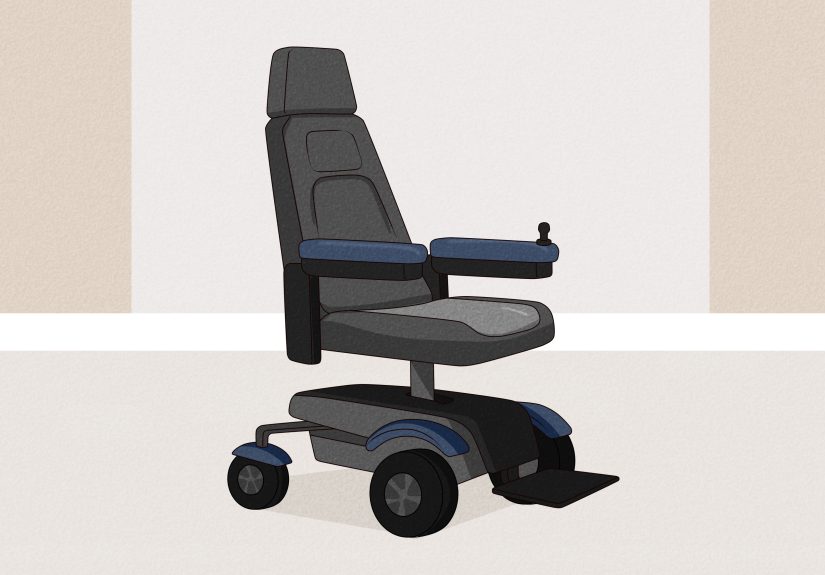
These options may be considered when a person cannot safely use a cane or walker, and manual propulsion is too difficult or unrealistic. Power mobility can be life-changing for people with significant weakness, pain, fatigue, or cardiopulmonary limitations.
The big takeaway is simple: mobility aids are not ranked like a video game skill tree. A wheelchair is not “giving up,” and a cane is not automatically “better.” The right device is the one that lets the person function more safely and more fully.
How Professionals Decide Which Mobility Aid Makes Sense
Choosing a mobility aid should be less about vibes and more about function. A doctor, physical therapist, or occupational therapist typically looks at several factors before recommending a device.
Balance and fall history
If a person has frequent falls, near-falls, dizziness, or poor coordination, that changes the recommendation immediately. A stylish determination to “push through it” is not a clinical plan.
Strength and weight-bearing ability
Can the person support their weight safely? Can they grip handles? Can they propel a manual chair? Can they transfer in and out of a seat without assistance? The answers shape the right choice.
Endurance
Someone may have decent strength but poor stamina. That person might walk across a room but not across a campus. Endurance often determines whether a walker, rollator, wheelchair, or combination approach makes the most sense.
Pain and symptom control
If walking increases pain, breathlessness, dizziness, or fatigue to an unreasonable degree, a mobility aid may reduce that symptom burden. The point is not to prove mobility. The point is to preserve function.
Home and community environment
The best device on paper can fail in a cramped bathroom, a house with narrow doorways, or a neighborhood full of broken sidewalks. Professionals also consider ramps, flooring, storage, transportation, and whether the user needs the device mostly indoors, outdoors, or both.
Goals
What does the person actually need to do? Work? Attend school? Travel? Cook? Shop? Get to medical appointments without arriving too exhausted to speak in complete sentences? Goals matter. Mobility planning should be built around real life, not abstract ideas about what people “should” be able to do.
Common Myths About Ambulatory Wheelchair Users
“If you can stand up, you don’t need a wheelchair”
False. A person can stand, transfer, or walk short distances and still need a wheelchair for daily function. Walking ability exists on a spectrum.
“Using a wheelchair will make someone lazy”
Also false. A well-matched mobility aid is a tool, not a trap. For many people, the right device actually increases participation in exercise, work, school, social life, and rehab because it reduces exhaustion and helps them get where they need to go.
“A wheelchair is only for full-time use”
Nope. Some people use wheelchairs full time, some part time, and some only in specific environments. Mobility needs can change by day, task, distance, and symptoms.
“More walking is always better”
Not if it causes injury, repeated falls, severe pain, or energy crashes that wipe out the rest of the day. More walking is not automatically better. Better function is better.
Tips for Choosing and Using Mobility Aids Well
Get properly fitted
A cane that is too tall, a walker that is the wrong height, or a wheelchair that does not fit the body can create new problems while trying to solve old ones. Fit matters more than people realize.
Ask for training
Using a device safely often requires instruction. That includes turning, transferring, using brakes, going over thresholds, dealing with slopes, and navigating bathrooms or tight spaces. There is no shame in learning the smart way instead of the dramatic way.
Think about the whole environment
Home setup matters. Loose rugs, cluttered hallways, poor lighting, narrow doors, and awkward furniture can turn a workable device into a daily headache. Small adjustments at home often make a big difference.
Plan for transportation
If a wheelchair is part of the plan, think about how it will be loaded into a car, stored at school or work, or used in public places. Convenience is not a luxury here. It affects whether the device actually helps.
Reassess when needs change
Mobility is not static. Recovery, disease progression, better symptom control, growth, aging, and new environments can all change what device works best. A mobility aid should be reviewed when life changes.
Real Experiences Related to Ambulatory Wheelchair Meaning
To really understand ambulatory wheelchair meaning, it helps to step away from definitions and picture real days in real lives.
Imagine a college student with a chronic condition that causes fatigue, dizziness, and pain. Inside her apartment, she walks. She can make coffee, move from room to room, and get ready for class. But her campus is huge, the sidewalks slope like they were designed by people who hate knees, and by the time she reaches her second building, she is sweating, shaky, and too tired to focus. A wheelchair does not replace her ability to walk. It protects her ability to participate. Without it, she might skip classes. With it, she can save energy for learning instead of spending all of it on travel.
Now picture a middle-aged man recovering from orthopedic surgery. At home, he uses a walker. For a medical appointment in a giant hospital complex, his spouse pushes him in a transport chair because the distance is simply too much. Is he ambulatory? Yes. Does he still benefit from a wheelchair? Absolutely. Recovery is messy, and mobility often comes in phases.
Consider an older adult with arthritis and balance problems. She can walk from the bedroom to the kitchen just fine on a good morning. But stores with hard floors, long lines, and nowhere to sit are another story. By the time she reaches the checkout lane, pain has turned her posture stiff, and fatigue has slowed her to a crawl. Using a wheelchair for long outings means she can still go shopping with her family instead of staying home and pretending she “didn’t really need anything.”
Then there is the emotional side, which deserves more attention than it gets. Many ambulatory wheelchair users describe a strange social pressure: if they walk a few steps, people assume they are fine. If they sit in a wheelchair, people assume they cannot walk at all. Either way, someone feels weirdly entitled to an opinion. This can make new wheelchair users hesitate to get the help they need. They worry about judgment, questions, or being accused of exaggerating. But a mobility aid is not a courtroom exhibit. It is a practical tool.
Another common experience is learning that mobility aids can work together. Someone may use a cane at home, a rollator for short community trips, and a wheelchair for airports, festivals, amusement parks, or medical campuses. That is not inconsistency. That is smart adaptation. The body does not perform the same way in every setting, so the support does not have to be identical either.
Families also go through an adjustment. At first, a wheelchair may feel emotionally heavy because people associate it with decline. Later, many discover the opposite. The chair brings freedom back. Outings become possible again. Pain is lower. Falls are fewer. Social life returns. The person who once avoided events because they were too physically demanding can join in again. That shift matters.
In the end, lived experience teaches the most important lesson: mobility is about access. Access to school. Access to work. Access to health care. Access to fun. Access to ordinary life. If a wheelchair helps someone keep that access, then it is doing exactly what a good mobility aid is supposed to do.
Conclusion
The simplest way to explain ambulatory wheelchair meaning is this: it usually refers to a person who can walk some of the time but still needs a wheelchair in certain situations. That need may be driven by pain, fatigue, weakness, balance issues, recovery, safety, or limited endurance. And that need is valid.
Learning about mobility aids is really about learning that movement is not one-size-fits-all. Canes, walkers, rollators, transport chairs, manual wheelchairs, and power chairs all have a place. The best choice depends on the person, the environment, and the goal. When the right mobility aid is chosen well, it does not shrink life. It often opens life back up.
So if you have ever wondered whether someone can walk and still “count” as a wheelchair user, the answer is yes. Completely, clearly, and without apology. Mobility aids are not about proving limitation. They are about supporting independence.