Table of Contents >> Show >> Hide
- What Does “An Operative Field of Dreams” Actually Mean?
- The Bedrock: Sterility, Infection Prevention, and Discipline
- Checklist Culture: The Quiet Superpower of Safe Surgery
- Teamwork Is a Clinical Skill, Not a Personality Trait
- Technology in the Dream Field: Powerful, Useful, Not Magical
- Designing the Modern Operative Environment
- How Patients Can Co-Create an Operative Field of Dreams
- Metrics That Turn Dream Into Reality
- Conclusion
- Extended Experience Section (Approx. )
If baseball has a Field of Dreams, surgery has one tooonly this field is brighter, colder, and filled with
people wearing matching hats who absolutely do not care about your astrological sign while you’re under anesthesia.
In modern medicine, an operative field of dreams isn’t fantasy. It’s a deliberate system: sterile technique,
reliable communication, smart technology, disciplined teamwork, and patient-centered decision-making.
This is where surgical outcomes are shaped long before the first incision: in checklists, briefings, hand prep,
equipment checks, and quiet moments of “Does everyone agree on the plan?” The dream isn’t perfection. The dream is
preventable harm becoming genuinely rare.
What Does “An Operative Field of Dreams” Actually Mean?
Think of it as the intersection of three layers:
- The physical field: sterile drapes, instruments, airflow, skin prep, and contamination control.
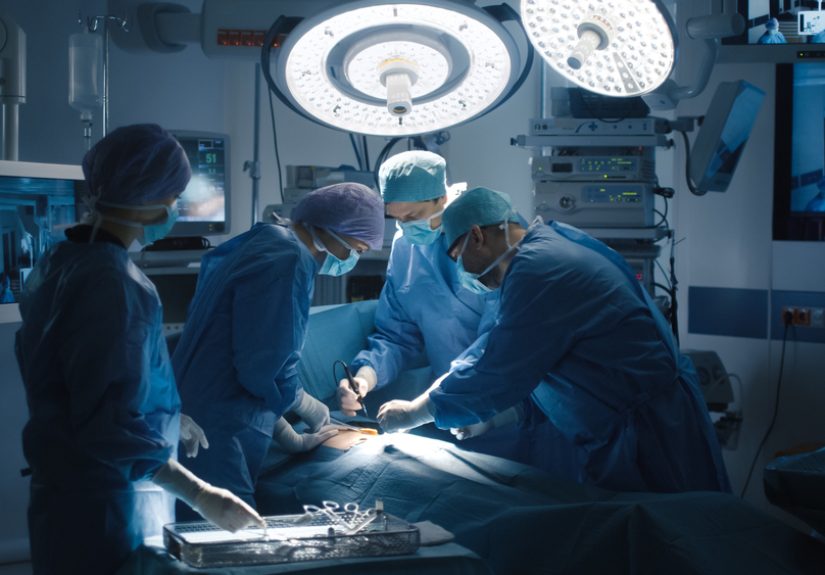
- The human field: surgeons, nurses, anesthesia professionals, techs, and support staff working as one unit.
- The cognitive field: planning, situational awareness, clear communication, and rapid recovery from mistakes.
A dream operating room isn’t the one with the fanciest robot. It’s the one where everyone knows what’s happening,
what could go wrong, and what to do if it does.
The Bedrock: Sterility, Infection Prevention, and Discipline
Sterile technique is not a “nice-to-have”
The sterile field exists for one reason: to protect patients from microorganisms that can turn a routine recovery
into a prolonged complication. Teams that treat asepsis as a living processnot a one-time setuptend to perform more
consistently. That means careful draping, disciplined movement, contamination recognition, and immediate correction.
Hand hygiene and hand antisepsis are old-school and still elite
Surgical hand preparation is one of those unglamorous routines that quietly saves lives. Rings off. Nails cleaned.
Correct scrub or antiseptic protocol followed. No shortcuts. No “I did it quickly because we were running behind.”
In high-performance ORs, basics are sacred.
Why this matters for outcomes
Surgical site infection prevention is not one interventionit’s a chain. Break one link and risk rises. Keep the
chain intact and patients spend less time battling avoidable complications and more time getting back to normal life.
Checklist Culture: The Quiet Superpower of Safe Surgery
Checklists are often misunderstood as paperwork cosplay. In reality, a good surgical checklist is an anti-chaos tool.
It standardizes what must happen every single time, especially when teams are tired, rushed, or dealing with a complex case.
The pre-op verification and time-out
Wrong-patient, wrong-site, and wrong-procedure events are among the most feared failures in operative care. That’s why
the time-out exists immediately before incision, with active participation from the full procedure team.
It’s a hard stop, not a background murmur.
What high-performing teams do differently
- They brief before incision with explicit goals and anticipated risks.
- They invite every role to speak up, including the most junior person in the room.
- They debrief afterward: What went well? What almost went wrong? What changes tomorrow?
- They treat “near misses” as learning assets, not blame material.
A landmark checklist study often cited in surgical safety circles showed meaningful drops in complications and mortality
after structured checklist implementation. The larger lesson: communication reliability is a clinical intervention.
Teamwork Is a Clinical Skill, Not a Personality Trait
In many industries, teamwork is “soft.” In surgery, it’s hard science with hard consequences. Delayed communication,
role confusion, and weak escalation pathways can derail even technically perfect procedures.
The team model that works
Frameworks like TeamSTEPPS emphasize leadership, monitoring, mutual support, and direct communication. That sounds simple,
but operationally it means:
- Shared mental model: everyone understands the same plan.
- Cross-monitoring: people watch each other’s blind spots.
- Assertive language when risk appears: “I’m concerned.” “I’m uncomfortable.” “This is a safety issue.”
- Debriefing as routine, not punishment.
If this feels like aviation, that’s because both environments reward disciplined communication under pressure.
Nobody gets extra points for silent heroism.
Technology in the Dream Field: Powerful, Useful, Not Magical
Modern surgery now includes minimally invasive techniques, advanced imaging, and robotically assisted systems.
These can improve dexterity, visibility, and access in selected cases. But let’s keep one thing clear:
technology supports surgical judgment; it does not replace it.
Minimally invasive and robotic approaches
Smaller incisions may reduce pain, speed recovery, and shorten hospitalization for appropriate patients.
However, every approach has tradeoffs. Even minimally invasive surgery carries risks such as bleeding, infection,
and anesthesia-related complications. Patient selection, surgeon training, and institutional readiness matter as much as hardware.
Regulation and realism
Regulatory guidance emphasizes informed decision-making: discuss benefits, limits, alternatives, and surgeon experience.
In oncology-related contexts, the evidence can be nuanced by disease type and endpoint. A dream OR is evidence-aligned,
not marketing-driven.
Designing the Modern Operative Environment
Environment impacts performance
The OR is a cognitive workplace. Lighting, traffic flow, device setup, monitor positioning, alarm burden, and ambient noise
all affect concentration and error risk. High-reliability teams engineer friction out of the room:
fewer unnecessary interruptions, cleaner handoffs, tighter instrument logistics.
Standardization without rigidity
Good systems are standardized where errors are predictable and flexible where clinical judgment is required.
For example:
- Standardized: identity verification, site marking, antibiotic timing windows, count protocols.
- Adaptive: anatomy variations, intraoperative surprises, escalation pathways.
Translation: if everything is optional, safety is accidental. If everything is rigid, care is brittle.
The dream field balances both.
How Patients Can Co-Create an Operative Field of Dreams
Patients are not passive passengers. They can strengthen safety with good questions and clear communication.
Questions worth asking before surgery
- What are my surgical options, and why is this one recommended for me?
- What are the most common complications for this procedure in my case?
- How does your team prevent surgical site infection and wrong-site/wrong-procedure errors?
- Will my case involve minimally invasive or robot-assisted techniques, and what does that change?
- What should I do before surgery to reduce risk and speed recovery?
The best clinicians welcome these questions. A culture that encourages informed patients usually encourages better team communication too.
Metrics That Turn Dream Into Reality
If hospitals want a true operative field of dreams, they should measure what matters and publish internally:
- Surgical site infection rates by procedure category.
- Checklist and time-out reliability (real compliance, not checkbox compliance).
- Near-miss reporting volume and learning cycle closure time.
- Team debrief completion rates and action follow-through.
- Patient-reported recovery quality and return-to-function timelines.
Safety is not a speech. It is a feedback loop.
Conclusion
An operative field of dreams is built in layers: disciplined sterility, consistent checklists, active teamwork,
thoughtful use of technology, and informed patient partnership. None of this is glamorous on its own. Together, it’s transformative.
The future of surgery won’t be won by a single robot, policy memo, or heroic individual. It will be won by systems that make the
right action the easy actionevery case, every shift, every patient.
And maybe that’s the most hopeful part: the dream field is not fantasy. It’s a design choice.
Extended Experience Section (Approx. )
Stories from the Edge of Precision: Living the Operative Field of Dreams
The first time I heard a circulating nurse call a full stop during a time-out, the room went still in a way I’ll never forget.
No alarms. No instrument clatter. Just a sentence: “I need to verify the site marking before we continue.” Nobody rolled their eyes.
Nobody sighed dramatically like a sitcom surgeon. The attending surgeon nodded, stepped back, and said, “Good catch.” It took less
than a minute. But in that minute, the culture became visible: safety was not hierarchy-dependent.
In another case, the anesthesia team flagged a blood pressure trend that looked “a little off, maybe nothing, maybe something.”
That phrasemaybe somethingtriggered a shared pause. The surgeon adjusted pace, nursing confirmed supplies for a possible
shift in plan, and the scrub tech prepped backup instruments proactively. No crisis happened. But that’s the point: high-functioning
teams don’t wait for drama to collaborate. They coordinate early, when options are still wide open.
One resident told me the most stressful moment of early training wasn’t suturing under pressure. It was speaking up. “I knew the
protocol,” she said, “but I didn’t know if I had the social permission.” In strong OR cultures, social permission is explicit.
People are told on day one: if you see risk, you own the responsibility to voice it. The dream isn’t confidence by personality.
It’s confidence by policy, rehearsal, and reinforcement.
Then there’s the technology effect. I watched a robot-assisted case where visualization was stunning and movement was elegantly precise.
But what impressed me most wasn’t the machine. It was the choreography around it: setup checks, role clarity, conversion planning,
and backup pathways if needed. The lead surgeon later said, “The robot extends my hands, not my judgment.” That line should probably
be printed on every OR wall in small, respectful font.
Patients feel this culture too, even before entering the operating room. One family member described pre-op as “surprisingly calm.”
Why? Because each clinician introduced themselves, confirmed identity and plan, and explained the next step in plain English. No buzzwords.
No mystery theater. Trust didn’t come from promises of perfection. It came from transparency and consistency.
I’ve also seen what happens after hard days. Cases that ran long. Unexpected bleeding. Equipment hiccups. In weaker systems, everyone
disappears and hopes tomorrow will be better. In stronger systems, they debrief. They ask uncomfortable questions without making it personal.
What did we miss? What assumptions failed? Which signal arrived too late? The OR becomes a classroom, not a courtroom.
Over time, these moments accumulate. A cleaner handoff here. A clearer command there. A faster recognition of contamination risk. A junior
nurse who speaks sooner. A senior surgeon who listens faster. This is how an operative field of dreams is actually built: not by one brilliant
day, but by thousands of ordinary decisions made well under ordinary pressure.
If you want to know what excellence in surgery looks like, it’s not cinematic. It’s disciplined, humble, and a little repetitive.
It sounds like checklists and closed-loop communication. It looks like people double-checking each other with respect. It feels like
a room where every person understands the mission: safer surgery, better recovery, fewer regrets.