Table of Contents >> Show >> Hide
- Why Realistic Doll Repainting Captures So Much Attention
- How Artists Turn Plastic Faces Into Believable Characters
- Real Artists, Real Examples, Real Skill
- Why Some Repainted Dolls Feel Magical and Others Feel a Tiny Bit Creepy
- More Than a Makeover: What Realistic Doll Art Says About Beauty and Representation
- Are Repainted Dolls Toys, Collectibles, or Fine Art?
- What the Experience Feels Like: on Seeing and Making Realistic Doll Repaints
- Conclusion
- SEO Tags
There are makeovers, and then there are makeovers. A fresh haircut is nice. A new coat of lipstick can be fun. But when an artist takes a mass-produced doll with factory-perfect cheeks, sky-high lashes, and the emotional range of a store mannequin, then repaints it into something startlingly human? That is a whole different level of creative sorcery.
The world of realistic doll repainting sits at the crossroads of fine art, craft, restoration, design, and a tiny bit of “wait, why is this plastic person staring into my soul?” It is part sculpture, part painting, part character design, and part rebellion against the glossy sameness of many store-bought dolls. Instead of frozen smiles and cookie-cutter faces, artists create freckles, subtle skin texture, uneven brows, under-eye shadows, laugh lines, and expressions that feel lived in. In other words, they trade toy-aisle perfection for something much more interesting: personality.
That is exactly why the idea behind “Artist Repaints Dolls In A More Realistic Way” resonates so strongly online. People are fascinated by transformation, but they are even more fascinated when that transformation feels truthful. A doll repaint artist is not just changing makeup. They are changing the story the face tells. One repaint can turn a glamorous fashion doll into a sleepy teenager, a weathered grandpa, a freckled little kid, or a moody musician who looks like he definitely owns at least one vintage denim jacket.
Why Realistic Doll Repainting Captures So Much Attention
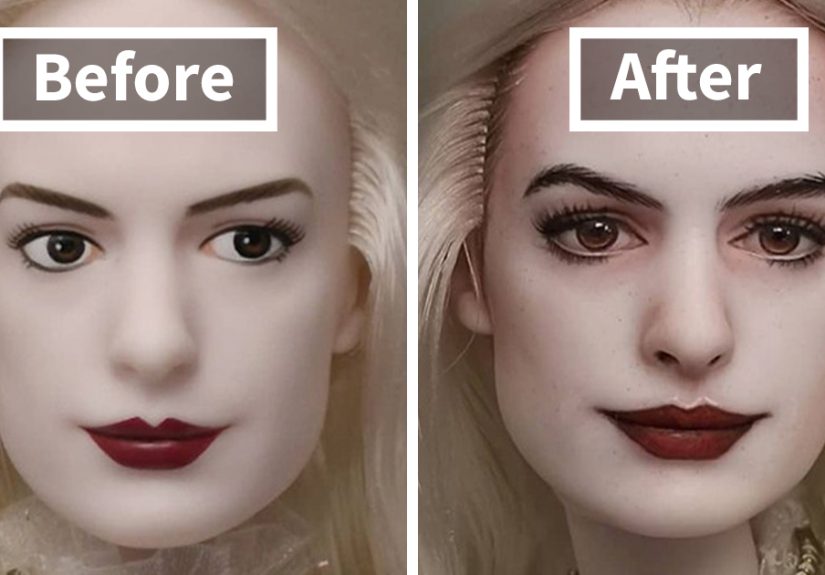
The appeal starts with contrast. Many mass-produced dolls are designed to read clearly from a distance. That usually means exaggerated eyes, extremely symmetrical features, shiny skin, and paint applications that are bold enough to survive both playtime and fluorescent store lighting. Artists who repaint dolls often go in the opposite direction. They soften the symmetry, reduce the shine, vary the skin tone, and add the tiny imperfections that make a face feel believable.
That shift matters because realism in art has always been about close observation. When viewers see a repainted doll with faint redness around the nose, realistic lip shading, and eyebrows that do not look stamped on by a tiny office printer, the brain responds differently. Suddenly the object feels less like a product and more like a portrait. The repaint becomes compelling not because it is flawless, but because it feels specific.
And specificity is catnip for the internet. Before-and-after photos are irresistible. A factory doll with glittery eyeshadow goes in; a believable human character comes out. The transformation feels dramatic, but it also feels intimate. Viewers can see the artist’s decisions in every detail. One change in the curve of a brow can turn “default happy” into “quietly thoughtful.” A matte finish can erase the toy-like plastic glare. A few painted freckles can do more for character than a full closet of accessories ever could. That is why custom doll repaint videos and photo series keep pulling people in: they make craftsmanship visible.
How Artists Turn Plastic Faces Into Believable Characters
A realistic doll repaint usually begins with subtraction, not addition. The original face paint is removed or reduced so the artist can start with a cleaner base. Then comes the slow, layered work. Thin washes of color build undertones into the skin. Soft browns, pinks, blues, and neutrals create the suggestion of warmth, depth, and circulation. That sounds dramatic for a doll the size of your forearm, but realism lives in those tiny choices.
From there, artists refine the features. Lips are shaded rather than simply outlined. Eyelids get depth. Nostrils are softened. The face may receive faint capillaries, blush, freckles, beauty marks, or textured shading around the chin and temples. Some artists repaint teeth. Others repaint the whites of the eyes so they look less stark and more natural. If the doll originally had the visual energy of a caffeinated cartoon, this is where it begins to look like someone who might ask if you have seen their keys.
Many artists also change the materials around the face. They reroot hair strand by strand, replace wigs, add rooted eyelashes, swap in more realistic eyes, or sculpt subtle adjustments to the nose, cheeks, or lips. In the reborn doll world, artists may go even further, using weighted bodies, glass eyes, rooted mohair, and many translucent paint layers to mimic the look of real skin. The finish is often sealed to protect the work, and matte coatings are especially important because too much shine can instantly push a doll back into “plastic” territory.
The Difference Between Pretty and Real
One of the smartest things a doll artist can do is understand that pretty and realistic are not the same thing. Pretty often means polished, balanced, symmetrical, and idealized. Realistic means varied, textured, and slightly unpredictable. Human faces are wonderfully uneven. One eyebrow may sit a little higher. Lips have natural color shifts. Skin is not one flat beige or pink; it changes from forehead to cheek to chin. Realistic repainting works because it respects those small differences instead of sanding them down into generic beauty.
Real Artists, Real Examples, Real Skill
One well-known example is artist Olga Kamenetskaya, whose doll transformations have been widely shared for turning heavily stylized dolls into believable faces. Instead of leaning into factory glamour, her repaints favor matte skin, toned-down features, freckles, wrinkles, and facial structures that feel closer to real people you might actually see on the street. Her work is a perfect illustration of why OOAK doll artist culture has such a loyal following: each doll becomes a one-of-a-kind character instead of another clone from the production line.
Then there is the hyperrealistic side of the craft, often seen in reborn doll art. Reborn artists create infant dolls with astonishing detail, using many layers of paint, carefully rooted hair, and weighted interiors to mimic the presence of a real baby. Whether viewers find that beautiful, moving, uncanny, or all three at once, there is no denying the technical mastery involved. These dolls are not quick hobby projects. They demand patience, precision, and a serious understanding of materials.
There is also a broader tradition behind all this. Doll makers have been chasing realism for a very long time. Antique bisque dolls became popular in part because they allowed more realistic skin tones than earlier glazed porcelain forms. Look-alike dolls, portrait dolls, and artist dolls have all reflected the same basic impulse: people want miniature human figures that feel recognizable, expressive, and personal. Realistic repainting may look modern on social media, but the artistic urge behind it is old-school in the best possible way.
Why Some Repainted Dolls Feel Magical and Others Feel a Tiny Bit Creepy
Now we arrive at the room’s awkward but necessary guest: the uncanny valley. This is the reason a realistic doll can feel fascinating one second and vaguely unsettling the next. When an object becomes highly human-like without fully becoming human, the brain sometimes reacts with unease. That is why lifelike dolls, mannequins, wax figures, and certain digital characters can make people do that polite little shiver they hope no one notices.
But here is the interesting part: the uncanny reaction is not a failure of the art. In many cases, it is evidence that the artist came very close to something powerful. A realistic doll repaint asks the viewer to sit in the weird, emotionally charged space between object and person. It is both toy and portrait. Both handmade and manufactured. Both familiar and not-quite-right. That tension is part of the appeal.
Besides, not all realistic dolls hit the uncanny note the same way. Some feel warm and charming. Some feel theatrical. Some feel eerie because they are supposed to. Context matters. A reborn baby in a stroller will land differently than a freckled fashion doll posed like a candid portrait. A doll made to look like a specific child or family member carries a different emotional charge than a doll repainted for fantasy styling. In other words, it is not just the face. It is the story attached to the face.
More Than a Makeover: What Realistic Doll Art Says About Beauty and Representation
At its best, realistic doll repainting is not simply about technical flexing. It is also a quiet critique of narrow beauty standards. Many artists strip away the default makeup, impossible proportions, and same-face syndrome of commercial dolls and replace them with features that feel more human. Freckles stay. Wrinkles stay. Broad noses stay. Skin texture stays. Different ages, genders, and moods show up. Suddenly the doll world looks less like a beauty counter exploded and more like actual humanity.
That matters for collectors, artists, and casual viewers alike. When dolls become more diverse and more believable, they stop functioning as one-note fantasies and start becoming tools for storytelling. A repaint can celebrate individuality. It can make a doll resemble a real child. It can create a character that feels racially and culturally specific instead of blandly universal. It can even push against the idea that a face must be flawless to be beautiful.
That same cultural shift has influenced mass-market doll design too. Major doll brands have gradually expanded body types, skin tones, hairstyles, and facial options in response to years of criticism about unrealistic standards. Independent artists, though, often go farther and faster. They are not trying to please a whole toy aisle. They are trying to make one compelling face at a time. That freedom is exactly why so many of the most memorable lifelike doll makeover projects come from small studios, Etsy shops, collector communities, and one-person workshops.
Are Repainted Dolls Toys, Collectibles, or Fine Art?
The honest answer is: yes.
Some repainted dolls are made for collectors and displayed like sculpture. Some are customized for photography, stop-motion, or illustration references. Some are sentimental commissions. Some are playable, though highly detailed repaints are usually better suited to shelves than sandbox duty. Some sit squarely inside the art doll tradition, where the doll is less a toy than a mixed-media artwork.
What makes the category so interesting is that it refuses a neat label. Doll repainting borrows from painting, costume design, sculpting, hair work, conservation, and portraiture. It is decorative but not merely decorative. It is nostalgic but often contemporary in its concerns. It can be commercial, intimate, weird, funny, emotionally heavy, or all of the above before lunch.
Why Viewers Keep Coming Back for More
Realistic doll repainting also satisfies a very modern craving: we want to see process. We do not just want the finished object; we want the transformation. We want to watch the old factory face come off, the new eyebrows appear, the blush build slowly, the wig go on, the matte sealant knock the shine away, and the final character emerge like a tiny actor arriving on set. There is something deeply satisfying about watching skilled hands turn sameness into individuality.
And let’s be honest, there is also joy in seeing an overdone doll lose the “pageant at noon, nightclub at nine” energy and gain a face that looks grounded, expressive, and real. Not every doll needs to look like it is heading to a glitter emergency. Sometimes a few freckles and a thoughtful stare are the bigger glow-up.
What the Experience Feels Like: on Seeing and Making Realistic Doll Repaints
For many people, the first experience with a realistic doll repaint is pure surprise. You expect a cute craft project, maybe something decorative and clever, and instead you find yourself staring at a small face that seems to contain an actual inner life. It is strange in the best way. You lean in closer. You notice the faint pink around the eyelids, the soft shading at the corners of the mouth, the tiny asymmetry in the brows. The doll no longer reads like “product.” It reads like “person with a backstory.” That shift can happen in seconds, and once it does, the whole hobby suddenly makes sense.
Watching the process is its own kind of pleasure. A blank or factory-painted head looks stiff and generic, but each new layer changes the mood. The artist wipes away the old face, and there is a brief awkward stage where the doll looks like it has misplaced its personality. Then the rebuilding starts. A little blush under the cheekbones. A more natural lip tone. Softer lashes. Better eyes. Matte finish. New hair. Step by step, the character appears. It feels less like decoration and more like discovery, as if the artist is uncovering someone who was hiding under all that shiny pink plastic the whole time.
Collectors often describe the finished result as deeply personal. A realistic repaint can resemble a child, a family member, a fictional character, or even an imagined person who simply feels emotionally true. That connection is part of what makes the work memorable. You are not just admiring technique. You are responding to recognition. Maybe the doll reminds you of someone you knew in middle school, or a cousin with stubborn brows and sun freckles, or the tired but sweet expression on a parent’s face at the end of a long day. Miniature scale does not reduce that emotional effect. Sometimes it intensifies it.
Artists, meanwhile, often talk about the experience as both calming and obsessive. Repainting requires patience that borders on monk-like. You cannot rush realism. You build it with tiny decisions, then pause, then correct, then soften, then add one more almost invisible detail. The work trains the eye to notice what most people skip over: the color variation in skin, the fact that lips are never one flat shade, the way eyebrows communicate emotion before a mouth does. It is slow, focused, repetitive, and weirdly meditative. Also, yes, it probably involves a moment where the artist realizes they have spent twenty minutes painting a lower eyelid on a six-inch head. That is part of the charm.
There is also the social experience. People share before-and-after photos, trade tips, swap materials, and talk about faceups, reroots, sealants, and sculpt tweaks like they are discussing fine wine. One artist’s realistic doll face inspires another artist to try freckles. A collector sees a custom doll that finally looks like a real teenager instead of a glam robot and decides they want one too. That sense of community keeps the art form growing. In the end, realistic doll repainting is not just about making dolls look more human. It is about reminding viewers how much humanity lives in the details.
Conclusion
When an artist repaints dolls in a more realistic way, the result is bigger than a makeover. It becomes a conversation about realism, beauty, craftsmanship, memory, and the surprisingly expressive power of a tiny painted face. These artists take objects designed for mass appeal and turn them into singular works with mood, texture, and identity. Some repaints feel cozy. Some feel uncanny. Some feel like miniature portraits. The best ones feel impossible to scroll past.
That is the magic of this niche. It is not trying to make dolls perfect. It is trying to make them believable. And in a world full of copy-paste aesthetics, believability can feel downright radical.