Table of Contents >> Show >> Hide
- What Are “Autonomous Cars,” Really?
- The 6 Levels of Driving Automation (And Why They Matter)
- How Autonomous Vehicles Work: The Short Version Without the Sci-Fi Soundtrack
- What’s Real in the U.S. Today: Robotaxis vs. Consumer “Self-Driving”
- Safety: The Promise, the Data, and the Messy Middle
- Regulation and Liability: Who’s Responsible When Things Go Sideways?
- Cybersecurity and Privacy: The Hidden Passenger
- Where Autonomous Cars Are Headed Next
- Experiences: What Autonomous Cars Feel Like in Real Life (The Good, the Weird, and the “Oh!”)
- Conclusion
Autonomous cars have a marketing problem: the phrase makes it sound like your vehicle can drop you at the airport, then go grab tacos, then swing by to pick you up again like a loyal golden retriever with a driver’s license. In reality, most “autonomous” cars you can buy today are not autonomous. They’re very advanced assistantsmore like a smart intern than a fully trained chauffeur.
So let’s clear the fog (and the windshield): what autonomous cars actually are, how they work, what’s real right now in the U.S., what’s still science project territory, and how to talk about this stuff without accidentally starting a family group chat argument.
What Are “Autonomous Cars,” Really?
In everyday conversation, “autonomous cars” usually means “self-driving cars.” In safety and regulatory language, you’ll often see terms like automated driving systems (ADS) for higher automation and advanced driver assistance systems (ADAS) for the features most people already havethink adaptive cruise control and lane centering.
The most important idea is simple: who is responsible for driving at this momenthuman or system? That answer changes depending on the automation level.
The 6 Levels of Driving Automation (And Why They Matter)
You’ve probably heard “Level 2” or “Level 4” thrown around like they’re phone models (“I’ve got the Level 2 Pro Max”). These levels describe how much the system can doand how much the human must do.
Levels 0–2: Driver Assist (You’re Still the Driver)
- Level 0: No automation. You drive. The car might warn or brake in emergencies.
- Level 1: The car can help with either steering or speednot both at once.
- Level 2: The car can help with steering and speed simultaneously, but you must supervise continuously.
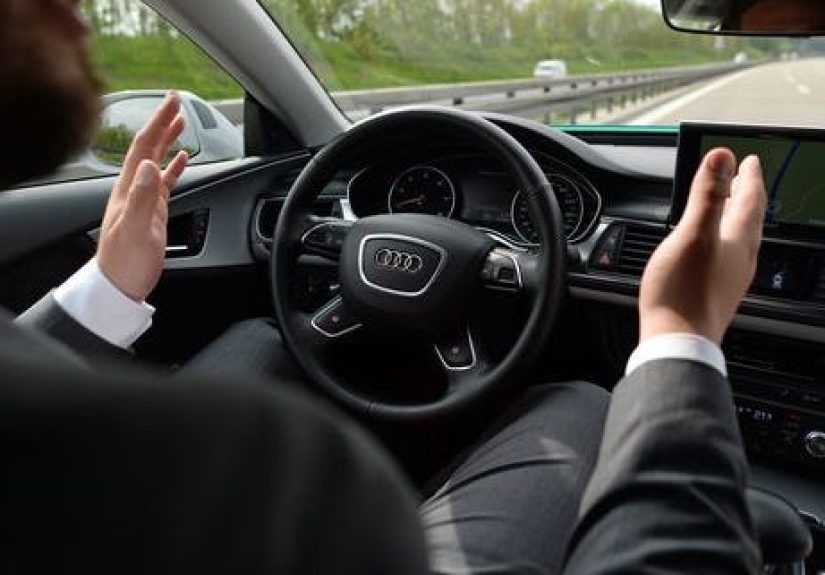
Level 2 is where a lot of consumer confusion lives. It can feel impressivesmooth lane centering, comfortable highway cruisingand that “feels like” autonomy to a tired brain. But legally and practically, the human is still driving. If you treat Level 2 like Level 4, it will eventually remind you (rudely) that physics does not accept vibes as a safety strategy.
Levels 3–5: Automated Driving (The System Takes the WheelSometimes or Always)
- Level 3: The system drives under specific conditions, but may ask you to take over with notice.
- Level 4: The system drives without a human driver within a defined operating area and conditions (often a geofenced city zone).
- Level 5: The system drives anywhere a human can, in all conditions. (No one has this on public roads at scale.)
In the U.S., the headline-grabbing “robotaxi” services are typically aiming at (or operating as) Level 4 autonomous vehicles in limited areas. That limitation isn’t a weaknessit’s a safety design choice. Driving “everywhere, always” is the hardest version of the problem.
How Autonomous Vehicles Work: The Short Version Without the Sci-Fi Soundtrack
An autonomous vehicle is basically a real-time decision-making machine that must constantly answer: “Where am I, what’s around me, what might happen next, and what should I do?”
1) Sensing: Seeing the World
Many autonomous vehicle stacks use a combination of:
- Cameras (great detail, can struggle with glare/low light)
- Radar (good for distance/speed, works well in bad weather)
- Lidar (laser-based 3D mapping of surroundings)
2) Perception: Turning Sensor Data Into “Stuff That Matters”
Sensors produce raw data; perception converts it into a usable understanding: cars, pedestrians, cyclists, lane boundaries, traffic lights, cones, and the occasional “mystery object” (which is usually a plastic bag… until it isn’t).
3) Localization and Mapping: Knowing Where You Are
GPS alone isn’t enough for robust autonomous driving. Many systems combine GPS, inertial sensors, and map-based localization. In practice, autonomy is easier when the vehicle operates in a well-mapped environmentand harder when construction turns the road into a surprise escape room.
4) Prediction and Planning: Guessing What Happens Next
Prediction models estimate what other road users might do: Will that pedestrian step off the curb? Will the car ahead change lanes? Planning chooses a safe, legal path. This is where “the long tail” shows up: rare, weird situations that humans handle with intuition but machines must handle with explicit logic and data.
5) Control: Actually Driving Smoothly
Control translates the plan into steering, acceleration, and brakingwithout making passengers feel like they’re trapped in a washing machine.
What’s Real in the U.S. Today: Robotaxis vs. Consumer “Self-Driving”
The U.S. currently has two very different realities under the same “autonomous cars” umbrella:
Reality A: Level 4 Robotaxis (Driverless in Limited Areas)
Robotaxi services are the closest thing to “the car drives itself” that regular people can experience todayas passengers. Some operators have scaled to meaningful ride volumes in select metro areas, and the business is increasingly about expansion, operational reliability, and regulatory trust.
The key point: these services succeed by defining a safe operational design domainthe “where/when/how” the system is allowed to operate. If conditions fall outside that domain (heavy storms, unusual road closures, etc.), the system may reroute, pause, or refuse the ride. That’s not a failure; that’s the system respecting its limits.
Reality B: Level 2 Driver Assistance (You Still Drive, Even If It Feels Like You Don’t)
Most consumer vehicles marketed with advanced driving features are still Level 2. That means supervision is mandatory. The system can helpbut you are the fallback when it gets confused, encounters an edge case, or simply reaches its design limits.
This is where safety debates get spicy: a feature can reduce workload and improve comfort while also increasing the risk of misuse if drivers over-trust it. Studies and evaluations of partial automation have repeatedly highlighted the importance of strong driver monitoring and safeguards to prevent hands-off, eyes-off behavior.
Safety: The Promise, the Data, and the Messy Middle
If humans are responsible for the vast majority of critical driving errors, autonomy could theoretically reduce crashesespecially those caused by distraction, impairment, or fatigue. But “theoretically” is doing heavy lifting here.
Why Comparing Safety Is Hard
Autonomous systems don’t drive the same mix of roads, times, and conditions as the average human driver. A robotaxi fleet might operate mostly in well-mapped urban zones, while consumer cars face everything from rural deer crossings to icy mountain passes. So simple comparisons like “crashes per mile” can mislead if you don’t control for context.
What U.S. Regulators Are Doing About Crash Data
The federal government has moved toward more transparency by requiring certain crashes involving ADS and Level 2 ADAS to be reported under standing orders. That helps regulators spot patterns, investigate defects, andwhen neededpush enforcement actions or recalls. It’s not perfect data, but it’s a lot better than relying on viral videos and vibes.
Partial Automation’s Biggest Risk: Misuse
The uncomfortable truth: partial automation can create a “boring problem.” The car handles routine driving well enough that people get complacent, and then a high-stakes takeover request shows up at the worst possible moment. That’s why good systems treat driver monitoring like a core safety feature, not a customer-annoyance button.
Regulation and Liability: Who’s Responsible When Things Go Sideways?
Responsibility depends heavily on the automation level and operating mode:
- Level 2: The driver is responsible for supervising and intervening.
- Level 4 robotaxi ride: The operator and system design take on much more responsibility, especially within the approved domain.
In practice, U.S. regulation is layered:
- Federal: Vehicle safety standards, defect investigations, exemptions for nontraditional vehicles, and crash reporting.
- State: Testing and deployment rules, permits, reporting requirements, and operational constraints.
For everyday people, the takeaway is simple: if you’re using a driver-assist feature, treat it like an assistant. If you’re in a robotaxi, treat it like public transit with seatbelts and a very polite refusal to break the law “just this once.”
Cybersecurity and Privacy: The Hidden Passenger
Autonomous vehicles run on software, sensors, connectivity, and massive data pipelines. That brings two non-negotiables:
- Security: Systems must resist hacking, spoofing, and malicious interference.
- Privacy: Cameras and sensors can capture sensitive information, and ride services generate detailed location histories.
The industry trend is toward stronger security engineering and clearer privacy policies, but consumers should still ask questions. If a service is free, you should always wonder what the “other” price is (spoiler: it’s often data).
Where Autonomous Cars Are Headed Next
Over the next few years, expect progress to look less like a single “robot cars everywhere” moment and more like steady expansion in specific lanes:
1) More Robotaxi Cities, Bigger Operating Areas
Robotaxi services are expanding across metro areas, adding airports, highways, and more complex routes as confidence grows. The growth pattern is typically: map → test → supervised operations → limited driverless service → broader rollout.
2) Better Driver Monitoring in Level 2 Systems
Driver attention tracking (often via in-cabin cameras) is becoming more common. Expect fewer “trust me, I’m fine” moments and more “please look at the road” remindersbecause safety engineering does not care about your pride.
3) More Purpose-Built Autonomous Vehicles
Beyond retrofitting existing cars, some companies are building vehicles designed specifically for autonomy. That approach can unlock better interior layouts, clearer sensor placement, and more predictable performancethough it can also require special exemptions when designs don’t match decades-old assumptions in safety standards.
4) A Slow, Careful March Toward Higher Autonomy for Consumers
Full autonomy for personally owned cars in every environment is still a tough climb. The fastest wins will likely come from constrained use cases: highways, low-speed shuttles, delivery routes, and geofenced neighborhoods.
Experiences: What Autonomous Cars Feel Like in Real Life (The Good, the Weird, and the “Oh!”)
Let’s talk about the human sidebecause spreadsheets don’t capture the moment you sit in a car with no driver and realize your brain has been trained since childhood to expect someone up front holding the wheel like it’s a sacred duty.
Experience #1: The First Robotaxi Ride
You order the ride like any other. The car arrives with the calm confidence of someone who has never once forgotten where they parked. You open the door and immediately do a quick visual scan for the driverbecause your instincts are loyal even when they’re wrong. No driver. Just a clean interior, a screen with your name (or a pickup code), and that oddly polite “Ready when you are” vibe.
The first minute is the strangest. The car pulls away and your shoulders tense, because your body expects the micro-signals of human driving: a head tilt at the intersection, the subtle brake tap to “check” if someone’s going to run the light, the little social negotiation of a four-way stop. Instead, the vehicle is precise. It waits. It yields. It accelerates smoothly. It’s almost… too well-mannered.
Experience #2: The Over-Polite Left Turn
Then comes the moment autonomy fans and skeptics both recognize: the “overly cautious” maneuver. The vehicle edges forward to see around a parked truck, waits for a clean gap, then waits again just to be sure. Meanwhile, the human behind you is communicating exclusively through horn honks that translate roughly to: “I have places to be and I do not respect your safety margins.”
As a passenger, you may find yourself whispering, “It’s okay… you can go,” as if the car is a nervous teenager taking a driving test. But here’s the twist: in most situations, that caution is the point. The system isn’t trying to impress you with assertiveness. It’s trying to be predictably safe and legally correct. The trade-off is occasionally feeling like you’re being chauffeured by a conscientious hall monitor.
Experience #3: Construction ConesThe Villain Origin Story
Autonomous cars do great with normal roads. Construction turns “normal” into “improvised theater.” Cones appear. Lane markings vanish. A flagger points you into what looks like a parking lot but is technically a lane now. Humans handle this with eye contact and interpretive dance. Machines handle it by slowing down, re-checking, and sometimes rerouting. You might arrive a few minutes later, but you’ll probably arrive less stressed than if you’d tried to out-guess a maze of cones yourself.
Experience #4: Level 2 on the HighwayComfortable, Until It Isn’t
Now switch to a personal vehicle with Level 2 assistance. On a long highway stretch, it’s fantastic. The car holds the lane, keeps distance, and reduces fatigue. It feels like you’ve hired a co-pilot who’s great at the boring parts.
But here’s the trap: the better it feels, the easier it is to drift into “passenger mode.” That’s why driver monitoring matters. The system may “nag” you to keep eyes on the road or hands ready, and yes, it can feel annoyingright up until you hit a confusing merge, a sudden slowdown, or a faded lane line at dusk and realize the assistant is not a replacement. It’s a tool, and you’re still responsible for the outcome.
Experience #5: The Emotional Aftermath
The most surprising part is how quickly the novelty fades. After a few rides, your brain updates its expectations: “Okay, cars can drive in some places.” You stop staring at the empty driver seat and start staring at your phone like a normal passenger. And that, ironically, is the emotional milestone autonomy has to managebecause public trust isn’t built on one magical ride. It’s built on boring reliability, clear limits, and thousands of uneventful trips where nothing goes wrong.
In other words: the future of autonomous cars might not arrive with fireworks. It might arrive with a quiet notification that says, “Your ride is here,” and the gentle realization that you no longer think it’s weird.
Conclusion
Autonomous cars are not a single technology; they’re a spectrum. Level 2 driver assistance is already mainstream and genuinely usefulif drivers understand it’s supervised. Level 4 robotaxis are the closest real-world taste of “self-driving” most Americans can experience today, but they work by staying inside carefully defined boundaries.
The next phase won’t be about hype. It’ll be about scaling responsibly: better driver monitoring for partial automation, smarter regulation and reporting, safer deployments, and real-world performance that earns trust one ordinary trip at a time. If that sounds less like a sci-fi movie and more like a well-run airline, congratulationsyou’re thinking about autonomy the right way.