Table of Contents >> Show >> Hide
- What Makes This Drapery Stand Out?
- Why Belgian Linen Still Has Such a Grip on Good Taste
- Why the 3 Pinch Pleat Style Matters So Much
- Why Oyster Is Such a Smart Color Choice
- Where This Drapery Works Best
- Practical Buying Considerations Before You Click Order
- Care, Wrinkles, and Other Honest Realities
- Final Verdict: Is It Worth the Attention?
- Experiences With Barn & Willow Belgian Linen 3 Pinch Pleat Drapery – Oyster
If windows are the eyes of a room, drapery is the eyeliner, the mascara, and the “yes, I absolutely meant to make this look expensive” finishing touch. And when the conversation turns to custom-looking neutrals, Barn & Willow Belgian Linen 3 Pinch Pleat Drapery – Oyster deserves a long, admiring look. This is not a loud fabric. It is not a trend-chasing color. It is not here to start drama. It is here to make your room look calmer, taller, softer, and far more pulled together than it did five minutes ago.
That is the charm of Oyster linen drapery. It lives in the sweet spot between warm white, soft beige, and whisper-light greige. In other words, it behaves like a neutral but does not feel flat. Paired with a classic 3 pinch pleat drapery style, it lands with the kind of tailored elegance that works in traditional homes, modern homes, transitional homes, and even that one room that is currently “in progress” but mostly just contains a lamp, a chair, and optimism.
What Makes This Drapery Stand Out?
Barn & Willow has built its name around custom window treatments that aim to feel premium without the eye-watering markup. The Oyster Belgian linen option is especially appealing because it brings together three things homeowners and designers consistently want: natural texture, a versatile neutral tone, and a pleated style that looks polished instead of floppy.
The product is associated with 100% Belgian linen, a rich, densely woven, heavy-bodied texture, and a dry-clean-recommended care profile. That combination tells you this is not an airy café curtain trying its best. It is meant to behave like proper drapery: to hang with presence, create beautiful folds, and add weight and softness around the window at the same time.
Another reason it stands out is the format itself. Barn & Willow presents 3 pinch pleat as its classic drapery style, while its broader educational materials describe two- and three-pinch pleated panels as more structured and formal. That matters because pleat style changes everything. The same fabric can feel relaxed in a soft top, modern in a Euro pleat, or quietly luxurious in a three-pinch pleat. Oyster linen in this header style gives you classic architecture without making the room feel stiff.
Why Belgian Linen Still Has Such a Grip on Good Taste
It Brings Texture Without Visual Chaos
One of the best things about Belgian linen drapery is that it can add depth to a room without relying on bold prints or flashy color. Linen has visible character. It has slub, body, and a slightly relaxed surface that keeps a neutral room from looking sterile. That is especially helpful in spaces dominated by painted walls, smooth cabinetry, stone counters, or hard flooring. Linen breaks up all that visual straightness and says, “Let us all exhale.”
Design publications consistently point to linen as a fabric that softly filters light, feels breathable, and creates a relaxed but elegant atmosphere. That description matches the appeal of Oyster almost perfectly. The color does not compete with surrounding finishes, while the weave keeps the drapery from disappearing into the wall.
It Plays Well With Light
Linen is excellent at making daylight look expensive. That may sound dramatic, but it is true. In rooms with strong sun, Oyster linen can soften brightness so the space feels gentler and more layered. In darker rooms, it still reads warm rather than dingy, which is an important distinction. Nobody wants a neutral drape that looks like old printer paper by 4 p.m.
Because linen naturally diffuses light, this drapery works well in living rooms, dining rooms, bedrooms, and home offices where you want glow rather than glare. If the room needs more privacy or more darkness, the lining choice becomes crucial, and Barn & Willow’s custom approach makes that part easier to tailor.
Why the 3 Pinch Pleat Style Matters So Much
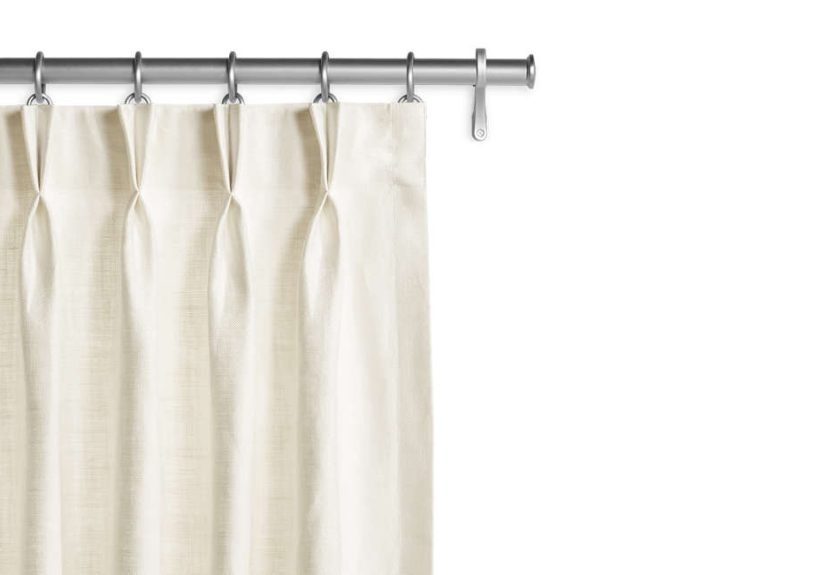
Header style is where many window treatment decisions either become genius or go sideways. A 3 pinch pleat curtain has three folds pinched together at the top of each pleat, creating a traditional, balanced look with fuller drape below. Barn & Willow describes it as the classic option, and that tracks with broader industry guidance: pinch pleats are polished, architectural, and especially effective when you want your panels to read as intentional design elements rather than just fabric covering glass.
Compared with softer or more casual headers, a 3 pinch pleat gives Oyster linen more structure. It also creates more visual rhythm across the top of the panel, which makes the whole window look more finished. This is one reason pinch pleats often look more expensive than simple rod-pocket styles. The fabric is being asked to perform, not merely exist.
There is also a practical side. Pleated drapery generally stacks more predictably and can work beautifully with rings or hooks. Comparable pleated systems from other premium retailers show just how engineered this style can be, with defined pleat counts, hook placements, and lined construction designed to keep the folds neat over time. In plain English: when done well, pinch pleat drapes behave themselves.
Why Oyster Is Such a Smart Color Choice
Not all neutrals are equally useful. Some are too yellow. Some lean pink. Some look chilly enough to file your taxes. Oyster is appealing because it usually lands in the warmer off-white family, which makes it easier to coordinate with wood tones, plaster walls, cream upholstery, marble, brass, black iron, and natural rugs.
Neutral-curtain guidance from design brands often emphasizes temperature as much as color, and that is exactly the right lens here. Oyster works because it softens contrast. It can stand beside crisp white trim without looking dirty, but it also has enough warmth to sit comfortably in rooms filled with beige, oatmeal, camel, walnut, or antique brass. This makes it one of those rare neutral window treatments that feels adaptable instead of indecisive.
It also helps that Oyster suits both minimal and decorated rooms. In a quieter space, it adds texture and subtle contrast. In a room with pattern, wallpaper, or strong color, it acts as a visual buffer. That is why warm off-white linen drapery is often used in more ornate interiors: it balances richness instead of competing with it.
Where This Drapery Works Best
Living Rooms
This is the most obvious home for Barn & Willow Belgian Linen 3 Pinch Pleat Drapery – Oyster. Living rooms benefit from softness, scale, and a bit of polish. The pleats give the room structure; the linen keeps it from feeling too formal. If your sofa is light, the drapes will blend in and add quiet texture. If your sofa is darker, the drapes help lift the room and reflect more light.
Bedrooms
In a bedroom, Oyster has a cocooning quality. It is warmer than bright white and more calming than gray. Add privacy or blackout lining and it becomes even more functional for sleep, especially in rooms that get early morning light. This is a strong choice for anyone who wants the bedroom to feel serene but not bland.
Dining Rooms
The formal side of the 3 pinch pleat header really earns its keep here. Dining rooms often benefit from more tailored treatments because the room itself is already structured by a table, chairs, and overhead lighting. Oyster linen adds elegance without making the room feel overdecorated.
Home Offices
If your office needs to look polished on video calls but still feel human when the laptop closes, this drapery strikes a nice balance. Oyster reflects light well, softens hard edges, and keeps the background from feeling too stark. It says, “Yes, I have taste,” but not, “I spent all morning adjusting my curtains for Zoom.”
Practical Buying Considerations Before You Click Order
Fullness Matters More Than Most People Think
Beautiful drapery needs enough width. Barn & Willow’s measuring guidance recommends multiplying the span for fullness, and Remodelista has similarly noted that drapes look very different depending on whether you choose flat coverage, moderate waves, or richer folds. In real-world terms, under-ordering width is one of the fastest ways to make custom drapery look oddly skimpy.
For a product like this, fullness is part of the aesthetic. The pleats look best when there is enough fabric below them to fall in generous folds. If you want that tailored, luxury-hotel effect, do not starve the panels.
Mounting Height Changes the Entire Room
Mount the rod higher, and the room looks taller. That remains one of the least glamorous but most effective decorating tricks. Barn & Willow’s measuring advice suggests placing rods near the ceiling line or several inches above the trim, and that is still one of the smartest moves you can make with custom drapes. Oyster linen in long, pleated panels especially benefits from added height because it emphasizes vertical lines in a very flattering way.
Lining Is Not Just a Boring Checkbox
Lining changes privacy, light control, and body. Barn & Willow has highlighted multiple lining choices across its drapery offerings, and that is worth paying attention to. If you love the natural glow of linen, a lighter privacy lining may be ideal. If the room is a bedroom, media room, or west-facing furnace by late afternoon, blackout may make more sense.
It is also worth remembering that linen alone is not the privacy champion of the century. Many home editors note that linen filters beautifully but often offers limited privacy on its own. So if your neighbors can identify your dinner menu from their driveway, lining deserves real thought.
Care, Wrinkles, and Other Honest Realities
Let us discuss the linen elephant in the room: wrinkles. Yes, linen wrinkles. That is not a flaw so much as part of the fabric’s personality. If you prefer every surface in your home to look vacuum-sealed and crease-free, linen may test your emotional resilience. But if you appreciate natural texture and a slightly relaxed finish, the soft rumpling is part of the charm.
Care guidance for lined drapery often leans toward dry cleaning, and that is especially true for more substantial custom panels. Day to day, the easiest maintenance is usually gentle vacuuming, occasional steaming, and following the care label instead of improvising with laundry optimism. Steaming is particularly useful for helping pleats settle after hanging and for refreshing the fabric without overhandling it.
In other words, this is not a toss-it-in-the-washer-and-forget-it purchase. It is more of a “treat me like a grown-up textile and I will reward you by making the room look amazing” situation.
Final Verdict: Is It Worth the Attention?
Barn & Willow Belgian Linen 3 Pinch Pleat Drapery – Oyster works because it gets the fundamentals right. The fabric has texture. The color has flexibility. The pleat style has structure. Together, they create a drapery option that feels tailored, calm, and elevated without looking stiff or trying too hard.
If you want drapes that feel classic but not fussy, warm but not yellow, polished but not precious, Oyster is a smart choice. It suits people who want their home to feel layered and intentional without shouting about it. This is the design equivalent of a person who is very well dressed and somehow still seems relaxed. Annoying? Maybe. Effective? Absolutely.
For homeowners building a neutral palette, refreshing a living room, softening a bedroom, or upgrading from basic panels to something more architectural, this drapery earns its keep. It is the kind of window treatment that can quietly improve a room every single day, which is honestly more impressive than many louder design decisions.
Experiences With Barn & Willow Belgian Linen 3 Pinch Pleat Drapery – Oyster
One of the most common experiences people have with Oyster linen drapery is surprise at how much it changes a room without changing the room’s color palette. That sounds small, but it is actually huge. A lot of homeowners assume neutral drapes will simply “go with everything.” Then they hang a structured, textured linen panel in a warm off-white tone and suddenly the room looks edited. The sofa looks better. The rug looks more intentional. Even the lamp in the corner starts acting like it was selected by someone with a master plan.
Another familiar experience is realizing that pinch pleat curtains photograph better than expected. In casual snapshots, they look neat and architectural rather than limp. In person, that translates into a room that feels more finished from morning to night. Barn & Willow’s own customer-facing imagery and designer testimonials lean into this idea of transformation, and it makes sense. Pleated drapery frames the window in a way flatter headers often do not.
There is also the tactile experience. Linen is one of those fabrics people talk about with suspicious affection, and once you live with it, you understand why. Oyster linen does not feel shiny or synthetic. It feels grounded. In homes with wood beams, old floors, plaster walls, natural stone, or woven accents, that texture tends to make the whole space feel warmer and more human. Even in newer homes, it can soften the sharper edges that sometimes come with open-plan construction.
Of course, real-life experience also includes the little practical lessons. New linen drapes may arrive with fold lines or creases from shipping. That first moment can be mildly alarming if you were expecting instant catalog perfection. Then you steam them, let them hang, and watch the fabric relax into place. Many people end up liking the look even more after a few days because the folds become less rigid and more natural.
Another common takeaway is that the right fullness makes all the difference. Homeowners who order enough width usually love the result because the pleats open into generous folds that read custom and substantial. People who go too narrow often learn the hard way that even beautiful fabric can look underwhelming when there is not enough of it. This is why measuring and planning the stack, rod height, and fullness matters so much with a product like this.
Then there is the color itself. Oyster tends to win people over because it feels forgiving. It is not stark like bright white, and it is not muddy like some beige neutrals can be. In morning light it can feel creamy and calm; in the evening it often looks richer and more cocooning. That day-to-night flexibility is one reason warm neutral custom linen curtains tend to stay relevant even as trend cycles spin themselves dizzy.
Perhaps the most telling experience is this: once people install tailored linen drapery, many of them immediately notice every other unfinished window in the house. It is the classic home-design domino effect. One room gets Oyster 3 pinch pleat drapes, and suddenly the bare guest room window looks like a neglected afterthought. That is both a compliment and a warning. Good drapery raises standards very quickly.
In the end, the experience of living with Barn & Willow Belgian Linen 3 Pinch Pleat Drapery – Oyster is less about one dramatic before-and-after reveal and more about daily improvement. The room feels softer. The light feels nicer. The window looks taller. The house feels more complete. And that, frankly, is exactly what excellent drapery is supposed to do.