Table of Contents >> Show >> Hide
- Why Basil + Rosemary Is a Power Couple for Trout
- Ingredients
- Equipment That Makes Grilling Trout Way Less Stressful
- How to Choose Trout That Tastes Clean (Not “Pondy”)
- Prep Like a Pro (So the Fish Doesn’t Stick or Tear)
- Make the Basil-Rosemary Herb Paste
- Step-by-Step: Basil-Rosemary Grilled Trout
- How to Serve (Without Overcomplicating Your Life)
- Flavor Variations (Same Concept, Different Mood)
- Leftovers That Don’t Taste Like Regret
- Troubleshooting: Save the Trout, Save the Day
- Conclusion
- Real-World Grilling Notes ( of Practical Experience-Based Tips)
If you’ve ever grilled fish and watched it fuse to the grates like it signed a lease, this one’s for you. Basil-Rosemary Grilled Trout is the “looks fancy, cooks fast” dinner that tastes like a lakeside vacationeven if you’re standing next to a patio chair that’s missing one screw and a grill that’s been through things.
This recipe leans into what trout does best: delicate, slightly sweet flesh that’s happiest with simple, bright flavors. Basil brings fresh, peppery-green vibes. Rosemary adds piney intensity (like a Christmas tree that learned to cook). Lemon and garlic keep everything crisp and lively. The result: flaky, juicy grilled trout with fragrant herbs and a clean finish that makes you want to high-five your own tongs.
Why Basil + Rosemary Is a Power Couple for Trout
Trout is mild and cooks quickly, which is greatuntil you blink and it’s overdone. Basil and rosemary solve two problems at once:
- They add big aroma without heavy sauces. Trout doesn’t need a flavor “coat,” it needs a flavor “halo.”
- They stand up to the grill. Basil loves gentle heat; rosemary tolerates higher heat and perfumes everything around it.
- They play well with lemon and garlic. Citrus brightens fish, garlic adds savory depth, and herbs tie it together like a good playlist.
Ingredients
This recipe works with either whole trout (classic, impressive) or trout fillets (easy, weeknight-friendly). Choose your adventure.
For the Basil-Rosemary Herb Paste
- 2 tablespoons extra-virgin olive oil (plus more for the grates)
- 1 tablespoon fresh lemon juice
- 1 teaspoon lemon zest
- 2 cloves garlic, finely minced
- 2 tablespoons chopped fresh basil (packed)
- 1 tablespoon chopped fresh rosemary (or 2 teaspoons if you want it gentler)
- 1/2 teaspoon kosher salt (plus more to taste)
- 1/4 teaspoon black pepper
- Optional: pinch of red pepper flakes for a tiny kick
For the Trout
- Option A: 2 whole trout (about 12–16 oz each), cleaned and scaled (heads on or offyour call)
- Option B: 4 trout fillets (about 5–6 oz each), skin on if possible
- 1 lemon, thinly sliced (for stuffing or topping)
- Fresh basil leaves and rosemary sprigs (optional, for stuffing whole fish)
- 1 tablespoon butter (optional, for extra richnessgreat inside whole fish)
Equipment That Makes Grilling Trout Way Less Stressful
- Grill (gas or charcoal)
- Fish spatula or wide spatula
- Instant-read thermometer (highly recommended)
- Grill brush and paper towels
- Neutral high-heat oil (like canola or avocado) for the grates
- Optional but amazing: fish basket, grill topper, or heavy-duty foil
How to Choose Trout That Tastes Clean (Not “Pondy”)
Fresh fish doesn’t smell like “fish.” It smells like the ocean, a clean lake, or basically… water. Here’s what to look for:
- Whole trout: Clear eyes, shiny skin, firm flesh that springs back when pressed.
- Fillets: Moist (not slimy), glossy, and evenly colored. Avoid dull, dry edges.
- Ask for help: Your fishmonger can scale and clean whole trout. Let them do it. They have the tools and the emotional resilience.
Prep Like a Pro (So the Fish Doesn’t Stick or Tear)
1) Dry the fish
Pat the trout very dry with paper towels. Dry surface = better sear = less sticking.
2) Score whole fish (optional but helpful)
For whole trout, make 2–3 shallow diagonal slashes on each side. This helps heat penetrate and lets seasoning sneak in.
3) Season simply
Trout doesn’t need a complicated marinade. The herb paste is plenty. Too much acid too long can start “cooking” the surface and mess with texture. Keep it reasonable.
Make the Basil-Rosemary Herb Paste
- In a small bowl, combine olive oil, lemon juice, zest, garlic, basil, rosemary, salt, pepper, and red pepper flakes (if using).
- Stir until it becomes a loose paste. Taste it. It should be bright, herby, and a little salty (in a good way).
Step-by-Step: Basil-Rosemary Grilled Trout
Step 1: Preheat the grill (and give it a clean start)
Heat the grill to medium-high (about 400–450°F). Once hot, brush the grates clean. Then oil the grates: dip a folded paper towel in neutral oil, hold with tongs, and wipe the grates quickly.
Step 2: Season the trout
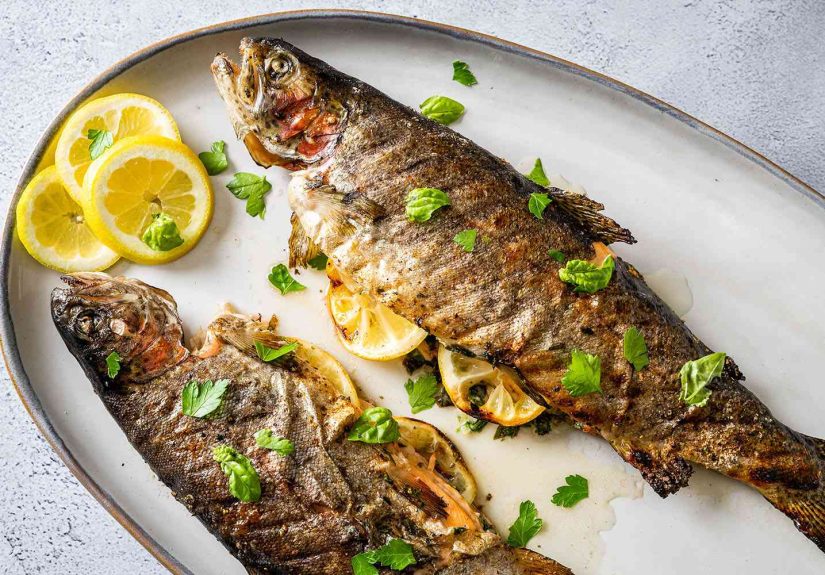
For whole trout: Rub the herb paste inside the cavity and lightly on the outside. Stuff the cavity with lemon slices, a few basil leaves, and a rosemary sprig. Add a small dab of butter inside if you want extra richness.
For fillets: Rub the herb paste over the flesh side. If skin-on, lightly oil the skin side too.
Step 3: Choose your grilling method
- Direct on grates (best flavor): Great for skin-on fillets or sturdy whole trout if your grill skills are feeling confident.
- Fish basket or grill topper (best control): The “I want this to be delicious, not dramatic” option.
- Foil method (most foolproof): Ideal for beginners, thinner fillets, or windy days when your grill runs hot.
Step 4: Grill the trout
Whole trout (direct heat): Place on the grill and cook 4–6 minutes per side, depending on size. If it resists flipping, wait another 30–60 secondsfish releases when it’s ready.
Trout fillets (skin-on): Start skin-side down and grill 4–6 minutes until the skin is crisp and the fish is mostly opaque. Flip once (carefully) and cook 30–90 seconds more.
Foil method: Place trout on a lightly oiled piece of heavy-duty foil. Add lemon slices on top. Fold into a packet, leaving a small vent. Grill 8–12 minutes depending on thickness.
Step 5: Check doneness (don’t guessverify)
Trout is done when it flakes easily and is opaque. For the most accurate result, check the thickest part with a thermometer and pull it when it reaches 145°F. Let it rest for 2 minutes before serving.
How to Serve (Without Overcomplicating Your Life)
Trout is happiest with sides that don’t steal the spotlight:
- Grilled vegetables: zucchini, asparagus, bell peppers, or corn
- Simple starch: rice, roasted potatoes, or crusty bread
- Fresh salad: arugula + lemon vinaigrette or a cucumber-tomato salad
- Sauce option: Greek yogurt + lemon zest + chopped basil + pinch of salt (cool, creamy, and fast)
Drink pairing: Sparkling water with lemon, iced tea, or a citrusy mocktail keeps the meal bright and grill-friendly.
Flavor Variations (Same Concept, Different Mood)
- Mediterranean: Add chopped parsley, a pinch of oregano, and a few capers.
- Spicy-citrus: Add extra red pepper flakes and a little orange zest.
- Garlic-butter finish: Melt 1 tablespoon butter with a tiny bit of garlic and drizzle over the fish right before serving.
- Dairy-free: Skip butter and finish with a swirl of good olive oil and extra lemon juice.
Leftovers That Don’t Taste Like Regret
Leftover grilled trout is gold if you treat it gently:
- Trout salad: Flake into a bowl with mayo or yogurt, celery, lemon, and herbs.
- Breakfast upgrade: Add to scrambled eggs with herbs and a squeeze of lemon.
- Grain bowl: Rice or quinoa + cucumbers + tomatoes + trout + lemony dressing.
Troubleshooting: Save the Trout, Save the Day
“My fish stuck to the grill.”
Usually it’s one of these: grates weren’t hot enough, fish wasn’t dry enough, or you tried to flip too soon. Next time: preheat longer, dry the fish, oil the grates, and let the fish release naturally.
“My trout is dry.”
Trout overcooks fast. Pull it at 145°F and rest it briefly. If you’re nervous, use foil or a fish basket until you get a feel for your grill’s personality.
“The rosemary tasted too strong.”
Rosemary can flex. Use less, chop it finely, or keep it as a sprig inside the fish cavity for aroma without intensity.
Conclusion
Basil-Rosemary Grilled Trout is the kind of recipe that feels like you planned ahead (even if you didn’t). With a simple herb paste, smart grill prep, and a quick temperature check, you’ll get tender, flaky fish with crisp edges and big fresh flavor. Serve it with grilled veggies and a lemony salad, and you’ve got a meal that’s light, satisfying, and absolutely not “sad diet food.” It’s summer-on-a-plate energy any time of year.
Real-World Grilling Notes ( of Practical Experience-Based Tips)
Recipes love to pretend grills are perfectly even, weather is always calm, and fish fillets are identical twins. In real life, grills have hot spots, wind shows up uninvited, and trout varies in thickness like it’s trying to keep things interesting. Here are the practical, real-world tips home cooks rely on to make grilled trout consistentespecially when cooking for people who will absolutely notice if dinner is dry.
1) Treat your grill like it has moods. Most grills run hotter in the back and along certain burners (or right above a charcoal pile). Before you start, give the grill 10–15 minutes to preheat fully, then use your hand test (carefully) or a thermometer to identify the hottest zones. Cook thicker parts of the fish toward the hotter area and thinner ends toward cooler zones. This small adjustment prevents the tail end from turning into fish jerky while the thick center is still catching up.
2) Dry fish is your best friend. It feels backward because we’re trying to keep fish moist, but surface moisture is the enemy of clean grilling. Patting trout dry helps it sear, release, and develop better texture. If you have a few extra minutes, let the fish sit uncovered in the fridge for 15–30 minutes after patting dry. That quick air-dry can make the skin crispier and reduce sticking.
3) “Don’t flip it yet” is almost always the answer. When trout sticks, it’s often because it hasn’t formed a crust. If you tug and it fights back, stop and wait. Give it another minute. Fish tends to release once the surface has browned slightly. Trying to force it early is how you end up with “grilled trout” plus “mystery trout confetti” left behind on the grates.
4) Use the right method for the day you’re having. If you want maximum smoky flavor and you’re feeling confident, grill on the grates. If you’re tired, cooking for guests, or dealing with a windy day, choose a fish basket or foil. Foil packets get teased for being “too easy,” but they’re incredibly effective: they prevent sticking, reduce flipping risk, and create a gentle steam that protects delicate fish. The goal is a great mealnot a heroic struggle.
5) Whole fish is surprisingly forgiving. It looks fancy, but whole trout can be easier than thin fillets because the bones and skin help protect the flesh. Stuffing the cavity with lemon and herbs adds aroma and helps keep the interior moist. Just remember that whole fish still cooks fast; it’s not a brisket. Check doneness early, and rely on temperature and texture cues instead of the clock alone.
6) Keep a “rescue finish” ready. If the fish is almost done but the outside needs a little more color, you can finish it quickly: close the lid for 30–60 seconds to trap heat, or move it briefly to the hottest zone for a final kiss of char. If it’s getting too dark outside but not done inside, shift to indirect heat and close the lid. That combodirect for color, indirect for gentle finishingis how a lot of reliable grillers stay consistent.
7) Make peace with carryover cooking. Fish continues cooking for a minute or two after it leaves the grill. Pulling trout right at doneness (or even a hair before) and letting it rest briefly keeps it juicy. It’s a small detail that separates “nice” trout from “wow, you did something here” trout.