Table of Contents >> Show >> Hide
- What Is Bergen Street Studio?
- Why People Talk About Them: A Philosophy Built on Balance
- Signature Work and the Stories Behind It
- How Bergen Street Studio Approaches Projects
- What to Ask If You’re Considering Them (or Any Architect)
- FAQ: Quick Answers About Bergen Street Studio
- Experiences: What “Bergen Street Studio” Work Can Feel Like (A 500-Word Add-On)
- Conclusion
If you’ve ever walked through Brooklyn and thought, “Wow, this block has layershistory, grit, beauty, and a guy carrying a fiddle case in July,”
you already understand the design universe Bergen Street Studio works in. This is an architecture practice that’s comfortable in the tight constraints of
landmarked neighborhoods and in the wide-open complexity of institutional and humanitarian workwhere design isn’t just about looking good,
but about working better, lasting longer, and making life a little more humane.
In plain terms: Bergen Street Studio is known for thoughtful renovations, adaptive reuse, and a clear-eyed approach to problem solvingwhether that problem is a
narrow townhouse with a stubborn side yard, or a healthcare facility where daylight and ventilation aren’t “nice-to-haves,” they’re part of the mission.
And yes, they have the résumé to back up the calm confidence.
What Is Bergen Street Studio?
Bergen Street Studio is an architectural practice with roots in New York and an active footprint that also includes Fort Worth, Texas. Their portfolio spans
a wide rangeprivate residential renovations, multifamily concepts, institutional planning, cultural projects, and healthcare facilitiesoften with an emphasis on
weaving new ideas into existing contexts rather than bulldozing what came before.
If you’re searching for a “signature style,” you won’t find a single loud aesthetic repeated like a logo. Instead, the recurring theme is a disciplined balance:
historic fabric and modern interventions, beautiful materials and pragmatic detailing, big-picture planning and real-world constraints.
It’s architecture that tries to be both quietly confident and deeply functionallike a well-designed pocket door that doesn’t jump the track the first time your cousin visits.
Why People Talk About Them: A Philosophy Built on Balance
1) Old buildings aren’t problemsthey’re partners
A lot of firms “do renovations.” Fewer treat renovations as a form of architectural scholarshipreading what a building used to be, what it can become, and what it
should keep. Bergen Street Studio’s work often sits in that sweet spot where historic preservation and contemporary life stop fighting and start cooperating.
That matters in cities like New York, where you can’t just freestyle your way through a landmarked district and hope the review board appreciates your “vibe.”
2) Understated doesn’t mean boring
Some homes scream. Some homes whisper. Bergen Street Studio tends to design the kind of spaces that whisperthen surprise you with how good the acoustics are.
Their approach is frequently described as restrained and uplifting: spaces that feel calm, daylight-forward, and intentional without turning into a sterile showroom.
In other words, it’s not “minimalism for social media,” it’s “minimalism that still works when you own a toaster.”
3) “Inventive” is only useful when it’s buildable
Great architecture is an intersection of imagination and constraint. Bergen Street Studio leans into that reality: budgets, codes, landmarks, structure, and the
realities of construction are treated as design inputsnot afterthoughts. This shows up in projects where circulation is reimagined, daylight is rerouted, and tight
footprints are made to feel generous through sequencing and spatial strategy.
Signature Work and the Stories Behind It
A Brooklyn townhouse move that became a conversation starter
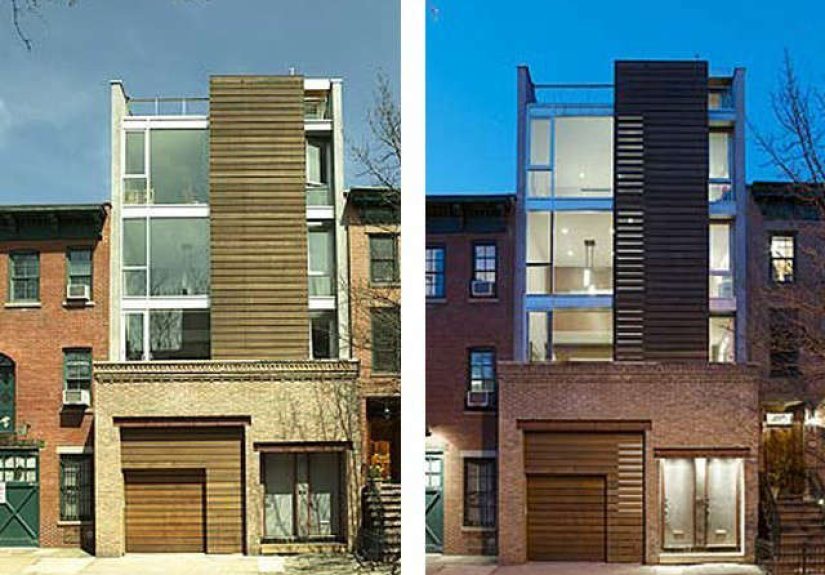
One of the most shareable examples of the studio’s thinking is a townhouse renovation in Brooklyn where circulation becomes the main eventan “inside-out” staircase
approach that leverages an extremely tight side yard. In a city where “outdoor space” sometimes means “a fire escape you can stand on,” finding spatial value in a
narrow leftover zone is both clever and deeply New York.
What makes this kind of move memorable isn’t just the visual. It’s the logic: turning an awkward constraint into a functional, luminous connectormaking
everyday movement through the house feel deliberate instead of cramped. That’s the kind of detail that often separates a standard renovation from one that feels like
a genuine upgrade to how people live.
Materials that feel like a decision, not a default
Another thread in Bergen Street Studio’s reputation is their attention to material characterusing wood, stone, and finishes that feel considered rather than trendy.
When a wall treatment becomes memorable, it’s usually because it’s tied to proportion, light, and the way a space is experienced at human speed (a.k.a. not just in a
perfectly staged photo where nobody owns socks).
Healthcare design with real stakes
Bergen Street Studio’s work includes healthcare facilities and medical planningan area where “design” can’t just be aesthetic. It has to support patient dignity,
staff workflow, safety, and long-term resilience. In Central Africa, projects connected to Village Health Works highlight how architecture can contribute to health outcomes
through strategies like daylighting, passive ventilation, campus planning, and culturally informed building forms.
A standout example is a maternity and women’s hospital project in Kibogora, Rwanda, described as a modern facility designed to address overcrowding by adding a new
maternity ward. The building is positioned into a steep site so that daylight and ventilation can be controlled across floorsan approach that treats the landscape as
a performance tool, not an obstacle. The project narrative also recognizes the social reality of care: planning space for family members who accompany patients, which is
a practical and culturally aware design choice.
In Burundi, work associated with Kigutu Hospital has been framed as part of a broader community-driven health and education campus. Here the architecture language is
rooted in local typologieslike sloped roof formswhile upgrading performance to serve complex clinical programs. In projects like these, “beautiful” matters, but
“durable,” “maintainable,” and “appropriate” matter even more.
Institutional and cultural projects: where planning is the design
The studio’s public-facing work list includes major institutional and cultural contextsprojects involving master planning, renovations, and concept design for large
organizations. These are the jobs where success is often invisible: circulation that works, systems that integrate cleanly, and historic fabric that stays legible while
new interventions do their job honestly.
For example, project descriptions associated with museum and institutional planning emphasize priorities like preserving historic fabric, making the interface between
old and new clear, and introducing modern infrastructure with visible intent rather than hiding it as a messy afterthought. That’s a grown-up design stance: respectful,
clear, and not afraid to admit that the building has lived multiple lives.
How Bergen Street Studio Approaches Projects
Step 1: The “what are we really solving?” conversation
The early phase of a Bergen Street Studio–type process typically starts with clarity: What is the real needmore space, better light, a new program, improved flow,
or a combination? In residential work, clients often begin with a list of wants. The architect’s job is to translate that list into priorities, tradeoffs, and a plan
that survives contact with reality (structure, budget, timeline, and your building’s opinionated plumbing).
Step 2: Design that’s both conceptual and specific
Their portfolio suggests a comfort with conceptual thinkingbig spatial ideaspaired with tangible decisions about where stairs go, where light comes from, and how
rooms connect. The best renovations don’t just add square footage; they improve the experience of moving through space. That’s where strategies like re-routing circulation,
opening sightlines, and borrowing light can do more than an extra closet ever will.
Step 3: Coordination, approvals, and the “glamorous” stuff
If your project touches a landmarked building or a complex urban site, you need an architect who can do more than sketch. You need someone who can manage constraints:
consultant teams, structural coordination, permit pathways, and construction administration. Bergen Street Studio’s range of project types implies fluency in the
administrative side of making architecture happenbecause even the best concept is just a concept until it becomes a set of drawings that a contractor can actually build.
What to Ask If You’re Considering Them (or Any Architect)
Ask about similar constraints
If you’re renovating a townhouse in Brooklyn, ask to see precedent work in similar building types: narrow lots, party walls, landmark oversight, tight rear yards,
and aging infrastructure. If you’re in Texas, ask about climate response, material choices, and contractor coordination in that region. The goal isn’t to find an
identical project; it’s to confirm your architect has solved problems like yours without melting into a puddle.
Ask about process and communication
Great design is collaborative, but only if communication is clear. Ask how often you’ll see options, how decisions are documented, and how budget is tracked over time.
The best firms will talk about design and logistics in the same sentence, because those two things are married whether you like it or not.
Ask how they handle the handoff to construction
The construction phase is where good projects either become excellentor become group therapy. Ask how site visits are handled, how questions from the field are answered,
and how design intent is protected without turning the process into a showdown. Architects who understand construction tend to deliver calmer projects (and calmer clients).
FAQ: Quick Answers About Bergen Street Studio
Are they only a Brooklyn architecture firm?
No. While strongly associated with Brooklyn and New York work, Bergen Street Studio also has a presence in Fort Worth, Texas, and has been listed with addresses in both
locations.
Do they only do residential work?
Not at all. Their project lists include private residential renovations as well as public, institutional, cultural, and healthcare projectsranging from planning and
renovation work to larger program-driven facilities.
What kind of design “style” do they have?
Think of it less as a style and more as a method: adaptive reuse intelligence, clear modern insertions, calm material palettes, and a bias toward spaces that feel
livable rather than performative.
Experiences: What “Bergen Street Studio” Work Can Feel Like (A 500-Word Add-On)
Let’s talk experiencenot the résumé kind, but the human kind. If you’ve never worked with an architect, you might assume it’s 90% sketching and 10% nodding
thoughtfully while staring at brick. In reality, a Bergen Street Studio–type experience (based on how projects like theirs are typically described and structured) feels
more like a guided strategy session that gradually turns into something you can stand inside.
It often starts with you bringing a messy pile of hopes: “We want more light,” “We need a real entry,” “Can the kitchen stop being a hallway?” and “Please don’t ask me
to pick fourteen shades of whitemy soul is fragile.” A good architect listens for the real problem behind the request. More light might mean changing circulation.
A better entry might mean rethinking storage. A kitchen hallway might mean your plan is working against itself, not that you need fancier tile.
Then comes the part people don’t expect: the gentle confrontation with constraints. If you’re in Brooklyn, your building may have strong opinions about what can be moved.
If you’re in a landmarked district, the exterior might have rules that are older than your great-aunt’s cast-iron skillet. If you’re renovating, your walls may reveal
“surprise conditions” (the polite term for “why is that there?”). In a steady process, you’re not shamed for wanting big ideasyou’re given a map for achieving them.
As the design develops, the experience becomes surprisingly narrative. Instead of thinking in rooms, you begin thinking in sequences: where you enter, what you see first,
how you move, where light shifts during the day, and where your life actually happens. It’s also where the calm, understated approach shines. You’re not being sold a
trendy gimmick; you’re being offered an architecture that aims to feel good at 7:12 a.m. when you’re hunting for coffee like it’s a survival skill.
If the project is largeran institutional or healthcare effortthe experience becomes even more mission-driven. Decisions revolve around workflow, safety, dignity, and
long-term resilience. When you read about projects that emphasize daylighting, ventilation, and culturally aware planning, it’s a reminder that architecture can serve
more than aesthetics. It can serve outcomes.
By the time construction begins, the best experience is one where your architect is still present: answering questions, clarifying intent, helping solve surprises without
turning every issue into a dramatic monologue. The payoff isn’t just a beautiful final photoit’s a place that functions well, ages gracefully, and makes you feel like
your building is finally on your side.
Conclusion
Bergen Street Studio sits in a rare sweet spot: sophisticated enough to handle complex public and institutional work, and attentive enough to make residential spaces
feel personal rather than generic. Their projects reflect a respect for existing buildings, a practical creativity under constraints, and a broader interest in how design
affects peoplewhether that’s a Brooklyn family navigating a narrow footprint or a healthcare campus supporting a community’s long-term wellbeing.
If you’re researching Bergen Street Studio, the most useful takeaway is this: their “signature” isn’t a visual trick. It’s a way of thinkingone that treats context,
craft, and real-life use as the main event. The result is architecture that doesn’t just photograph well. It lives well.