Table of Contents >> Show >> Hide
- What Casino “Odds” Really Mean (And Why the House Doesn’t Need Luck)
- RTP vs. House Edge: Same Story, Different Outfit
- The Best Casino Game Odds (Lowest House Edge, Usually)
- The Middle of the Pack: Not the Worst, Not the Best
- The Worst Casino Game Odds (High House Edge, Often Disguised as “Fun”)
- Practical Tips for Gambling (Focused on Safety and Spending Less on Math)
- Quick Comparison Table: Typical Odds Snapshot
- FAQ: Casino Odds Questions People Ask at the Table (Usually Loudly)
- Conclusion: The Real “Best Odds” Are the Ones You Choose Before You Play
- Experiences: 5 Lessons From Watching Casino Odds Play Out in Real Life
Quick note before we talk odds: casino gambling is age-restricted (often 21+ in U.S. casinos, sometimes 18+ depending on the game and state). If you’re not of legal age, treat this as a “how the math works” explainernot a to-do list. The smartest move for minors is simple: don’t gamble.
Now, for everyone who’s legally allowed to be in the building with the dazzling chandeliers and the suspiciously enthusiastic carpet pattern: casino odds aren’t magic, and they’re not “vibes.” They’re mathsometimes clean and transparent, sometimes tucked inside a pay table like it’s hiding from daylight. This guide breaks down which games usually have the best (and worst) odds, what “house edge” really means, and how to keep gambling from turning into an expensive hobby that also ruins your weekend.
What Casino “Odds” Really Mean (And Why the House Doesn’t Need Luck)
When people say “odds,” they usually mean one of three things:
- Probability: How often something happens (like hitting a blackjack, rolling a 7, or watching your buddy say “one more hand” for the 19th time).
- Payout odds: What the casino pays when you win (e.g., 35-to-1 on a roulette number).
- House edge: The casino’s built-in advantagehow much the casino expects to keep over the long run.
House edge is the headline act. It’s the reason casinos can afford free drinks, dramatic lighting, and chairs that somehow feel both padded and judgmental. House edge is typically expressed as a percentage of your total wagers and is based on the rules of the game and (often) how well you play. Many “house edge” comparisons assume near-optimal play.
A simple way to think about expected loss
If a game has a 2% house edge, then on average the casino expects to keep about $2 for every $100 wageredover a very large number of bets. That does not mean you will lose $2 every $100 in neat, polite installments. In the short run, anything can happen. In the long run, the math shows up like rent.
Example: Suppose you make 200 bets of $10 each in a game with a 1.5% house edge. Total wagered = $2,000. Expected loss ≈ $2,000 × 0.015 = $30. Not terrifying… until you realize many casino games involve lots of bets per hour, which quietly multiplies the “total wagered” part.
RTP vs. House Edge: Same Story, Different Outfit
You’ll also hear about RTP (Return to Player), especially in slots and some online casino games. RTP is the percentage a game is designed to pay back over time. For instance, an RTP of 96% implies a 4% house edge (because 96% + 4% = 100%). RTP is a long-run statistic, not a promise for your next 20 spins.
The Best Casino Game Odds (Lowest House Edge, Usually)
“Best odds” doesn’t mean “you’ll win.” It means: if you’re going to pay for entertainment, you’re paying a smaller “math tax” per dollar wagered. Here are the usual standouts.
1) Blackjack (when rules are fair and you play well)
Blackjack is one of the few mainstream casino games where your decisions matter. With decent rules and strong basic play, the house edge can be quite lowoften around the neighborhood of 0.5% to 2% depending on rules and player choices.
Why blackjack odds swing so much: small rule changes add up. A big one is the blackjack payout (3:2 is generally more player-friendly than 6:5). Even if you never memorize a strategy chart, you can still protect yourself by avoiding games with “worse rules” posted right on the felt or signage.
Adult-friendly tip: If you can’t explain the table’s key rules (blackjack payout, number of decks, dealer hits/stands soft 17), you’re basically ordering dinner without looking at prices. It might be delicious, but don’t act shocked later.
2) Baccarat (Banker bet is the math favorite)
Baccarat looks fancy, but the core bets are simple. In the common “punto banco” version, the Banker bet typically has a house edge around 1.06%, while the Player bet is around 1.24%. The Tie bet is where the casino really turns the screw, commonly showing a much larger house edge (often cited around the mid-teens).
What this means: baccarat can be one of the better “low-effort” table options for adults who want a relatively low house edge without complex decisionsso long as they don’t drift into flashy side bets.
3) Craps (good core bets + “odds” that are mathematically fair)
Craps is loud, chaotic, and somehow capable of making a grown adult high-five a stranger over a pair of dice. Under the hood, the math is surprisingly respectableif you stick to certain bets.
Two key ideas:
- Some foundational bets (like Pass/Don’t Pass) have relatively low house edges in typical rulesets.
- “Taking odds” in craps is considered a fair bet with no house edgebut it’s usually only available after making a base bet that has a house edge.
Translation: You can reduce your overall “math tax” by putting more of your total wager into the fair-odds portionthough you’re still gambling, and variance is still real.
4) Video Poker (sometimes low edge, sometimes notpay tables matter)
Video poker is the “spreadsheet” of casino gambling: it looks like a slot but behaves more like a simplified poker puzzle. Some versions with very favorable pay tables can offer very high theoretical returns with perfect play. For example, “full pay” Jacks or Better is commonly cited at about 99.54% return under optimal strategy (about a 0.46% house edge).
Important reality check: “Optimal strategy” is doing heavy lifting there, and not every machine is “full pay.” If you’re not reading pay tables, you’re not really playing video pokeryou’re just donating to a machine with better posture than you.
The Middle of the Pack: Not the Worst, Not the Best
Roulette (single-zero beats double-zero)
Roulette is a great lesson in how a tiny detail (one extra green pocket) changes everything.
- European (single-zero) roulette commonly carries a house edge of about 2.70% across standard bets.
- American (double-zero) roulette commonly carries a house edge of about 5.26% on most bets.
What to watch for: The layout tells you a lot. If you see “0” and “00,” the house edge is typically higher. If you see one “0,” the math is generally better. Roulette is also a prime habitat for the gambler’s fallacy (“red hasn’t hit in a while, so it’s due”). The wheel does not remember your feelings.
Slots (RTP varies; speed is the hidden cost)
Slots are easy to play and hard to “analyze” from the outside because different machines can have different RTP settings, volatility profiles, bonus structures, and rules. RTP describes long-run payback, but it doesn’t protect you from short-term swings.
What makes slots sneaky: pace. Many slot sessions involve a huge number of wagers per hour, which increases the “total wagered” part of expected loss. Even a modest house edge gets expensive when you press the button like it owes you money.
The Worst Casino Game Odds (High House Edge, Often Disguised as “Fun”)
If casinos had a “Top Donors” board like a public radio station, these games would be responsible for a lot of engraved plaques.
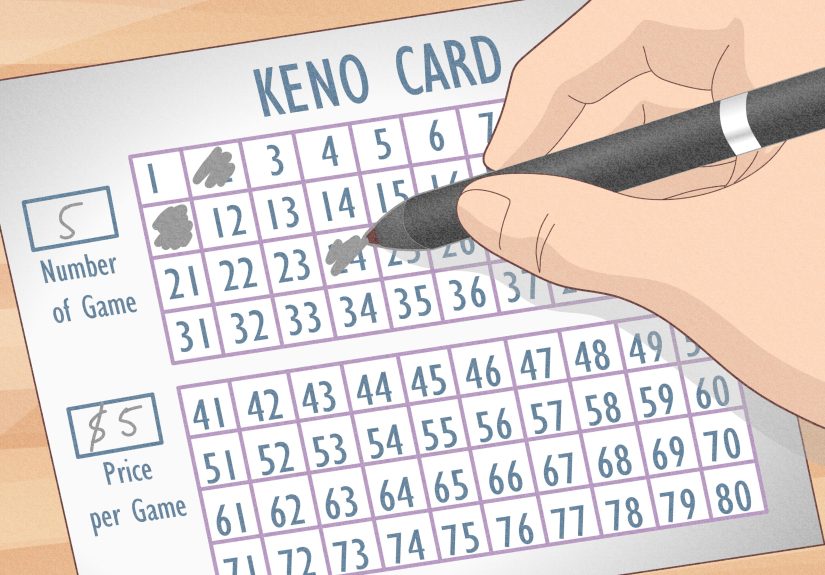
Keno (often among the toughest games for players)
Keno can resemble a lottery-style experienceand the math often matches that vibe. Surveys and analyses commonly show very low returns compared to many table games. One analysis notes returns ranging roughly from 65% to 80% in certain live keno contexts, implying a house edge around 20% to 35%.
Why it matters: even if keno feels slow and harmless, the built-in disadvantage can be massive.
Big wheel / novelty games / many side bets
Novelty games can be entertainingbright lights, simple rules, big promises. The trade-off is often a larger house edge. Likewise, many table games add side bets that look exciting and pay big when they hit… but may be mathematically expensive over time. General house-edge comparisons across common casino bets highlight how widely edges vary by bet type and rules.
Rule of thumb: The more a bet is marketed as “bonus,” “jackpot,” or “mega,” the more carefully you should assume the math is not your best friend.
Practical Tips for Gambling (Focused on Safety and Spending Less on Math)
This isn’t a “how to win” sectionbecause casinos aren’t charities and luck doesn’t take coaching. This is a “how to lose less and stay in control” section.
1) Treat gambling like entertainment, not income
Multiple responsible gaming programs emphasize this mindset: you can hope to win, but you should expect to lose and budget accordingly.
2) Set a money limit and a time limit before you start
Responsible gaming resources commonly encourage setting clear time and spending limitsbefore the first betso decisions don’t get made “in the moment” when adrenaline is doing the budgeting.
3) Never chase losses
Chasing losses is how “a quick $40” turns into a long, quiet ride home. Responsible gaming guidance repeatedly warns against trying to win back money by increasing risk after losses.
4) Use built-in tools if you gamble online
Major regulated operators offer tools like deposit limits, cooling-off periods, and self-exclusion options. These features exist because self-control is harder at 1:00 a.m. than it looks at 1:00 p.m.
5) Learn the “one line of math” for any game you play
You don’t need a degreejust one sentence: “What’s the house edge (or RTP), and what rules change it?” For example, roulette’s single-zero setup reduces the house edge compared with double-zero formats.
6) Watch for signs gambling is no longer “just for fun”
Problem gambling is generally described as gambling behavior that damages a person or their family and disrupts life. If you notice you’re hiding gambling, feeling unable to stop, or using it to escape stress, take it seriously.
Quick Comparison Table: Typical Odds Snapshot
Note: numbers vary by rules, pay tables, and how you play. These are common reference points for widely played versions of each game.
| Game / Bet Type | Typical House Edge (Approx.) | Why It Changes | Verdict |
|---|---|---|---|
| Blackjack (good rules + strong play) | ~0.5%–2% (varies) | Rules (payouts, decks, soft 17), player decisions | Often among the best |
| Baccarat (Banker bet) | ~1.06% | Commission rules, side bets | Strong low-effort option |
| Craps (core bets) + odds | Core bet low; odds portion ~0% | Bet selection, how much is placed as odds | Good if you keep it simple |
| Roulette (European single-zero) | ~2.70% | Wheel type (single vs double zero) | Middle tier |
| Roulette (American double-zero) | ~5.26% | Double-zero pocket increases house edge | Pricier entertainment |
| Slots | Varies by machine (RTP varies) | Game design, RTP setting, volatility, speed of play | Convenient, but can be costly |
| Keno | Often very high (e.g., ~20%–35% cited) | Pay table structure | Often among the worst |
FAQ: Casino Odds Questions People Ask at the Table (Usually Loudly)
Which casino game has the best odds?
Often, it’s a toss-up between well-run blackjack (with good rules and strong play), certain baccarat bets (like Banker), and “simple” craps approaches that include fair odds bets. Exact ranking depends on rules and how you play.
Do betting systems (like Martingale) beat the casino?
They don’t change the underlying math. Betting systems can change how your wins and losses are distributed, but they don’t remove the house edgeand real-world limits (table max, bankroll size, time) are undefeated.
Is “hot” or “cold” roulette real?
Roulette spins are designed to be independent events. Streaks happen naturally in randomness, which is why casinos can build a whole vibe around your brain trying to find patterns.
Conclusion: The Real “Best Odds” Are the Ones You Choose Before You Play
If you remember only three things, make them these:
- House edge is the price of admission. Lower-edge games usually mean you’re paying less for the same entertainment.
- Rules and bet types matter. A “good” game can become an expensive one with the wrong variant or side bets.
- Control beats cleverness. Time limits, money limits, and not chasing losses matter more than any superstition.
Casinos are built to be fun. They are also built to be profitable. If you gamble as an adult, do it like an adult: informed, limited, and never under the illusion that the universe owes you a jackpot because you were “due.”
Experiences: 5 Lessons From Watching Casino Odds Play Out in Real Life
The first time I tried to “understand casino odds,” I made the classic mistake: I assumed the hardest part would be learning the math. The hardest part was learning my own brain. Casinos are basically a theme park for human decision-makingcomplete with flashing lights, friendly dealers, and the subtle illusion that you are the main character in a movie montage. Here are five real-world lessons that made the odds feel less abstract and a lot more practical.
Lesson 1: Speed is an invisible multiplier
I once watched someone sit down at a fast-paced game and say, “I’m only betting ten bucks.” That sounds reasonable until you notice they’re making that bet again…and again…and again. The “only” part doesn’t come from the bet sizeit comes from the total amount wagered over time. Seeing it in real life made the expected-loss formula click. A small edge becomes a bigger cost when you stack hundreds of wagers into a short session. It’s not that the game suddenly gets worseit’s that your exposure to the edge increases quietly, like a subscription you forgot to cancel.
Lesson 2: The worst bets often feel the most exciting
There’s a reason side bets, big wheels, and lottery-style games pull crowds: the wins are dramatic. People don’t gather around a table to politely admire a low house edge. They gather when someone hits a big payout and the moment becomes a story. I learned that “fun” and “good odds” aren’t the same thing. Sometimes the fun is worth paying forlike buying overpriced popcorn at a movie. The problem starts when people think the popcorn is an investment strategy.
Lesson 3: “Chasing” doesn’t feel like chasing when you’re doing it
From the outside, chasing losses looks obvious. From the inside, it can feel like “getting back to even” or “not letting the night end like this.” I watched the mood shift: a person who was laughing an hour ago suddenly got quiet, started increasing wagers, and stopped reacting to small wins because they were mentally subtracting earlier losses. That’s when gambling stops being entertainment and starts becoming a negotiation with reality. Responsible gaming advice about not chasing losses sounds basic until you see how quickly a fun night can become emotionally sticky.
Lesson 4: The best “strategy” is choosing the moment you stop
I’ve seen people win early and then donate it all back because they didn’t have an exit plan. I’ve also seen someone set a clear limitboth time and moneythen actually leave when the limit hit, even though the table was lively and the dealer was charismatic. That person looked almost suspiciously calm, like they’d discovered a cheat code. They didn’t “beat” the casino. They beat the most dangerous opponent in the room: the part of the brain that says, “One more.”
Lesson 5: Knowing the odds changes your emotions (in a good way)
Once I started thinking in house edge and expected value, two things happened. First, I stopped taking normal variance personally. A losing streak wasn’t a cosmic insult; it was randomness doing randomness things. Second, I started treating gambling like paid entertainment with transparent pricing. If I chose a game with a smaller built-in disadvantage, I felt better about the decision regardless of the outcomebecause the choice itself was rational. And when I saw games with obviously worse math, it became easier to walk past them without feeling like I was missing out.
In the end, the most useful “tip” I’ve learned isn’t about which game is best. It’s about why you’re playing. If the answer is “for fun, within limits,” the odds become a tool for picking cheaper fun. If the answer is “to make money,” the odds become a warning label. Either way, knowing the math doesn’t ruin the experienceit just helps you stay the person holding the steering wheel.