Table of Contents >> Show >> Hide
- What “Does It By Folding” Actually Means
- Why Engineers Keep Chasing the Gearbox Dream
- How the Folding Gearbox Stands Apart
- Why a Straight Chainline Matters More Than Marketing Departments Think
- Where a Folding Gearbox Could Shine First
- The Catch: Because There Is Always a Catch
- Why This Idea Still Matters
- Experiences Related to “Bicycle Gearbox Does It By Folding”
- Conclusion
Bike drivetrains have had a pretty good run. The derailleur has been bossing the bicycle world for generations, hanging off the back of bikes like a loyal but slightly fragile sidekick. It is light, fast, relatively efficient, and when everything is clean and aligned, it shifts beautifully. The problem is that “when everything is clean and aligned” is doing a lot of heavy lifting there.
That is why the cycling world keeps flirting with alternatives. Internal gear hubs promised cleaner lines and lower maintenance. Gearboxes moved weight toward the center of the bike and tucked the workings away from mud and impacts. Electronic shifting made gear changes faster and more precise. Belt drives showed riders that maybe, just maybe, they could stop smearing black chain grease on their calves like it was a personality trait.
Now comes one of the more fascinating ideas in recent bicycle tech: a gearbox that changes ratios by folding parts of the gears instead of moving the chain sideways. That concept sounds like something dreamed up by a mechanical engineer after too much espresso and one too many old Honda tech papers. But it is real, and it points toward a future where bike shifting could become smoother, more protected, and far less fussy.
What “Does It By Folding” Actually Means
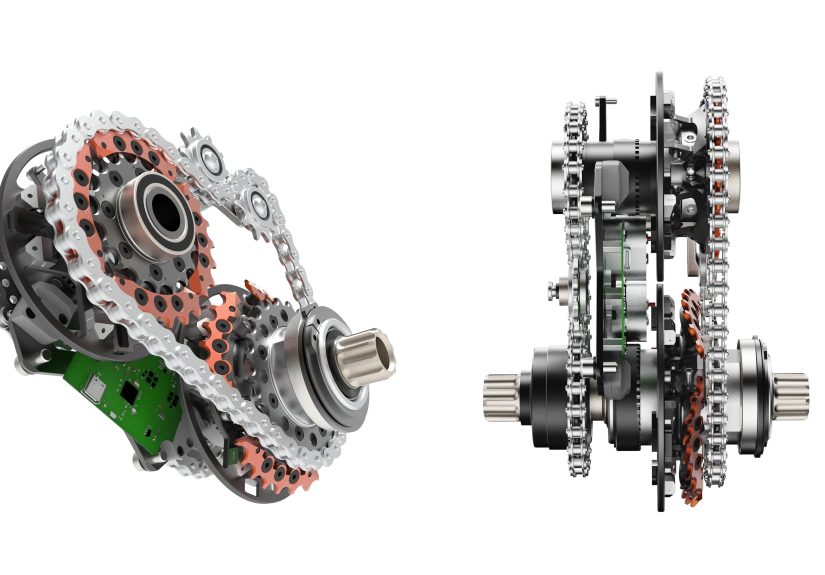
The phrase refers to a prototype gearbox concept known as the HiT, short for Hinged Transmission. Instead of using a conventional derailleur to move the chain across a cassette, the system changes the size of the gear the chain is running on. In simple terms, sections of the outer gear fold away in sequence, revealing a smaller inner gear. The chain stays in line while the effective gear ratio changes.
That may sound like a magic trick, but the logic is wonderfully mechanical. Think of one gear hiding inside another. The larger gear is split into hinged segments, and those segments pivot out of the way at precisely timed moments. Once those sections fold down, the chain begins running on the smaller diameter gear. The chain does not need to hop sideways across multiple cogs, and the drivetrain can keep a constant chainline through every ratio.
That constant chainline is a big deal. Traditional derailleurs work by asking the chain to move laterally across the cassette. That gives riders a huge range of gears, but it also introduces chain angle, wear, adjustment sensitivity, and the occasional soundtrack of expensive sadness. A folding gearbox aims to reduce those headaches by keeping the chain straight and letting the transmission do the clever work internally.
Why Engineers Keep Chasing the Gearbox Dream
Gearboxes are appealing because they solve several bicycle problems at once. First, they move complexity into a sealed housing, which protects internal components from rain, grit, road salt, and trail grime. Second, they centralize weight near the bottom bracket area instead of leaving a derailleur and cassette hanging at the rear wheel. Third, they pair naturally with a single front and single rear sprocket, which opens the door to cleaner layouts and even belt drives.
That last point matters more than it may seem. A straight chainline or belt line usually means lower external drivetrain wear and less maintenance. It also means fewer exposed parts waiting to get bashed by rocks, bent in transit, or turned into modern sculpture by one bad parking-lot tip-over. Commuters love that idea. Cargo bike riders love it even more. Mountain bikers, especially those riding in mud, are practically writing thank-you notes already.
Existing systems show why this category keeps gaining attention. Internal gear hubs offer weather protection and the ability to shift while stopped. Crank-based gearboxes such as Pinion move the gearing to the center of the bike and promise long service intervals. Newer hybrid approaches, like the Classified hub, target performance riders by using internal gearing to expand ratios while keeping the external drivetrain simpler and straighter. The cycling industry has clearly decided that the derailleur is excellent, but also not sacred.
How the Folding Gearbox Stands Apart
The folding concept feels fresh because it does not behave like a normal gearbox or a normal derailleur. A classic bicycle gearbox generally relies on internal gears, clutches, or planetary arrangements to create different ratios. A derailleur moves the chain between physically separate sprockets. The hinged transmission concept sits somewhere in between. It still uses a chain inside the system, but the ratio change happens because the gear itself changes form.
That gives it several intriguing theoretical benefits. One is shifting under load. Riders know the usual rule: ease up a little when you shift or risk an ugly crunch. The folding approach is designed to keep working even when power is still going through the drivetrain. For real-world riding, that could be huge. Think of a steep climb when momentum is fading, or a city intersection where the light changes at the exact moment you realize you are in the wrong gear. A system that shifts cleanly without asking for a ceremonial pause could feel almost unfair.
Another advantage is packaging flexibility. Because the input and output do not always need to sit in exactly the same layout as a traditional drivetrain, designers can imagine more creative frame solutions. For mountain bikes, that could work well with certain suspension layouts, including bikes that want the drive output positioned differently. For pavement, commuter, and cargo bikes, it could allow very clean frame integration.
The concept is also modular. In prototype form, it has been presented as configurable from four to sixteen speeds, depending on how many gear clusters are used. That means one basic idea could potentially be scaled for a practical commuter, a burly cargo bike, or a trail-focused machine.
Why a Straight Chainline Matters More Than Marketing Departments Think
“Straight chainline” can sound like the kind of phrase invented by someone who alphabetizes their Allen keys. But it matters. Chain angle affects friction, noise, and wear. With modern wide-range drivetrains, the chain often runs at noticeable angles in the easiest and hardest gears. That is normal, but it is not ideal. A straighter drivetrain usually runs more calmly and tends to treat components with a little more kindness.
There is also an efficiency angle. Derailleur systems are still very hard to beat when they are clean, properly adjusted, and running in favorable gears. But gearbox-style systems have improved, and some newer internally geared solutions are pushing efficiency numbers that would have seemed ambitious not long ago. Even when a gearbox is slightly less efficient on paper, many riders will accept the trade if it buys reliability, reduced maintenance, better all-weather performance, and the ability to shift in situations where a derailleur gets grumpy.
That trade-off is important because bicycles are not ridden in laboratories. They are ridden through rain, dust, potholes, grocery runs, missed turns, panic shifts, bike racks, and chaotic trail chatter. Riders do not always care whether the drivetrain is theoretically fastest at 250 watts on a test rig. Sometimes they just want the bike to shift properly after being neglected for three weeks and leaned against a brick wall.
Where a Folding Gearbox Could Shine First
Urban and commuter bikes
This may be the easiest win. Commuters value reliability, quiet operation, low maintenance, and the ability to shift at stoplights. A gearbox that stays sealed, uses a constant chainline, and possibly works with belt drive starts sounding like a dream bike for people who ride to work rather than to win arguments online.
Cargo bikes
Cargo bikes place high loads on drivetrains and are often used by riders who care deeply about function and not at all about shaving a few grams. Smooth shifting under load would be a real advantage here. When a bike is loaded with kids, groceries, or enough hardware-store lumber to alarm nearby drivers, a calm and robust transmission is not a luxury. It is sanity preservation.
Mountain bikes
Off-road riding adds impacts, mud, and terrain-induced drama. A protected drivetrain with centralized mass has obvious appeal, and gearbox downhill bikes have already gained momentum in elite circles. A folding gearbox that keeps the chainline fixed while moving complexity away from trail hazards could fit naturally into that conversation, especially if it proves durable and compact enough.
E-bikes
This may be where the concept gets especially interesting. E-bikes place serious torque through the drivetrain, and that can accelerate wear on chains, cassettes, and derailleurs. A compact gearbox that can be paired or integrated with a mid-drive system could offer a cleaner long-term solution. If the folding architecture scales well, e-bikes could be the category that turns clever engineering into actual mainstream adoption.
The Catch: Because There Is Always a Catch
For all the excitement, this remains prototype territory. And prototype territory is where big promises go to meet boring realities like cost, tolerances, manufacturing complexity, service networks, and consumer expectations.
First, there is size and weight. Even promising gearbox concepts need to be packaged tightly enough to fit real bikes without creating weird ergonomics or turning the bottom bracket area into a lunchbox. The system shown so far is polished, but the production-friendly version still has a lot to prove.
Second, there is efficiency. Early estimates for systems like this may look encouraging, especially with a straight chainline and chain-driven internals, but independent lab testing matters. Cyclists are famously forgiving about almost everything except mysterious watt loss. Tell riders they need proprietary mounts, software, and a new frame standard, and they might nod politely. Tell them the system steals free speed, and suddenly they become constitutional lawyers.
Third, there is repairability and ecosystem support. Derailleurs are everywhere. Shops understand them, riders understand them, and replacement parts are widely available. New gearbox systems must either be easy to service or backed by brands that can provide strong support. Otherwise, the first mechanical issue turns innovation into a very expensive paperweight.
Finally, there is cost. Advanced transmissions rarely arrive wearing a bargain sticker. That does not make them bad, but it does shape who adopts them first. Premium commuters, cargo platforms, high-end e-bikes, and niche mountain bikes are the most likely early homes for this kind of technology.
Why This Idea Still Matters
The folding gearbox matters because it expands the design conversation. It suggests that bicycle shifting does not have to be limited to the same old question of “How do we move the chain better?” Instead, it asks, “What if we hardly moved the chain at all?” That shift in thinking opens new paths in frame design, drivetrain integration, maintenance philosophy, and rider experience.
It also reflects where the bicycle industry is heading. More riders want bikes that behave like durable appliances without losing the joy of good performance. They want fewer adjustments, longer service intervals, cleaner drivetrains, and shifting that works when the weather is bad and the rider is tired. In other words, they want the bike to act less like a diva and more like a trusted daily tool.
The derailleur is not going away tomorrow. It is too good, too established, and too cost-effective. But the rise of internal gear hubs, modern gearboxes, smart shifting, belt drives, and concepts like folding cogs shows that bicycle transmission design is finally having a very lively midlife crisis. And honestly, it looks great on it.
Experiences Related to “Bicycle Gearbox Does It By Folding”
The most useful way to think about rider experience with a folding gearbox is not as a laboratory graph, but as a string of ordinary cycling moments. Imagine rolling toward a red light on a wet morning commute. With a traditional drivetrain, you might forget to downshift, stop in too hard a gear, and then lurch away from the line like a shopping cart with stage fright. A gearbox-style system changes that experience. Because internally geared systems can often shift while stationary or under less-than-perfect conditions, the bike feels calmer and more forgiving. You spend less attention on drivetrain etiquette and more on traffic, cadence, and arriving to work without chain tattoos on your pants.
Now picture a steep climb. Anyone who has mistimed a shift under pressure knows the feeling: legs loaded, heart rate rising, and then that awful split second when the gear change hesitates and your momentum evaporates. The promise of a folding gearbox is that the shift itself is less dependent on moving the chain sideways under stress. In practical terms, that could make climbing feel smoother and more predictable. Not easier, exactly; your legs still have to file the paperwork. But the bike stops acting like it wants a committee meeting before every shift.
Trail riding offers a different kind of appeal. Mountain bikers deal with mud, vibration, chain slap, bent hangers, and the occasional rock that appears to have personal issues with rear derailleurs. A sealed transmission with centralized mass and fewer exposed parts changes the emotional tone of the ride. You worry less about clipping the wrong thing, and the bike can feel tidier underneath you. That matters on rough trails, where confidence and consistency are half the battle.
There is also a quieter, less glamorous experience that deserves attention: maintenance. Many riders love tinkering. Many more would rather not spend Saturday adjusting a drivetrain because last weekend’s rain ride turned it into a crunchy science project. Systems built around a straight chainline, sealed gearing, and fewer exposed shifting components can reduce that maintenance burden. That may not sound romantic, but for daily riders it is wonderful. “It just works” is one of the most underrated performance features in cycling.
And then there is the fun factor. Mechanical novelty has its own charm. A folding gearbox is the kind of idea that makes bike nerds lean in, squint, and grin. It is unusual without being pointless. If it reaches production in a refined form, the experience of using one would likely feel part futuristic gadget, part old-school engineering satisfaction. You would not just be riding a bike; you would be riding a machine that solves a familiar problem in an entirely different way. That is the kind of innovation cyclists remember, especially if it delivers not only cleverness, but calm, confidence, and miles of trouble-free riding.
Conclusion
The folding bicycle gearbox is not just a flashy mechanical parlor trick. It is a serious attempt to rethink how shifting happens on a bicycle. By changing ratio through hinged gear segments rather than lateral chain movement, it aims to combine the cleanliness of internal gearing with the responsiveness riders expect from modern drivetrains. That is an ambitious target, and plenty of hard work remains between prototype excitement and production reality.
Still, the concept deserves attention. It answers real rider frustrations: fragile external shifting, messy maintenance, poor behavior under load, and the limits of conventional chain movement. If the engineering, packaging, efficiency, and service support all come together, this style of drivetrain could become especially compelling for commuters, cargo bikes, e-bikes, and even certain mountain bikes. The derailleur remains king for now, but the crown is no longer sitting quite as comfortably.
Note: This version is formatted as body-only HTML for direct web publishing and intentionally omits inline source links.