Table of Contents >> Show >> Hide
- What Makes These “Supreme” Biscuits?
- Biscuits Supreme Ingredients
- Equipment You’ll Actually Use
- Step-by-Step: How to Make Biscuits Supreme
- Pro Tips for Flaky, Tall, Tender Biscuits
- Easy Variations (Because Biscuits Love Options)
- Serving Ideas: Where Biscuits Go to Shine
- Storage, Freezing, and Make-Ahead
- Troubleshooting: Fixing Common Biscuit Problems
- Biscuits Supreme: A Quick Recipe Card
- Experience Notes: The Real-Life Road to “Supreme” (500+ Words)
- Conclusion
If you’ve ever bitten into a biscuit so tall, flaky, and buttery that it made you pause and whisper, “Okay, wow,”
you already know the goal. A Biscuits Supreme recipe isn’t just “a biscuit recipe.” It’s a warm,
golden, steam-puffed flex that says: I understand butter, and butter understands me.
The good news: supreme biscuits don’t require a culinary degree, a secret Southern handshake, or a grandmother named
“Miss Pearl.” They require cold fat, gentle handling, and a hot oven. That’s it. The rest is vibes
and a pastry cutter (or two forks you found in the drawer after a brief argument with the whisk).
What Makes These “Supreme” Biscuits?
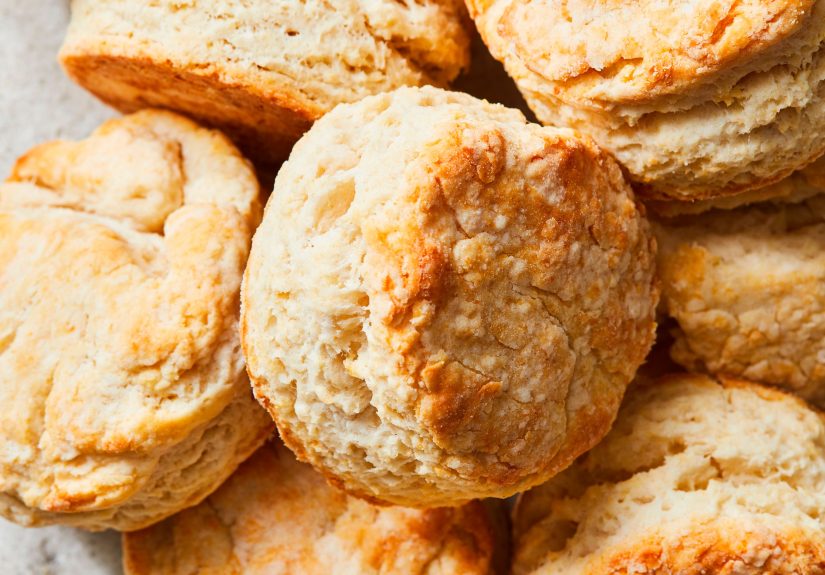
Supreme biscuits hit that rare triple-crown: flaky layers, tender crumb, and
big rise. This recipe borrows the best ideas from America’s most reliable biscuit nerds:
keep ingredients cold, don’t overwork the dough, and use a simple folding technique that creates layers like a
low-effort croissant’s charming cousin.
The Supreme Biscuit Checklist
- Cold butter + cold buttermilk: butter stays in pieces, melts in the oven, and creates steam pockets.
- Minimal mixing: less gluten = less chew = more “oh my gosh.”
- Folds for layers: a few quick folds = flaky strata without drama.
- High heat: you want lift fast, not a slow sauna.
Biscuits Supreme Ingredients
This makes about 8 tall biscuits (2.5–3 inches). If you’re feeding a crowd, double itbiscuits have
a mysterious ability to disappear even when no one “had that many.”
Dry Ingredients
- 2 cups (240g) all-purpose flour, plus extra for dusting
- 1 tablespoon (12g) baking powder
- 1/2 teaspoon baking soda
- 1 teaspoon kosher salt (or 3/4 teaspoon fine/table salt)
- 1 tablespoon sugar (optional, for balance and browning)
Cold Ingredients
- 6 tablespoons (85g) unsalted butter, very cold (freeze 10–15 minutes if your kitchen is warm)
- 3/4 cup (180g) buttermilk, very cold, plus 1–3 tablespoons more if needed
For Finishing
- 1–2 tablespoons melted butter (for brushing tops)
- Optional: flaky salt, cracked pepper, or a drizzle of honey right before serving
Equipment You’ll Actually Use
- Large mixing bowl
- Pastry cutter (or your fingertips, or two forks)
- Bench scraper (nice) or a spatula (fine)
- Baking sheet lined with parchment (or a preheated cast-iron skillet)
- Biscuit cutter (2.5–3 inch) or a knife for square biscuits
Step-by-Step: How to Make Biscuits Supreme
1) Preheat like you mean it
Heat oven to 450°F. If you’re using cast iron, place the skillet in the oven while it preheats.
A properly preheated oven is one of the fastest paths to tall, flaky biscuits.
2) Mix the dry ingredients
In a large bowl, whisk together flour, baking powder, baking soda, salt, and sugar (if using).
Whisking distributes the leaveners evenly, which helps your biscuits rise without random “tunnels of sadness.”
3) Cut in the butter (keep it cold!)
Cut cold butter into small cubes (or grate it on the large holes of a box grater). Add to the flour mixture and cut
in with a pastry cutter until you have pea-sized pieces plus some smaller bits.
Think: gravel at the beach, not sand at a playground.
4) Add cold buttermilk and form a shaggy dough
Pour in 3/4 cup cold buttermilk. Stir gently with a fork or spatula until it looks shaggy and
most of the flour is moistened. If the bowl still looks like a flour desert, drizzle in 1 tablespoon more at a time.
The dough should look a little messylike it hasn’t fully committed to being dough yet.
5) The “Supreme” folds (quick layers, big payoff)
Lightly flour your counter. Turn out the dough and gently press it into a rough rectangle about 3/4-inch thick.
Fold it like a letter (thirds), rotate 90 degrees, press gently, and fold again.
Do this 2–3 total folds. Don’t knead. Don’t overthink. We’re building layers, not biceps.
6) Cut biscuits (no twisting!)
Pat dough into a final rectangle about 3/4 to 1 inch thick. Cut with a floured biscuit cutter:
press straight down and lift straight up. Don’t twist, or you can seal the edges and limit rise.
Want even more “supreme” energy? Cut square biscuits with a knife to avoid re-rolling scraps.
7) Arrange for height
For taller biscuits, place them close together on the pan so they gently support each other as they rise.
If you prefer crisper sides, space them out.
8) Bake hot and fast
Bake at 450°F for 12–16 minutes, until the tops are golden and the layers look like
they’re trying to show off. Brush with melted butter right after baking (or halfway through if you like extra gloss).
Pro Tips for Flaky, Tall, Tender Biscuits
Keep ingredients cold (yes, again)
Warm butter melts into flour too early, which can lead to flatter biscuits. If your kitchen is hot, chill your bowl,
pop the butter back in the freezer, or pause the dough in the fridge for 10 minutes before baking.
Measure flour the smart way
If you scoop flour straight from the bag, you can pack in extra and end up with dry dough. If possible,
spoon flour into your measuring cup and level it off, or use a kitchen scale for consistent results.
Don’t overmix
Overmixing develops gluten. Gluten is great in chewy bread, but in biscuits it can turn “cloud-soft” into “hockey puck.”
Stop mixing once the dough comes togethercrumbly is okay.
Easy Variations (Because Biscuits Love Options)
Cheddar Supreme Biscuits
Add 1 cup shredded sharp cheddar and 1 tablespoon chopped chives to the dry mix.
Reduce buttermilk by 1 tablespoon if the cheese seems moist. Brush tops with butter and a pinch of garlic powder.
Honey-Buttermilk Supreme
Add 1 tablespoon honey to the buttermilk before mixing. It gives subtle sweetness and extra browningperfect for
breakfast sandwiches or “I’m just eating these plain and proud.”
3-Ingredient “Emergency Supreme” (Self-Rising Flour Shortcut)
If you have self-rising flour, you can simplify: self-rising flour + cold fat (butter/shortening) + cold buttermilk.
It won’t be identical to the full “supreme” build, but it’s shockingly good when time is not your friend.
Serving Ideas: Where Biscuits Go to Shine
- Classic: butter + jam, or butter + honey (simple, undefeated)
- Savory: sausage gravy, fried egg + cheese, ham, or chicken
- Soup sidekick: chili, chicken stew, or any bowl of comfort that needs a buttery hat
- Dessert-adjacent: split and top with berries + whipped cream for a quick shortcake moment
Storage, Freezing, and Make-Ahead
Storing baked biscuits
Keep baked biscuits in an airtight container at room temperature for 1–2 days.
Rewarm in a 350°F oven for 5–8 minutes to bring back the magic.
Freezing baked biscuits
Cool completely, wrap tightly, and freeze up to 2–3 months. Reheat from frozen at 350°F for 12–15 minutes.
Freezing unbaked biscuits (my favorite “future me” trick)
Cut biscuits, place on a tray, freeze until firm, then store in a freezer bag. Bake from frozen at 450°F,
adding 2–4 minutes to the bake time. Fresh biscuits on a random Tuesday feels like cheating at life.
Troubleshooting: Fixing Common Biscuit Problems
“Mine came out flat.”
- Butter got warm before baking (chill dough briefly next time).
- Leavening was old (baking powder/soda lose strength over time).
- Oven wasn’t fully preheated (give it time; use an oven thermometer if yours runs sneaky).
- Dough was rolled too thin (aim 3/4–1 inch thick).
“Mine were tough.”
- Dough was overmixed or kneaded (stop sooner; shaggy is fine).
- Too much flour added while shaping (use a light dusting, not a snowstorm).
“They didn’t rise evenly.”
- Butter pieces were too small (you want pea-size chunks for steam pockets).
- Cutter was twisted (press straight down).
- Biscuits were spaced too far apart (closer placement can encourage upward lift).
Biscuits Supreme: A Quick Recipe Card
Ingredients
- 2 cups (240g) all-purpose flour
- 1 tbsp baking powder
- 1/2 tsp baking soda
- 1 tsp kosher salt (or 3/4 tsp fine salt)
- 1 tbsp sugar (optional)
- 6 tbsp (85g) cold unsalted butter
- 3/4 cup (180g) cold buttermilk, plus a little more if needed
- Melted butter for brushing
Directions
- Preheat oven to 450°F. Line a baking sheet with parchment (or preheat a cast-iron skillet).
- Whisk dry ingredients in a bowl.
- Cut in cold butter until pea-size pieces remain.
- Stir in cold buttermilk until a shaggy dough forms.
- Turn out, pat into a rectangle, fold in thirds 2–3 times.
- Pat to 3/4–1 inch thick. Cut biscuits (don’t twist).
- Bake 12–16 minutes until golden. Brush with melted butter.
Experience Notes: The Real-Life Road to “Supreme” (500+ Words)
Here’s the funny thing about biscuits: the first time you try to make them, you think they’re going to be fussy
like macarons, or taxes. Then you realize biscuits are more like a friendly golden retriever: they just want you to
treat them kindly and not yell at them with a rolling pin.
My earliest “biscuit phase” (the one where you suddenly believe you should bake biscuits every weekend) taught me the
most important lesson fast: temperature is everything. I used to leave butter on the counter because
that’s what you do with butter for cookies, right? Wrong category. In biscuits, warm butter is basically a villain in
a tiny cape. The dough gets greasy, the flour absorbs fat too soon, and the biscuits bake up flatter than your phone
battery at 2% with no charger. Once I started keeping the butter coldsometimes even freezing it for a few minutes
the rise improved immediately. Suddenly I had layers instead of “biscuit-flavored bread discs.”
The second lesson came from the way biscuit dough looks. Biscuit dough is not supposed to be smooth and
perfect like pizza dough. It’s shaggy. It’s a little crumbly. It looks like it’s still deciding whether it wants to be
dough or just a pile of ingredients with trust issues. Early on, I kept “fixing” it by mixing more. And more.
And thensurprisemy biscuits turned tough. Now I stop mixing earlier than my instincts want to. If the dough holds
together when I squeeze it, I move on. The oven finishes the job.
Then there’s the folding. The first time someone told me to “fold the dough like a letter,” I pictured stationery,
sealing wax, and a tiny monocle. But it’s actually the easiest upgrade you can make. A couple quick folds create
obvious layers without needing fancy lamination skills. It’s the baking equivalent of taking a basic outfit and adding
a good jacket: the whole thing suddenly looks intentional. When I started folding 2–3 times, the biscuits became
pull-apart flaky in a way that made people ask, “Where did you buy these?” (The correct answer is: “From my oven,
thank you.”)
Another very real biscuit moment: the biscuit cutter twist. I used to twist the cutter because it felt satisfying,
like you were “locking in” the shape. It turns out that twisting can compress the edges and mess with the rise.
The first batch I cut without twisting looked taller and more evenlike they finally had permission to become their
best selves. Small change, big difference.
And let’s talk about the emotional experience of pulling biscuits from the oven. When they’re done right, they look
like little golden towers with visible layers at the sides. You brush them with melted butter (which immediately soaks
in like the biscuit was waiting for it), and suddenly the kitchen smells like a Southern breakfast restaurant that
charges extra for “house-made jam.” These are the moments you realize biscuits aren’t just foodthey’re a mood.
Over time I’ve learned to bake biscuits for different situations: tight together on the pan when I want extra lift,
spaced apart when I want more crisp edges. I’ve also learned that leftover biscuits are not a problem; they’re an
opportunity. Split one, toast it, add an egg and cheese, and you’ve got a breakfast sandwich that feels way too good
for a weekday. Crumble one over a bowl of stew, and you’ve got comfort with a buttery bonus. Even the “not perfect”
biscuits still taste greatbecause butter and flour are basically best friends.
That’s why this Biscuits Supreme recipe is worth keeping in your back pocket. It’s dependable, it’s
adaptable, and it’s the kind of thing you can make once and then casually become “the biscuit person” in your circle.
Just be warned: once people find out, they will request biscuits. Often. Happily.
Conclusion
Supreme biscuits are the sweet spot between technique and simplicity: cold butter, cold buttermilk, gentle mixing,
quick folds, and a hot oven. Master those, and you’ll get tall, flaky biscuits that work for breakfast, dinner, and
every “I need comfort food immediately” moment in between. Keep the dough chill, keep your hands light, and let the
oven do the heavy lifting.