Table of Contents >> Show >> Hide
- Start With the Patio’s Job Description
- Choose the Right Location Before You Fall in Love With a Layout
- The Foundation Is the Least Glamorous Part and the Most Important
- Pick the Right Patio Material for Your Style and Maintenance Tolerance
- Size and Shape Matter More Than Most People Expect
- Design in Zones So the Patio Feels Like a Real Outdoor Room
- Add the Comfort Layer: Shade, Lighting, and Furniture
- Use Plants to Soften the Edges and Bring the Patio to Life
- Budget Smart by Spending on the Bones First
- Common Patio Mistakes to Avoid
- Real-World Experiences: What People Learn After the Patio Is Built
- Conclusion
A great patio does not begin with a chair set, a string of café lights, or an overly ambitious vision board titled Outdoor Oasis 2.0. It begins with the building blocks: purpose, placement, structure, material, comfort, and style. Get those right, and even a simple patio can feel like your favorite “room” in the house. Get them wrong, and you end up with a very expensive slab where pollen goes to party.
The perfect patio is not necessarily the biggest, fanciest, or most expensive one on the block. It is the one that fits your home, your climate, your budget, and the way you actually live. Maybe you want a quiet place for morning coffee. Maybe you want room for burgers, birthday candles, and one relative who always drags in an extra folding chair. Maybe you want all of the above. The trick is designing a patio that works hard without looking like it is trying too hard.
Here is how to build a patio that feels polished, practical, and pleasant enough to make your indoor sofa a little jealous.
Start With the Patio’s Job Description
Before you choose pavers, colors, or furniture, decide what the patio is supposed to do. This sounds obvious, yet it is the step people skip when they get distracted by pretty photos of fire pits and teak loungers. A patio without a clear purpose usually ends up feeling awkward, underused, or cluttered.
Ask these questions first
Will the patio be used mostly for dining, lounging, entertaining, grilling, or all four? Do you need room for a dining table, a conversation set, or a solo chair and side table? Will kids play there? Will pets treat it like their royal court? Are you trying to create a sun-soaked hangout, a shady retreat, or a flexible space that can swing both ways?
When you define the patio’s purpose early, every other choice gets easier. Size becomes more logical. Layout becomes more efficient. Even your material choice becomes smarter, because a patio for frequent entertaining may need a sturdier, easier-to-clean surface than one meant mainly for decorative charm.
Choose the Right Location Before You Fall in Love With a Layout
Even the best patio design can flop if it is placed in the wrong spot. Location affects comfort, drainage, privacy, access, and how often you will actually use the space. In other words, where you build matters almost as much as what you build.
Think about sunlight, wind, and daily flow
Watch your yard at different times of day. A patio that is lovely at 8 a.m. may become a heat trap by 3 p.m. If your yard gets intense afternoon sun, build in shade from the start with an umbrella, pergola, awning, or nearby tree canopy. A patio without shade in peak summer is less “outdoor living” and more “stylish roasting tray.”
You should also think about how people move through your yard. The best patios feel connected to the house, not marooned in the distance like a decorative island. If you grill often, proximity to the kitchen matters. If you host frequently, a natural flow between indoor and outdoor spaces makes the patio feel larger and more useful.
Privacy matters, too. A perfect patio should feel open, not exposed. Fences, hedges, planters, lattice screens, and layered greenery can create enclosure without making the space feel boxed in.
The Foundation Is the Least Glamorous Part and the Most Important
If patio design had a villain origin story, it would usually begin with skipped prep work. The surface might look fine at first, but poor excavation, weak base layers, and bad drainage eventually lead to shifting pavers, puddles, weeds, and regret. Lots of regret.
Drainage is the quiet hero
A patio needs a gentle slope away from the house so water does not collect near your foundation or sit on the surface after rain. This is one of those boring details that turns out to be wildly important. A patio that drains well lasts longer, looks better, and is much safer to walk on.
If your yard already has drainage issues, do not pretend decorative pillows will fix them. Address grading first. In some cases, a drainage system, permeable materials, or extra base prep may be worth the investment.
The base layer is what keeps everything honest
For paver patios, the compacted base underneath the finished surface does the heavy lifting. It helps the patio resist settling, shifting, and seasonal movement. This is also where edge restraints matter. They are not exciting, but they help keep the perimeter crisp and the pavers from wandering over time.
In other words, the base is like good shapewear for your patio. Nobody comes over to compliment it, but everybody notices when it is missing.
Pick the Right Patio Material for Your Style and Maintenance Tolerance
Material choice is where beauty and practicality have to get along. Your patio surface should match your home’s style, your budget, and your willingness to maintain it. The “best” material is not universal. It depends on the vibe you want and the amount of upkeep you can tolerate without becoming resentful.
Concrete pavers
Concrete pavers are one of the most versatile options for patio design. They come in many shapes, colors, sizes, and finishes, which makes them easy to customize. They can look modern, rustic, traditional, or somewhere in the glorious middle. They are also durable and relatively easy to replace individually if one gets damaged.
Natural stone
Natural stone has an upscale, organic look that many homeowners love. Bluestone, flagstone, slate, and limestone each bring their own personality. Stone patios tend to feel timeless and high-end, though installation and material costs are usually higher. This is the option for people who want their patio to whisper elegance instead of shouting weekend project.
Brick
Brick works beautifully with traditional homes, cottage-style yards, and classic landscapes. It has warmth, character, and a sense of permanence. It can also age gracefully, which is a nice way of saying it often looks even better after it has had a little time to mellow out.
Gravel or decomposed granite
If you want a more casual, budget-friendly patio, gravel can be charming and surprisingly effective. It drains well and pairs beautifully with stepping stones, metal edging, and relaxed garden planting. The trade-off is maintenance. Loose materials can shift, scatter, and require touch-ups, especially in high-traffic areas.
When in doubt, match the patio material to both the architecture of your home and the mood you want to create. Sleek concrete suits modern spaces. Brick flatters traditional homes. Natural stone works with almost anything when used thoughtfully.
Size and Shape Matter More Than Most People Expect
A patio can be too small, too large, or just weirdly proportioned. The goal is not to fill every inch of the yard. The goal is to create enough usable space for the way you live while keeping the patio visually balanced with the house and landscape.
Do not build for the empty patio photo
Furniture takes up real space. So do pulled-out chairs, walking paths, planters, grills, and the general movement of human beings holding drinks. A patio that looks roomy on paper can feel cramped once real life moves in.
If you are building a small patio, smart scale is everything. Choose compact furniture, avoid oversized pieces, and think vertically with wall planters, trellises, or hanging lights. If you are building a larger patio, break it into zones so it does not feel like a giant blank stage waiting for a monologue.
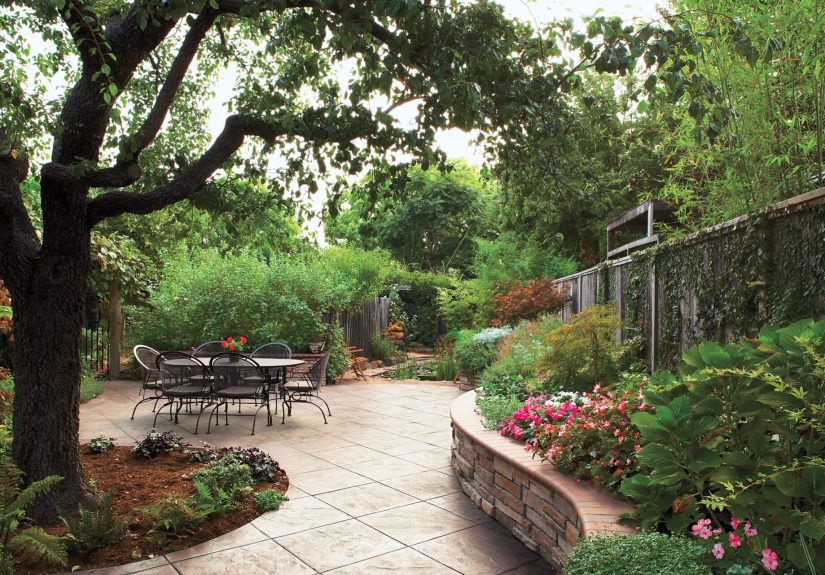
Shape matters, too. Square and rectangular patios often feel tidy and easy to furnish. Curved patios feel softer and more organic, especially in garden-heavy landscapes. Circular or semi-circular layouts can work beautifully around a fire pit or focal point. The best shape is the one that complements your yard, not the one that looked dramatic on page 37 of a catalog.
Design in Zones So the Patio Feels Like a Real Outdoor Room
One of the smartest ways to make a patio feel finished is to divide it into functional zones. This works on large patios, medium patios, and even smaller patios where one zone simply needs stronger definition.
Common patio zones that actually work
A dining zone gives structure and purpose, especially near the grill or kitchen door. A lounge zone invites conversation and relaxation with softer seating and a coffee table or fire feature. A transition zone, such as a border of planters or a walkway, helps connect the patio to the rest of the yard. In family spaces, a flexible zone can accommodate games, extra seating, or seasonal décor.
You do not need walls to create zones. Rugs, planters, furniture arrangement, lighting, and changes in material or pattern can all help visually organize the space. This is one reason paver patterns and borders are so effective. They give the patio subtle structure without making it feel busy.
Pick one anchor feature
Every great patio benefits from an anchor. It might be a dining table, a fire pit, a sectional, a water feature, or even a dramatic pair of oversized planters. An anchor helps the layout feel intentional. It gives your eye somewhere to land and keeps the space from feeling like a furniture showroom exploded outdoors.
Add the Comfort Layer: Shade, Lighting, and Furniture
Once the hardscape is right, comfort is what makes a patio irresistible. This is the layer that turns “nice backyard” into “where is everybody, and why are they all outside?”
Shade is not optional if you want real usability
Pergolas, umbrellas, retractable canopies, and covered patio structures all help make the space usable for longer stretches of the day. Shade also protects furniture, cushions, and guests who do not wish to leave a cookout looking like boiled lobsters.
Lighting extends the life of the patio
Good patio lighting should be warm, layered, and practical. String lights create ambiance. Wall sconces or mounted fixtures provide reliable illumination. Path lights improve safety. Lanterns, candles, and portable lamps add softness. The best patios glow; they do not glare.
Furniture should match the scale of the patio
One of the most common mistakes is buying furniture that is too large, too matchy, or too flimsy. Instead, choose pieces that fit the space and mix materials for a more collected look. Wood, metal, wicker, concrete, and stone can work beautifully together when the color palette is cohesive.
Layer in cushions, outdoor pillows, and a rug to make the patio feel like a real room. These elements also help soften hard surfaces and tie the design together.
Use Plants to Soften the Edges and Bring the Patio to Life
A patio without plants can feel a little sterile, like an outdoor waiting room with better snacks. Plants bring texture, movement, color, and privacy. They also help the patio blend into the landscape so it feels like part of the yard instead of a surface dropped into it.
Use containers to frame entrances, flank seating areas, or add height in corners. Mix upright plants, trailing plants, and flowering varieties for a layered look. Repeating a few plant types often looks more sophisticated than using one each of seventeen different species in a botanical speed-dating event.
If you want low-maintenance beauty, choose plants suited to your local climate and sun exposure. The perfect patio should not require daily emotional support from a watering can.
Budget Smart by Spending on the Bones First
If your budget is limited, put the money into the parts that are hardest to change later: site prep, drainage, materials, and layout. Those are the bones of the patio. You can always add accessories over time. It is much easier to buy planters next month than to rebuild a sinking corner next year.
Spend first on structural quality. Spend second on comfort. Spend third on styling. That order saves money and usually leads to better results.
Common Patio Mistakes to Avoid
Even a beautiful patio can miss the mark if a few key details go wrong. Watch out for these common mistakes:
- Making the patio too small for furniture and movement
- Ignoring slope and drainage
- Choosing materials that clash with the house
- Forgetting shade in hot climates
- Using only one type of lighting
- Skipping privacy planning
- Overdecorating before the layout is solved
- Buying a full matching furniture set with the personality of an airport lounge
The perfect patio is usually the result of restraint as much as creativity. A few smart choices will outperform a dozen random ones every time.
Real-World Experiences: What People Learn After the Patio Is Built
One of the most common experiences homeowners talk about after finishing a patio is that they wish they had made it slightly bigger. Not dramatically bigger. Not “accidentally built a resort” bigger. Just enough bigger to account for chairs being pulled out, a grill lid opening, or guests gathering in a way that ignores your carefully measured floor plan. On paper, a patio can seem generous. In real life, people spread out, bags land on chairs, someone drags over a plant for “better ambiance,” and suddenly that extra breathing room would have been nice.
Another lesson people learn is that the patio becomes more useful when it feels connected to everyday life rather than reserved for special occasions. The homeowners who love their patios most are often the ones who made them easy to use on ordinary Tuesday evenings. They kept the grill close enough to the kitchen, chose furniture that did not require a full pep talk to maintain, and added lighting that made the space inviting even after sunset. A patio works best when it supports casual habits, not just picture-perfect weekends.
Shade comes up again and again in real-life patio stories. People fall in love with open-sky photos, then discover that direct afternoon sun turns the space into a no-go zone. The fix is often simple: an umbrella, pergola, shade sail, or strategic planting. But the larger point is that comfort determines use. A patio can be gorgeous and still sit empty if it is too hot, too bright, too windy, or too exposed.
Many homeowners also discover that mixing materials gives the patio more character than buying everything from one collection. A wood dining table paired with metal chairs, concrete planters, woven lanterns, and a simple outdoor rug often feels more relaxed and personal than a perfectly matched set. Real patios tend to look better when they evolve a little. They pick up personality over time.
Drainage is another lesson that shows up the hard way. People who invested in proper grading and base prep rarely brag about it at dinner parties, but they absolutely appreciate it after heavy rain. Meanwhile, patios that collect puddles or develop shifting corners become ongoing projects instead of peaceful retreats. It is the classic homeowner tale: the invisible details end up being the most important ones.
There is also a strong emotional side to a well-designed patio. Homeowners often describe it as the place where they start using their yard differently. Coffee moves outside. Weeknight dinners become a little slower. Friends linger longer. Kids sprawl out with snacks. Even people who thought they “weren’t outdoor people” suddenly become very interested in weather apps and citronella candles. A good patio changes behavior because it lowers the barrier to being outside.
Perhaps the most useful lesson of all is that the perfect patio is rarely finished in one shot. It usually starts with the hardscape and a few essentials, then improves over time. A planter here, better lighting there, a privacy screen next season, cushions when the old ones finally surrender. That gradual layering often creates the most natural, inviting result. So if your patio is functional now but not fully styled yet, that is not failure. That is how good outdoor spaces grow up.
Conclusion
Building the perfect patio is really about building the right foundation for outdoor living. Start with purpose. Choose the best location. Prioritize drainage and structure. Pick materials that fit your home and your habits. Then layer in comfort, greenery, lighting, and personality. That is how you create a patio that looks beautiful in photos but works even better in real life.
At its best, a patio becomes more than a backyard feature. It becomes a place to gather, unwind, eat, celebrate, and occasionally pretend you are the sort of person who always remembers to water the basil. And honestly, that is pretty close to perfect.