Table of Contents >> Show >> Hide
- Why the Media Mixes Celebrities Up (Even When They Really Shouldn’t)
- Celebrity Pairs the Media Has Mixed Up (And the Stories That Prove It)
- Keira Knightley & Natalie Portman
- Jessica Chastain & Bryce Dallas Howard
- Amy Adams & Isla Fisher
- Zooey Deschanel & Katy Perry
- Dylan McDermott & Dermot Mulroney
- Will Ferrell & Chad Smith
- Rupert Grint & Ed Sheeran
- Daniel Radcliffe & Elijah Wood
- Jeffrey Dean Morgan & Javier Bardem
- Margot Robbie & Jaime Pressly
- Mila Kunis & Sarah Hyland
- Jeff Bridges & Kurt Russell
- Michael Cera & Jesse Eisenberg
- Henry Cavill & Matt Bomer
- What These Celebrity Mix-Ups Say About Fame
- How to Tell Look-Alike Celebrities Apart Without Becoming a Human Spreadsheet
- Conclusion: The Mistaken-Identity Hall of Fame Isn’t Closing Anytime Soon
- Experiences and Moments That Make Celebrity Mix-Ups Feel Weirdly Personal (Bonus Section)
Hollywood has done a lot for humanity: it gave us unforgettable movies, iconic red carpet looks, and the comforting knowledge
that no matter how chaotic your day gets, somewhere out there an entertainment headline is confidently naming the wrong person.
That’s not shadeit’s basically a job hazard in an industry where half the population shares the same stylist, the same lighting,
and (on award nights) the same facial expression: “Please don’t let me trip.”
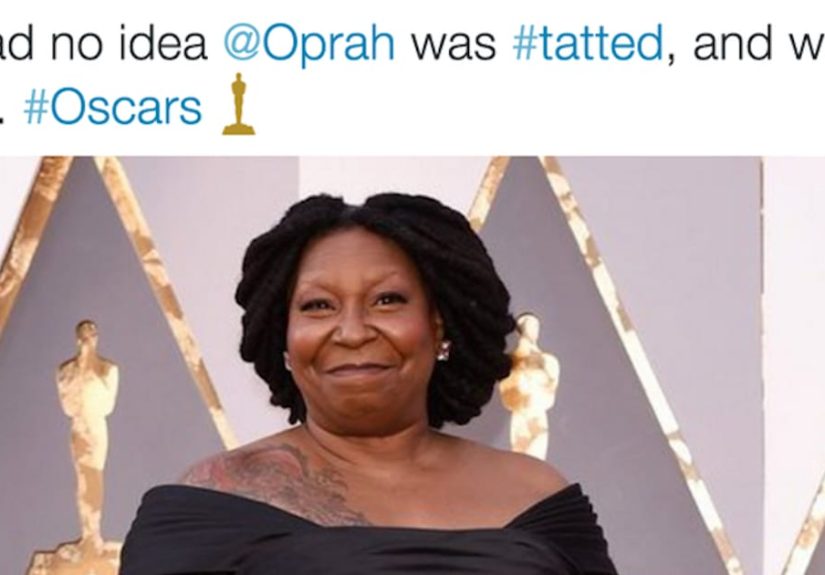
Celebrity mix-ups aren’t just a “fans on Twitter” thing. They show up in photo captions, quick-hit headlines, TV chyrons,
and rushed social posts. Sometimes it’s a harmless oops. Sometimes it’s a full-on identity swap that follows someone for years.
And sometimes the celebrities themselves lean into it, because if the internet is going to be weird, you might as well charge rent.
Why the Media Mixes Celebrities Up (Even When They Really Shouldn’t)
1) Speed beats accuracy (until it doesn’t)
Entertainment news moves fast. A paparazzi photo drops, an editor needs a caption in seconds, and suddenly the “Who wore it best?”
question becomes “Who wore it, period?” When speed is the KPI, confusion becomes a recurring character.
2) Red carpet styling creates “twin moments” on purpose
Stylists chase trends. Photographers chase angles. And glam teams chase the same “camera-ready” formulassoft contour, glossy hair,
defined brows, and a dress color that looks expensive under flash. The result: different celebrities can land in the same visual lane,
especially in tiny thumbnails where nuance goes to die.
3) Similar names are a trap disguised as typography
Sometimes it isn’t even about faces. It’s names that are just close enough to make your brain autocorrectespecially when you’re scanning
a headline at 11:57 p.m. on deadline. (We’ll get to the Dylan/Dermot situation. Yes, it’s still happening. No, the universe has learned nothing.)
4) The “celebrity doppelgänger” phenomenon is real (and occasionally profitable)
When the public keeps comparing two people, media outlets eventually cover the comparisonand that coverage reinforces the idea. At that point,
the mix-up becomes a pop-culture loop: the more you hear it, the more you see it, the more you believe it, the more you mix them up.
Congratulations, you’ve joined the doppelgänger economy.
Celebrity Pairs the Media Has Mixed Up (And the Stories That Prove It)
Keira Knightley & Natalie Portman
This is the platinum standard of modern celebrity confusion. Their resemblance has been discussed for so long that it basically has its own
IMDb page. The mix-up got extra fuel from Star Wars history: both were tied to the same cinematic universe in the public imagination,
and that “I swear I’ve seen her before” feeling does the rest. Knightley has publicly joked about being mistaken for Portman, including moments
where strangers were extremely confident and extremely wrong. When even casual observers have “Padmé energy” on the brain, captions become risky.
Jessica Chastain & Bryce Dallas Howard
This pair isn’t just an internet memethere are real interviews where the mix-up is acknowledged openly. Chastain has talked about being confused
for Bryce Dallas Howard, including a story involving Ron Howard (yes, Bryce’s dad) mixing her up. That’s the kind of confusion that makes
journalists feel seen… and also slightly concerned. The two actresses have different screen presences, but on a red carpet photo? Their shared
“radiant redhead + classic features” combo can trigger instant misidentification.
Amy Adams & Isla Fisher
If celebrity confusion had a mascot, it would be these two. The resemblance is so famous it’s become a running gag in interviewsand Isla Fisher
has weaponized it with comedy. One of the most talked-about moments: Fisher once replaced her own face with Adams’s on a family holiday card
and people didn’t notice. That’s not just a look-alike situation; that’s an accidental field study on human perception. Add in red carpet hair
colors and similar facial structure, and you can see how a rushed caption writer could go, “Yep, that’s Amy,” and hit publish.
Zooey Deschanel & Katy Perry
The Deschanel/Perry confusion has been so mainstream that it became a storyline. The resemblance is strongest in certain erasdark hair, bold brows,
bright eyes, similar smileand the media has referenced it for years. Katy Perry has even discussed impersonating Deschanel early in her career,
which is both funny and deeply proof that the similarity is not in our imagination. When two public figures become “the same person” in the cultural
shorthand, it’s only a matter of time before a headline, caption, or TV segment leans too hard into the bit and accidentally becomes misinformation.
Dylan McDermott & Dermot Mulroney
This one is less “faces are identical” and more “names are trolling us.” The confusion has been acknowledged repeatedly in entertainment coverage,
and the two actors have leaned into it publicly. When your first names share most of the same letters and your last names sound like cousins,
the media doesn’t even need a photo to get it wrongjust a quick scroll and a tired editor. Their shared “handsome leading man” vibe doesn’t help,
but honestly the names are doing the heavy lifting here.
Will Ferrell & Chad Smith
What happens when a comedian and a rock drummer look like they were separated at birth and reunited by fluorescent studio lighting? You get a media
moment. Ferrell and Red Hot Chili Peppers drummer Chad Smith have leaned into their resemblance on late-night television, including a famously public
“who is who” bit that turned into a drum-off storyline. The reason it works is simple: they genuinely do look confusingly similar in certain photos,
and the media has treated it like a delightful glitch in the celebrity matrix.
Rupert Grint & Ed Sheeran
If you ever watched an Ed Sheeran video and briefly wondered why Ron Weasley was emotionally invested in the plot, you’re not alone. The resemblance
has been discussed widely, and both have acknowledged it in pop-culture interviews. The confusion is so common that it’s become a recurring joke:
fans spotting one in public and mentally filing it as the other. And because entertainment coverage loves a neat narrative, the “look-alike” angle
gets repeatedsometimes so often that people forget which one they actually saw.
Daniel Radcliffe & Elijah Wood
Here we have two beloved franchise faces with similar features who became famous at roughly the same cultural momentmeaning the comparison had years
to ferment into legend. Elijah Wood has discussed being mistaken for Daniel Radcliffe in interviews, and the topic has been covered as a long-running
pop-culture mix-up. Add in the fact that both are strongly associated with fantasy epics, and you get the perfect recipe for mistaken identity:
dark hair, expressive eyes, and a public that remembers “wizard/hobbit vibes” more than specific bone structure.
Jeffrey Dean Morgan & Javier Bardem
Some look-alike conversations are light and fluffy. This one is intense, brooding, and probably lit with a single dramatic lamp. Jeffrey Dean Morgan
has addressed comparisons to Javier Bardem publicly, noting how often he gets mistaken for him. It makes sense: both have strong facial features,
a similar “I have seen things” screen presence, and the kind of expressions that make casting directors whisper, “Yes. That guy. The dangerous one.”
For the media, one fast glance at a photo can become an instant identity swap.
Margot Robbie & Jaime Pressly
This pairing shows how the doppelgänger conversation can stretch across generations of fame. Jaime Pressly has addressed comparisons to Margot Robbie
in interviews, and media coverage has kept the conversation alive because, frankly, it’s uncanny in certain side-by-side shots. The confusion tends
to spike when styling overlaps: blonde hair, similar makeup choices, and that clean, symmetrical “leading role” face that reads as instantly familiar.
If a photo editor isn’t fully locked in, this is where mistakes happen.
Mila Kunis & Sarah Hyland
This is a great example of how the media mix-up isn’t always “they look identical” so much as “they share a vibe that your brain recognizes.”
Coverage has noted that Kunis and Hyland have been compared, and the story has even included them acknowledging the confusion. Age difference aside,
certain facial features (eyes, brows, smile) and similar camera-ready styling can trigger the “Wait, isn’t that…?” effect that leads to mislabels in
quick celebrity roundups.
Jeff Bridges & Kurt Russell
As actors age, facial hair, lighting, and “rugged charm” can compress distinct faces into the same mental folder. Jeff Bridges has talked about being
mistaken for Kurt Russell, including a story about signing a photo of Russell. That kind of anecdote is basically a media cautionary tale: if someone
can get close enough to ask for an autograph and still be wrong, imagine what can happen in a newsroom picking a photo for a slideshow at lightning speed.
Michael Cera & Jesse Eisenberg
This mix-up has been discussed for years in interviews and entertainment segments. They share a certain on-screen energysmart, anxious, slightly
bewilderedand their look can overlap in the public imagination. The media has treated the confusion as a recurring pop-culture joke, which only makes
it more “real” in people’s heads. When a comparison becomes a punchline, it doesn’t stay harmlessit becomes a shortcut, and shortcuts lead to mistakes.
Henry Cavill & Matt Bomer
Sometimes the resemblance conversation is less about constant media mistakes and more about repeated comparisons that prime the public (and, yes,
entertainment writers) to see one as the other in certain photos. Coverage has leaned into the “interchangeable basically” angle, especially when both
are styled with clean haircuts and sharp suits. If you’ve ever scrolled fast and thought, “Superman… but make it White Collar,” you understand
the hazard.
What These Celebrity Mix-Ups Say About Fame
The funny part of celebrity mistaken identity is obvious: two successful people accidentally sharing one public persona, like a timeshare nobody booked.
But there’s a more interesting layer underneath. Fame is visual. It’s often processed in fragmentsone photo, one headline, one clip. That means the
“idea” of a celebrity can become stronger than the details of the actual person.
Media mix-ups also reveal how quickly our brains sort faces into categories: “rom-com actress,” “serious prestige actor,” “red carpet brunette,”
“internet boyfriend,” “late-night funny guy.” Once someone fits the category, we stop looking closelyand that’s when a caption becomes confident fiction.
How to Tell Look-Alike Celebrities Apart Without Becoming a Human Spreadsheet
- Use voice and mannerisms: Watch a short clip. A still photo lies; a speaking voice usually doesn’t.
- Anchor to one signature role: Pick one “forever” character and connect it to the actor’s face.
- Check context: Movie premiere, TV appearance, music eventoften the setting makes the identity obvious.
- Don’t overtrust hair: Hair is the #1 identity thief. People change it. Wigs exist. Glam teams are mischievous.
- Be kind if you’re wrong: Nobody has ever looked cool insisting, “No, I’m positive you’re Katy Perry,” to Zooey Deschanel.
Conclusion: The Mistaken-Identity Hall of Fame Isn’t Closing Anytime Soon
Celebrity confusion is the intersection of human psychology and modern media speed. The public sees faces in flashes; the media publishes at warp speed;
and celebrities themselves sometimes play along because it’s easier than correcting the entire internet before breakfast. The result is a pop-culture
tradition that’s half comedy, half cautionary tale: if the world can mix up million-dollar faces under perfect lighting, it can definitely mix up the
rest of us under the fluorescent lights of the grocery store.
Experiences and Moments That Make Celebrity Mix-Ups Feel Weirdly Personal (Bonus Section)
If you’ve ever been absolutely certain you spotted a celebrity in the wildonly to realize your brain was running on vibes and caffeineyou already know
how these mix-ups happen. The funny part is that celebrity confusion isn’t just a spectator sport. The people living inside those faces experience it in
ways that are equal parts hilarious, awkward, and occasionally exhausting.
Take the “signature request problem.” When Jeff Bridges tells a story about signing a photo of Kurt Russell, that’s more than a jokeit’s a full social
situation where someone approaches with confidence, you don’t want to embarrass them, and suddenly you’re autographing someone else’s face like it’s a
perfectly normal Tuesday. It’s the polite version of identity theft: nobody gets hurt, but the paperwork is spiritually incorrect. Similarly, actors
like Daniel Radcliffe and Elijah Wood have had their resemblance discussed so long that it becomes part of their public narrative. That means they
don’t just get recognized; they get recognized as the wrong person, which is a special flavor of surreal. Imagine walking into a coffee shop and being
congratulated for defeating Sauron when you’re just trying to order an iced latte.
Some celebrities turn the confusion into comedy because it’s the only way to stay sane about it. Isla Fisher’s holiday card stuntswapping in Amy Adams’
face and watching people not noticeworks because it exposes the truth: most of us don’t look closely. We recognize a “type” and move on. It’s the same
reason rushed captions happen. If your mental checklist is “red hair + award-season lighting + elegant dress,” you might land on Amy Adams even if Isla
Fisher is standing right there, smiling politely while your brain misfiles her.
Then there’s the “media feedback loop” experience, where coverage creates the confusion it reports. Zooey Deschanel and Katy Perry are a perfect example:
once the look-alike conversation became mainstream, it showed up everywhereinterviews, entertainment segments, even storylines. Perry discussing
pretending to be Deschanel early in her career is the kind of anecdote that spreads because it’s so vivid. But it also reinforces the idea that they’re
basically interchangeable, so the next time a small photo pops up in someone’s feed, the misidentification feels almost inevitable. It’s not that people
can’t tell them apartit’s that the culture has trained them not to try.
A different kind of experience shows up with name confusion, where the “mistake” happens before anyone even sees a face. Dylan McDermott and Dermot
Mulroney have lived with the headline hazard for so long that it’s become a running joke in entertainment coverage. Their situation is a reminder that
media mistakes aren’t always visual; they can be linguistic. A writer types fast, autocorrect “helps,” and suddenly the wrong Dylan/Dermot is starring in
the wrong project in the public imagination.
And finally, there’s the fan experiencebecause audiences are part of this ecosystem. People don’t confuse Jessica Chastain and Bryce Dallas Howard
because they’re careless; they confuse them because they’ve seen both in glossy, similar contexts where styling overlaps. Fans don’t mix up Rupert Grint
and Ed Sheeran because they’re inattentive; they mix them up because both have been part of a pop-culture conversation that’s repeated for years, and our
brains are pattern machines. We love shortcuts. We love familiar shapes. We love a neat story. And sometimes that neat story is: “Those two are the same
person,” even when reality gently coughs and says, “No, actually.”
The healthiest takeaway isn’t “How dare anyone get this wrong?” It’s “Wow, perception is messy.” Celebrity mistaken identity is funny because it’s human.
It’s the moment you realize your brain doesn’t store faces like a high-resolution databaseit stores impressions. The media is made of humans, too, and
when deadlines hit, impressions sometimes win. The best we can do is slow down when accuracy matters, laugh when it’s harmless, and remember that if
you ever get mistaken for a celebrity, the correct response is to enjoy the momentthen immediately clarify before someone asks you to sign a photo of
somebody else.