Table of Contents >> Show >> Hide
- The White Lines Have a Boring Name: Contrails
- Why the Sky Sometimes Looks Like Graph Paper
- “But I Watched Them Spread Into Clouds!” Yep. That’s Still Normal.
- What Planes Actually Spray (Spoiler: Not You)
- So Why Does the Chemtrail Idea Feel So Convincing?
- Quick Myth vs. Fact
- How to Check What You’re Seeing (Without Becoming a Full-Time Sky Detective)
- How to Talk to Someone Who’s Genuinely Worried
- Conclusion
- of Real-World “Chemtrail” Moments (That Turn Out to Be Contrails)
If you’ve ever looked up, spotted a plane drawing bright white lines across the sky, and thought, “Welp, that’s definitely the government writing a prescription for my brain,” you’re not alone. The idea that aircraft are secretly spraying chemicals (“chemtrails”) has been floating around for decades. It’s also wrong.
What you’re seeing is almost always the much less dramaticand far more science-ything called a contrail (short for “condensation trail”). It’s basically a cloud that accidentally got a ride-share from a jet engine. And while contrails can have real environmental impacts (especially on climate), they’re not evidence of a hidden airborne spraying program.
The White Lines Have a Boring Name: Contrails
What contrails are actually made of
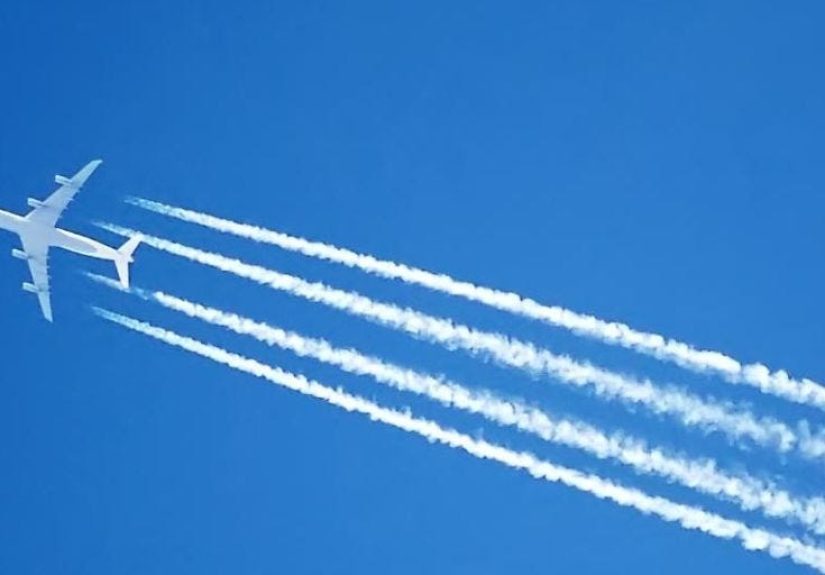
Modern jet engines burn fuel, producing exhaust that includes water vapor (plus a mix of other combustion byproducts). At high cruising altitudes, the air is cold enough that water vapor can condense and freeze quickly, forming tiny ice crystals. Those ice crystals reflect sunlight and show up as the bright white streaks you see from the ground.
Think of contrails like visible breath on a freezing day. Your breath always contains water vapor, but you only see it when the air is cold and humid enough for it to condense. Planes are doing the same trickjust 30,000 feet up, with a slightly more expensive scarf.
Why some disappear fast and others hang around like an uninvited guest
Here’s the part that fuels a lot of confusion: not all contrails behave the same way. Some vanish in seconds or minutes. Others linger for hours and spread out into wider, hazier cloud bands.
The difference comes down to atmospheric conditionsespecially humidity and temperature where the plane is flying. If the air is dry, the ice crystals sublimate (skip the “melting” step and go straight from solid to vapor), and the trail fades quickly. If the air is humidsometimes ice-supersaturated at those altitudesthe ice crystals can persist and even grow by pulling in moisture from the surrounding air. Same plane, same engine, same fueldifferent sky recipe.
Why the Sky Sometimes Looks Like Graph Paper
One of the most common “chemtrail” arguments is the pattern: crisscrossing lines, grids, parallel streaks, and “X marks the spot” shapes that look suspiciously organized.
The plot twist is that it is organizedby air traffic management, not secret sprayers. Commercial flights don’t wander randomly; they follow routes, corridors, and altitude “lanes” designed for safety and efficiency. When the atmosphere is primed for persistent contrails, you see those routes drawn in temporary ice-cloud ink.
Parallel lines and sudden “bursts” of trails
Sometimes you’ll notice multiple parallel contrails in the same part of the sky. That can happen when planes are flying along similar routes at similar altitudes (or when winds align the trails). Other times a sky can go from “clear” to “etched” quickly because the air mass changesmeaning contrails that would have evaporated yesterday can persist today.
“They turn on and off!”
Another popular claim is that trails start and stop abruptly, like someone flipped a switch. There’s a normal explanation: as a plane moves, it passes through pockets of air with different humidity and temperature. The trail can form in one region and not in another. From the ground, that can look like a clean on/off segmenteven though the “switch” is just the airplane crossing an invisible atmospheric boundary.
“But I Watched Them Spread Into Clouds!” Yep. That’s Still Normal.
Persistent contrails can spread out and blend into high, thin cirrus-like clouds. This is often called contrail cirrus. If you’ve ever watched a crisp line widen into a hazy veil over a couple of hours, you’ve basically seen meteorology doing a slow-motion magic trick.
Here’s what matters: spreading contrails are not proof of chemical spraying. They’re proof that the upper atmosphere can be humid enough to support long-lived ice clouds. That same atmosphere can also create natural cirrus clouds that look similar.
Contrails can affect climate (without being “chemicals”)
Now for a nuance that gets lost in the shouting: contrails are not harmless in every sense. While they aren’t secret toxins, they can influence Earth’s energy balance. High, thin ice clouds can trap outgoing heat (a warming effect), and they can also reflect incoming sunlight (a cooling effect). Overall, scientists estimate the net effect of persistent contrails and contrail cirrus is often warmingthough it varies by time of day, location, and weather patterns.
This is one reason researchers and aviation agencies study ways to reduce contrail impacts, such as adjusting flight paths or altitudes to avoid the most contrail-friendly air layers when feasible. The climate conversation here is realand it’s much more interesting than the fictional one.
A real-world example: the post-9/11 flight pause
After the September 11, 2001 attacks, commercial flights in U.S. airspace were grounded for several days. Researchers studied that brief period and reported an unusual increase in the average daily temperature range, attributing at least part of the change to the absence of persistent contrails. That doesn’t mean contrails are “poison”it means they can act like cloud cover and subtly change how heat moves in and out of the atmosphere.
What Planes Actually Spray (Spoiler: Not You)
It’s understandable that people ask, “Okay, but do planes ever spray anything?” Yessometimes, and usually at low altitudes, and usually in ways you can identify without needing a corkboard and red string.
Common legitimate spraying activities
- Agricultural application (crop dusting): aircraft may apply fertilizers or pesticides over farmland.
- Firefighting: planes and helicopters may drop water or fire retardant on wildfires.
- Cloud seeding (limited, localized weather modification): in some regions, approved programs disperse small particles (like silver iodide) to encourage precipitation under specific conditions.
Notice the theme: these are visible, regulated, mission-specific activities. They are not secret commercial jets cruising at 35,000 feet “spraying the population.” Also, the physics problem alone is a dealbreaker: if you wanted to deliver something to the ground efficiently, dispersing it into powerful high-altitude winds would be a spectacularly bad plan. (It’s like trying to mail a letter by throwing it into a hurricane and hoping it lands in the right mailbox.)
So Why Does the Chemtrail Idea Feel So Convincing?
Humans are pattern-finding machines. We see a weird-looking sky, we feel uneasy, and our brains reach for a story that fits the vibe. Add in:
- Confirmation bias (we notice what supports what we already suspect),
- Mistrust (sometimes earned, sometimes amplified),
- Viral misinformation (a screenshot spreads faster than a textbook),
- Real-but-different history (like documented weather modification experiments, which are not contrails),
…and suddenly contrails become a Rorschach test for fears about health, government, and the environment. In fact, the “chemtrails” idea has even shown up in political debates and proposed state legislation in recent yearsproof that a sticky myth can travel far, even without a boarding pass.
Quick Myth vs. Fact
Myth: “Chemtrails are different from contrails.”
Fact: The white streaks people point to are explained by normal contrail formation and atmospheric conditions. Large-scale secret spraying programs are not supported by evidence.
Myth: “They’re spraying because the trail stays for hours.”
Fact: Persistence depends on humidity and temperature at flight altitude. Some contrails dissipate quickly; others persist and spread into cirrus-like clouds.
Myth: “The trails make grids, so it must be planned.”
Fact: Flight routes are structured, and winds spread the trails. When conditions are right, you can “see” the map of air traffic.
Myth: “It’s geoengineering.”
Fact: Researchers do discuss geoengineering proposals (like solar radiation management), but that is not the same thing as everyday commercial contrailsand it is not being conducted as a secret jetliner program. Contrails are an unintended byproduct of flight.
How to Check What You’re Seeing (Without Becoming a Full-Time Sky Detective)
If you want to sanity-check a dramatic-looking contrail day, try these practical steps:
- Look at weather conditions aloft: High humidity at cruising altitudes makes persistent contrails more likely.
- Notice wind shear: Trails can drift and spread differently at different heights.
- Remember perspective: Two planes at different distances can look like they intersect or “cross at the same spot,” even when they’re miles apart.
- Don’t skip the boring answer: The most likely explanation is usually the right one.
How to Talk to Someone Who’s Genuinely Worried
If a friend or family member is anxious about “chemtrails,” coming in hot with “LOL that’s dumb” rarely helps. Try this instead:
- Start with the shared observation: “Yeah, the sky looks intense today.”
- Offer the mechanism: “Those lines are ice crystals from jet exhaust in cold, humid air.”
- Separate the real concern: “Aviation does affect climate, and contrails are part of that.”
- Invite curiosity: “Let’s look up what agencies and researchers say about contrails.”
People often aren’t looking for a debatethey’re looking for a way to feel safe in a confusing world. Replacing a scary story with a clearer one can be a kindness.
Conclusion
Chemtrails aren’t real. Contrails are. And contrails can be weird, dramatic, and sometimes surprisingly long-livedbecause the atmosphere is a complicated place and airplanes are basically speed-running through a chemistry lab at high altitude.
If the sky looks like it’s been scribbled on, you’re not witnessing a secret plotyou’re witnessing water vapor meeting cold air, guided by flight routes, shaped by wind, and sometimes spreading into high clouds. The truth is less cinematic, but it’s also more useful. Because once you understand contrails, you can talk about the real issueslike aviation’s climate impactwithout getting lost in a fictional smoke trail.
of Real-World “Chemtrail” Moments (That Turn Out to Be Contrails)
Picture a Saturday afternoon cookout. Someone flips burgers, someone else flips a conversation into high gear: “Look at those linestell me that’s normal.” A few heads tilt back. The sky has three bright streaks running parallel, plus a crisscross that looks like an X. In the moment, it feels personallike the sky is doing something to you. But what’s really happening is more like a live weather report: several planes are sharing a corridor, the upper air is humid enough for persistent contrails, and a steady wind is stretching the older trails into thin sheets. Ten minutes later, the “X” has drifted sideways and smudged into wisps. If it were a targeted spray pattern, it’s doing a terrible job of staying on target.
Or imagine driving on a long highway with a big, wide skyone of those trips where your brain has enough free space to invent mysteries. You stop at a gas station, glance up, and notice a trail that “starts” suddenly, like someone hit the button mid-flight. It’s tempting to treat that sharp edge as evidence. In reality, the plane likely crossed a boundary between two air layers: one too dry for contrails to last, and one humid enough for ice crystals to persist. The airplane didn’t change its mission; the atmosphere changed its mood.
Another classic moment happens after a storm front passes. The air feels crisp, the sunlight is bright, and contrails seem to pop like chalk lines on a blue board. Later, the sky looks hazier, and someone says, “See? They’re making clouds.” What you’re often seeing is contrail cirrusice crystals spreading and mixing with natural high clouds. It’s not fun, but it is real: aviation can add thin cloudiness under certain conditions. That’s a climate and meteorology discussion, not a covert operation.
Then there’s the social media spiral. A dramatic photo shows a checkerboard of contrails with a caption like, “They’re spraying again today.” The image gets shared by people in different states, at different times, as if it’s one coordinated event. But contrail-heavy skies are common near busy routes, and the same weather setup can occur across large regions. A screenshot is powerful because it’s simple; the atmosphere is messy because it’s real.
Finally, consider the honest worry behind many “chemtrail” comments: health. People notice rising allergies, more smoke from wildfires, hazy days, or respiratory irritation and want a clear cause. The reality is that air quality issues have many sourceswildfire smoke, industrial pollution, dust, ozone, and more. Contrails are high-altitude ice clouds; they’re not dumping barrels of chemicals into your neighborhood. If your goal is to protect your lungs and your family, the best move isn’t tracking white linesit’s following credible local air quality guidance, understanding particulate pollution, and supporting real solutions that reduce harmful emissions.
In other words: the “chemtrail” story sticks because it feels like a neat explanation for a messy world. But the more you learn about contrails, the more you realize you don’t need a conspiracy to explain the sky. You just need physics, weather, and a plane doing what planes doleaving a temporary signature on the air as it passes through.