Table of Contents >> Show >> Hide
- What Is China’s Spaceplane, Exactly?
- Why Reusable Spacecraft Matter
- The Mission Timeline: From Curiosity to Credibility
- What Is the Spaceplane Probably Doing in Orbit?
- Is This China’s Answer to the X-37B?
- Why Secrecy Is Not a Side Note
- Does This Mean China Is Weaponizing Space?
- What This Means for the Future of Space
- Final Thoughts
- Extended Perspective: What It Feels Like to Watch This Story Unfold
- SEO Tags
If the phrase Chinese spaceplane sounds like the opening line of a sci-fi trailer, well, fair enough. It has all the ingredients: secrecy, runway landings, mysterious objects released in orbit, and just enough public information to keep analysts, amateur satellite trackers, and defense nerds fully caffeinated. But beneath the cloak-and-dagger vibe is a very real story. China is building a reusable orbital vehicle of its own, and it matters for far more than cool factor.
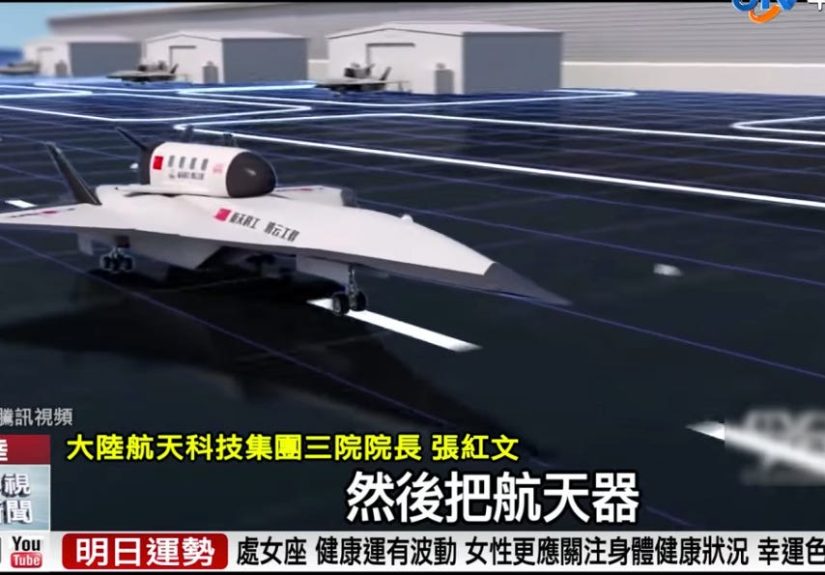
The aircraft-like spacecraft commonly referred to as Shenlong, or “Divine Dragon,” is part of China’s broader push into reusable space technology. That means lower launch costs over time, more frequent missions, faster testing cycles, and a stronger ability to perform complicated work in orbit. In plain English: this is not just about making spaceflight look sleek. It is about building a practical tool that can support science, logistics, surveillance, technology testing, and potentially military objectives, too.
And that is why this story deserves attention. China is not simply trying to make a flashy answer to America’s X-37B. It is building a capability that could shape the future of low Earth orbit, space competition, and how nations think about reusable spacecraft in the decade ahead.
What Is China’s Spaceplane, Exactly?
Officially, China has said very little. The public description has been intentionally broad: a reusable experimental spacecraft designed to test technologies that could support more affordable and convenient access to space. That sounds polite, responsible, and faintly like it was written by a committee armed with herbal tea and legal review.
Unofficially, outside analysts generally describe the vehicle as a small, uncrewed orbital spaceplane launched on a Long March-2F rocket and recovered with a runway landing. It is widely compared to the U.S. military’s X-37B because the two systems appear to share the same basic concept: launch vertically inside a rocket fairing, operate autonomously in orbit for long periods, then return to Earth for inspection, refurbishment, and another flight.
That reusable loop is the whole point. Traditional spacecraft are often one-and-done machines. A reusable spacecraft, by contrast, can become a flying laboratory. Engineers can launch it, test hardware, expose components to the space environment, bring everything home, examine what worked, fix what did not, and do it again. Space suddenly becomes less like throwing a grand piano off a cliff and more like running an aggressive R&D cycle.
Why Reusable Spacecraft Matter
Reusable spacecraft are appealing for one simple reason: space is expensive, and everybody would like it to be slightly less offensive to the budget. If a country can recover and reuse a vehicle instead of discarding it after a single mission, the long-term economics improve. The mission tempo can increase. Testing becomes more realistic. And the door opens to more specialized orbital operations.
That is why the spaceplane concept keeps returning, even after the glory days of the U.S. Space Shuttle are long gone. A modern orbital spaceplane is not meant to be a giant people-hauler with all the operational baggage that came with the shuttle era. It is meant to be smaller, simpler, more autonomous, and more focused. Think less “space bus” and more “high-end orbital multitool.”
For China, this fits neatly into a larger pattern. The country is expanding its launch cadence, investing in reusable launch technology, improving on-orbit servicing capabilities, and pushing deeper into strategic space infrastructure. A reusable spaceplane fits into that ecosystem almost too perfectly. It can serve as a testbed, a technology demonstrator, a platform for experimentation, and a symbol that China intends to compete across the full spectrum of advanced space operations.
The Mission Timeline: From Curiosity to Credibility
The reason analysts take the program seriously now is simple: it has moved past rumor and into repetition. Repetition is boring in the best possible way. In aerospace, boring is often another word for “maturing.”
First Flight: Proof of Concept
China’s first publicly known reusable experimental spacecraft mission took place in 2020 and lasted roughly two days. That short flight looked like a basic technology demonstration, enough to prove launch, orbital operation, reentry, and recovery. It was not flashy, but it was a line crossed. China had joined the short list of actors publicly associated with launching and recovering an orbital reusable craft.
Second Flight: Endurance Enters the Chat
The second known mission, launched in 2022 and completed in 2023, lasted 276 days in orbit. That changed the conversation. A two-day test says, “We are experimenting.” A mission of many months says, “We are learning how to live up there.” Long-duration missions suggest better thermal control, power systems, autonomous operations, and confidence in the vehicle’s overall design.
Third Flight: More Time, More Questions
The third known orbital mission launched in late 2023 and returned in 2024 after roughly 268 days. That kind of repeat performance matters more than a single long mission. It implies China is not just stumbling into orbital endurance; it is building it into the program. In aerospace terms, that is the difference between a lucky touchdown and a repeatable landing pattern.
Fourth Flight: The Program Keeps Going
By early 2026, China had launched the spacecraft for a fourth time. Details remained sparse, because of course they did. But the bigger point is impossible to miss: this is now an ongoing program, not a one-off science fair project with better funding. China keeps flying it because the vehicle keeps teaching it something useful.
What Is the Spaceplane Probably Doing in Orbit?
This is where the mystery machine earns its reputation. Chinese official statements are vague, but outside observers have pieced together clues from tracking data, orbital changes, and the release of objects during missions. That leaves a short list of likely mission categories.
1. Testing Reusable Spacecraft Hardware
This is the most straightforward explanation. A spaceplane is an excellent platform for validating heat-shield materials, avionics, flight software, sensors, thermal systems, propulsion components, and deployable hardware. Because the vehicle returns home, engineers can inspect the actual hardware rather than guessing how it behaved in orbit. That is a huge advantage for design refinement.
2. Satellite Deployment and Recovery-Adjacent Work
Observers have reported that the vehicle released objects during previous missions. That opens the door to testing small satellite deployment, subsatellite handling, or hardware release mechanisms. Even when a mission is framed as peaceful, this kind of orbital dexterity attracts attention. A spacecraft that can release something carefully may someday be able to retrieve, inspect, or manipulate something carefully, too.
3. Rendezvous and Proximity Operations
One of the most important phrases in modern space strategy is rendezvous and proximity operations, often shortened to RPOs. It sounds dry. It is not dry. It means a spacecraft can approach another object in orbit, inspect it, maneuver around it, and possibly interact with it. Civilian uses include servicing, repair, refueling, debris mitigation, and upgrades. Military uses are where everyone’s eyebrows start climbing.
If a spacecraft can sidle up to a friendly satellite to inspect or service it, the same skill set can theoretically be applied to an adversary’s satellite. That does not automatically make the vehicle a weapon, but it does make it strategically interesting. In space, capability is often more important than declared intent, because hardware can do more than one job.
4. Intelligence, Surveillance, and Technology Signaling
Even a secretive spaceplane sends a public message: “We can build this, fly this, and improve this.” Sometimes that message is part of the mission. The system itself becomes a strategic signal to other nations, especially the United States, that China intends to compete in advanced reusable and maneuverable orbital systems. It is not only about what the spaceplane does. It is also about what the existence of the spaceplane says.
Is This China’s Answer to the X-37B?
In broad concept, yes. In public detail, not exactly. The U.S. X-37B has a longer documented operational history and remains the more familiar benchmark. Analysts generally believe China’s vehicle is in the same family of ideas: compact, robotic, reusable, long-endurance, and designed to perform missions the government prefers not to narrate in real time.
But the comparison can be overdone. The Chinese vehicle appears to have operated in lower orbits and with more limited publicly known endurance than the U.S. system. At the same time, reports suggesting it has performed notable proximity operations and object deployments give it its own profile. It may not be a carbon copy. It may be China’s version of what a useful reusable orbital vehicle should be.
That distinction matters. China is not obligated to build the same tool for the same missions. It only needs to build a tool that serves its own strategic requirements. If those requirements emphasize orbital experimentation, inspection, servicing, or selective military utility, then a spaceplane that looks roughly similar to the X-37B can still evolve in very different directions.
Why Secrecy Is Not a Side Note
The secrecy around the program is not just frustrating for journalists and space nerds who would like less mystery and more pictures. It is part of the strategic value. Ambiguity forces outsiders to spend time and money tracking the vehicle, modeling its mission set, and worrying about its potential uses. That uncertainty can itself be useful.
At the same time, secrecy has a downside. It fuels worst-case assumptions. A reusable spacecraft that performs close maneuvers in orbit is always going to raise questions about counterspace capabilities. Analysts and policy experts have repeatedly argued that more transparency from all spacefaring powers would reduce the chance of misunderstanding, miscalculation, and dramatic overreaction with unpleasant geopolitical side effects.
In other words, mysterious spaceplanes are fascinating until they become the orbital equivalent of someone creeping around your backyard at 2 a.m. with a flashlight and refusing to explain why.
Does This Mean China Is Weaponizing Space?
That question tends to arrive early, loudly, and with movie-trailer energy. The more realistic answer is that China is building dual-use space capability, and dual-use systems are exactly what make space security so complicated. The same spacecraft can support peaceful experiments, technology validation, satellite servicing, and potentially more coercive missions depending on how it is equipped and used.
Most experts caution against turning Shenlong into a cartoon superweapon. Small spaceplanes are not magic orbital doom machines. They have payload limits, energy constraints, and mission tradeoffs. Still, dismissing them would be equally foolish. A reusable vehicle capable of long stays in orbit, deploying objects, and conducting close maneuvers is strategically relevant even if it never carries anything resembling a Hollywood weapon.
The bigger issue is not whether the craft is a space battleship. It is whether China is mastering the kinds of technologies that future space competition will depend on. On that question, the answer appears to be yes.
What This Means for the Future of Space
China’s spaceplane program signals three big shifts.
First, reusability is becoming normal. Not just for rockets, but for orbital vehicles and mission architectures. The more nations learn to reuse spacecraft, the more space starts looking like an operational domain rather than a collection of one-time stunts.
Second, orbital maneuverability is becoming a premium skill. It is no longer enough to place an object in orbit and leave it there. The future belongs to systems that can move, inspect, interact, and return value over time.
Third, space competition is becoming more layered. It is not only about rockets, lunar landings, or giant satellite constellations. It is also about the quieter tools: inspection vehicles, servicing technologies, reusable craft, and platforms that blur the line between civil, commercial, and military use.
That makes China’s spaceplane important even if we never get the glossy official brochure. The capability itself tells the story.
Final Thoughts
China is building a spaceplane of its own, and by this point the evidence is not theoretical. It has flown, returned, flown again, stayed up longer, and kept drawing attention from analysts who watch orbital behavior for a living. That means the program has moved beyond rumor and into capability development.
The smartest way to understand Shenlong is not as a copycat toy or a sci-fi menace. It is a reusable spacecraft built for an era in which space systems need to be flexible, recoverable, maneuverable, and strategically ambiguous. That combination makes it useful for innovation, powerful for signaling, and significant for security planners on the ground.
So yes, China is building a spaceplane of its own. And no, this is not just another shiny headline from the orbital rumor mill. It is part of a bigger transformation in how major powers intend to operate in space: more often, more flexibly, and with fewer clues for everyone else.
Extended Perspective: What It Feels Like to Watch This Story Unfold
Following the rise of China’s spaceplane program has been a strange mix of excitement, caution, and intellectual whiplash. One day, the news cycle is full of giant rockets, crewed missions, and moon ambitions. The next day, a much smaller story sneaks in: a reusable experimental spacecraft launched quietly, released an object, changed orbit, or landed after months in space. For space watchers, that is the kind of detail that makes you sit up straighter in your chair and say, “Well, that seems important.” Because it is.
The experience is fascinating precisely because the program is so opaque. You are not handed a polished media package with glossy renderings and triumphant narration. Instead, you get fragments. A brief official statement. A tracking update. An analyst’s assessment. A report that an object was deployed. A suggestion that the vehicle conducted close maneuvers. The picture comes together slowly, like assembling a jigsaw puzzle while someone keeps hiding the box.
That makes covering the topic both thrilling and frustrating. Thrilling, because every new mission tells us something about how quickly China is learning. Frustrating, because the most important details often remain unconfirmed. Was the primary goal endurance testing? Satellite servicing? Sensor validation? Strategic signaling? Probably some combination of all of the above. The uncertainty is not a flaw in the story; it is part of the story.
There is also a very modern feeling to this program. It reflects the current era of space development, where reusable systems, autonomous vehicles, and dual-use technologies matter more than grand speeches. The old image of space competition was built around giant firsts: first satellite, first human, first moon landing. Today’s competition often looks quieter and more technical. It is about who can maneuver best, iterate fastest, reuse most efficiently, and operate in orbit with the greatest precision. That is less cinematic, maybe, but in strategic terms it can be even more important.
For readers, the takeaway experience is this: China’s spaceplane story feels like watching a capability mature in near real time. It is not a relic of a future plan. It is happening now. Each flight adds another layer of credibility. Each recovery makes the system more real. Each mystery object or orbital maneuver reminds the rest of the world that a lot of the future of space will not arrive with fireworks. It will arrive quietly, on time, and with just enough public information to keep everyone guessing.