Table of Contents >> Show >> Hide
- What a Cochlear Implant Is (and Isn’t)
- How a Cochlear Implant Works
- Who Typically Benefits From Cochlear Implants?
- The Step-by-Step Cochlear Implant Process
- Cochlear Implant Cost in the U.S.
- Pros: Why People Choose Cochlear Implants
- Cons and Tradeoffs (the “honest brochure” section)
- Risks and Side Effects
- Living With a Cochlear Implant
- Questions to Ask Your Cochlear Implant Team
- Experiences: What the Cochlear Implant Journey Can Feel Like (Composite Examples)
- Conclusion
- SEO Tags
If you’ve ever watched someone “turn on” a cochlear implant and thought, “Wow… that’s basically a hearing
superpower,” you’re not wrongjust slightly missing the fine print. Cochlear implants can be life-changing for
many people with severe hearing loss, but they’re not a magic “restore my hearing to factory settings” button.
They’re more like a high-tech shortcut that helps your brain get sound information another way… and then you and
your brain do the real work together.
In this guide, we’ll break down how cochlear implants work, who they help, what the surgery and rehab process
looks like, the real-world pros and cons, risks to know, and what cochlear implant cost often looks like in the
United States (including insurance and Medicare coverage basics).
What a Cochlear Implant Is (and Isn’t)
A cochlear implant is an electronic medical device designed for people with moderate-to-profound
sensorineural hearing loss (hearing loss caused by damage to the inner ear or auditory nerve). Unlike
hearing aidswhich amplify soundcochlear implants bypass damaged parts of the inner ear and send
electrical signals directly to the hearing (auditory) nerve.
Here’s the important, expectation-setting part: a cochlear implant does not restore normal hearing.
Many recipients describe early sound as “robotic,” “tinny,” or “like an old radio,” and improvement happens over
time with programming and practice.
How a Cochlear Implant Works
Think of it as a two-part system: an external “sound capture and processing” setup, plus an internal “signal
delivery” setup.
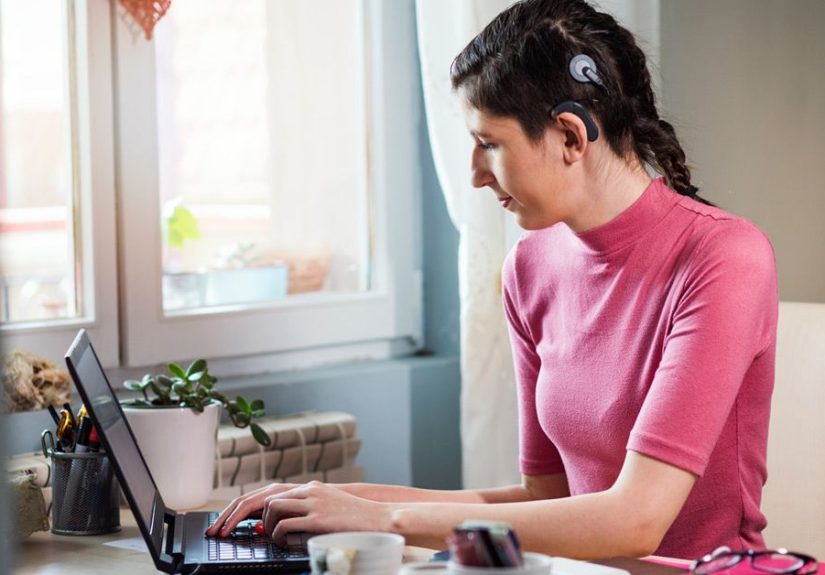
The external parts (the pieces you can see)
- Microphone to pick up sound from the environment
- Speech processor to analyze sound and convert it into digital signals
- Transmitter coil (often held by a magnet) that sends signals through the skin to the implant
The internal parts (the pieces under the skin)
- Receiver/stimulator that receives the signal and converts it into electrical impulses
- Electrode array inserted into the cochlea to stimulate the auditory nerve
What your brain does with the signal
Your auditory nerve carries the electrical information to your brain, and your brain interprets it as sound.
That interpretation is a learned skill. For many people, the biggest gains come from consistent use, follow-up
“mapping” (programming), and auditory therapy/rehabilitation.
Who Typically Benefits From Cochlear Implants?
Adults
Adults who often consider cochlear implants include those with significant hearing loss who get limited benefit
from well-fitted hearing aidsespecially if speech understanding remains poor even when sounds are loud enough.
Outcomes vary based on factors like the cause of hearing loss, how long severe hearing loss has been present,
and whether hearing loss occurred before or after language development.
Children
For children with severe-to-profound hearing loss, earlier access to sound can support speech and language
development. Pediatric candidacy decisions are individualized and usually involve a multidisciplinary team.
What about “hybrid” options?
Some people have better low-frequency hearing but poor high-frequency hearing. In certain cases, a
hybrid approach (cochlear implant plus acoustic amplification) may be considered to help preserve and
use remaining natural hearing while improving access to speech cues.
The Step-by-Step Cochlear Implant Process
1) Candidacy evaluation
A typical cochlear implant evaluation may include:
- Comprehensive hearing tests (including aided speech testing)
- Medical exam with an ENT (otolaryngologist)
- Imaging (CT and/or MRI) to assess inner ear anatomy
- Discussion of communication goals and realistic outcomes
- Review of vaccination status (often discussed due to meningitis risk)
2) Surgery day (and what actually happens)
Cochlear implant surgery is commonly performed under general anesthesia. Many centers perform it as an
outpatient procedure (meaning you go home the same day), though some patients may stay overnight depending on
age, medical history, and surgeon preference.
The surgeon places the internal receiver under the skin behind the ear and threads the electrode array into
the cochlea. The incision is closed, and the healing phase begins.
3) Healing and activation
Activation is not usually the day after surgery. Most people wait a few weeks for the area to heal before the
external processor is fitted and the implant is turned on for the first time. That first day can be emotional:
exciting, weird, overwhelming, and sometimes all of the above in the same 30 seconds.
4) Mapping (programming) and rehabilitation
“Mapping” is the process of fine-tuning the implant settings so sounds are comfortable and useful. This
typically requires multiple follow-ups, especially early on. Auditory rehabilitationsometimes with an
audiologist and/or speech-language pathologisthelps your brain learn to interpret the new input.
5) Long-term follow-up
Cochlear implants aren’t “set it and forget it.” Many recipients continue periodic check-ins for mapping,
performance testing, and equipment needs. The goal is steady improvement in speech understanding and listening
comfort in real-life environments (not just the quiet testing booth, which is basically the “easy mode” of
listening).
Cochlear Implant Cost in the U.S.
Let’s talk moneybecause “life-changing technology” and “affordable” don’t always show up at the same party on
time.
Typical cost ranges (ballpark, not a quote)
Published estimates commonly place the total cost of cochlear implantation in the United Statesoften including
the device, surgery, and rehabilitationsomewhere in the $50,000 to $100,000 range per ear, though
real totals can be lower or higher depending on your medical situation, location, hospital billing, and what
services are included.
What the total cost may include
- Initial evaluations and audiology testing
- Imaging (CT/MRI)
- The implant device and external processor
- Surgeon, anesthesia, and facility/hospital fees
- Post-op visits
- Activation and mapping appointments
- Auditory therapy/aural rehabilitation (frequency varies widely)
- Supplies and maintenance (batteries, cables, microphone covers, etc.)
Insurance coverage (private insurance, Medicare, Medicaid)
Many private insurers cover cochlear implants when medically necessary, but coverage details vary by plan. Even
when covered, out-of-pocket costs can include deductibles, copays, coinsurance, and non-covered services.
Medicare coverage is guided by national policy criteria. In general, Medicare may cover cochlear
implantation for people who meet specific clinical requirements and demonstrate limited benefit from hearing
aids, based on aided speech recognition testing and other criteria.
Medicaid coverage varies by state and may include additional documentation or authorization steps.
Planning tips to avoid “surprise billing” stress
-
Ask your implant center for a written estimate that separates: evaluation, surgery/facility, device,
programming, and rehab. -
Request procedure codes (CPT/HCPCS) and confirm coverage with your insurerdon’t rely only on verbal “it should
be covered.” - Ask about warranty coverage, replacement parts, and upgrade policies for external processors.
- If you’re eligible, ask about financial assistance programs or manufacturer support resources.
Pros: Why People Choose Cochlear Implants
- Better speech understanding (especially compared to hearing aids for some candidates)
- Improved awareness of environmental sounds (alarms, traffic, doorbells)
- Reduced listening fatigue from straining to piece together speech
- Potential quality-of-life boost (social connection, independence, confidence)
- Access to assistive tech like direct streaming, remote microphones, captioning tools
Cons and Tradeoffs (the “honest brochure” section)
- Not natural hearing; sound quality can take time to adjust to
- Rehabilitation commitment; progress often depends on consistent use and practice
- Possible loss of residual hearing in the implanted ear
- Ongoing maintenance (parts, batteries/charging, troubleshooting)
- Costs and insurance complexity can be a real hurdle
- Performance varies; outcomes depend on many personal and medical factors
Risks and Side Effects
Cochlear implantation is generally considered safe, but it’s still surgery, and it’s still a device. Here are
the key risks commonly discussed in cochlear implant counseling.
Surgery and anesthesia risks
- Bleeding
- Infection
- Problems with wound healing
- Anesthesia complications (risk depends on overall health)
Ear- and nerve-related risks
- Dizziness or balance changes (often temporary, sometimes longer-lasting)
- Tinnitus changes (can improve, worsen, or stay the same)
- Taste disturbance due to nearby nerve pathways
- Facial nerve injury (rare, but discussed because of anatomy in the surgical area)
Meningitis risk (and why vaccines come up)
People with cochlear implants have an increased risk of bacterial meningitis compared with the general
population. Because of that, many implant programs review vaccine status and recommend appropriate vaccinations
(often including pneumococcal vaccines) before surgery when indicated. Your care team will advise what applies
to you or your child.
Device-specific risks
- Device failure (may require repair or replacement surgery in rare cases)
- Skin irritation at the magnet/coil site
- Impact damage to the external processor (the world is full of doorknobs and toddlers)
MRI considerations
MRI safety depends on the specific implant model. Because cochlear implants contain metal and typically magnets,
MRIs may require special precautions or specific conditions. Some implants are approved for certain MRI scans
under controlled conditions, while others may have stricter limitations. Always tell any imaging facility that
you have a cochlear implant, and bring your implant ID card.
Living With a Cochlear Implant
Daily life: the practical stuff
- Power: rechargeable or disposable batteries; you’ll build a charging routine fast.
- Moisture: sweat and rain happenmany people use drying kits and protective covers.
- Maintenance: small parts wear out; keep backup cables or coils if possible.
- Accessories: remote microphones can be huge in noisy restaurants and meetings.
Phones, streaming, and captions
Many modern processors support wireless streaming and app-based controls. Even with better hearing access, lots
of people still love captionsbecause captions aren’t cheating; they’re just efficient.
Sports and travel
Most people return to typical activities after healing, but contact sports may require protective headgear or
additional caution. For travel, pack chargers, backup parts, and your implant information. Your future self at
Gate 42B will thank you.
How long do cochlear implants last?
Internal implants are designed for long-term use, and many last for years. External processors are upgraded more
often as technology improves (and as insurance policies allow).
Questions to Ask Your Cochlear Implant Team
- Am I (or is my child) a cochlear implant candidate based on aided speech testing?
- What outcomes are realistic for my hearing history and communication goals?
- What does rehabilitation look like at your center (frequency, duration, who provides it)?
- How many mapping visits are typical in the first year?
- What are the most common complications you see, and how do you manage them?
- What does the full cost estimate include, and what might be billed separately?
- What MRI precautions apply to the implant model you recommend?
- What support exists for work/school accommodations and assistive technology?
Experiences: What the Cochlear Implant Journey Can Feel Like (Composite Examples)
The following “experience snapshots” are composite examples based on commonly reported patterns in
cochlear implant rehabilitation. They’re not individual stories or medical advicejust a realistic preview of
what many people describe along the way.
Experience #1: “Activation day was exciting… and also kind of hilarious.”
A lot of adults describe activation day like stepping into a new audio universe where everything sounds like it
was recorded on a walkie-talkie. Voices can seem high-pitched or robotic at first. Paper crinkling suddenly
becomes the loudest object in the room. Some people laugh because it’s so unexpected; others feel overwhelmed,
especially in busy clinics with lots of background noise. One common theme: it’s not a final resultit’s a
starting line.
Over the next few weeks, mapping sessions adjust volume and frequency balance, and the brain starts sorting out
the “new language” of sound. Many people keep a small notes app list: “The microwave beep is too sharp,” “car
turn signal is weirdly loud,” “my own footsteps are jump-scary.” Those details can help audiologists fine-tune
settings.
Experience #2: “Rehab is where the real gains happen.”
Many recipients find that structured listening practice makes a huge differenceespecially for speech in noise.
A common routine includes short daily sessions: listening to an audiobook while following along with the text,
practicing with a partner who reads simple sentences, or using an auditory training app recommended by the team.
Progress often comes in bursts: suddenly you catch more words on the phone, or you realize you understood the
cashier without asking them to repeat. Those moments feel like tiny fireworks.
People also talk about “listening fatigue.” Even as hearing improves, the brain is working hard to interpret
signals, particularly in loud environments. Many learn to plan breaks, choose quieter seating, use remote
microphones in meetings, and keep captions on as a low-stress backup.
Experience #3: “Cost and insurance paperwork can be its own obstacle course.”
Financial stress is a real part of the cochlear implant journey for some families. People commonly describe
learning new vocabulary like “pre-authorization,” “durable medical equipment,” and “out-of-network facility”
(none of which sound like things you should have to master just to hear your grandkid’s voice clearly). Implant
centers often have coordinators who help patients gather documentation, schedule required tests, and submit
insurance paperwork. Many recipients say the best strategy is organization: keep a folder with estimates,
approval letters, device serial numbers, and names of insurance reps you speak with. Boring? Yes. Useful? Also
yes.
Experience #4: “The emotional part surprised me.”
Even when outcomes are positive, the emotional side can be complicated. Some adults feel grief about years of
missed conversations. Some parents feel relief, then anxiety, then relief againoften in the same week. Many
people say support groups (online or local) help normalize the learning curve. Hearing improves, communication
improves, and confidence improvesbut it’s not always a straight line. Plenty of recipients describe the best
mindset as: steady practice, realistic expectations, and celebrating meaningful wins (like understanding a joke
in real timebecause delayed laughter is awkward, no matter how charming you are).
Conclusion
Cochlear implants can open up access to sound for people who don’t get enough benefit from hearing aids, often
improving speech understanding and daily communication. But they also come with tradeoffs: a surgical procedure,
an adjustment period, ongoing mapping and rehabilitation, and real costs that require planning.
If you’re considering a cochlear implantfor yourself or a family memberthe best next step is a candidacy
evaluation with an implant center. You’ll get individualized testing, a clear picture of expected benefits, and a
detailed breakdown of risks and costs based on your situation.
Medical note: This article is for general education and does not replace medical advice. Always
consult a qualified audiologist or ENT specialist for diagnosis and treatment guidance.