Table of Contents >> Show >> Hide
- Why Comfort Matters More Than “Performance”
- What Actually Makes a Position Comfortable?
- Comfortable, Non-Explicit Position Ideas
- Common Reasons Sex or Masturbation Feels Uncomfortable
- How to Make Sexual Activity More Comfortable
- Masturbation and Comfort: A Practical Approach
- When to Talk to a Healthcare Professional
- Comfort Is a Skill, Not a Lucky Accident
- Experiences Related to Comfortable Positions for Sex and Masturbation
- Conclusion
- SEO Tags
Note: This article is intentionally non-explicit and focuses on sexual wellness, comfort, communication, and safety.
Let’s start with a truth that deserves a standing ovation: comfort is not boring. Comfort is not “less sexy.” Comfort is not the participation trophy of intimacy. Comfort is the foundation. When your neck is cranked, your lower back is filing a formal complaint, or your pelvic floor is clenched like it’s bracing for tax season, pleasure tends to leave the building.
That is why the best approach to comfortable sex and masturbation is not chasing acrobatic performance. It is building body-friendly setups that support relaxation, reduce strain, improve communication, and make it easier to notice what feels good and what clearly does not. Whether you are dealing with dryness, stress, joint pain, pelvic tension, menopause, diabetes, postpartum healing, disability, or simply the reality that your body is not auditioning for a circus, a comfort-first mindset can make a big difference.
This guide takes a practical, non-explicit approach to sexual comfort. Instead of turning intimacy into an instruction manual with way too much confidence, it focuses on body mechanics, common causes of discomfort, supportive position ideas, and smart ways to know when the issue is not “just needing to relax” but worth discussing with a clinician.
Why Comfort Matters More Than “Performance”
A lot of people absorb the same bad script: if sex or masturbation is not effortless, spontaneous, and wildly cinematic, something must be wrong. In real life, comfort usually comes from trial, communication, and a few strategic pillows. That is normal.
Comfortable sexual activity is easier on the muscles and joints, helps people stay present, and makes it more likely that pleasure will build instead of getting interrupted by friction, cramping, numbness, or pain. Comfort also supports consent and communication. It is easier to say yes clearly, change course, or stop when your body is not busy screaming in lowercase italics.
And here is the key distinction: mild awkwardness can happen; recurring pain should not be brushed off. Discomfort is useful feedback. Treat it like information, not a personality flaw.
What Actually Makes a Position Comfortable?
1. Support beats flexibility
The most comfortable setups usually support the spine, hips, knees, shoulders, and neck. If you need to “hold yourself up” for long stretches, that position may look impressive for eight seconds and then become a backache with branding. Supported positions tend to work better because they allow muscles to relax instead of constantly stabilizing.
2. Pressure distribution matters
A posture that dumps too much weight into one wrist, one hip, one knee, or the lower back can become uncomfortable fast. Comfort improves when body weight is spread across a larger surface area and when bony pressure points are cushioned. Translation: bedding, pillows, wedges, rolled towels, and supportive chairs are doing more work than most people realize.
3. Control over pace and depth helps
People often feel more comfortable when they can slow down, pause, adjust angle, or reduce depth and pressure. Control can lower anxiety and help prevent the “brace against discomfort, then feel more discomfort” cycle that makes intimacy feel harder than it should.
4. Relaxation helps the pelvic floor
Pelvic floor muscles respond to stress, pain anticipation, injury, and hormonal changes. When those muscles are tense, sexual activity may feel more difficult or painful. Comfortable positions are often the ones that make it easier to breathe normally, unclench the abdomen, release the jaw, and let the hips rest in a neutral position.
5. The right friction level matters
Too much friction can make both partnered and solo activity uncomfortable. Too little support can also make people compensate with extra force or repetitive movement, which may irritate tissues or strain muscles. The goal is not intensity for its own sake. The goal is a setup that feels sustainable and easy on the body.
Comfortable, Non-Explicit Position Ideas
Instead of getting overly specific, think of these as body-friendly categories. The best choice depends on your joints, flexibility, pain history, fatigue level, and how much support you want.
Side-lying positions
Side-lying setups are often among the most comfortable because they reduce pressure on the lower back, allow the neck to stay neutral, and make it easier to place pillows between the knees, under the waist, or behind the back. These positions are often helpful for people with hip discomfort, fatigue, balance issues, or people who simply do not want every intimate moment to double as a core workout.
Semi-reclined positions
A semi-reclined posture, supported by pillows or an adjustable headboard, can work well for people who want back and neck support without lying completely flat. It often helps reduce abdominal tension and can make it easier to change angles gradually. This can be useful during solo sexual activity too, especially if sitting upright feels tiring or lying flat causes strain.
Seated positions with back support
Sitting in a stable, well-supported chair or against a cushioned surface can reduce the effort of holding the torso upright. This kind of setup can be more comfortable for people with limited stamina, chronic pain, or mobility restrictions. The important part is stability. If the furniture is wobbling like it has stage fright, it is not helping.
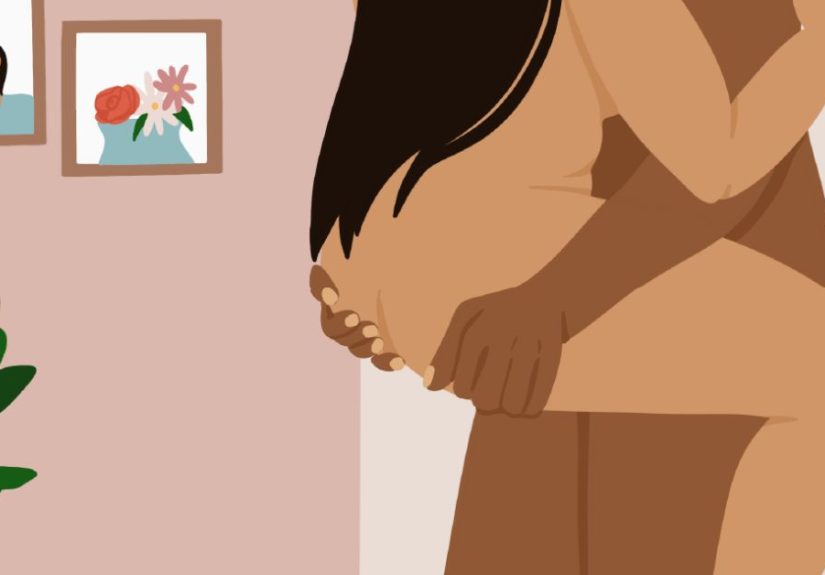
Standing with support
Some people prefer standing, but it is usually more comfortable when there is solid support nearby, such as a wall, countertop, or sturdy surface. Good standing setups reduce the amount of balancing and muscular effort required. Without support, standing can quickly become a calves-and-lower-back situation instead of a pleasurable one.
Solo comfort setups for masturbation
For masturbation, the most comfortable “position” is often the one that protects the wrists, shoulders, neck, and hips. Side-lying, semi-reclined, or seated-supported postures usually work better than holding a twisted angle for long periods. If your hand, forearm, shoulder, or pelvic area gets tired or numb, that is a cue to change posture, take a break, reduce pressure, or add support.
Common Reasons Sex or Masturbation Feels Uncomfortable
Dryness and friction
One of the most common reasons for discomfort is simple friction. Vaginal dryness can happen because of perimenopause, menopause, postpartum changes, breastfeeding, medications, stress, or certain medical conditions. Dryness can also happen outside those situations. Friction-related discomfort often feels burning, stinging, rubbing, or soreness afterward.
Pelvic floor tension
When pelvic floor muscles stay tight, the body can interpret sexual activity as effort instead of ease. People may describe this as tightness, pressure, aching, difficulty relaxing, or pain with penetration. This can happen after pain, stress, trauma, childbirth, surgery, or without an obvious trigger. Pelvic floor physical therapy is often a helpful option, especially when the issue keeps repeating.
Hormonal changes
Hormones influence tissue elasticity, lubrication, sensitivity, and comfort. Menopause gets a lot of attention here, but hormonal changes can also happen with postpartum recovery, breastfeeding, some medications, and certain endocrine conditions. If sex suddenly becomes uncomfortable when it used to feel fine, hormones may be part of the story.
Chronic conditions like diabetes
Diabetes can affect blood flow, nerve function, lubrication, arousal, and overall comfort. Other chronic health issues can affect energy, pain sensitivity, mobility, and body confidence as well. Sometimes the issue is not desire at all. It is logistics, symptoms, or fatigue.
Infections, skin conditions, and pelvic pain disorders
Vaginitis, urinary symptoms, vulvodynia, endometriosis, interstitial cystitis, prostatitis, and chronic pelvic pain can all make sexual activity uncomfortable. In some cases, pain shows up only during sex. In others, the pelvic area hurts during everyday life too. Either way, repeated pain deserves real attention, not a shrug and a vague “maybe next time.”
Muscle and joint strain
Sometimes the problem is less about sex itself and more about the body mechanics around it. Knee pain, hip stiffness, arthritis, low back pain, hypermobility, neck problems, or shoulder strain can all make certain positions miserable. This is why the “best position” is not universal. It is the one your body can support comfortably.
How to Make Sexual Activity More Comfortable
Talk before your body has to complain for you
Communication is one of the least glamorous and most effective comfort tools ever invented. Talk about what feels okay, what tends to hurt, what kind of pacing helps, and what a pause or stop should look like. That conversation is not a mood killer. It is a shortcut to a better experience.
Use support generously
Pillows are not cheating. Rolled towels are not cheating. Back support, cushioning, and positioning aids are not cheating. They are excellent. Add support under the knees, lower back, neck, elbows, or hips wherever pressure tends to build.
Use lubricant smartly
Lubricant can reduce friction and make activity more comfortable. If condoms are involved, compatibility matters. Water-based and silicone-based lubricants are usually the safest bet with latex condoms. Oil-based products can damage latex. Comfort improves a lot when people stop improvising with whatever was nearest the bathroom sink.
Go slower and stop treating discomfort like a challenge
Slowing down helps the body adapt and relax. If pain increases as things continue, pushing through it usually makes the experience worse, not more heroic. A useful rule: discomfort that fades after a small adjustment may be positional; discomfort that escalates is a sign to stop and reassess.
Warm up the rest of the body, too
People often focus only on genital comfort, but the rest of the body matters. A warm shower, looser hips, relaxed shoulders, and calm breathing can reduce overall tension. If your jaw is clenched hard enough to crack a walnut, your pelvic floor may not be having a great time either.
Masturbation and Comfort: A Practical Approach
Masturbation can be a low-pressure way to learn what your body finds comfortable. It can also help you notice whether the issue is tissue irritation, wrist strain, hip tension, dryness, numbness, or fatigue. That kind of information can be useful whether you are solo or partnered.
A few comfort principles matter here. First, choose a posture that does not force your shoulder, wrist, neck, or lower back into awkward positions. Second, avoid repetitive pressure that leaves you sore or numb afterward. Third, use enough support and lubrication when relevant. And fourth, do not ignore pain just because you are alone. Pain during solo sexual activity is still pain.
If you consistently need extreme pressure, unusual tension, or very specific body contortions just to feel comfortable, it may be worth asking whether the setup is working against your body. Sometimes a small ergonomic change makes a big difference. Sometimes persistent discomfort is a sign to talk to a clinician.
When to Talk to a Healthcare Professional
Make an appointment if pain keeps happening, gets worse, or changes suddenly. You should also get checked if you notice bleeding after sex, unusual discharge, fever, pelvic pain outside of intimacy, burning with urination, urinary urgency, itching, sores, or a feeling of tightness that does not improve with comfort measures.
People with vaginas should not ignore repeated dryness, burning, tearing, or pain with penetration. People with penises should not ignore pelvic pain, pain during or after ejaculation, blood in urine or semen, or scrotal swelling. And anyone with severe pain, heavy bleeding, fever, or inability to urinate should seek urgent care.
There is no prize for self-diagnosing “probably stress” for six months. Recurrent sexual pain can be evaluated and often improved.
Comfort Is a Skill, Not a Lucky Accident
The most satisfying sexual experiences are not always the most dramatic. Often, they are the most responsive. They make room for pillows, pauses, lubrication, humor, body awareness, and actual conversation. They respect the reality that different bodies need different setups.
Comfortable positions for sex and masturbation are really about something bigger than posture. They are about reducing strain, increasing control, and listening when your body gives useful feedback. If something feels good, sustainable, and safe, that is worth more than any flashy idea that leaves your hamstring emotionally unavailable.
Experiences Related to Comfortable Positions for Sex and Masturbation
The stories below are composite, non-identifying examples inspired by common patterns people describe when they talk about sexual comfort. They are not explicit, but they are realistic.
One couple in their thirties realized they kept choosing what they thought were “fun” positions and ending the night with one person’s hip flexors in open rebellion. Their fix was not dramatic. They stopped treating comfort like a spoiler and started using side-lying setups with two pillows: one behind the back, one between the knees. That small change reduced strain, made it easier to breathe, and surprisingly improved communication. Once nobody was busy pretending their lower back was fine, they could actually pay attention to pleasure.
A solo example is just as common. One person noticed masturbation was less about enjoyment and more about wrist fatigue and a shoulder that felt like it had been volunteering for overtime. They switched from awkward half-sitting in bed to a semi-reclined position with elbow support and realized the discomfort had very little to do with arousal and a lot to do with terrible ergonomics. That is not unromantic. That is basic biomechanics wearing sensible shoes.
Another person in perimenopause thought they had suddenly “stopped liking sex.” What was actually happening was dryness and tissue sensitivity. Once they learned that hormonal changes can alter lubrication and comfort, the problem made more sense. They talked to a clinician, used appropriate moisturizers and lubricant, slowed things down, and stopped blaming themselves. The emotional shift mattered as much as the physical one. When a problem has a name, it becomes a challenge to solve instead of a mystery to internalize.
People recovering from childbirth, surgery, or pelvic pain conditions often describe a similar turning point: they stop chasing their old normal and start building a new, more supportive one. That might mean seated support, more recovery time, better pacing, or pelvic floor physical therapy. For many, the breakthrough is realizing that “comfortable” does not mean “settling.” It means adapting intelligently.
Some people with diabetes, chronic pain, or fatigue say the hardest part is not the physical symptom itself. It is the expectation that intimacy should happen the same way every time. On low-energy days, a supported seated or side-lying posture may feel much better than anything requiring stamina and coordination. On high-symptom days, solo activity may be more comfortable than partnered activity because there is more control. That flexibility is healthy, not disappointing.
And then there are the people who discover that discomfort was their body asking for a medical workup, not a new pillow. Recurrent burning, pelvic pain, urinary symptoms, or pain with penetration sometimes lead to diagnoses like vulvodynia, endometriosis, vaginitis, prostatitis, or pelvic floor dysfunction. Many describe feeling relieved once a clinician took the issue seriously. The most common reaction is not “I can’t believe I needed help.” It is “I wish I had asked sooner.”
If there is one theme across almost every experience, it is this: comfort improves when people become curious instead of critical. They ask better questions. Which muscles are working too hard? What angle strains the hip? Does lubrication help? Is there dryness, tension, fear, or a medical issue in the background? That curiosity turns awkward trial and error into actual insight.
In other words, the best “position” is often not a named move at all. It is the moment you stop performing, support your body properly, communicate clearly, and let comfort become part of the experience instead of an afterthought.
Conclusion
Comfortable positions for sex and masturbation are less about novelty and more about body respect. When you focus on support, alignment, lubrication, communication, and medical awareness, intimacy becomes easier to enjoy and easier to adapt. If something hurts once, adjust. If it hurts often, investigate. Your body is not being difficult. It is being informative.