Table of Contents >> Show >> Hide
- What’s actually confirmed (and what isn’t just internet noise)
- Meet the OnePlus 12: the flagship that wants to win on “the basics”
- Meet the OnePlus 12R: the value phone that refuses to feel “budget”
- Pricing, preorders, and where you can buy them
- Which one should you buy? A fast, no-drama guide
- Why the January 23 global launch mattered (beyond the hype)
- Hands-on vibe check: what people noticed first
- Extra: Everyday experiences you can expect
- The “Day 1” setup: fast, clean, and immediately smooth
- The screen moment: “Oh… this is bright”
- Battery confidence: the invisible luxury
- Fast charging changes your habits
- Cameras: the difference shows up in zoom and flexibility
- Small features you unexpectedly love
- The “which one feels better?” reality
- Conclusion
January 23rd wasn’t just another date on the tech calendarit was the day OnePlus basically stood on a virtual stage, tapped the mic, and said: “Yes, we’re doing two phones, yes it’s global, and yes, the R-series is finally leaving its usual neighborhood.”
The result: the OnePlus 12, a full-on flagship built to compete with the big names without needing a “Pro” badge to feel expensive, and the OnePlus 12R, a “flagship-ish” value phone aimed at people who want speed, battery life, and a premium screenwithout paying premium-money pain.
What’s actually confirmed (and what isn’t just internet noise)
OnePlus confirmed a global launch event on January 23, 2024 (with North America, Europe, and India time zones called out). The big headline wasn’t only the OnePlus 12it was that the OnePlus 12R would also debut globally, bringing the R-series to more markets than it typically reaches.
Translation: this wasn’t a “China first, everyone else later” whisper campaign. It was a coordinated global rollout, with preorders opening around launch and retail availability following shortly after.
Meet the OnePlus 12: the flagship that wants to win on “the basics”
A lot of phones in this price range try to dazzle you with one flashy trickAI magic, satellite something-or-other, or a camera feature you’ll use twice and then forget exists. The OnePlus 12’s pitch is simpler: great screen, fast performance, big battery, fast charging, and cameras that can hang with the big dogsat a price that doesn’t require a deep-breath moment at checkout.
Display and design: big, bright, and built for real life
The OnePlus 12 ships with a large 6.82-inch QHD+ LTPO display with a refresh rate up to 120Hz. On paper, that’s already top-tier. In practice, the bigger flex is brightness: OnePlus touted a peak brightness figure up to 4,500 nits, which is basically “yes, you can read your texts outside without turning into a human sunshade.”
OnePlus also highlighted touch improvements for wet conditions (marketed as Aqua Touch/Aqua Display). It’s the kind of feature you don’t appreciate until the moment you’re juggling a drink, a bag, and a screen that normally would refuse to cooperate like a stubborn cat.
On durability, the OnePlus 12 carries an IP65 rating. That’s better than “no rating,” but it’s also the part of the spec sheet where some rivals still win. If you’re someone who frequently tests gravity and water resistance at the same time, keep that in mind.
Performance and thermals: Snapdragon 8 Gen 3, no excuses
Under the hood, the OnePlus 12 runs on Qualcomm’s Snapdragon 8 Gen 3, the flagship chip of that generation. That matters because it means you’re not buying a “premium phone” with last year’s engine. It’s the real dealsnappy for everyday use and strong for gaming, photo processing, and multitasking.
OnePlus also emphasized thermal management and sustained performance. In human terms: it’s trying not to turn into a tiny hand-warmer when you play games, shoot a lot of photos, or doomscroll for “just five minutes” that somehow becomes forty.
Battery and charging: big capacity, fast refills, wireless returns
The OnePlus 12 packs a 5,400mAh batterylarge enough that many reviewers described it as comfortably “all-day-and-then-some.” For lots of people, that’s the real luxury feature: not worrying about your battery percentage like it’s a stock market chart.
Charging is a OnePlus specialty. Wired fast charging is rated up to 100W (with region-dependent differencesNorth America commonly lists 80W). And wireless charging made a return, with support up to 50W using OnePlus’ compatible wireless charger, plus standard Qi charging at lower speeds.
The vibe here is simple: this phone expects you to live your life, forget to charge sometimes, and still make it out the door without panic.
Cameras: Hasselblad tuning and a real zoom lens
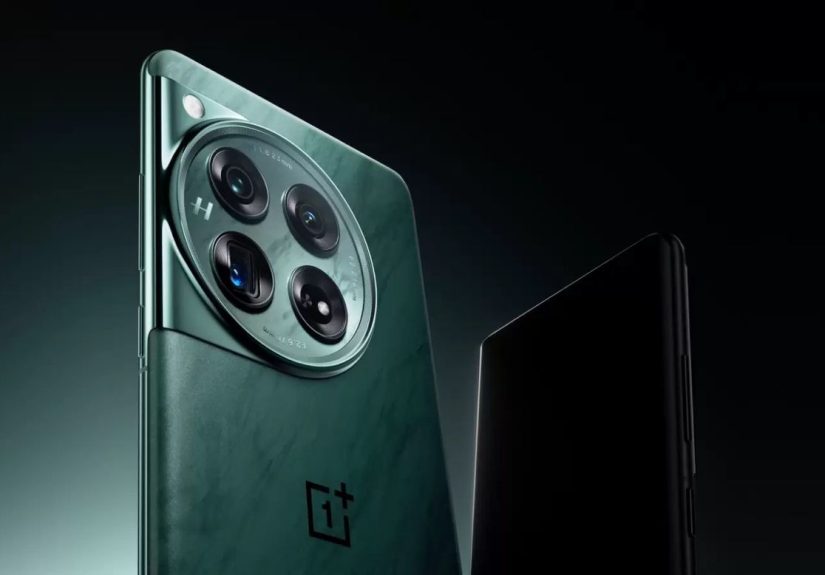
OnePlus leaned into its partnership with Hasselblad again, positioning the OnePlus 12 as a camera upgrade over the prior generation. The camera setup features:
- 50MP main camera (commonly cited with a Sony Lytia sensor)
- 64MP 3x periscope telephoto (a serious zoom option rather than a token lens)
- 48MP ultrawide
In real-world use, the OnePlus 12 tends to deliver strong daylight photos with pleasing color, and the periscope lens adds flexibility for portraits and distant shots. The biggest trade-off versus the very top camera phones tends to show up in tricky conditionsfast-moving subjects, low light, and HDR edge caseswhere some competitors still have an advantage.
Software and updates: OxygenOS 14, plus the “sandwich” philosophy
The OnePlus 12 launches globally with OxygenOS 14 (based on Android 14). OxygenOS is known for customization, speed, and a clean-ish feelthough it has become more similar to OPPO’s ColorOS over time.
OnePlus committed the OnePlus 12 to four years of Android updates and five years of security patches. That’s solid support, even if it doesn’t reach the “7 years” headline some competitors love to wave around.
OnePlus leadership even compared phones to sandwiches in an interview about update policybasically arguing that longer support isn’t automatically “better” if the experience degrades over time. Whether you agree or not, it’s the first time a software policy debate has made me hungry.
Meet the OnePlus 12R: the value phone that refuses to feel “budget”
The OnePlus 12R is the phone for people who want a smooth, fast, premium-feeling daily driverand would rather spend money on literally anything else than the most expensive flagship on the shelf.
It’s also historically notable because it marks the R-series expanding beyond its typical availability, including a clearer presence in markets like the U.S. and Canada.
Performance: Snapdragon 8 Gen 2 is still a monster
The OnePlus 12R uses the Snapdragon 8 Gen 2, whichdespite being “last year’s flagship chip”remains extremely powerful. This is the “end-of-season luxury jacket” strategy: it might not be the newest label, but it still fits perfectly and looks expensive.
For everyday use, it’s fast. For gaming, it’s strong. For the vast majority of people, it’s more power than they’ll ever fully tap.
Display: premium where it counts
OnePlus gave the 12R a display that punches well above its price class: a large 6.78-inch LTPO AMOLED with a 120Hz refresh rate and a peak brightness figure OnePlus also marketed up to 4,500 nits. It’s not identical to the OnePlus 12’s QHD+ panel, but it’s still the type of screen that makes you pause mid-scroll and think, “Wait… this is the cheaper one?”
Battery and charging: the marathon runner of the pair
The OnePlus 12R carries a 5,500mAh batteryslightly larger than the OnePlus 12. That extra capacity, paired with the efficient Snapdragon 8 Gen 2, helps explain why so many reviewers praised the 12R’s endurance.
Like the OnePlus 12, wired charging is extremely fast, with region-dependent ratings (often listed as 80W in North America and higher in some other regions). The key difference: no 50W wireless charging here. The 12R is more “plug in, fill up fast, move on.”
Cameras: good main camera, fewer “extras”
The 12R’s cameras are designed to be competent rather than showy. You get a solid main camera for everyday photography, but you’re not getting the OnePlus 12’s periscope zoom setup. That means fewer “wow, I can actually zoom” momentsbut also a lower price.
If your camera roll is mostly pets, food, friends, and the occasional sunset you swear is “exactly like it looked in real life,” the 12R will hold up. If you love zoom photography, portraits with lens compression, or travel shots at a distance, the OnePlus 12 is the better fit.
Durability and updates: solid, but trimmed
The OnePlus 12R is commonly listed with an IP64 rating, which is still helpful protection but a notch below the OnePlus 12’s IP65. Software support is also trimmed: commonly stated as three years of Android updates and four years of security updates.
Pricing, preorders, and where you can buy them
OnePlus positioned this launch to feel accessible in the U.S. marketboth in price and in availability.
- OnePlus 12: starts at $799.99 (with higher-tier configurations priced higher)
- OnePlus 12R: starts at $499.99
Preorders opened around the January 23 launch window, with U.S. availability following in early-to-mid February (the OnePlus 12 commonly listed as available starting February 6, and the OnePlus 12R starting February 13).
Retail channels included OnePlus’ own store, plus major U.S. retailers like Amazon and Best Buy. OnePlus also leaned on promotionssuch as trade-in offers and storage upgrades during preorder periodsto make the value proposition feel even louder.
Which one should you buy? A fast, no-drama guide
Pick the OnePlus 12 if you care about:
- Wireless charging (and faster wireless options with OnePlus gear)
- Better camera flexibility, especially the 3x periscope telephoto
- Newest flagship performance with Snapdragon 8 Gen 3
- Longer software support (4 Android upgrades / 5 years security)
- Extra flagship polish (like the overall camera system and feature stack)
Pick the OnePlus 12R if you care about:
- Maximum value per dollar
- Battery life that just won’t quit
- Flagship-grade performance (Snapdragon 8 Gen 2 still rules)
- A premium display at a much lower price
- Fast wired charging and a “keep it simple” experience
Why the January 23 global launch mattered (beyond the hype)
OnePlus has always lived in a weirdly specific zone: too “enthusiast” to be boring, too mainstream to stay niche forever, and constantly trying to balance value with premium ambition.
Launching the OnePlus 12 and 12R together globally signaled a strategy shift: instead of betting everything on one hero flagship, OnePlus offered a two-lane lineupone for people who want the full package, and one for people who want 80–90% of the experience for a lot less money.
It also helped OnePlus compete in a market where rivals were talking up AI features and long update promises. OnePlus’ counter-message was refreshingly grounded: make the phone fast, make it last, make it charge quickly, and price it like you still remember what “value” means.
Hands-on vibe check: what people noticed first
Across early reviews and hands-on impressions, a few themes kept popping up:
- Battery life was a highlight on both models, especially the 12R’s endurance.
- Display quality felt premiumbig, bright, and smooth.
- Charging speed remained a OnePlus superpower, making “top-ups” genuinely useful.
- Cameras on the OnePlus 12 were strong overall, with occasional edge-case weaknesses compared to the very best camera phones.
- IP ratings were a sticking point for some people who expect higher water resistance at flagship prices.
The takeaway is pretty straightforward: these phones are built to feel great in daily life. Not in a “look at my AI summarizing my grocery list” way, but in a “this screen is gorgeous and my battery isn’t stressing me out” way.
Extra: Everyday experiences you can expect
Specs are useful, but living with a phone is all about the moments between the benchmarks. Here are the kinds of day-to-day experiences people tend to have with the OnePlus 12 and 12Rbased on common hands-on themes and how these features actually play out in real life.
The “Day 1” setup: fast, clean, and immediately smooth
The first experience most people notice is speednot “open an app 0.2 seconds faster” speed, but the kind of smoothness that makes your old phone feel like it’s wearing heavy boots. App installs, photo restores, and initial updates generally move quickly thanks to strong processing power and modern storage. OxygenOS also tends to feel responsive right out of the gate, especially when paired with a 120Hz display that makes scrolling look like it’s gliding on ice.
The screen moment: “Oh… this is bright”
Outdoor visibility is one of those things you don’t think about until you’re standing in sunlight trying to read a message while squinting like you’re decoding an ancient map. Both phones aim to solve that with high peak brightness claims and a premium panel. In everyday use, that often translates to less fighting your screen and more just… using it. Whether you’re navigating, ordering food, or checking a boarding pass, it’s a quality-of-life upgrade you feel constantly.
Battery confidence: the invisible luxury
The OnePlus 12’s 5,400mAh battery and the 12R’s 5,500mAh battery are the kind of capacities that turn your battery percentage into background noise. The 12R especially is built to feel like it can go and gogreat for people who commute, travel, game, or simply refuse to carry a charger like it’s a security blanket. The best part is psychological: you stop doing the “battery math” in your head every time you leave the house.
Fast charging changes your habits
OnePlus charging is less “overnight ritual” and more “espresso shot.” With very fast wired charging (region-dependent wattage), quick top-ups become meaningful. A short plug-in while you shower or get ready can add enough power to carry you through the day. It also changes how you pack for trips: fewer panic moments, fewer “do I have a power bank?” questions. If you choose the OnePlus 12, wireless charging adds another convenience layerespecially if you already live on a desk mat or nightstand charger.
Cameras: the difference shows up in zoom and flexibility
In typical daily shootingfriends, pets, food, and the random “this sky looks unreal” photoboth phones can deliver pleasing results. The OnePlus 12’s advantage shows up when you want options: the periscope telephoto gives portraits and travel shots more reach, and it can capture details from a distance that the 12R simply can’t frame the same way. The 12R is more about getting a solid main-camera experience without pretending it’s a pro photography tool.
Small features you unexpectedly love
Things like Aqua Touch/Aqua Display can be surprisingly useful if you live in a rainy climate, hit the gym, or just use your phone one-handed while holding a drink. And little quality-of-life additionslike an IR blaster on the OnePlus 12 (yes, really)can turn into a party trick when you’re the person who can suddenly control the TV at a friend’s house.
The “which one feels better?” reality
The OnePlus 12 often feels like the more complete “do everything” device: stronger camera flexibility, wireless charging, the latest chip, and longer software support. The OnePlus 12R often feels like the smarter purchase for people who prioritize smooth performance, screen quality, and battery life above all. Neither choice is “wrong”it’s just a question of whether your daily life rewards camera versatility and wireless convenience (OnePlus 12) or endurance and value (OnePlus 12R).
Conclusion
The January 23 global launch made one thing clear: OnePlus wasn’t trying to win with hype aloneit was trying to win with a lineup that covers two very real types of buyers. The OnePlus 12 targets people who want a true flagship experiencebig, bright screen; Snapdragon 8 Gen 3; fast charging; and the return of wireless chargingwithout paying four-figure prices. The OnePlus 12R targets people who want a premium-feeling phone that lasts forever on a charge and stays blazing fast, while keeping the price comfortably in the “I can justify this” zone.
If you’ve been waiting for a phone that feels practical, powerful, and actually priced like it wants to be purchased (what a concept), the OnePlus 12 and 12R launch was the kind of confirmation worth paying attention to.