Table of Contents >> Show >> Hide
- What Is Deal or No Deal Island, Anyway?
- How the Game Works (And Why Strategy Matters)
- Ranking the Format Twists – From Genius to “Why Would You Do That?”
- Power Rankings: The Most Memorable Players
- 1. Jordan Fowler – The Calculated Closer
- 2. David Genat – The High-Stakes Legend
- 3. Parvati Shallow – Social Assassin in Vacation Wear
- 4. Kim Mattina – The Under-the-Radar Threat
- 5. Alexis Lete – Heart-on-Sleeve Competitor
- 6. Dr. Will Kirby – Chaos with a Doctorate
- 7. Boston Rob Mariano – The Legend Who Didn’t Need the Intro
- The Island Aesthetic and Critical Reception
- Ranking the Seasons: Season 1 vs. Season 2
- Is Deal or No Deal Island Actually Good?
- Tips (and Light-Hearted Advice) If You Ever Land on Deal or No Deal Island
- 500-Word Deep Dive: What Deal or No Deal Island Feels Like to Watch
- Conclusion: Final Rankings and Final Thoughts
If you’ve ever watched Deal or No Deal and thought, “This needs more sand, more sweat, and way more alliance drama,” then
Deal or No Deal Island was basically built in a lab for you. The NBC spin-off takes the iconic briefcase game and
drops it onto a tropical battleground where strategy, social politics, and luck all collide.
With two seasons, a massive potential prize pool, big-name reality stars, and now a very public cancellation, the show has already
carved out a weirdly fascinating corner of reality TV history. In this article, we’ll break down how the game works, rank the best
twists and players, and share some honest opinions about whether Deal or No Deal Island was a genius idea, a beautiful mess,
or a little bit of both.
What Is Deal or No Deal Island, Anyway?
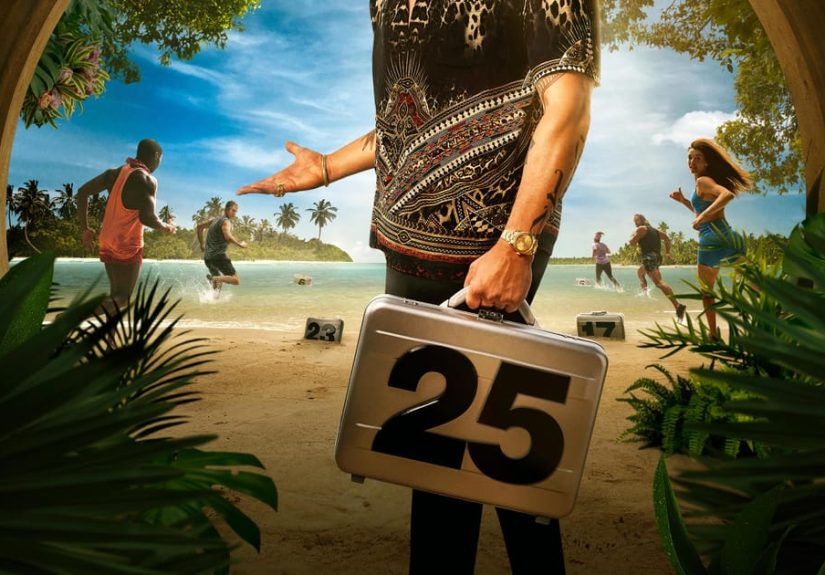
Deal or No Deal Island is an American reality competition series that aired on NBC starting in February 2024. Hosted
by actor Joe Manganiello, it’s a spin-off of the original Deal or No Deal, but instead of a single contestant
facing the Banker on a studio stage, you get a full cast of players battling it out on the Banker’s private island in Panama.
The show ran for two seasons, combining physical challenges, social strategy, and the classic “Deal or No Deal” endgame. Season 1
introduced viewers to the island format, while Season 2 dialed things up by bringing in well-known reality stars like Survivor legends
and Big Brother champions. In 2025, however, NBC pulled the plug after Season 2, reportedly due to a mix of high production costs,
big payouts, and ratings that didn’t keep climbing the way the network hoped.
Even with its relatively short run, the series made noise: it featured record-setting wins, heated betrayals, and enough dramatic
confessionals to fuel fan debates and rankings for years.
How the Game Works (And Why Strategy Matters)
The basic structure of Deal or No Deal Island blends three things:
- Physical challenges to collect briefcases
- Social maneuvering to stay off the chopping block
- The classic Banker showdown to determine who wins big and who goes home
Each episode revolves around an Excursion, where contestants compete in a challenge to retrieve hidden briefcases
scattered around the island. Each case contains a different dollar amount. Players or teams that grab the highest-value cases gain
immunity for the night and often control who must face the Banker in the elimination game.
The twist? Some cases are “red” or otherwise risky, letting players steal from others or introducing penalties. Those holding the
lowest-value cases end up in danger. Eventually, one unlucky contestant must sit across from the Banker’s offer board and play a
high-stakes version of the original Deal or No Deal game. Take the deal and live to play another day (maybe). Say “no deal”
and you risk blowing up your game in spectacular fashion.
Unlike the original show, where the emotional stakes were mostly financial, Deal or No Deal Island adds social fallout. Taking
a deal might save you from elimination but anger your alliance. Refusing a deal and crashing the board might make you look reckless
or heroic, depending on how generous the Banker was.
Ranking the Format Twists – From Genius to “Why Would You Do That?”
Let’s talk about the format itself. Here’s a ranking of the main elements of Deal or No Deal Island, from best to most
questionable.
1. Excursions and Case Hunts – S-Rank Twist
The excursions are the heart of the show. Watching contestants climb, swim, solve puzzles, and scramble for cases gives the series a
Survivor-style pulse. It’s not just about picking a random briefcase anymore; it’s about earning that case with sweat and
strategy. The visual of players racing across beaches and jungles makes the show feel bigger, more cinematic, and way more chaotic
than its studio-bound predecessor.
2. Immunity Through High-Value Cases – Excellent Drama Fuel
Tying immunity to the highest-value cases is a smart move. It makes every moment in the excursion matter and forces players to think
like gamers, not just contestants. Do you help your alliance member get a high-value case or make a play for yourself? That kind of
tension is where reality TV lives.
3. Red Cases and Power Swings – Fun but Chaotic
The “red case” concept and other power twists let players steal or shift case values and control. This injects unpredictability but
sometimes borders on overcomplication. When viewers have to pause and say, “Wait, what just happened?” you risk losing casual fans.
As spice, it’s great. As the entire meal, it can be a bit much.
4. The Banker’s Game as Elimination – Smart Upgrade
Turning the Banker showdown into a potential elimination is brilliant. Instead of being a pure money play, it becomes a survival
decision. Offers become psychological tests: how much risk are you willing to take when your place on the island is at stake? It’s a
natural evolution of the original format.
5. Massive Potential Prize Pool – Eye-Catching, Not Always Necessary
The show’s marketing leaned heavily on huge potential payouts and record-breaking winnings. That certainly grabs attention, but it
also escalates expectations and production costs. In the end, those giant money boards looked great on screen, but they may have
contributed to the show’s short lifespan behind the scenes.
Power Rankings: The Most Memorable Players
One of the joys of Deal or No Deal Island is watching very different types of players collide: reality TV veterans, regular
folks, and strategic masterminds with wildly different approaches to risk and loyalty. Here’s an opinionated, debate-ready ranking of
some of the most memorable competitors across the series.
1. Jordan Fowler – The Calculated Closer
Jordan Fowler’s Season 1 run is a case study in balancing risk and rationality. In the finale, she faced a life-changing decision,
ultimately taking a deal worth over a million dollars rather than chasing an astronomical but unlikely jackpot. When her case was
revealed to hold far less, her choice looked genius. She didn’t just win money; she won the “smartest exit” award.
2. David Genat – The High-Stakes Legend
David Genat, a veteran of international reality competitions, brought a fearless, big-move mentality to the island. His record-setting
win showcased the extreme upside of aggressive play. He leaned into risk and walked away with a life-altering prize, cementing his
status as one of the most iconic players in the show’s short history.
3. Parvati Shallow – Social Assassin in Vacation Wear
Already a legend from Survivor, Parvati brought her trademark mix of charm and menace to the island. She didn’t need to be
the loudest person in the room; she just had to be the one quietly rearranging the chessboard while others argued over who got what
bunk. Any ranking of “dangerous” players on the island has to include her near the top.
4. Kim Mattina – The Under-the-Radar Threat
Kim Mattina, highlighted early on as a “dangerous” player, pulled off the classic stealth strategy: act unassuming, then quietly
outmaneuver people who underestimate you. While others went for big speeches and bold moves, she specialized in subtle manipulations,
which is often more effective in a social game.
5. Alexis Lete – Heart-on-Sleeve Competitor
Alexis brought intensity and emotional honesty to the island. Her reactions to shifting alliances and endgame betrayals turned her
storyline into one of the most talked-about arcs. Even off the island, she’s been candid about how deeply the final decisions affected
her, making her one of the most relatable players to fans who’ve ever felt burned by a “friend” in a game.
6. Dr. Will Kirby – Chaos with a Doctorate
Dr. Will entered the show like a self-aware villain in a tuxedo, fully leaning into his reputation as a strategic disruptor. Showing
up late, flexing his resume, and needling other players, he treated the island as another social experiment. Whether you loved or
hated his approach, he made the game more unpredictableand that’s gold for reality TV.
7. Boston Rob Mariano – The Legend Who Didn’t Need the Intro
Just seeing Boston Rob on the cast list signaled that the show wasn’t playing around. He brought decades of
competition experience, a sixth sense for alliance dynamics, and the ability to talk people into decisions they didn’t even know they
wanted. He wasn’t always at the center of every twist, but his presence alone raised the strategic bar.
The Island Aesthetic and Critical Reception
Visually, Deal or No Deal Island nails the “vacation you can’t actually relax on” vibe. Filmed in Panama, the show leans into
lush landscapes, rocky cliffs, and clear water that contrast nicely with the anxiety of watching someone decide whether to accept a
multi-million-dollar offer.
Critics have generally described the show as a fun, messy mash-up. Some have compared it to eating a novelty flavor of chips:
familiar enough to enjoy, but sufficiently weird that you’re not totally sure if it’s brilliant or unhinged. Many reviews praised the
way the show repurposed the Deal or No Deal mechanic into a season-long narrative, even if certain twists or editing choices
occasionally made things confusing for new viewers.
Ratings-wise, the series started with decent curiosity-fueled numbers but didn’t grow enough to justify its cost. Between travel,
location shooting, and big prize potential, it’s clear the island wasn’t cheap to run. Ultimately, the network opted to cut its losses
after two seasons, turning the show into a short, intense chapter in the larger Deal or No Deal franchise.
Ranking the Seasons: Season 1 vs. Season 2
Season 1 – The Experiment
Season 1 has a special charm simply because it was the first time viewers saw the Banker’s island in action. The cast blended
“normie” contestants with a few familiar faces, and the format still felt fresh. The finale, featuring Jordan Fowler’s big decision
and ultimately smart deal, wrapped the season in a satisfying way. If you like straightforward arcs and discovery, Season 1 gets the
edge.
Season 2 – The Reality All-Star Upgrade
Season 2 leaned hard into the “reality multiverse,” bringing in heavy hitters from other franchises, which raised the strategic
expectationsand the drama. The social game became sharper, the blindsides nastier, and the endgame far more polarizing. If you love
high-intensity, sometimes messy dynamics, Season 2 might be your personal number one, especially with its record-setting payout and
fiery finalist reactions.
Overall ranking? By narrative cohesion and emotional payoff, you could argue:
- #1 – Season 1 for clean storytelling and a satisfying winner
- #2 – Season 2 for pure chaos, bigger names, and “I cannot believe he did that” moments
Is Deal or No Deal Island Actually Good?
Short answer: yes, if you know what you’re signing up for. This is not a slow-burn strategic masterpiece, and it’s
not meant to be a perfectly balanced game. It’s a glossy, high-stakes, occasionally bonkers hybrid that thrives on:
- Huge money boards and dramatic offers
- Big personalities clashing in alliances
- Physical challenges that look great on TV
- Risky decisions that can flip the game in minutes
If you enjoy Survivor, The Traitors, or classic Deal or No Deal, this show feels like an alternate-universe
remix that hits many of the same pleasure points. If you prefer very clean game design and minimal twists, you may find parts of the
format frustrating.
But in terms of pure entertainment? The show delivers. The combination of money anxiety, social drama, and vacation-postcard scenery
gives it a distinct flavor in the reality TV buffet.
Tips (and Light-Hearted Advice) If You Ever Land on Deal or No Deal Island
Just in case NBC changes its mind someday and you find yourself on a casting call, here’s a short checklist:
- Respect the briefcase. Don’t just grab any case; think about what its value means for your position and your alliance.
- Make alliances, not announcements. Quiet deals usually get you further than big speeches.
- Study probability. Understanding expected value doesn’t just make you sound smartit helps you know when to take the deal.
- Don’t sleep on social players. The person everyone likes in camp is often the one with the real power.
- Remember the camera. This is still television. Being boring might keep you safe early, but it won’t make you memorable.
500-Word Deep Dive: What Deal or No Deal Island Feels Like to Watch
Watching Deal or No Deal Island is a very specific kind of experience. It’s like sitting down to watch a comfort-food game
show and realizing you’ve accidentally stumbled into a group vacation where everyone is secretly trying to outmaneuver everyone else.
First, there’s the money anxiety. Even if you’re not the one holding the briefcase, you feel that familiar tension
every time the Banker calls. The offers are more than just numbers on a board. On the island, they carry social meaning: are you the
kind of player who takes a solid, life-changing deal, or the kind who chases the top prize and risks disaster? As a viewer, you can’t
help but project yourself onto each player and think, “Would I have taken that?”
Then there’s the social game. On a studio stage, you only worry about your own nerves. On the island, you’re worrying
about who’s whispering on the other side of camp, who’s suddenly spending a lot of time together, and which alliance is about to crack
under pressure. You start to notice patterns: the overconfident leader who makes themselves a target, the quiet person who quietly
becomes the swing vote, the charismatic vet who knows exactly how to talk people into a bad move that looks good in the moment.
The challenges add another layer. Unlike some competition shows where challenges can feel repetitive, the excursions
here are tied directly to money and power. When someone dives into the ocean to grab a floating case or hauls a heavy chest up a hill,
you’re not just cheering their athleticism. You’re thinking about how that one case might grant them immunity, shift the pecking order,
or send someone else into the hot seat.
And then, of course, there are the big emotional swings. One episode, someone is riding high with an alliance, a
strong position, and a good case. The next, one bad decision or one unexpected twist sends them spiraling toward elimination. As a
viewer, you get whiplash in the best possible way. You might find yourself yelling at the screen when someone rejects a generous
offer, only to quietly admit later that you’d probably have done the exact same thing if you believed the top prize was within reach.
One of the most surprisingly relatable aspects of the show is how it turns risk management into entertainment. In
everyday life, we’re constantly taking little deals or saying “no deal” without realizing itswitching jobs, moving to a new city,
ending or starting relationships. Watching players openly weigh risk and reward on national television makes those decisions feel
bigger, but also more understandable. You see people gamble and win big. You see others play it safe and walk away with enough to
genuinely change their lives. You see a few flame out completelyand somehow, those episodes are still fun.
At its best, Deal or No Deal Island feels like a combination of game theory class, group therapy session, and wild tropical
adventure. You’re there for the drama and the big-money suspense, but you end up staying because it quietly says something about how
all of us think about luck, fear, and opportunity.
Conclusion: Final Rankings and Final Thoughts
So, where do things land? As a format, Deal or No Deal Island ranks highly for creativity, energy, and visual impact.
It takes a familiar game and gives it real narrative stakes. As a reality competition, it shines brightest when strong players like
Jordan Fowler, David Genat, Parvati Shallow, Kim Mattina, Alexis Lete, Dr. Will Kirby, and Boston Rob are allowed to flex their
strategic muscles and personalities.
It’s not a perfect showsome twists are overly chaotic, and the very things that made it exciting (huge prizes, exotic location) also
likely made it too expensive to sustain. But in the crowded world of reality TV, Deal or No Deal Island stands out as a bold
experiment that delivered big emotions, big decisions, and some unforgettable television moments.
Whether you loved it, hated it, or just enjoyed watching people agonize over phone calls from an unseen Banker, the island did what
good TV should do: it got people talking, arguing, ranking, and endlessly asking themselves, “If that were me, would I take the deal
or say no deal?”