Table of Contents >> Show >> Hide
- Why Death Hits Doctors Differently (and Why It Still Hits)
- The Myth of the “Objective” Doctor
- When “The Conversation” Is Actually Twenty Conversations
- Advance Care Planning: The Kindest Paperwork You’ll Ever Do
- Hospice vs. Palliative Care: Words That Change the Room
- The Hardest Part Isn’t Always DeathIt’s the Road There
- Physician Grief: The “Unbilled Procedure”
- How Doctors Cope Without Turning to Stone
- What Patients and Families Can Do (That Actually Helps)
- What Medical Education Is Learning (Sometimes the Hard Way)
- Conclusion: The Quiet Lesson Behind the Monitor Beeps
- Experience Reflections (Extra )
Doctors spend years learning how to keep people alive. Then real life shows up and says,
“Cool. Now learn how to be helpful when we can’t.”
That’s the part of medicine nobody can fully rehearse: the moment when a physician realizes death
isn’t an abstract concept, a grim statistic, or a line on a chart. It’s a person. It’s a family.
It’s a story with a beginning, a middle, andno matter how brilliant the team isan ending.
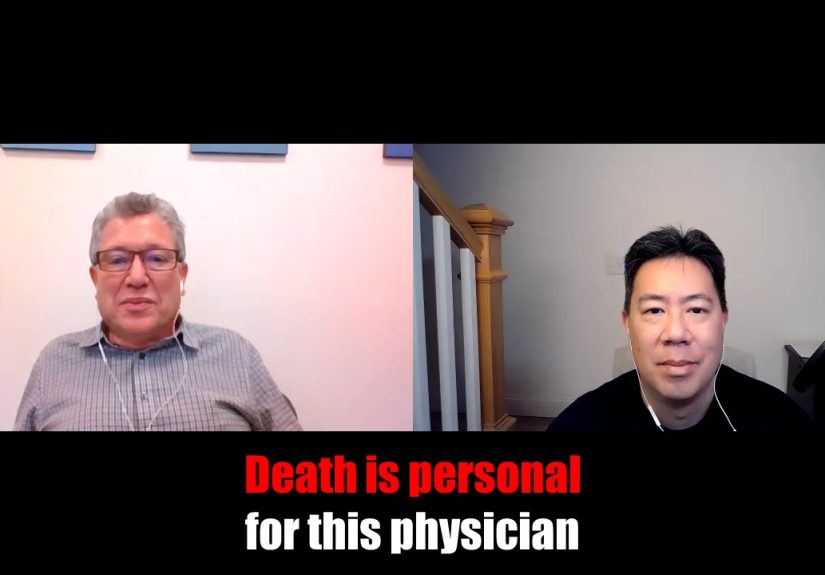
Death is personal for this physician because medicine is personal, even when it tries to wear a lab coat of perfect objectivity.
This article takes a grounded look at why death can land so hard on clinicians, how palliative care and hospice
actually work (and why we confuse them), what “good” end-of-life care looks like in real rooms with real emotions,
and how patients and families can make these moments a little clearerand sometimes even a little kinder.
Why Death Hits Doctors Differently (and Why It Still Hits)
Medical training teaches calm competence: breathe, assess, act. That’s a feature, not a flaw. In emergencies,
you want the clinician who can focus when everyone else is understandably falling apart. But the same training that
builds steadiness can accidentally teach silence: don’t show feelings, don’t get attached, don’t take it home.
The problem is simple: doctors are humans who keep meeting humans on some of their hardest days.
You can’t do that for years and stay untouched. You can become more skilled, yesmore comfortable navigating
uncertainty, more fluent in difficult conversationsbut “comfortable” isn’t the same as “unaffected.”
Many physicians describe a strange double life: professionally composed on the outside, emotionally
busy on the inside. They may not cry in the hallway, but grief still shows upsometimes as sadness,
sometimes as irritability, sometimes as the kind of tired you can’t fix with a weekend.
The Myth of the “Objective” Doctor
We love the idea of the physician as a pure logic machine with a stethoscope. It’s comforting.
It’s also not true.
When a patient is dying, clinicians often juggle competing responsibilities:
protect comfort, respect autonomy, interpret uncertain prognoses, coordinate teams,
and support families who might not agree with each otherwhile also managing their own internal reactions.
That last part is the quiet one. The medical record has a place for “shortness of breath,”
but not for “this reminds me of my grandmother,” or “I’m worried I’m doing too much,” or
“I wish I could give this family one more good day.”
And yet those thoughts affect how conversations gohow present a clinician can be, how clearly they explain options,
and how willing they are to say the words people fear: “I’m worried time may be short.”
When “The Conversation” Is Actually Twenty Conversations
People sometimes talk about end-of-life planning like it’s one big dramatic sit-down:
the family gathers, the doctor enters, and everyone bravely agrees on the perfect plan.
In real life, it’s more like a streaming seriesmultiple episodes, evolving plot, occasional cliffhangers.
Good serious-illness communication usually happens early and often. It starts with values:
What matters most if time becomes limited? What outcomes would feel unacceptable?
Who should speak for you if you can’t speak for yourself?
Three questions that can change everything
- What matters most to you right now? (Not “what should matter,” but what actually matters.)
- What are you most worried about? (Pain, being a burden, losing independence, leaving family behind.)
- What trade-offs are you willingor not willingto make? (More time vs. more comfort, ICU vs. home, procedures vs. peace.)
These questions don’t erase sadness. But they can reduce confusion. They help a physician
align care with the person, not just the diagnosis.
Advance Care Planning: The Kindest Paperwork You’ll Ever Do
Advance care planning often gets marketed like a chore. It’s not. It’s a gift you give to your future self
and to the people who love you. It can include conversations, written wishes (advance directives),
and choosing a health care proxy (someone who can make decisions if you can’t).
When preferences are known, clinicians have a steadier ethical footing. When they’re not,
doctors still try to helpby eliciting values and goals, documenting preferences, and guiding families through
decisions that can feel impossible under time pressure.
Practical tip: if you’re thinking, “I’m too young for that,” you’re also young enough to have things you care about.
Advance care planning isn’t about expecting disaster; it’s about being ready if life gets complicated.
Hospice vs. Palliative Care: Words That Change the Room
Let’s clear up a common misunderstanding: palliative care and hospice are related,
but they are not identical twins. They’re more like cousins who get mistaken for each other at family reunions.
Palliative care in plain English
Palliative care is specialized medical care for people living with serious illness that focuses on relief from symptoms,
stress, and sufferingphysical, emotional, and practical. It can be provided alongside treatments aimed at cure or control.
It’s an extra layer of support, not a surrender flag.
Hospice in plain English
Hospice is a type of palliative care for people who are likely in the last months of life and who have decided to focus on comfort,
not cure. In the U.S., hospice eligibility often involves a clinician certifying a prognosis of about six months or less
if the illness follows its expected courseyet hospice can continue beyond that timeframe if recertified, because prognosis is not a stopwatch.
Why does this matter for physicians? Because the words shape expectations.
If a doctor suggests palliative care, families sometimes hear “the doctor is giving up.”
If a doctor suggests hospice, families sometimes hear “we’re out of options.”
The better translation is: “We’re choosing the option that best matches your goals.”
Comfort-focused care can be deeply active care: managing pain, breathlessness, nausea, anxiety, insomnia; supporting caregivers;
coordinating equipment and home supports; and helping someone live as well as possible for as long as possible.
The Hardest Part Isn’t Always DeathIt’s the Road There
Many clinicians will tell you: the difficult moment isn’t necessarily the instant life ends.
It’s the days or weeks of uncertainty before it. The situation where a patient is receiving very intensive treatments
that may not be helpingand everyone in the room senses it, but no one wants to be the first to say it out loud.
This is where moral distress can appear: the experience of feeling pulled between what you believe is ethically
appropriate and what you feel forced to do by circumstancesystem pressures, family conflict, default “do everything” momentum,
or unclear goals.
When clinicians are repeatedly exposed to these situations without support, it can contribute to burnout and compassion fatigue.
That’s not a character flaw. It’s a human response to high-stakes care that happens in imperfect systems.
Physician Grief: The “Unbilled Procedure”
Here’s something the public doesn’t always see: physicians can grieve patients.
Not every patient, not in the same way, and not with the same intensitybut yes, grief.
A long-term primary care doctor may feel the loss of someone they’ve known for decades.
A hospital doctor may feel shaken by a patient who reminded them of a sibling.
A young resident may carry the first death they witnessed like a stone in their pocket for years.
And sometimes grief is layered with regret: “Did I explain that clearly enough?”
“Did we start that comfort plan too late?”
“Did I miss something?”
In healthcare, there is also a recognized phenomenon where clinicians experience emotional fallout after adverse events or traumatic clinical situations,
including deathsespecially when the team feels isolated or blamed. The best organizations respond with peer support,
debriefing, and a culture that treats clinicians as humans, not disposable parts.
How Doctors Cope Without Turning to Stone
“Professional distance” is sometimes framed as the only way to survive. In reality, the healthiest stance is often
professional presence: caring deeply while maintaining boundaries that keep care safe and sustainable.
What helps (and what many physicians wish existed more often)
- Team debriefs after difficult cases, even if they’re brief.
- Peer support programs that normalize emotional processing.
- Palliative care consultation earlybecause symptom relief and goal clarity help everyone.
- Rituals that create closure: a moment of silence, writing a condolence note, attending a memorial service when appropriate.
- Boundaries that protect both sides: being compassionate without making the patient responsible for the clinician’s feelings.
A gentle truth: clinicians don’t need to become numb to be competent. Many of the best physicians feel a lot.
Their skill is not “having no emotions.” It’s knowing what to do with them.
What Patients and Families Can Do (That Actually Helps)
You shouldn’t have to manage your doctor’s emotions. But you can make the conversation clearer,
and clarity helps everyone.
Five practical moves
- Bring your values to the appointment. Not just your symptomsyour priorities.
- Ask for plain language. “If this were your family member, what would you be thinking about?”
- Name the decision-maker. Make sure the care team knows who your proxy is.
- Ask about palliative care early. It’s not only for the last chapter.
- Give everyone permission to talk honestly. You can say, “We can handle the truth. We want to plan.”
When families can say, “Our goal is comfort at home,” or “Our goal is more time if it doesn’t mean being on machines,”
physicians can tailor treatment to fit real lifenot a generic protocol.
What Medical Education Is Learning (Sometimes the Hard Way)
End-of-life communication isn’t a “soft skill.” It’s a clinical skill with real outcomes:
better symptom control, fewer unwanted interventions, less family trauma, and care that aligns with the person.
Medical educators increasingly emphasize that these conversations are not one-time speeches but ongoing discussions that begin
before crisis moments. Many training programs now include structured communication practice, reflection, and palliative care exposure.
Still, gaps remain. Some clinicians graduate with excellent technical skills and only a thin toolkit for grief, uncertainty,
and the moral complexity of serious illness care. The result is predictable: they learn on the job, in real time, with real stakes.
The hopeful news is that medicine is changing. More teams now treat comfort, dignity, and family support as core outcomesnot consolation prizes.
Conclusion: The Quiet Lesson Behind the Monitor Beeps
If you asked most physicians why they chose medicine, you’d hear variations of the same theme:
to help people. End-of-life care is not a detour from that mission. It is the mission, sharpened.
Death is personal for this physician because each patient is personal: a set of values, relationships, fears, jokes,
traditions, and unfinished plans. When medicine can’t add days to life, it can still add life to daysand that is not nothing.
That is a form of success you don’t measure with a lab value.
And if you’re the patient or the family member reading this: you’re allowed to want honesty and comfort at the same time.
You’re allowed to ask for help. You’re allowed to plan. That’s not giving up. That’s taking care.
Experience Reflections (Extra )
Note: The reflections below are a composite of common clinician experiences and themes, shared without identifying details.
I used to think the hardest part would be the moment someone dies. I imagined it like a scene in a movie:
dramatic, definitive, contained. In real life, it’s rarely that tidy.
The hard part is often the in-between. The day a patient says, “I’m tired,” and I can’t tell if they mean physically,
spiritually, or both. The family meeting where one person is ready for comfort care and another is still bargaining with the universe.
The phone call that starts with a question about a lab result and ends with, “Do you think it’s time to talk about hospice?”
I remember learning to speak in careful medical phrases“guarded prognosis,” “limited options,” “we’re concerned.”
Then I realized those phrases can act like fog. People don’t need fog. They need a flashlight.
The first time I said, “I think time may be short,” I felt my throat tighten, as if the words had weight.
The family didn’t crumble. They leaned in. One of them exhaled like they’d been holding their breath for weeks.
That’s when I learned honesty can be a form of relief.
I also learned that comfort care is not passive. It’s active, detailed work: adjusting medications to ease breathlessness,
making sure pain is controlled without flattening someone’s personality, finding the right supports so a spouse can sleep,
explaining what to expect so panic doesn’t fill the gaps. It’s teamwork, and when it goes well, it can feel like we’re finally rowing
in the same direction.
Sometimes, I carry small images home: a patient laughing at an old story, a grandchild climbing into bed for a last cuddle,
a spouse smoothing the blanket like that one gentle motion can keep everything together. I don’t think those memories are a burden.
I think they’re a receipt for what mattered.
I’ve also learned to notice my own limits. If I don’t pause, reflect, or talk to a colleague, the losses stack up.
Not as one big tragedybut as a slow accumulation of “almosts” and “what ifs.” So I’ve built small rituals:
a quiet moment after a death, a brief note to the team thanking them, a reminder to call my own family back.
Nothing grand. Just enough to stay human.
Death is personal for me not because I’m failing as a professional, but because I’m practicing medicine the way it was always meant to be practiced:
with skill, yesand with presence. If I ever stop feeling anything at all, that’s the day I worry I’m no longer doing this work safely.
Medical note: This article is for educational purposes and isn’t a substitute for professional medical advice. If you’re facing serious illness decisions, talk with your healthcare team.