Table of Contents >> Show >> Hide
- Quick Snapshot: The Core Difference
- What Is Deep Vein Thrombosis (DVT)?
- What Are Varicose Veins?
- Why They Happen: Risk Factors Compared
- How to Tell the Difference by Symptoms
- How Doctors Diagnose DVT vs. Varicose Veins
- Treatment: What’s Different (and Why It Matters)
- Complications: What You’re Trying to Prevent
- When to Call a Doctor (and When to Call 911)
- Prevention and Daily Habits That Actually Help
- Experiences: What Living With These Conditions Can Feel Like (Realistic, Composite Stories)
- Conclusion
Your legs do a lot. They carry you through school drop-offs, grocery runs, long shifts, weekend hikes, and the occasional “I can totally make that yellow light” sprint.
So when something looks offlike a ropey blue vein that suddenly wants its own zip code, or a swollen calf that feels weirdly tightit’s normal to wonder:
Is this just varicose veins… or something more serious like a blood clot?
Deep vein thrombosis (DVT) and varicose veins can both involve leg discomfort and visible vein changes, but they are not the same problem,
and they don’t carry the same level of risk. One is a clot in a deep vein that can become dangerous quickly. The other is usually a valve-and-blood-flow issue in superficial veins
that tends to be chronic, annoying, and sometimes painfulyet often manageable.
Let’s break it down clearly (and without turning your legs into a medical drama series). You’ll learn what each condition is, how they feel, why they happen,
how doctors diagnose them, and when it’s time to stop Googling and get urgent care.
Quick Snapshot: The Core Difference
| Feature | Deep Vein Thrombosis (DVT) | Varicose Veins |
|---|---|---|
| What it is | A blood clot in a deep vein (often in the leg) | Enlarged, twisted superficial veins from weak/failed valves |
| Why it matters | Can lead to pulmonary embolism (clot to the lungs) | Usually not life-threatening; can worsen over time and cause complications |
| Typical look | May look normal or swollen; not always visibly “veiny” | Bulging, rope-like veins near the skin (often blue/purple) |
| Typical feel | Swelling, pain/tenderness, warmth; sometimes no symptoms | Aching/heaviness, itching, cramping, swelling after standing |
| What diagnosis often uses | Clinical risk assessment + D-dimer + ultrasound | Physical exam + duplex ultrasound for reflux/vein mapping |
| Common treatments | Anticoagulants (“blood thinners”), sometimes procedures | Compression, lifestyle changes, sclerotherapy, ablation, phlebectomy |
What Is Deep Vein Thrombosis (DVT)?
Deep vein thrombosis means a blood clot has formed in a deep vein, most often in the lower leg or thigh.
“Deep” matters because these veins are larger and carry a lot of blood back toward your heart.
If a piece of the clot breaks off and travels to your lungs, it can cause a pulmonary embolism (PE), which is an emergency.
Common DVT symptoms (but not always)
DVT symptoms can be sneaky. Some people have obvious signs; others have none. When symptoms do show up, they often include:
- Swelling in one leg (or arm)
- Pain or tenderness (often in the calf) that may feel like a cramp or soreness
- Warmth in the affected area
- Redness or discoloration of the skin
Important reality check: you can have a DVT with minimal symptoms, and you can have leg pain/swelling for reasons that have nothing to do with a clot.
That’s why DVT isn’t a “guess-and-hope” situationrisk factors and proper testing matter.
Signs of pulmonary embolism (PE): when to get emergency help
If you suspect DVT and you also develop symptoms like sudden shortness of breath, chest pain that’s worse with breathing, fainting, or coughing up blood,
treat it as an emergency. Call emergency services right away. This isn’t the moment for “I’ll sleep it off.”
What Are Varicose Veins?
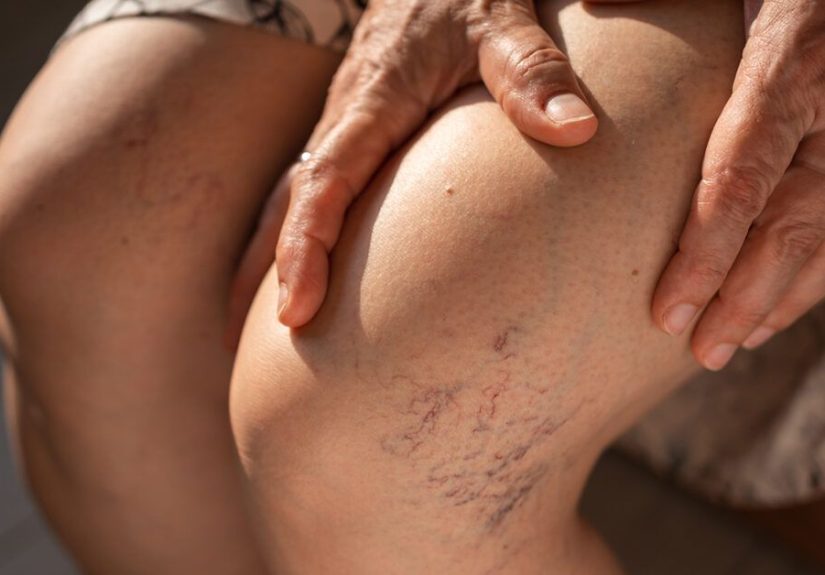
Varicose veins are enlarged, twisted veins close to the skin’s surface (superficial veins). They often look like raised blue or purple cords and
show up most commonly in the legs.
The usual root cause is a plumbing issuespecifically, vein valves that aren’t closing properly. Veins are supposed to move blood upward against gravity.
When valves weaken, blood can pool, pressure builds, and the vein stretches into that familiar bulging shape.
Common varicose vein symptoms
- Aching, heaviness, or “tired legs,” especially after standing
- Throbbing or cramping
- Itching around a vein
- Swelling around the ankles
- Skin changes over time (discoloration, dryness, irritation)
Some people have varicose veins that are mostly cosmetic. Others have real discomfort or develop complications like skin irritation, inflammation, or (in more advanced cases)
slow-healing sores near the ankle. In other words: not usually an emergency, but not always “no big deal,” either.
Why They Happen: Risk Factors Compared
DVT risk factors (think: clot-friendly conditions)
DVT is more likely when blood flow slows, the vein is injured, or the blood is more prone to clotting. Common risk factors include:
- Recent surgery or hospitalization
- Long periods of immobility (bed rest, long travel, limited movement after injury)
- Pregnancy and the postpartum period
- Hormone use (such as estrogen-containing birth control or hormone therapy)
- Cancer and some cancer treatments
- Prior history of blood clots or inherited clotting tendencies
- Major trauma or fractures
- Increasing age and certain chronic medical conditions
Real-life example: someone has knee surgery, spends a few days moving less than usual, and develops one-sided calf swelling a week later.
That timeline and risk profile raises the “check for DVT” flag much higher than a random ache after leg day.
Varicose vein risk factors (think: valve strain + gravity)
Varicose veins are often linked to long-term pressure on leg veins and a tendency toward weaker valves. Common risk factors include:
- Family history (genetics can be loud)
- Pregnancy (increased blood volume + hormonal changes + pressure from the uterus)
- Age (valves can weaken over time)
- Jobs or routines with lots of standing or sitting
- Excess body weight (extra pressure on leg veins)
- Prior leg vein issues or injury
Real-life example: a teacher, nurse, or retail worker stands for hours daily. By the end of a shift, legs feel heavy, ankles swell, and visible veins become more prominent.
That pattern fits varicose veins far more than DVT.
How to Tell the Difference by Symptoms
Clues that lean toward DVT
- One-sided swelling (one leg noticeably larger)
- New pain/tenderness in the calf or thigh that isn’t explained by an obvious strain
- Warmth and color change over an area
- Symptoms appearing after travel, surgery, illness, or reduced mobility
Clues that lean toward varicose veins
- Visible bulging veins close to the skin
- Heaviness/aching that worsens after standing and improves with elevation
- Itching, mild swelling at the ankles, nighttime cramps
- A long, slow history (not a sudden “it started an hour ago” story)
One more twist: superficial thrombophlebitis (a clot/inflammation in a superficial vein) can look like a tender, red, ropey line under the skin.
It can occur in varicose veins and feels scary because it’s painful and obvious. It’s usually less dangerous than DVTbut it’s still worth medical evaluation,
especially if symptoms spread, you have clot risk factors, or the area is close to where deeper veins connect.
How Doctors Diagnose DVT vs. Varicose Veins
Diagnosing suspected DVT
Clinicians often start with a pretest probability approach (how likely a clot is based on symptoms and risk factors),
then choose testing accordingly. Common tools and tests include:
- D-dimer blood test: helps determine whether more testing is needed (it’s not a “yes/no” by itself)
- Duplex (Doppler) ultrasound: the go-to imaging test for leg DVT
- Additional imaging in certain situations (for example, if symptoms suggest a clot in the pelvis/abdomen)
Translation: if your risk is low and tests are reassuring, you may avoid unnecessary imaging. If your risk is high, providers usually move quickly to ultrasound and treatment decisions.
The goal is speed with accuracybecause missing a DVT matters.
Diagnosing varicose veins (and mapping what’s really going on)
Varicose veins often start with a physical examwhat the veins look like, where symptoms are, and what makes them better or worse.
If treatment is being considered, a duplex ultrasound is commonly used to check for venous reflux (backward flow) and to map which veins are involved.
This helps match the right treatment to the right veinbecause “close the wrong vein” is not a great plan.
Treatment: What’s Different (and Why It Matters)
DVT treatment: stopping the clot from growing or traveling
The mainstay of DVT treatment is anticoagulationmedications often called “blood thinners.” They don’t literally thin the blood;
they reduce clotting ability so the existing clot is less likely to grow and new clots are less likely to form.
Treatment length varies depending on what caused the clot (temporary risk like surgery vs. ongoing risk), clot location, and individual factors.
In certain high-risk cases, specialists may consider procedures or other interventionsbut many people are treated with medication and careful follow-up.
If you think you have DVT, don’t self-treat with random supplements or “detox” ideas. DVT management is medical-grade decision-making.
Varicose vein treatment: improving flow, symptoms, and complications
Varicose vein care usually follows a step-up approach:
1) Conservative measures (often the first move)
- Compression stockings to support veins and reduce pooling
- Leg elevation (yes, your couch can be a medical device)
- Regular walking and calf-strength movement (your calf muscles help pump blood upward)
- Breaking up long standing/sitting with short movement breaks
- Weight management, when relevant, to reduce pressure on leg veins
2) Office-based procedures (when symptoms persist or complications appear)
- Sclerotherapy: an injection that causes a problem vein to close and fade over time
- Endovenous thermal ablation (laser or radiofrequency): a catheter-based method to close a refluxing vein
- Ambulatory phlebectomy: removing bulging surface veins through tiny openings
A practical note: insurance coverage can depend on whether treatment is medically necessary (pain, swelling, skin changes, ulcers) versus purely cosmetic.
That’s one reason documentation and ultrasound mapping can be important.
Complications: What You’re Trying to Prevent
DVT complications
- Pulmonary embolism (PE): a clot traveling to the lungs (medical emergency)
- Post-thrombotic syndrome: long-term leg swelling, pain, and skin changes after DVT due to vein damage
Varicose vein complications
- Worsening pain/heaviness and swelling
- Skin irritation or discoloration
- Inflammation of superficial veins
- In advanced cases: venous stasis changes and ulcers near the ankle
Think of DVT as “potentially dangerous quickly,” and varicose veins as “can become a bigger quality-of-life and skin-health problem over time.”
Both deserve attentionjust on different timelines and with different urgency.
When to Call a Doctor (and When to Call 911)
Get urgent medical evaluation for possible DVT if you have:
- New, unexplained swelling in one leg
- Calf or thigh pain/tenderness plus warmth or discoloration
- Symptoms after travel, surgery, hospitalization, pregnancy/postpartum, or immobilization
Call emergency services immediately if you have possible PE symptoms:
- Sudden shortness of breath
- Chest pain that may worsen with breathing
- Fainting or feeling like you might pass out
- Coughing up blood
Schedule a non-urgent visit for varicose veins if you have:
- Persistent aching/heaviness, swelling, or itching
- Skin changes (darkening, thickening, irritation) near the ankles
- Veins that are increasingly painful, inflamed, or interfering with daily life
- Questions about treatment options beyond compression
Prevention and Daily Habits That Actually Help
You can’t control every risk factor (thanks, genetics), but you can stack the deck in your favor.
These habits support vein health and lower the odds of both pooling and clot-friendly stagnation:
- Move regularly: stand up, walk, flex your anklesespecially during long sitting
- Use your calf pump: walking is simple and surprisingly effective
- Consider compression during high-risk times: long travel, long shifts, postpartum (ask a clinician if you’re unsure)
- Hydrate and avoid “immobile marathons” (binge-watching counts if you never move)
- Know your risk profile: recent surgery, hormones, pregnancy, cancer, or prior clots may change what “normal leg symptoms” mean
The big takeaway: varicose veins often improve with smart routines and targeted treatment, while DVT is a condition where early evaluation can prevent a serious emergency.
If your leg is sending you new, one-sided, swollen, warm, painful signalslisten.
Experiences: What Living With These Conditions Can Feel Like (Realistic, Composite Stories)
People don’t experience DVT or varicose veins as neat textbook bullet points. Real life is messiermore like:
“My leg feels weird, I’m busy, and I don’t want to overreact… but also I’d like to keep breathing normally, thanks.”
The experiences below are composite, realistic scenarios based on commonly reported patternsshared to help you recognize how these problems might show up day-to-day.
1) “The Long-Trip Leg Surprise” (DVT concern)
After a long flight (or a road trip where your biggest movement was reaching for snacks), you notice one calf looks puffier than the other.
At first you blame salt, dehydration, or “airport floor germs” (a scientifically meaningless but emotionally satisfying explanation).
Then the calf starts to feel tight and sorealmost like a muscle strain you don’t remember earning.
The tricky part? There’s no dramatic injury moment. No pop. No twist. Just a steady “this isn’t normal” vibe.
People in this situation often describe a mental tug-of-war: “I don’t want to be dramatic” vs. “What if this is serious?”
That’s where risk factors matter. Long immobility, recent surgery, hormone use, pregnancy/postpartum status, or a history of clots can move the needle from
“monitor and rest” to “get checked today.” A quick evaluation can turn anxiety into clarityeither ruling out a clot or catching one early enough to prevent complications.
2) “The Shift-Worker Heavy Legs” (varicose vein pattern)
Standing all day can make your legs feel like they’re wearing invisible ankle weights by 4 p.m.
Many people with varicose veins describe a predictable rhythm: mornings are fine, midday brings mild aching,
and evenings deliver the full combo mealheaviness, throbbing, mild swelling near the ankles, and a visible vein that looks more pronounced
after hours on your feet.
The most telling detail is how symptoms behave: legs feel better after elevation, walking a bit, or using compression.
Some people say compression stockings felt awkward at firstthen became the “why didn’t I do this sooner” item they keep buying in multiple pairs.
Not because they’re fashionable (though apparently they come in patterns now), but because the legs simply feel less fatigued.
3) “The Itch That Wouldn’t Quit” (skin + vein connection)
Varicose veins aren’t always about appearance. Sometimes the first complaint is itchy skin around the lower leg or ankle,
dryness that doesn’t respond to typical lotion, or a patch of discoloration that seems to deepen over time.
People often assume it’s eczema, allergies, or a new laundry detergent.
Then someone finally points out the nearby bulging veins and the pattern clicks: the skin is reacting to chronic pressure and pooling below faulty valves.
This is where a medical visit can shift the whole strategy. Instead of cycling through random creams, a clinician may recommend compression,
targeted skin care, and an ultrasound to see whether venous reflux is driving the problem.
The experience many people report is reliefnot just in symptoms, but in finally having an explanation that fits the pattern.
4) “The Scary Red Rope” (superficial vein inflammation vs. deeper clot)
One day you notice a tender, firm, cord-like area under the skinred, warm, and sore.
It can feel dramatic because it’s visible and painful. Many people immediately worry it must be DVT.
Sometimes it’s superficial thrombophlebitis, especially in the setting of varicose veins.
Even if it’s “less dangerous” than a deep clot, the lived experience is still unsettling: it hurts, it looks angry, and it demands attention.
People often describe feeling reassured when a clinician evaluates the pattern and decides whether imaging is needed.
The best part of that experience isn’t just treatmentit’s getting a clear plan and knowing what warning signs to watch for next.
5) “After Diagnosis: The Emotional Whiplash”
Whether it’s DVT or varicose veins, diagnosis can come with a weird emotional mix: fear, relief, frustration, and the sudden realization that veins are
more important than anyone gave them credit for.
With DVT, people often report that the scariest part is the “what if it traveled to my lungs?” thoughtfollowed by relief once treatment begins.
With varicose veins, the frustration is often chronic: “Why do my legs hurt after a normal day?” or “Why do these keep getting worse?”
The hopeful thread is that both conditions are treatable, and many people feel better once they understand what’s happening and follow a plan.
The experience shifts from vague worry to practical management: moving more, using compression when advised, treating underlying reflux when needed,
and knowing which symptoms should never be ignored.
Bottom line: varicose veins are often a long-term comfort and circulation issue; DVT is a potentially urgent clotting problem.
If you’re ever unsure which one you’re dealing with, it’s completely reasonable to ask for medical evaluationbecause guessing is not a strategy.
Conclusion
DVT and varicose veins can both involve leg discomfort, but they live in very different risk categories.
DVT is a clot in a deep vein that can become dangerous if it travels to the lungs, making prompt evaluation crucial when symptoms and risk factors line up.
Varicose veins are usually caused by weakened valves in superficial veins, often leading to heaviness, aching, swelling, and visible bulging veinsannoying,
sometimes painful, and occasionally complicated, but typically not an emergency.
If you remember nothing else, remember this: sudden one-leg swelling, warmth, tenderness, and discolorationespecially after immobility, surgery, or hormonal changesdeserve medical attention.
And if you ever add shortness of breath or chest pain to the mix, don’t wait.