Table of Contents >> Show >> Hide
- The big picture: Your “heart-smart plate” at a glance
- Alcohol and your heart: honest pros, clear cons
- Calcium: food first, supplements only if needed
- Other levers that meaningfully move cardiovascular risk
- A simple 1-day heart-healthy menu (DASH-style)
- Frequently asked (rapid-fire)
- Bottom line
- Real-life experiences: what this looks like day to day (≈)
Short version: A heart-smart diet is mostly plants, mostly unprocessed, and mostly delicious. The long version (the one search engines love and your future self will thank you for) dives into how alcohol really behaves in your body, what to know about calcium from food vs. supplements, and which everyday choices move your blood pressure, cholesterol, and inflammation in the right direction.
The big picture: Your “heart-smart plate” at a glance
Two U.S. pillars guide heart-healthy eating: the Dietary Guidelines for Americans and the DASH way of eating (Dietary Approaches to Stop Hypertension). Both emphasize vegetables, fruits, whole grains, beans, nuts, seafood, and low-fat dairy; they also say to limit saturated fat, sodium, added sugarsand alcoholic drinks.
Core targets worth taping to your fridge
- Sodium: No more than 2,300 mg per day; shoot for 1,500 mg if you have high blood pressure.
- Potassium: About 3,500–5,000 mg daily from foods (unless your clinician says otherwise).
- Saturated fat: Keep it under 6–10% of calories; swap in unsaturated fats.
- Fiber: ~25–30 g per day from foods (oats, beans, fruit, veggies, whole grains).
- Added sugars: Keep low (the AHA cap is ~6% of calories).
- Fish: Fatty fish twice per week for omega-3s.
Alcohol and your heart: honest pros, clear cons
Alcohol isn’t a health food. U.S. guidance says if you don’t drink, don’t start for heart benefits; if you do drink, do so cautiously and in moderation. That’s because the cardiometabolic ledger for alcohol is complicated: low amounts may show neutral to modest benefit in some outcomes, while risks clearly climb with quantity and binge patterns.
First, what counts as one drink?
In the U.S., a standard drink equals 14 grams (0.6 fl oz) of pure alcohol: 12 oz of 5% beer, 5 oz of 12% wine, or 1.5 oz of 40% spirits. Oversize pours and craft beverages with higher ABV easily turn “one drink” into two.
How much is “moderate” right now?
The 2020–2025 Dietary Guidelines cap alcohol at up to 1 drink/day for women and up to 2 for mennever as an average to “save up” for weekends. Public-health voices and AHA messaging increasingly stress “limit or preferably avoid,” and reports suggest the next Guidelines may soften specific numeric limits in favor of a stronger overall caution. Either way, the message is: less is better for health, and zero is best for many people.
Cardiac realities worth knowing
- Atrial fibrillation (AFib): Even small amounts of alcohol are linked to a higher AFib risk; meta-analyses and newer cohort data support a dose-related relationship.
- Blood pressure & stroke: Heavy drinking raises blood pressure and stroke risk; binge drinking is particularly harmful.
- Cholesterol & triglycerides: Alcohol can push triglycerides up; any perceived HDL “benefit” doesn’t outweigh broader risks. AHA science advisories now emphasize caution.
- Cancer risk: Alcohol increases risk for several cancersanother reason not to drink for “heart health.”
If you choose to drink, make it truly moderate
- Count actual standard drinks (check ABV and serving size).
- Avoid binges; spread drinks across the weeknever “catch up.”
- Build alcohol-free defaults: sparkling water + citrus, alcohol-free beers/wines.
- Skip drinking if you’re pregnant, driving, on interacting meds, or have AFib, liver disease, or substance-use risk.
Calcium: food first, supplements only if needed
Calcium is essential for bones, nerves, and musclesand yes, your heart. Adults generally need about 1,000–1,200 mg/day (higher needs with age); the safe upper limit ranges ~2,000–2,500 mg/day depending on age. Aim to meet needs with food (dairy, calcium-set tofu, fortified plant milks, leafy greens, canned salmon/sardines with bones).
Calcium and heart disease: what the evidence actually says
Does taking calcium pills harm the heart? The evidence is mixed. Some studies link high-dose supplements to higher cardiovascular event risk, while others don’t. Major medical sources take a prudent middle line: prefer dietary calcium, use supplements to fill a documented gap, and avoid excessive doses.
Also worth noting: overdoing calcium (especially with supplements) can cause constipation or kidney stones; talk to your clinician if you have kidney disease or are on medications that affect calcium balance.
If a supplement is appropriate
- Pick a reliable product (USP or NSF verified when possible) and keep individual doses ≤500 mg, taken with meals for better absorption.
- Do not exceed the age-specific upper limit; total up food + pills.
- Loop in your clinician if you take iron, thyroid meds, PPIs, or thiazide diureticsinteractions are common.
Other levers that meaningfully move cardiovascular risk
Sodium down, potassium up
Lowering sodium to 1,500–2,300 mg/day helps blood pressure; raising potassium with foods (produce, beans, dairy, fish) helps counter sodium’s effects and relax blood vessels. People with kidney disease or on certain meds need individualized plansask your care team.
Fat quality beats fat quantity
Replace saturated fats (fatty meats, butter, full-fat dairy, tropical oils) with unsaturated fats (olive oil, canola, nuts, seeds, avocados, fish). This swap lowers LDL cholesterol and atherosclerotic risk.
Fiber & whole grains: small changes, big dividends
Hitting ~25–30 g/day of fiberespecially soluble fiber from oats, beans, barley, fruitmodestly lowers LDL and improves long-term CVD outcomes. Aim to make at least half your grains whole.
Omega-3s: food first, supplements are case-by-case
Seafood twice weekly provides EPA/DHA linked to lower CVD mortality. For people with established coronary disease, ~1 g/day of EPA+DHA from food is often advised; prescription-strength omega-3s are used to treat very high triglycerides. For the general population, routine fish-oil pills don’t clearly prevent heart attacksand higher doses can raise AFib risk.
Added sugars: stealth calories, real risk
Excess sugar drives weight gain, fatty liver, and higher triglycerides. Keep added sugars to ~6% of caloriesa simple nudge that pays dividends for blood pressure, lipids, and waistline.
A simple 1-day heart-healthy menu (DASH-style)
- Breakfast: Oatmeal cooked with low-fat milk; sliced berries; sprinkle of walnuts; black coffee or tea.
- Lunch: Big salad (spinach, tomatoes, cucumbers, chickpeas, avocado, pumpkin seeds) with olive-oil vinaigrette; whole-grain roll.
- Snack: Plain yogurt with cinnamon and sliced peaches.
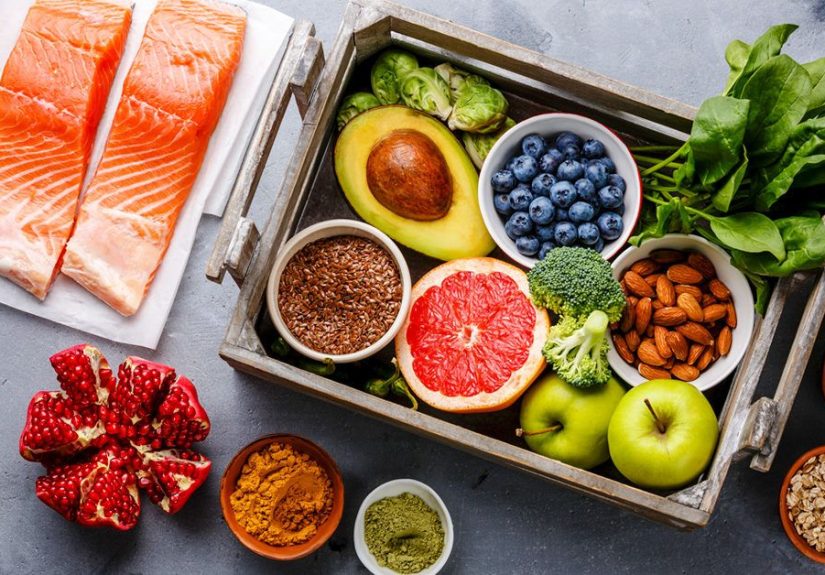
- Dinner: Baked salmon (or beans + quinoa if plant-based), roasted broccoli and carrots, small baked potato with herbs; side of fruit.
- Tip: This template hits potassium, fiber, and unsaturated fats while keeping saturated fat, sodium, and added sugar low.
Frequently asked (rapid-fire)
Is red wine special? Not compared with other alcohol typesethanol drives most effects. Don’t start drinking for heart benefits.
What about mocktails? Huge yessparkling water + citrus + bitters (alcohol-free) scratches the ritual without the risks.
Should I take a fish-oil pill? Ask your clinician. It helps for very high triglycerides; for routine prevention, food sources are preferred and high doses may raise AFib risk.
Bottom line
For heart health, the heavy hitters are daily habits: a DASH-or-Mediterranean pattern; less sodium and added sugar; more potassium, fiber, and unsaturated fats; fish twice a week; and if you drink, keep it truly moderateor skip it. For calcium, meet needs with food; use supplements only to fill verified gaps, and avoid excess.
SEO wrap (publish-ready)
sapo: Want a diet that actually moves your blood pressure, cholesterol, and energy in the right direction? This in-depth guide breaks down the heart-smart plate, demystifies alcohol’s real effects (including AFib risk), explains when calcium belongs on your grocery list versus in a pill bottle, and shows you practical swaps that lower risk without lowering flavor.
Real-life experiences: what this looks like day to day (≈)
Marina, 54, “weekend wine lover.” Marina’s cholesterol was fine, but her smartwatch kept flagging irregular rhythms after dinner on Fridays. She tallied her pours and discovered her “one” was closer to two or three large glasses. She swapped in alcohol-free sparkling options for the second round, spaced drinks with water, and added a fish-forward Friday (salmon, roasted veggies, farro). Two months later, her palpitations had dwindled, she slept better, and her Saturday runs didn’t feel like uphill battles. Her cardiology visit focused on staying the course rather than starting a medication.
Ray, 61, “calcium for bones, but how?” Ray’s DEXA scan showed osteopenia. He grabbed a high-dose calcium supplement and a multivitamin “just to be safe.” After a pharmacist consult, he realized food could cover most of his needs: a fortified soy latte at breakfast, tofu stir-fry or canned salmon with bones twice weekly, and a cup of low-fat yogurt most days. He added a modest 500-mg calcium citrate pill with dinner on days his diet fell short and stopped the double-dosing. His stomach thanked him, and his kidney-stone-prone brother thanked him for not tempting fate.
Aly & Dev, 39 and 41, “BP creeping up.” Their home cuff started reading 132/84 and 138/86. They didn’t think of themselves as “salty snack people,” but a quick label audit was eye-opening: deli turkey, jarred sauces, and a favorite frozen entrée were doing the heavy sodium lifting. They set a playful “potassium challenge”five produce servings by 5 p.m.and chose lower-sodium swaps for staples. The couple also cooked one big pot of beans weekly and prepped overnight oats with fruit. Within six weeks, Aly’s readings hovered near 122/78 and Dev’s around 126/80, plus they felt less puffy after long flights.
Sam, 47, “triglycerides in the 300s.” Sam’s clinician emphasized cutting sugary drinks and refined carbs and discussed prescription-strength omega-3s as an option. Sam went all-in on water, unsweetened tea, and high-fiber lunches (lentil soup, tuna on whole-grain, apple + almonds). Two months later, his triglycerides halved into the 150s, and energy crashes after lunch disappeared. He didn’t need to rely on over-the-counter fish-oil capsuleswhich had previously given him fishy burps and no lab improvement.
Practical takeaways from these stories: 1) Alcohol creepscount real servings and consider “dry days.” 2) Calcium is a “food-first” mineral; supplements are tools, not a lifestyle. 3) Blood pressure loves potassium: think beans, leafy greens, yogurt, bananas, potatoes, and citrus. 4) Triglycerides follow sugar and refined starchtame those, and you often tame the number. 5) Simple, repeatable meals beat complicated plans: a bean pot, a grain pot, a fish night, cut fruit in the fridge, and olive oil on the counter.
None of these changes required perfectionjust momentum. Start with the lever that feels easiest this week, keep score with your cuff and labs, and expand from there. Your heart (and future you) will notice.