Table of Contents >> Show >> Hide
- Type L vs. Type M in one minute
- The real difference: wall thickness (with actual numbers)
- Copper sizing 101: why “1/2-inch” isn’t 1/2-inch
- What thicker vs. thinner walls change in real life
- Typical applications: where each type is commonly used
- Code and inspection: the rules are local (and that’s not a joke)
- How to identify Type L vs. Type M in the wild
- Cost: why Type M is cheaper (and what you’re trading for that savings)
- Choosing the right type: a decision guide you can actually use
- Installation tips that matter more than the letter on the pipe
- FAQ
- Real-world experiences and lessons
Picking between Type L and Type M copper pipe feels like ordering coffee: both are “copper,” both will get the job done, and somehow the wrong choice will be discovered after you’ve cut everything to length.
Here’s the truth: Type L and Type M copper tubing are the same material family and the same outside diameter for a given nominal sizebut they’re not the same wall thickness. That one detail ripples into cost, durability, pressure margin, and what your local inspector will allow. Let’s make it simple, specific, and (mostly) regret-free.
Type L vs. Type M in one minute
- Type L (blue) = thicker wall, smaller inside diameter, more “insurance,” usually costs more.
- Type M (red) = thinner wall, slightly larger inside diameter, usually costs less, may be restricted by local code in some situations.
- Same nominal size = same outside diameter. Your fittings don’t care which letter you picked. Your future self might.
The real difference: wall thickness (with actual numbers)
Let’s put numbers on it. Below are common sizes shown as they’re typically referred to at the store (“1/2-inch,” “3/4-inch,” etc.). Notice how the outside diameter stays the same while wall thicknessand therefore inside diameterchanges.
| Nominal size | Outside diameter (OD) | Type L wall thickness | Type L inside diameter (ID) | Type M wall thickness | Type M inside diameter (ID) |
|---|---|---|---|---|---|
| 1/2 in. | 0.625 in. | 0.040 in. | 0.545 in. | 0.028 in. | 0.569 in. |
| 3/4 in. | 0.875 in. | 0.045 in. | 0.785 in. | 0.032 in. | 0.811 in. |
| 1 in. | 1.125 in. | 0.050 in. | 1.025 in. | 0.035 in. | 1.055 in. |
Copper sizing 101: why “1/2-inch” isn’t 1/2-inch
If you’ve ever held “1/2-inch copper” and thought, “This looks suspiciously like 5/8-inch,” congratulationsyou have working eyeballs. Copper water tube uses ASTM standard sizes where the actual outside diameter is typically 1/8-inch larger than the nominal size label. That’s why 1/2-inch copper measures 5/8-inch OD.
This matters because Type L and Type M share the same OD. The only thing changing is wall thickness, which changes ID, which changes:
- how much water can flow through at a given pressure drop (a little),
- how much copper is in each foot of pipe (more for L, less for M),
- how much “buffer” you have against dents, corrosion, and wear (more for L).
What thicker vs. thinner walls change in real life
1) Pressure margin (and why “burst pressure” is not your design pressure)
Thicker walls generally handle higher internal pressures and provide more margin for temperature-related stress, water hammer, and aging. One dramatic way to show this is burst pressure data (destructive testing at room temperature). For example, a 1/2-inch tube has a higher average burst pressure in Type L than Type M. That does not mean your house is running at thousands of PSI (if it is, call someonequickly). It means the thicker tube has more headroom.
Translation: if you’re choosing between “more margin” and “less margin,” Type L is the “more margin” option.
2) Dents, dings, and the “mystery nail” problem
In walls, ceilings, and crawlspaces, copper doesn’t just fight water pressureit fights people. A slightly thicker wall is more resistant to denting from rough handling, framing contact, accidental impacts, and that one drywall screw that definitely “missed the stud.”
If your run is exposed (garage, utility room) or in a place where it might get bumped, Type L is often chosen for toughness. If your run is well-protected and properly supported, Type M can be perfectly reasonable where permitted.
3) Corrosion and service life (the quiet, slow villain)
Copper is durable, but it’s not invincible. Water chemistry (pH, mineral content, dissolved oxygen, chlorides, and disinfectants) plus flow velocity and installation quality can influence corrosion risk. A thicker wall doesn’t magically “stop corrosion,” but it can provide more time and tolerance before a pinhole leak becomes your new indoor water feature.
If you’re in an area known for aggressive water, if the piping will be difficult to access later (think: under-slab), or if you just want extra buffer, Type L is often the conservative play.
4) Flow: Type M is a tiny bit roomier inside
Because Type M has thinner walls, it has a slightly larger inside diameter. That can mean slightly less friction loss for the same flowespecially over long runs. But the difference is usually modest. For example, at 1/2-inch nominal size, the inside cross-sectional area is only a bit larger for Type M than Type L. In many homes, layout, fittings, and overall sizing decisions matter more than this small ID difference.
In other words: don’t pick Type M only because you think it will turn your shower into a firehose. Proper sizing does that. A few thousandths of an inch does not.
Typical applications: where each type is commonly used
Type M: budget-friendly for interior supply where allowed
Type M is commonly used in residential water distribution (especially above ground) and other “normal duty” pressure applications where local code allows it. It’s popular because it uses less copper per footso it tends to be cheaper and slightly lighter to handle.
Good fits for Type M (when permitted):
- Interior branch lines to fixtures (sinks, toilets, showers) in typical homes
- Accessible runs where future replacement is not a demolition project
- Projects where budget matters and the installation is well supported and protected
Type L: the “sleep well” choice for higher-risk or harder-to-repair areas
Type L is widely used for domestic water service and distribution and is a common choice in residential and commercial workespecially where added durability is valued.
Good fits for Type L:
- Main distribution lines and longer runs
- Areas with higher risk of damage (exposed locations)
- Underground/under-slab applications (often preferred; sometimes required)
- Renovations where you want “do it once” reliability
Code and inspection: the rules are local (and that’s not a joke)
Model codes recognize copper water tube made to common standards, including Type L and Type M, but local amendments can be stricter. Some jurisdictions require Type L (or heavier) for certain water piping, while allowing Type M only in specific scenarios (like above-ground runs).
Practical takeaway: before you buy 200 feet of anything, check your local requirements or ask your inspector/plumbing department what they expect for your application (especially for under-slab, underground, or commercial work). This is one of those “five-minute phone call to avoid a five-hour redo” moments.
How to identify Type L vs. Type M in the wild
You don’t need a microscopejust look for markings.
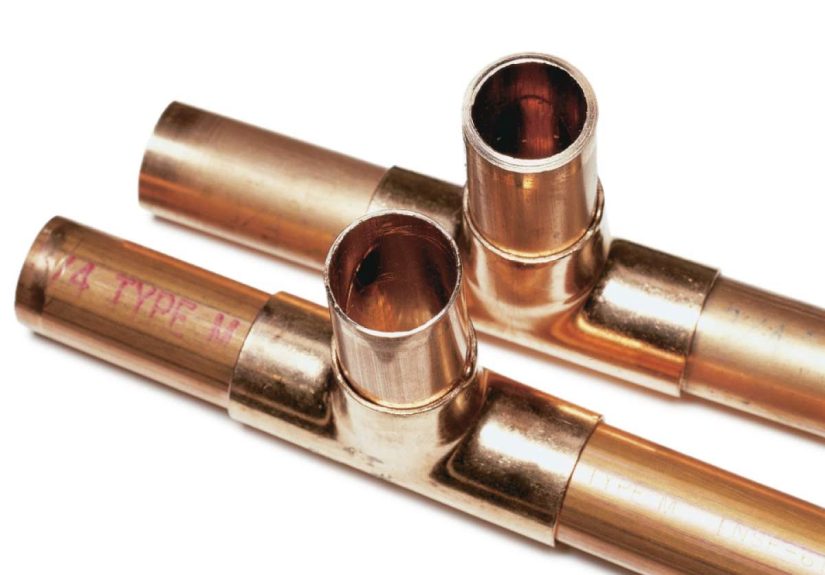
- Color: Type L is commonly marked blue; Type M is commonly marked red.
- Printed label: The tube should be printed or stamped with its type and standard.
- Incised markings: Many copper tubes are permanently marked at intervals with manufacturer and type info.
Important myth-buster: red and blue markings do not mean “hot” vs. “cold.” They mean “Type M” vs. “Type L.” Water temperature is not a branding decision made by a paint stripe.
Cost: why Type M is cheaper (and what you’re trading for that savings)
Type M generally costs less because it contains less copper per foot. That’s itno magic, no secret discount club, just basic math and metal prices.
So what are you trading?
- Less wall thickness = less tolerance for physical damage and long-term wear.
- Potential code limitations depending on where and how you use it.
- Possibly higher “replacement pain” later if the pipe is in a hard-to-reach location.
If the pipe will be easy to access later and your local code allows Type M, the savings can make sense. If the pipe will be buried, encased, or otherwise miserable to replace, many homeowners and pros treat Type L like a cheap insurance policy.
Choosing the right type: a decision guide you can actually use
Choose Type L when…
- You’re running pipe under a slab, underground, or anywhere replacement would be expensive and invasive.
- You want more durability against dents, abrasion, and “oops” damage during construction.
- Your local code or inspector prefers or requires Type L for the application.
- You’re renovating and want the plumbing equivalent of “buy once, cry once.”
Choose Type M when…
- The run is indoors, accessible, and well protected.
- Your local code explicitly permits Type M for water distribution in that location.
- You’re doing a budget-conscious project and understand the tradeoffs.
Installation tips that matter more than the letter on the pipe
Type L vs. Type M is importantbut installation quality is the main character. A great tube installed poorly can still fail early, and a thinner tube installed thoughtfully can last a long time. Focus on these:
Deburr and ream every cut
Leaving a sharp internal lip can increase turbulence and erosion risk, and it’s a great way to make your flow slightly worse while also feeling proud of your “speed.” Ream it.
Support the pipe properly
Good support reduces vibration, stress on joints, and movement from water hammer. Bonus: it also reduces the chance of the pipe rubbing against framing and slowly wearing.
Use the right joining methodand do it clean
Soldering, brazing, press fittings, and mechanical joints all have their place. Follow manufacturer instructions, avoid overheating, and keep flux under control. Sloppy flux isn’t “extra sealing.” It’s future cleanup… or future corrosion.
Prevent galvanic issues when mixing metals
If your copper transitions to steel or other metals, use approved fittings and methods to avoid galvanic corrosion. Mixed-metal hookups are where “minor detail” becomes “why is it leaking?”
Plan for freezing (even if you “don’t usually freeze”)
Freezing water expands. Copper does not appreciate expansion. Insulate where needed and keep vulnerable areas warm. Your pipe choice won’t out-muscle physics.
FAQ
Is Type L “required” for hot water?
Not inherently. Hot vs. cold is not what L and M mean. The choice is about wall thickness and the durability/pressure margin you want, plus what local code allows for your specific installation.
Can I mix Type L and Type M in the same system?
Often, yesbecause the OD is the same for a given nominal size, fittings work the same way. The bigger question is whether your design and local code allow Type M in the specific areas you’re using it.
Why does the store have a lot of one type and not the other?
Availability follows local habits, local codes, and contractor demand. In some regions Type L is the default; in others, Type M is common for interior work. If you can’t find it easily, it might be a clue about what’s typical (or expected) where you live.
Real-world experiences and lessons
Below are the kinds of “real life” moments people commonly run into when choosing between Type L and Type Mthings that don’t always show up on the label at the hardware store.
1) The “Inspector Surprise” Scenario
A homeowner buys Type M because it’s sitting right there in a neat stack, it’s cheaper, and the internet said it’s “fine.” Then inspection day arrives and the inspector says something like, “For this application, we want Type L minimum.” Cue the emotional journey: denial, bargaining, a quick trip back to the store, and finally acceptance (plus a receipt that looks like it belongs to a small used car).
Lesson: code acceptance is not a universal truthit’s local. If the work is permitted, verify the standard before you commit.
2) Under-slab and “Future You” Negotiations
Under-slab plumbing is the ultimate time capsule. Whatever you put down there, you’re basically sending a message to the future: “Good luck, pal.” Many plumbers and remodelers prefer thicker-wall tube in locations where repairs would mean jackhammers, dust storms, and a deep personal conflict about whether flooring is really necessary.
Lesson: when replacement is hard, paying more for extra wall thickness can feel like a bargain later.
3) The Myth of Red = Hot and Blue = Cold
This confusion shows up constantly. People see red printing and assume it belongs on hot water, then run red to the water heater and blue to cold lines like they’re color-coding a kindergarten art project. Unfortunately, the pipe doesn’t know your intentionit only knows its wall thickness.
Lesson: red and blue on copper are typically the tube type identifier, not temperature routing. Label your lines if you want clarity; don’t rely on a stripe to tell your story.
4) “It’s Only a Little Dent”… Until It Isn’t
During renovations, copper can take a beating: ladders bump it, lumber leans on it, someone uses it as a “temporary handle” (please don’t), and suddenly there’s a dent. A dent isn’t automatically a failure, but it’s not nothing eitherespecially if it’s in a high-stress area or right next to a joint.
Lesson: thicker tube can be more forgiving in chaotic jobsite conditions. If the install environment is rough, a more robust tube type can reduce risk.
5) The “Long Run” Reality Check
People sometimes choose Type M hoping the slightly larger ID will solve low pressure at the far end of a house. In practice, low pressure complaints are often caused by undersized mains, too many fittings, old valves, pressure regulators, clogged aerators, or supply issuesnot a tiny ID difference between L and M.
Lesson: if you’re solving a performance problem, focus on system sizing, layout, and restrictions. Pipe type is part of the puzzle, but it usually isn’t the entire picture.
6) The “Supply House vs. Big Box” Shopping Experience
At big-box stores, you’ll often see the popular sizes in whichever type sells most locally. At plumbing supply houses, you may find more variety (including coils, cleaned-and-capped tube, and specialty options). People doing bigger projects often discover that sourcing matters as much as selection.
Lesson: if you need specific lengths, coils, or a consistent brand/spec, a supply house can save time and reduce mismatches.
Bottom line from the field
Most “Type L vs. Type M” problems aren’t because one type is “good” and the other is “bad.” They happen because the tube choice didn’t match the location, local requirements, or long-term risk. When in doubt, choose the option that reduces future painespecially in places you never want to open up again.